
A Hen with Serious Boss Energy
JokeThis morning we ran into a hen strutting around like she was the mayor of the coop.
We go, “Hey boss, what’s with the blue eggs? You slap an Instagram filter on them or what?” And she goes, “No filter. That’s genetics and swagger, darling.” We go, “And that afro hairdo you’re rocking?” She goes, “Easy. Sleep well, and don’t hang out with beige-egg hens who get jealous.”
Magikito moral: if someone gives you a weird look today for being “different”, pull your mayor-hen face and keep laying your eggs whatever colour you feel like.

Eggs in Living Color
ScienceThe first time we spotted a blue egg in the coop, we froze the way you freeze when you see someone rocking a perfect afro on a rainy day: “nope, that can’t be real”.
Well… it is. And it’s not that the hen nipped to the corner shop for a pack of markers. Her body’s got its own little “paint booth” working behind the scenes before the egg ever makes its grand exit.
Why are some eggs blue or green?
Because some hens, thanks to their genes, lay down a pigment called biliverdin into the shell while it’s forming. Think of biliverdin like a blue-green ink. If that ink gets added throughout the whole build of the shell, the blue ends up inside the material, not just painted on the outside.

What pigments make eggs brown?
Brown usually comes from protoporphyrin. Different trick this time. It’s more like someone adds a varnish coat at the very end. That’s why brown eggs can have speckles or lighter patches, like when you paint with a brush and the edges end up with a bit more paint.
Does shell color change the taste or nutrients?
Basically, no. Nutrition depends way more on the hen’s diet and health than on shell color. Blue, white, or brown is like the color of a coat, not what’s in its pockets. What can change a tiny bit is thickness or toughness depending on the genetic line, but the “egg on the inside” is still the classic egg we all know.
Magikitos take: nature’s reminding you it’s totally allowed to be a little odd, and still make perfect sense. You’re an egg with personality too. Be kind to yourself today. Maybe your shell isn’t for show, maybe it’s protection you worked hard for.
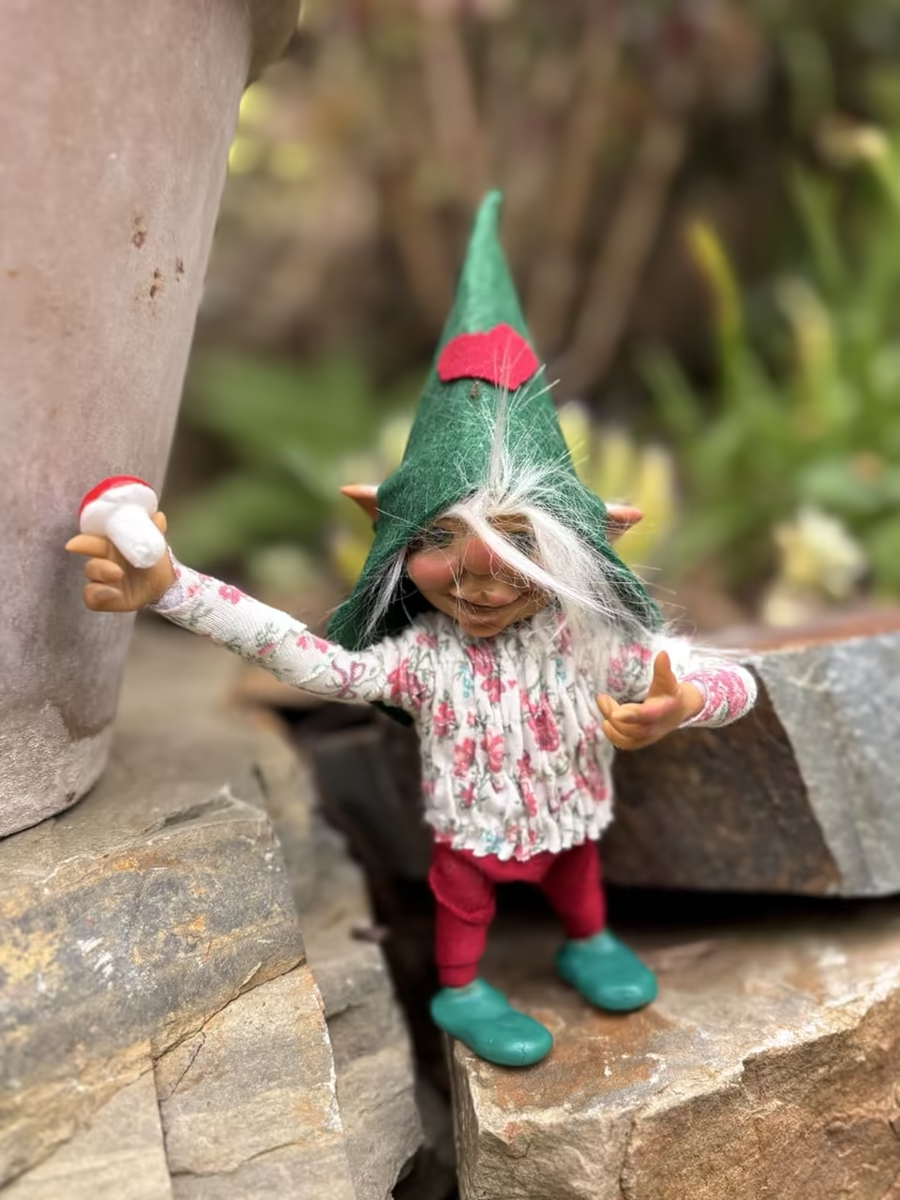
Eggbow Pickled Eggs
RecipeToday we’re doing the good kind of magic: Eggbow-style pickled eggs. Not a prank, not a joke, just kitchen witchery with a bit of jar science. They come out so pretty it looks like they were laid by a seriously sassy hen.
Ingredients:
- 6 eggs (boiled and peeled, we’re keeping it practical)
- 450 ml water
- 250 ml vinegar (apple cider or white)
- 1 tbsp salt
- 1 tbsp sugar (optional, but it rounds things out nicely)
- Beet color: 1 cooked beet, sliced (or 200 ml beet juice)
- Yellow color: 1 heaped tsp turmeric
- Blue color: 2 cups red cabbage (purple cabbage), finely chopped
- Optional, for extra swagger: peppercorns, a bay leaf, garlic, and a couple of cloves
How to do it:
Boil the eggs for 10 to 11 minutes, cool them in cold water, then peel them with patience. If one cracks, you eat it in secret, before the cat clocks you.
In a small pot, warm up the water with the vinegar, salt, and sugar. Stir until it’s all dissolved and it smells like “okay, this is serious pickling business”.
Split it into 3 jars. Beet in one. Turmeric in another. Red cabbage in the last one. Pour the hot liquid over each and let them cool down a bit.
Now pop two eggs into each jar. Into the fridge they go. After 4 hours they’re already tinted. After 12 to 24 hours they’re basically saying, “Yep, I’m an egg from another planet”.
Serve them sliced with a drizzle of olive oil, salt, and pepper, or with a spoonful of lemony yogurt for a soft little sauce moment.
Woodland tip: when you peel the egg and the color hits you, remember this. Inside, you’re still you. But sometimes a new layer can flip your whole day. And that’s egg-cellent, literally.

Your shell is your protective boundary
Reflection“Your shell isn’t a lie, it’s the line that keeps you safe.”
We look at those hens with colourful eggs, afro-style combs, feathers on their legs like they’re rocking cosy house slippers, and we think: what a kind of freedom that is, walking through the world without asking permission to be different.

Because you’ve got a shell too. Sometimes it’s your humour. Sometimes it’s the way you talk. Sometimes it’s that “not today, I can’t” you say with a half-smile so you don’t crumble right there in the kitchen. And hey, a shell doesn’t have to be hard. It can be colourful. It can bend. It can be your way of being here without everything getting under your skin.
And then there’s this seriously mind-blowing science thought: under all that wrapping, what it started as was a cell. One. Tiny, but with a huge plan. Maybe today doesn’t need you to be a “perfect egg”. Maybe it needs you to protect your centre and choose what layers you put on before you go out and live.
What layer have you been wearing lately just to get through, and which one would you like to wear today to enjoy things a little more, even if it’s proud blue-egg mode?
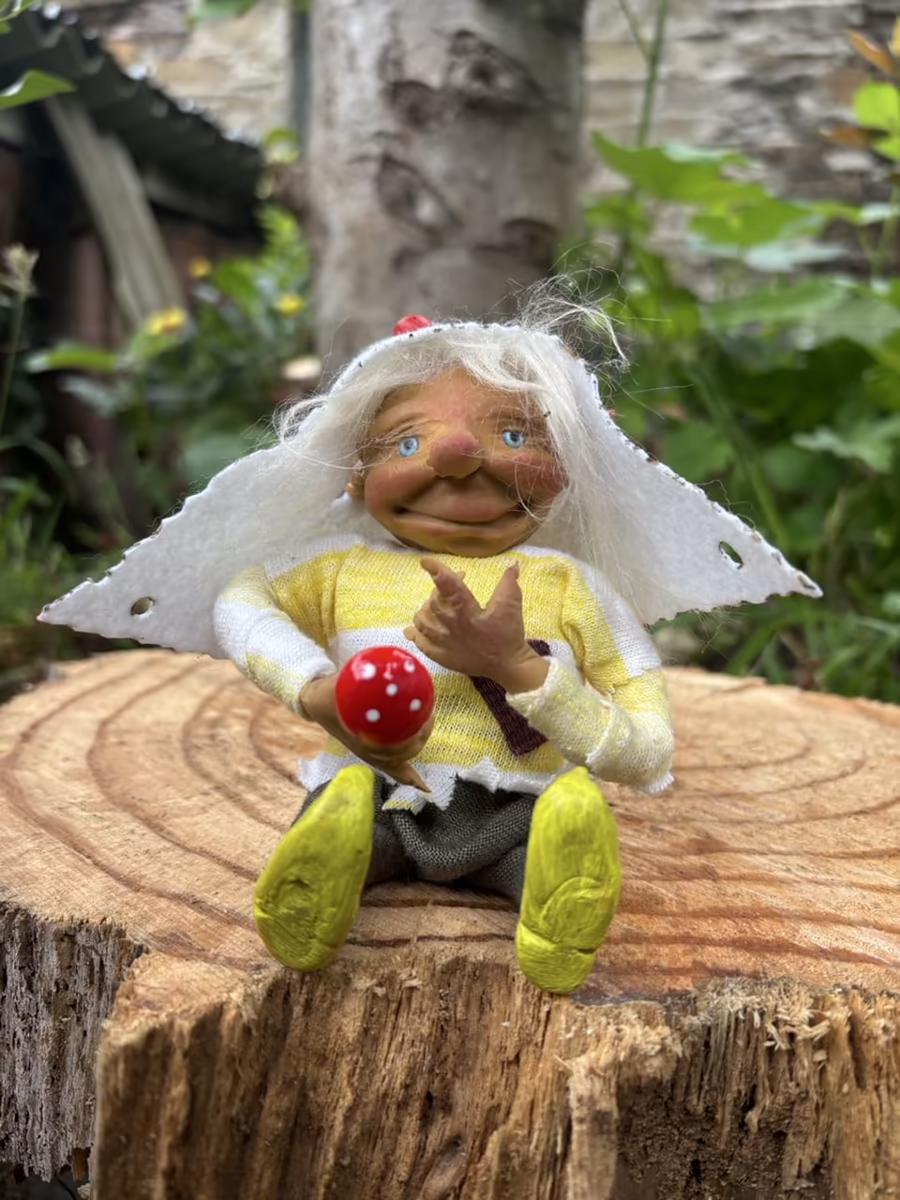
Invisible homeowner, huh?
Fun factWe love that the word “brownie” sounds like a cosy little biscuit… and then you find out its roots are actually proper folklore gold.
In old Scottish and Northern English tales, a brownie was a household spirit that came out at night to help with chores. The name most likely comes from their brown colour, the rough, earthy look of these little beings who blended right into the woodwork.
Where does the word “brownie” come from?
From that straightforward description: brown little creature → brownie. It’s like when you call your cat “Ginger” because, well, look at her. Same energy, just way older and with centuries of fireside stories behind it.
Why are brownies so linked to luck and good vibes?
Because if you woke up and the kitchen was magically tidy, or the cow had been milked, or the bread had risen perfectly, it was easy to think someone helped. And your brain went: “That was the brownie, obviously.” It was the old way of explaining those happy little coincidences that make your day better.
Magikito thought: maybe brownies don’t live under the stairs… maybe they live in that energy of “I take care of my home and my home takes care of me.” What tiny thing could you sort out today so good vibes have somewhere comfy to sit?

Crunchy Little Clovers
RecipeToday we’re baking an edible lucky charm. These cookies are buttery-soft, with a little kiss of lemon and a crunch that basically says, “yep, good luck’s hanging out with me today”. If you don’t have a clover-shaped cutter, no worries. The luck Brownie isn’t picky about geometry.
Ingredients:
- 120 g butter, room temperature
- 90 g sugar (brown sugar hits with extra oomph)
- 1 egg from the happiest hen you can find
- Zest of 1 lemon (the “spark” that wakes up the oven spirits)
- 200 g wheat flour
- 1/2 tsp baking powder
- 1 tiny pinch of salt (so luck doesn’t taste bland)
- Optional: 60 g chocolate chips or a small handful of chopped almonds (for the “hidden prize”)
How to make them:
In a bowl, beat the butter and sugar until it turns creamy, like you’re brushing the hair of a Brownie who just rolled out of bed. Add the egg and lemon zest and keep mixing until it smells like “this is gonna go great”.
In another bowl, mix flour, baking powder, and salt. Add it to the main bowl and stir just enough, we don’t want cookies with drama. If you’re adding chocolate or almonds, now’s the moment.
Shape it into a ball, wrap it up, and pop it in the fridge for 20 to 30 minutes. That rest is your little “deal” with luck. No pause, no classy crunch.
Roll out the dough (with a bit of flour if needed) and cut your shapes. Oven preheated to 180 ºC, bake for 10 to 12 minutes, until the edges are lightly golden. Let them cool, fresh out of the oven they’ll feel soft, then they firm up.
Forest tip: stash two “amulet” cookies for a random moment in your day. Luck is often just that, having something tasty ready before the slump shows up.
Family leprechaun night
FilmDarby O’Gill and the Little People (1959)
A sharp-as-a-tack Irish lad stumbles into the world of the “little folk” (leprechauns and the rest of the crew), and suddenly it’s a playful tug-of-war of luck, cheeky little tricks, and wishes with sneaky fine print.
Why watch it: because it’s pure fireside folklore. It reminds you that “luck” in fairytales always comes with a hidden catch and a laugh echoing in the background.
Pair it with a proper homemade guac. And when it’s over, sit with today’s Brownie question: if someone granted you a wish right now, would you ask with a clear head or with hungry grabby hands?

Pocket luck
Reflection“Luck doesn’t always fall from the sky. Sometimes it gets made right on the kitchen table.”
Usually when someone asks us if Brownies are real, we start laughing so hard it almost cracks our ribs. Because if we’re gonna throw big words around, we’ve gotta say it, “exist” is way too serious a word and we’re not that bothered. What really matters is feeling that someone’s with you, even if it’s an invisible presence. That’s the good stuff.
And a lot of the time it’s not a Brownie showing up with pointy ears and a tiny felt hat. Sometimes it comes as small details, someone texts you right when you needed it, a song that clicks the joy-bone back into place, a super simple routine that saves you from mind-chaos. Like the day has a tiny maintenance crew, quiet, working in the background.
So you know... maybe the trick isn’t proving anything. Maybe the trick is living like good vibes are contagious, and you could be a Brownie for someone too.
What teeny little gesture could you do today to call in some “luck” for your life… and what could you do to leave a little luck-tapa for someone else on their way?
Hunting, No Arrows Needed
HistoryWe were watching one little critter chase another through the woods. And it made us laugh because, you know how you go for a run “for your health”? Turns out that, in its oldest version, that was basically a hunting strategy.
It’s a thing we now call persistence hunting. It’s not “run like lightning”. It’s running for ages and doing it smart, until the animal that was flexing on you at first starts to fade and just can’t keep it up.
What is persistence hunting?
It’s a method documented in some hunter-gatherer groups (it’s been described in southern Africa, for example) where the key is keep going, and keep going. You track the animal, you make it stay at a steady trot, you don’t let it properly rest… and in the end its body overheats or it simply runs out of fuel and can’t sustain the effort. It’s not a movie-style chase. It’s more like, “I’ll beat you with patience.”
How could humans beat an antelope by running?
Because humans are kind of weird: we’ve got loads of sweat glands and not much hair (well, some of us more than others, hey), so we cool the engine by sweating, like a little portable radiator. A lot of four-legged animals, on the other hand, rely heavily on panting to cool down, and that gets tricky when they have to keep running nonstop. Plus our bodies come with some seriously endurance-friendly parts (springy tendons, a steady stride, a balanced head) that fit what’s called endurance running. And yep, this wasn’t the only way to hunt: there were traps, spears, teamwork, and a thousand other tricks. Still, this idea explains why running “for no prize” can make us feel so… human.
Magikito moral: today there’s no need to tire out any animal, obviously. But you can totally keep the vibe. If something scares you because it’s huge, maybe you don’t beat it with a wild sprint. Maybe you beat it with a steady rhythm, honest sweat, and a “I’ll go a little longer, quitting can wait.”
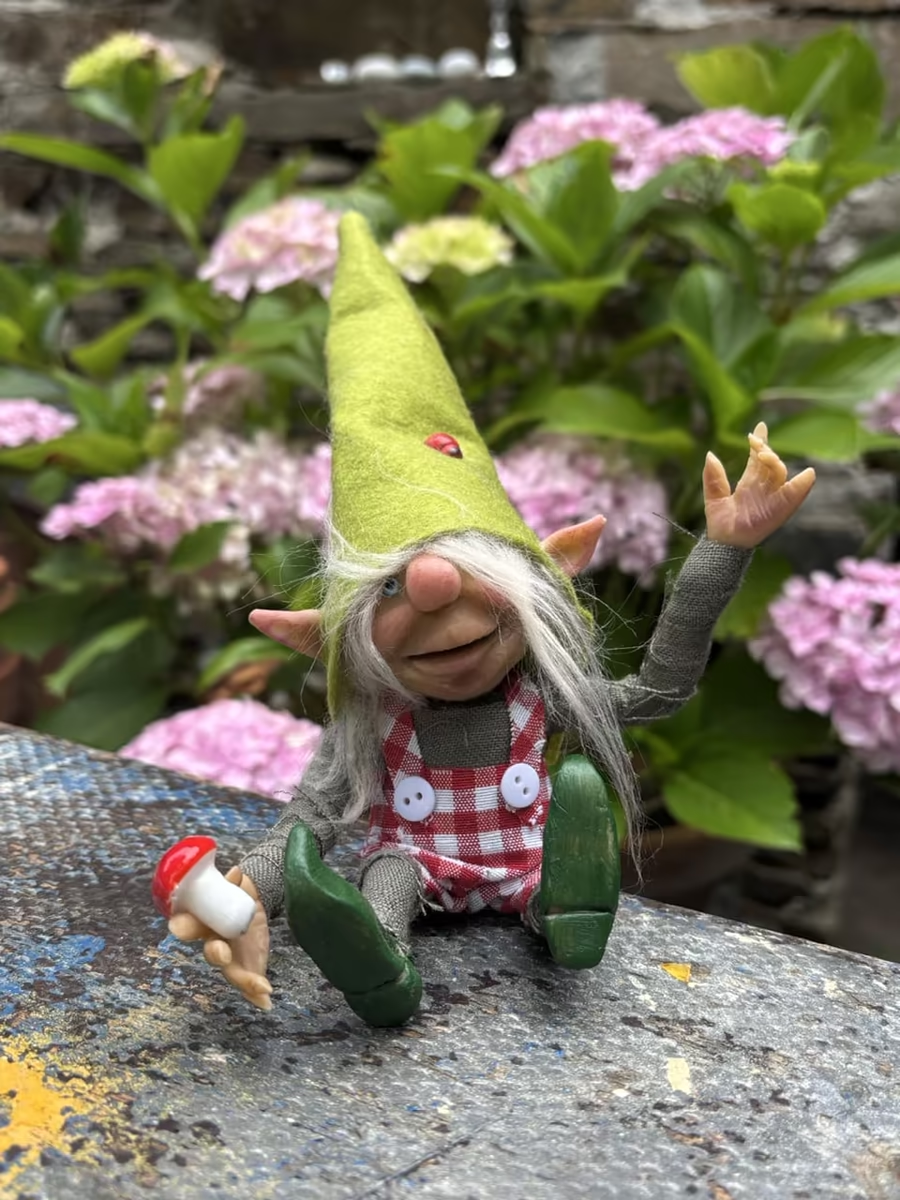
Brain-Cell Fuel
ScienceWe feel it after about three strides: suddenly the world weighs less, your head lines itself up, and your body goes, “ohhh, okay, this works.”
That’s not runner posturing. That’s biology doing its thing. Running, and aerobic exercise in general, sends your brain a little cocktail of signals that can shift your mood, your focus, and even how you feel pain.
What’s a “runner’s high”?
It’s that cozy wave of wellbeing that sometimes shows up after you’ve been jogging a bit: calm, a cheeky little euphoria, and clearer thoughts. It doesn’t happen every time, and it doesn’t always feel the same. Think of it like a fireplace: if you light it and blow it out two minutes later, it won’t warm the house. Give it a moment and it settles in, then the good part starts.
What’s the deal with endorphins, and why does everyone talk about them?
Endorphins are substances your body releases that act like “internal painkillers.” Picture a tiny maintenance crew with a first-aid kit: when the effort goes up, they go, “okay, let’s turn the pain alarm down a notch so you can keep going.” Important: it’s not that you become invincible, it’s just that your threshold shifts a little.
Magikitos take: if your mental flame feels low today, it’s not always “motivation” you’re missing. Sometimes you’re missing movement. Even a silly little jog, a brisk walk, or taking the stairs instead of the lift, your brain loves it and pays you back with a dose of mental clarity.
Long-Stride Couscous
RecipeThis recipe is our “forest pit-stop fuel”: carbs for the stride, protein so your body doesn’t start complaining, and a fresh little dressing that flips your brain into “alright then… I’ve got this”. We’re not out here hunting, but we do refuel. Your body’s got its own logistics, too.
Ingredients:
- 200 g couscous (or semolina) that cooks in a blink
- 250 g cooked chickpeas (from a can, rinsed, and still respectable)
- 1/2 red onion, sliced super thin (the crunch that wakes you up)
- 1 tomato diced, or a handful of cherry tomatoes (to give the trail some juice)
- 1 grated carrot (orange confetti energy)
- 2 tablespoons olive oil
- 1 teaspoon cumin
- 1/2 teaspoon paprika (sweet or a little spicy, you’re the boss)
- Salt and pepper
- Finish-line sauce: 1 plain yogurt, juice of 1/2 lemon, a pinch of salt, mint or parsley if you feel like it
- Optional: a small handful of raisins or olives (for that “I run and I smile” vibe)
How to make it:
Tip the couscous into a bowl with a pinch of salt and a tablespoon of oil. Heat the same amount of water as couscous until it boils, then pour it over. Cover for 5 minutes. Fluff with a fork after, like you’re stretching your legs after a jog.
In a pan, warm a tablespoon of oil and sauté the chickpeas with cumin, paprika, salt, and pepper. We just want them warmed through and extra tasty, not dried out and ready for retirement.
Mix the couscous, chickpeas, onion, tomato, and carrot in a bowl. If you’re adding raisins or olives, now’s the moment.
The sauce: yogurt, lemon, salt, and chopped herbs. Stir and taste. It should taste like “last kilometre with a really good song on”. Serve the salad warm-ish and drizzle the sauce over the top.
Forest tip: eat this like it’s a mental warm-up. You don’t need to run a marathon to feel like an athlete. Feed your engine well, and you’re already on the right path.
The Roe Deer Coach
JokeThe other day a roe deer showed up with a tiny whistle and a stopwatch made out of dried pine cones.
We go, “Oi, mate, what are you doing, setting up a workout in the middle of the woods?”. And he goes, “I’m training humans: I watch you run for two days, but on the third you turn into a sleepy croquette with legs.” We say, “Yeah but we’re just chasing free endorphins.” And he goes, “Your ancestors hunted on pure patience. They didn’t go all out in the first kilometre, and they didn’t haul forty flashy tech bits just to brag about their pace.”
Magikito moral: if you go for a run today, don’t drag forty gadgets to measure your pace. Just enjoy it and that’s it!
When rhythm saves your life
Reflection“Running isn’t escaping: it’s choosing the rhythm you meet whatever’s coming with.”
Mondays look like a sprint: the alarm goes off and it already feels like someone’s chasing you with a to-do list in their hand. But the forest reminds us of something else. Endurance isn’t about gritting your teeth. Mindfulness runners know this. It’s about pacing. Going hard enough to move forward, and gentle enough not to snap.
Ancient humans ran to survive, sure. Today you run to live better, which is a more refined kind of survival. And that’s where the awkward question shows up: what are you forcing into a sprint when it’s actually asking for the long run? What are you chasing with anxiety, when maybe it gets caught with consistency?
What part of your day could you run “at persistence-hunt pace”: no rush, no drama, but no stopping either, until what matters gives in and lets you through?
A Frog with a Family Tree
Fun factToday we went full-on pond philologists. A little ribbit popped off in the puddle and we thought... hang on, where does the word “frog” actually come from?
This word is old-school in the best way. We’re talking proper Old English here, back when everyone was speaking something that sounds like a different language entirely.
Where does the word “frog” come from?
From Old English frogga, which might be connected to the Proto-Germanic root meaning “to hop”. Makes sense, right? You see something small and green absolutely launching itself across a pond and you go: “that’s a hopper, that is.” Some scholars also link it to Old Norse froskr and Old High German frosc, all cousins in the great Germanic frog family.
Magikito takeaway: knowing where a word comes from is like shining a little torch on your day. If something in your head feels a bit odd today, ask yourself “where is this coming from?” and watch the pond get a whole lot clearer.
The Philologist Frog
JokeThis morning we spotted a frog wearing acorn-shell glasses, perched on a lily pad and reading a book.
We go: “Whatcha reading, love?” And she goes: “Latin. I’m not just any old frog, you know. I come with a certified label of origin.” We’re like: “Alright, alright… so why do you make those weird noises then?” And she gives us this proper serious look: “Weird noises? Mate, the weird noises are yours. You spend all day listening to reggaeton.”
Magikito moral: if someone slaps a silly label on you, don’t go picking a massive fight. Breathe, and flip the whole thing around.
Legs, no amphibians
RecipeToday we’re doing a classic with a forest twist: “frog legs”… but the respectful version. So yeah, we’re making shroom-legs (mushroom legs) that come out crispy on the outside, tender on the inside, and you’re like, “ok, that’s a serious culinary leap.”
Ingredients:
- 300-400 g oyster mushrooms (pleurotus), pulled into “little drumstick” strips
- 2 garlic cloves, finely chopped (for that classy-pond attitude)
- A generous handful of fresh parsley (lily-pad green)
- Zest and juice of 1/2 lemon (the tangy jump)
- For coating: 1 egg or 4 tablespoons aquafaba (the liquid from a can of chickpeas) and 80-100 g breadcrumbs
- 1 teaspoon smoked paprika (optional, but it gives the plate a bit of a cape)
- Salt, pepper
- Olive oil for a gentle fry, or go griddle-style with gusto
Method:
First, the “pond marinade”: in a bowl, mix garlic, parsley, lemon, salt, pepper and, if you’re into it, paprika. Add the mushrooms and give them a loving toss, like you’re massaging a problem until it finally gives up. Let them rest for 10-15 minutes.
Now the coating: dip the mushrooms in egg (or aquafaba if you’re going full plant mode), then into breadcrumbs. No need for medieval-armor breading, just a nice crunchy layer.
Pan with oil over medium-high heat. Brown the shroom-legs in batches, don’t crowd them, or they’ll turn sad and floppy. Once they’re golden, move them to a plate with paper towel.
Serve with an extra squeeze of lemon and, if you fancy it, a little salad or some oven potatoes. That’s it, bistro vibes, forest conscience.
Forest tip: if you want something bold today, make it bold without stepping on anyone. You can crunch with joy and still love frogs very much alive, they’ve already got plenty on their plate with that whole metamorphosis thing.
Jump, pause, jump
Reflection“Not every leap is an escape. Sometimes it’s how you look after yourself.”
Frogs aren’t out there jumping all day like they’ve got something to prove. They go still. They watch, they listen, they breathe nice and slow. And when it’s time, they jump. No apologies, no drama, and no explaining it with a PowerPoint.
We sometimes do the opposite. Either we get glued to a rock out of fear, or we jump on impulse and end up in a puddle that doesn’t even have water in it. And the funny thing is, balance isn’t “being brave all the time”. It’s choosing the right moment.
Maybe today you’re not lacking strength. Maybe you’re lacking a lily pad, a small place to stop, reset, and decide where the next jump goes, with a little more respect for yourself.
What leap is your body asking for right now… and what tiny pause could you give yourself first, just to jump with more truth and less noise?
The Lost Seahorse
JokeIn a little forest puddle, we spotted a seahorse clinging to a tiny twig, stiff as a board and looking properly worried.
We go, “Mate… aren’t you meant to be in the sea?” And he goes, “Yeah, but I followed a good-vibes current and somehow ended up in Taramundi.” We point at his curly tail, “And that tail, looking well fancy?” And he says, “That’s because I’m a horse who’s seriously into being all wound up.”
Magikita moral: hanging on to everything isn’t safety, it’s tiredness with a rope. Today, hold tight to what matters and let the rest go, even if it’s just a little knot.
Dad with the pouch
SciencePicture this, down in the seagrass meadow, it’s not the mama doing the pregnancy, it’s the papa. Yep, that’s exactly how the seahorse rolls, and the way they run it’s so slick it puts Amazon Prime to shame.
In seahorse world, the female lays the eggs, sure, but then she hands them over to the male. And that’s when the “pregnancy”, seahorse edition, kicks off.
What is the seahorse’s brood pouch?
It’s a pouch on the male’s body, like a grocery bag, except it’s stuck to his belly, full-on “tiny kangaroo” vibe. Think of that inside jacket pocket, the one you use for your important stuff. The female slips the eggs in there, and the male keeps them safe until they hatch.
How do the eggs go from the female to the male?
With a pretty well-rehearsed little courtship dance. They sync up, get super close, and the female uses a small tube (an ovipositor) to place the eggs inside the male’s pouch. It’s like passing a tray of cupcakes into the oven without dropping a single one on the way.
What does the male do while he’s “pregnant”?
He’s not just a storage unit, no. Inside the pouch, the male manages some seriously important stuff, oxygen, nutrients, and most of all salinity (osmoregulation). That part matters because the sea is basically salty soup, and the embryos need steady conditions so they don’t end up all “wrinkled” or “puffed up”. It’s a bit like taking care of bread dough, you can’t just leave it there. You’ve got to give it the right warmth and moisture if you want it to turn out good.
And what’s seahorse birth like?
The male gets contractions and pushes the babies out, sometimes loads of them, depending on the species. It’s got that vibe of “Alright kiddos, out you go, you’re ready to wiggle those tails and explore the sea.”
Magikitos’ take: the seahorse reminds us that caring isn’t a title, it’s something you do. Today, if it’s your turn to “carry the pouch”, do it with pride. And if it’s your turn to ask for help, ask. Raising days can be exhausting too.
Coiled-Tail Spirals
RecipeToday we’re cooking a recipe that looks like a little sea meadow, but in gourmet mode: green, fresh, and full of spirals, like a seahorse’s tail as it cruises through life.
Ingredients:
- 320 g spiral pasta (cavatappi, fusilli, or whatever goes “plop-plop” when it hits the pot)
- 250 g peas (no need to shell them, we’re not fancy little divas)
- A good handful of fresh spinach (the official “meadow”)
- 1 tiny garlic clove (so the sea’s got some attitude)
- Zest and juice of 1/2 lemon (the wave that wakes everything up)
- 40 to 50 g Parmesan or similar, grated (proper sea snow)
- 3 tablespoons olive oil
- Salt, pepper
- Optional: a small handful of chopped almonds or walnuts, toasted
How to make it:
Put a big pot of water on with salt. When it’s boiling like it means it, drop in the pasta. Halfway through, toss in the peas for a couple of minutes, just enough to soften them but keep a bit of bounce.
Meanwhile, in a small pan, warm the oil and lightly golden the garlic, just a touch, don’t let it get all dramatic. In a blender cup add the peas (save a small handful if you want to bump into little “green pearls”), the spinach, the garlic with its oil, the lemon, the cheese, salt and pepper. Blend until it turns into a bright green cream, like “meadow with a mission”. If it’s too thick, add a little splash of the pasta cooking water and you’re set.
Drain the pasta, pop it back in the pot, and mix with the green sauce. Stir gently, this isn’t a storm, it’s a tiny seahorse dance. Finish with the toasted nuts on top if you’re using them, and a little extra lemon zest if you’re feeling artsy.
Forest tip: if today you’re feeling a bit wobbly, hold on to something small but real, like this pasta, spiralled, green, and lemony. The tail curls up, but your mood uncurls.
Sea with seahorses
FilmThe Little Mermaid (1989)
A sea-soaked classic full of curiosity and impulsive choices, pure “I’m diving into the adventure even if I forgot the map” energy. And yep, under the water there’s a whole parade of little critters with big personalities, including some seahorses that are absolute tiny badasses.
Why watch it: because it plants that “underwater meadow” feeling in your head, like you’re wandering into a hidden world. Because it makes you want to hear your own voice without asking anyone’s permission. It’s light, but it’s got that little “hey, careful what you wish for” wink.
Put it on with something warm in your hands, and when it ends ask yourself: what are you holding onto today like a seahorse, just so you don’t get swept away?
The Touchy Vagus
JokeThis morning we ran into the Vagus Nerve sitting on a rock, looking like a tired civil servant, with a tiny referee whistle.
We go: “Hey mate, you’re the one who makes people drop like a sack of potatoes, right?” And he goes: “Sack of potatoes? Excuse me. I only do preventive shutdowns. Like a laptop when it overheats.” We say: “Well give us a heads-up on WhatsApp, yeah?” And he’s like: “I do. A bit of sweat, a little dizzy spell, tunnel vision… but you lot play tough and stay upright like streetlights.”
Magikito moral: if your body whispers ‘sit down now’, don’t answer ‘later’. The Vagus isn’t mean, he’s just an electrician in a hurry.
Blackout, Manual Included
SciencePicture your body as a house and suddenly, click, the breaker trips. It’s not always an “I’m dying” thing. A lot of the time it’s more like “I’m protecting myself”, because the classic faint is basically a built-in safety system.
The most common version is called vasovagal syncope, which sounds like a comic-book villain but it’s really just an automatic reflex. It happens when your body decides to turn the volume down, fast. Blood pressure drops, sometimes the heart rate slows, and the brain gets a bit less blood for a few seconds. Result, you hit the floor. And weirdly, that can help, because lying down makes it easier for blood flow to get back to your brain.
So what exactly is a faint?
A faint is a brief loss of consciousness because the brain momentarily isn’t getting enough blood. Think of a hose watering your garden. If the pressure drops, the stream won’t reach the pots on the top shelf. Your brain is that fussy little pot, and if the stream cuts out for a moment it goes, “Right folks, maintenance shutdown.”
What’s the vagus nerve, and what’s it got to do with fainting?
The vagus nerve is part of your body’s “calm down and hit the brakes” system. In some situations (pain, seeing blood, heat, standing for ages, dehydration, stress, fear), the brakes get pressed too hard. Blood vessels widen (so pressure drops) and your heart rhythm can slow. It’s like someone at the fuse box going, “We’re using too much, full system cutback.”
What do you feel right before fainting, and why?
Typical signals are cold sweats, nausea, weird yawning, looking pale, blurry vision, ringing in the ears... basically your body warning you something’s off. Sometimes it’s because the brain is already getting less blood. Other times it’s because your nervous system is reshuffling the blood supply, like at a party when you turn off a few lights so the others can stay on.
What should you do after someone faints to recover?
If someone feels faint, the smartest move is usually to lie them down and raise their legs a bit if you can, loosen tight clothing, and get them plenty of fresh air. Once they come around, take it slow. Sit up, drink some water, have a light snack if it sounds good. And heads up, if fainting keeps happening, there was a hard knock, chest pain, shortness of breath, it happens during exercise, or something just doesn’t add up, it’s time to check in with professionals and not try to be the hero.
Magikitos’ take: a faint is often your body saying “enough” in a clumsy but effective way. Today, listen to the tiny warning before the big blackout. Water, shade, sit down in time, and ask for help with zero shame.
Sandwich to reboot the system
RecipeWhen your body decides to faint and then comes back online, you don’t feel like demolishing a medieval feast. You want something that tastes like a proper reboot: a handful of carbs to lift your energy, a bit of salt to bring you back to life, and water so your blood doesn’t run in sad little puddle mode. And yeah, you also want it to be a bit funny. After a scare like that, serious is already covered.
Ingredients:
- 1 bread roll or 2 slices of bread
- Half an avocado (green and silky, the good fat that makes the reboot feel classy)
- 1 small tomato, grated or sliced (aka “water with flavour” mode)
- 1 slice of turkey or cooked ham or 1 hard-boiled egg (protein, no drama)
- A pinch of salt (yep, today salt is your buddy, not your enemy)
- A little drizzle of olive oil
- Optional: a squeeze of lemon and some pepper
- To drink: a big glass of water and, if you sweated a lot or you were out in the heat, another with a tiny pinch of salt and lemon (don’t overdo it, we’re not making the Bay of Biscay)
How to make it:
Toast the bread just enough to get a little crunch. No going wild, today we want comfort, not punishment.
Mash the avocado with a fork, add salt and a tiny splash of lemon. It’s like putting a non-slip mat in your stomach.
Spread the avocado, crown it with tomato, add the protein you picked, and finish with oil and pepper. If the sandwich looks at you like “I’ve got you”, you’re doing it right.
Have your water in small sips. And if you’re still recovering, sit down for a bit and chew slowly. Your body just rebooted, it doesn’t want a digestive marathon.
Forest tip from the Brownies: after a little “blackout”, you don’t need to act tough. You need to hydrate, sit like a sensible human, and eat your reboot sandwich like you’re updating the system without losing your files.