What it means
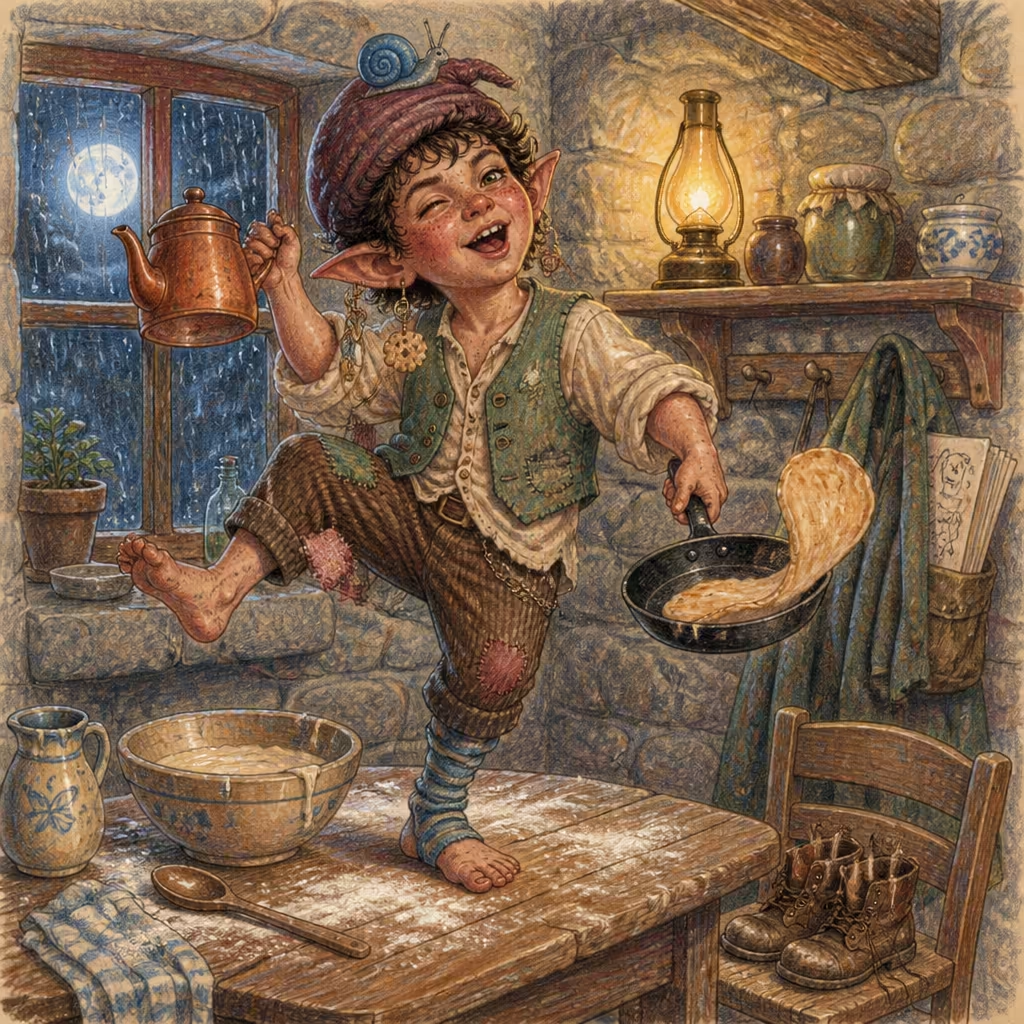
In British English, bash does two solid jobs. A bash is an informal party, the sort with music, drinks, mates drifting in and somebody balancing paper plates on the arm of the sofa. Have a bash means give it a go, usually without pretending you're an expert. Throw a bash and you're the poor soul hosting the chaos.
Usage examples
"We’re having a little bash for Dave’s retirement at the local. I’ll have a bash at the playlist, but if it’s all ’90s cheese, you’re on."
"Phil is throwing a bash at the working men’s club for his fortieth, two kegs, a karaoke machine, and a vegetarian buffet that his wife organised after he tried to argue that crisps counted as a complete meal for sixty people."
"I will have a bash at the sourdough starter recipe one of these weekends, the flour is in the cupboard, the jar is on the shelf, and the only thing missing is the patience that I am told is the proper key ingredient."
"We’re having a bash round ours on Friday, nothing fancy, just tunes, cans, and whoever turns up turns up."
"I’ve never fixed a bike chain in my life, but I’ll have a bash if you hand me the tools."
Where it comes from
Bash is recorded in English from the 17th century with the sense of a heavy blow or strike, likely reinforced by Scandinavian cognates. From that knockabout feel came have a bash at, meaning take a swing at something. The party sense turned up later for a lively gathering and stuck in British informal speech.