
The House
Shut up for forty years, with a tree growing inside
There were six houses on the top street, and only one had anyone in it.
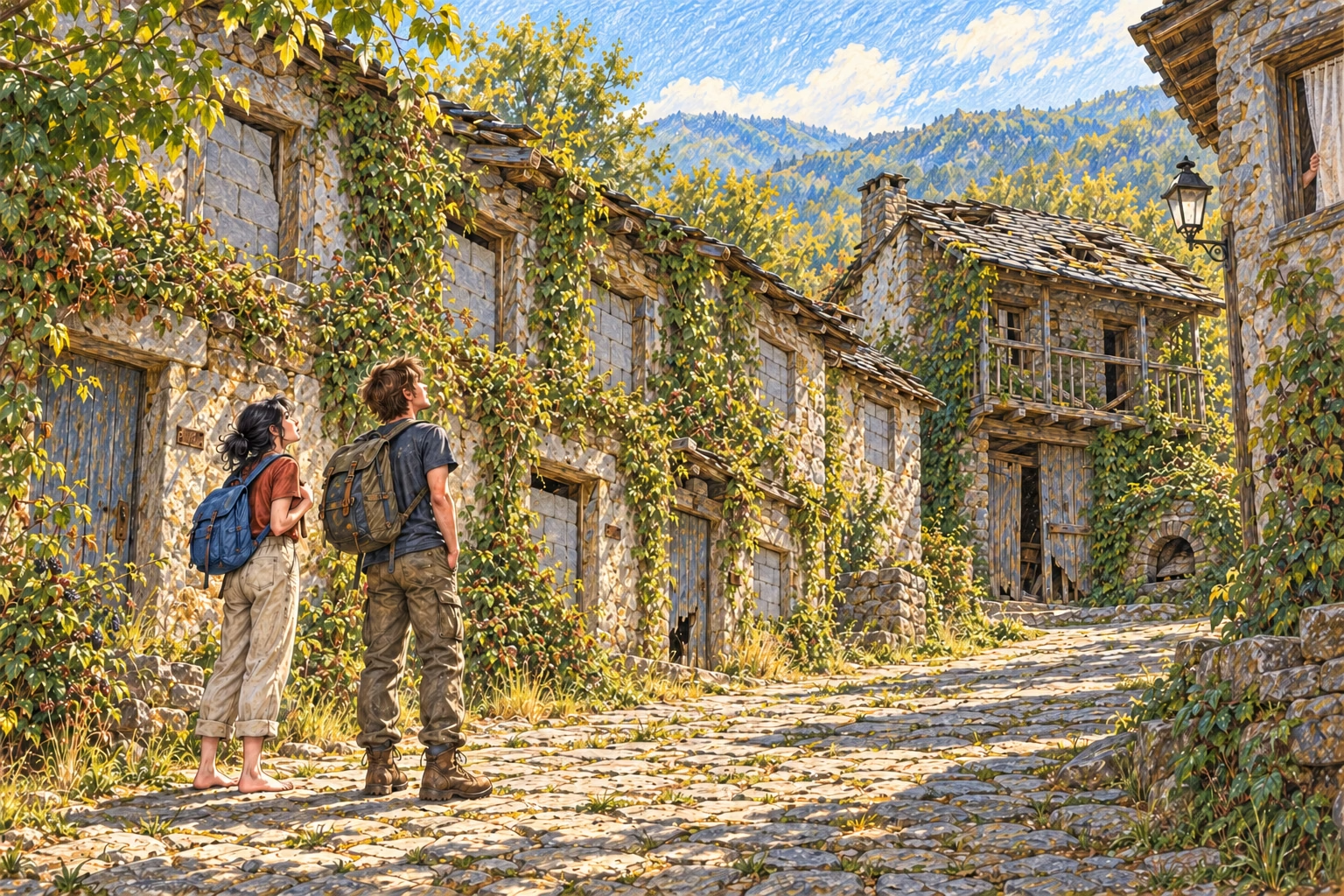
It was obvious straight away which ones were empty. Four had windows bricked up with new concrete blocks, and brambles still climbing over them. A shiny little plaque had been screwed to each door, bearing a leaf, the village name and two words in English. Those plaques were the only new things in the whole street.
The one with someone in it was the corner house. Stacked firewood, a doormat and a small car out front, with a new windscreen. At the top window a woman was watching. Axel raised his hand to her.
The woman drew the curtain.
Hortensia’s was the last, and it turned out to be quite a bit bigger than Axel had expected. It had two floors, dark stone walls and a stable door smashed in at the bottom. Half the boards were missing from the wooden balcony, and a fern grew out of one corner. The eaves were missing a few teeth too. On the right, half hidden under ivy, a round lump of stone with a black mouth stuck out: the oven, exactly as the paper said.
The lad with the car had followed them up without anyone telling him to. He was standing in the middle of the street with his hands on his hips, reading the order on the door with his head on one side.
“Bloody hell. Is this yours?”
“No.”
“Even better.” He tapped the plastic. “Let them pull it down, then, guys. Let them pay for it and move on.”
“Hortensia pays,” said Eva.
“Who?”
“The lady from the hotel. The one who laughed at your stories.”
“Oh. The lady.” He laughed. “Lovely lady.”
Eva was still leaning against the wall with her rucksack on.
“And what are you doing here?”
“Passing through.”
“Nobody passes through here.”
“Then I’m rubbish at it.” He smiled with his whole face.
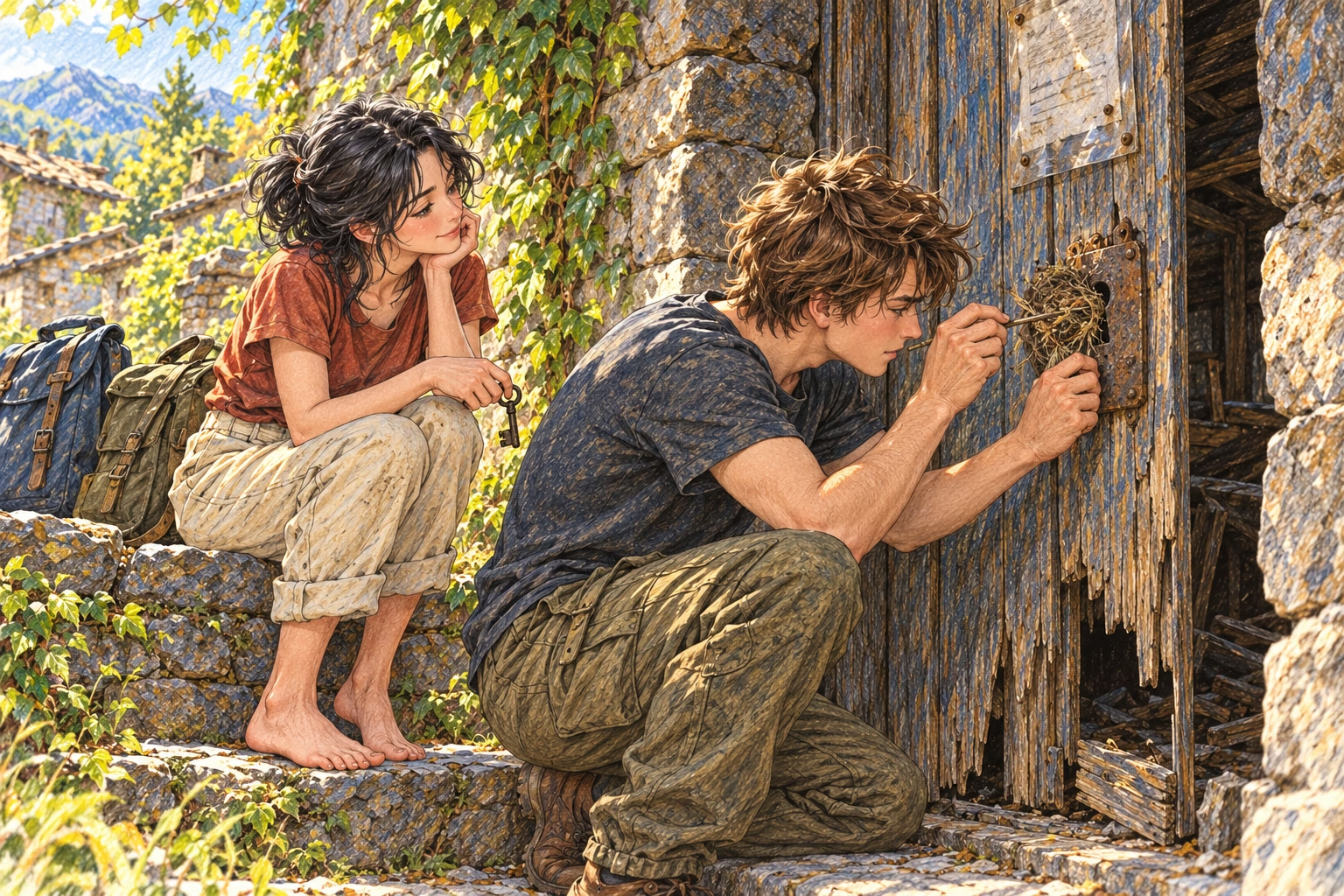
Axel spent ten minutes fighting with the lock until he saw it was full of dirt and an old nest. He got it out with a twig and put it on top of the wall.
The key went in on the fourth go and turned with a sound like bone.
Inside it smelled of wet earth and something sweetish Axel couldn’t identify. The stable was enormous, with a flagstone floor, stone mangers along the wall and a rusty wheelbarrow abandoned beside a mountain of dry ferns. What surprised him most was the light coming from above.
They went up a stone staircase built against the wall, no banister, counting the steps because two were broken.
The living quarters were upstairs. The kitchen had an enormous open hearth, black with smoke, with a chimney opening the size of a wardrobe. A wobbly table and two chairs remained, one of them lying on the floor. A passage led to the two bedrooms.
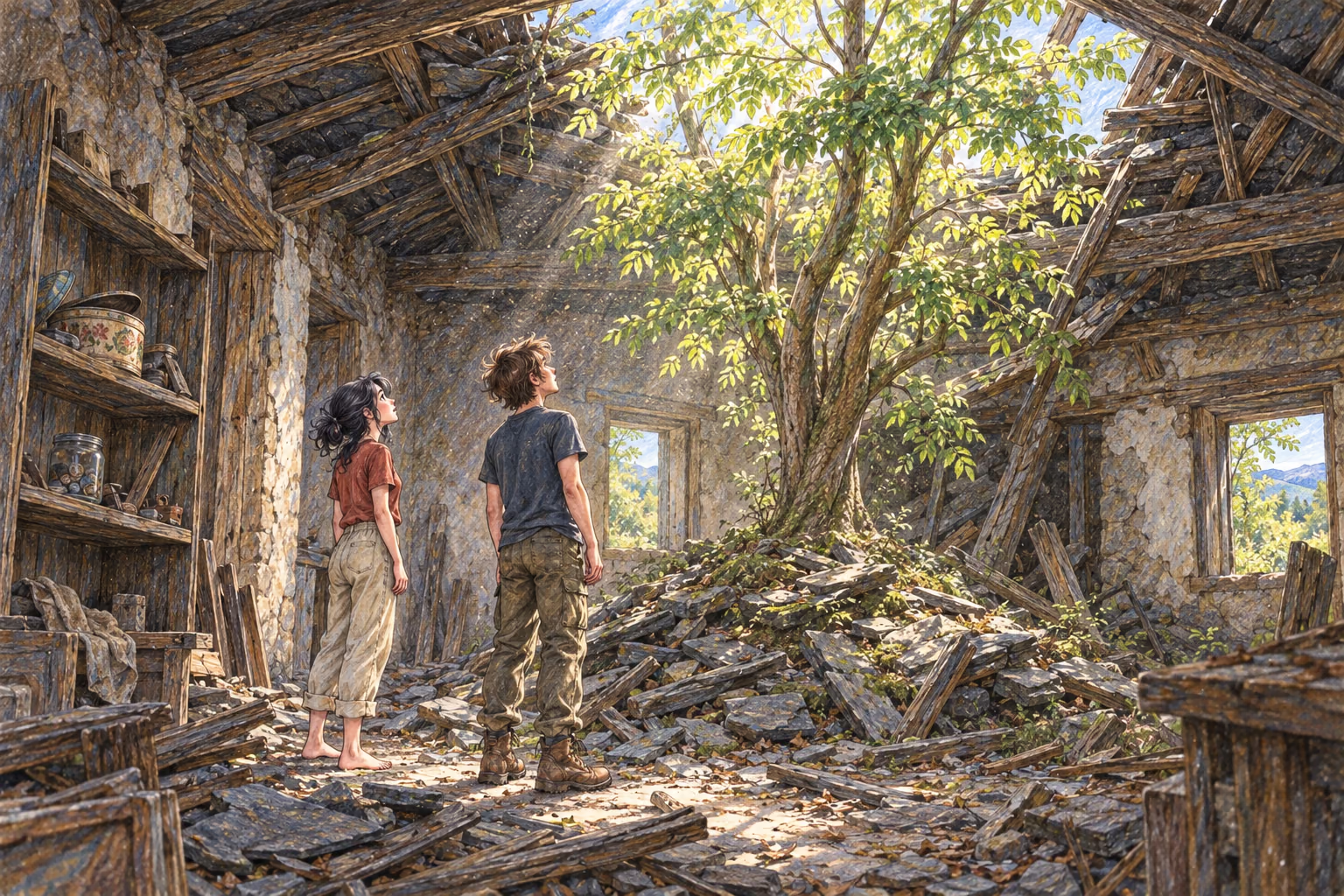
In the back room they found a pile of fallen slates and, growing among them, a three-metre elder tree sticking out through a hole in the roof. This wasn’t some little twig that had crept through a crack. It was a proper tree, making itself at home inside the house.
“Fucking hell,” said Eva.
Light poured through the hole onto leaves stirring in the draught. Axel stood spellbound for a moment, until he thought of the water that would pour through as soon as it rained. If they did nothing, on the thirtieth of September the house, the tree and anything living inside would all be swept away.
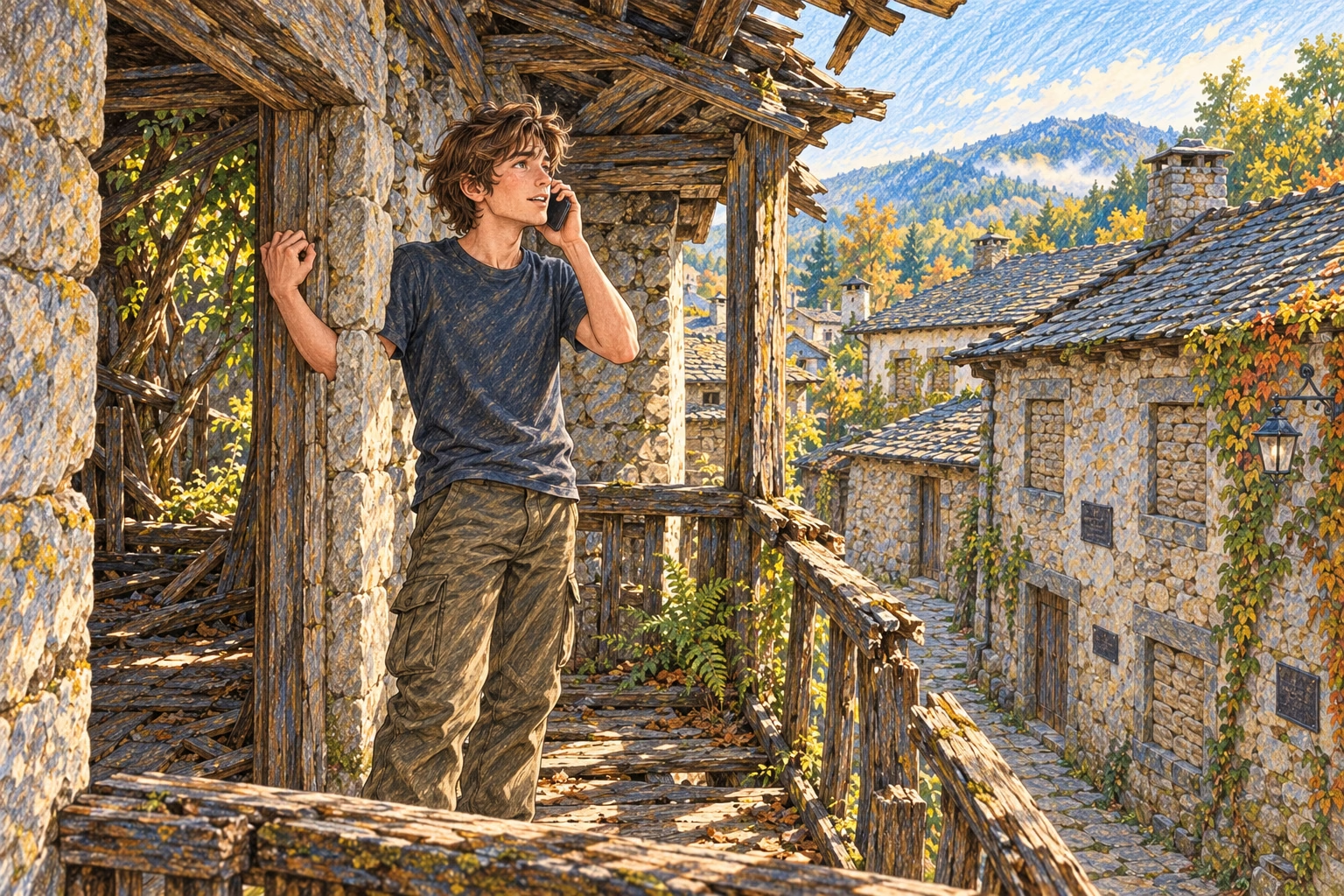
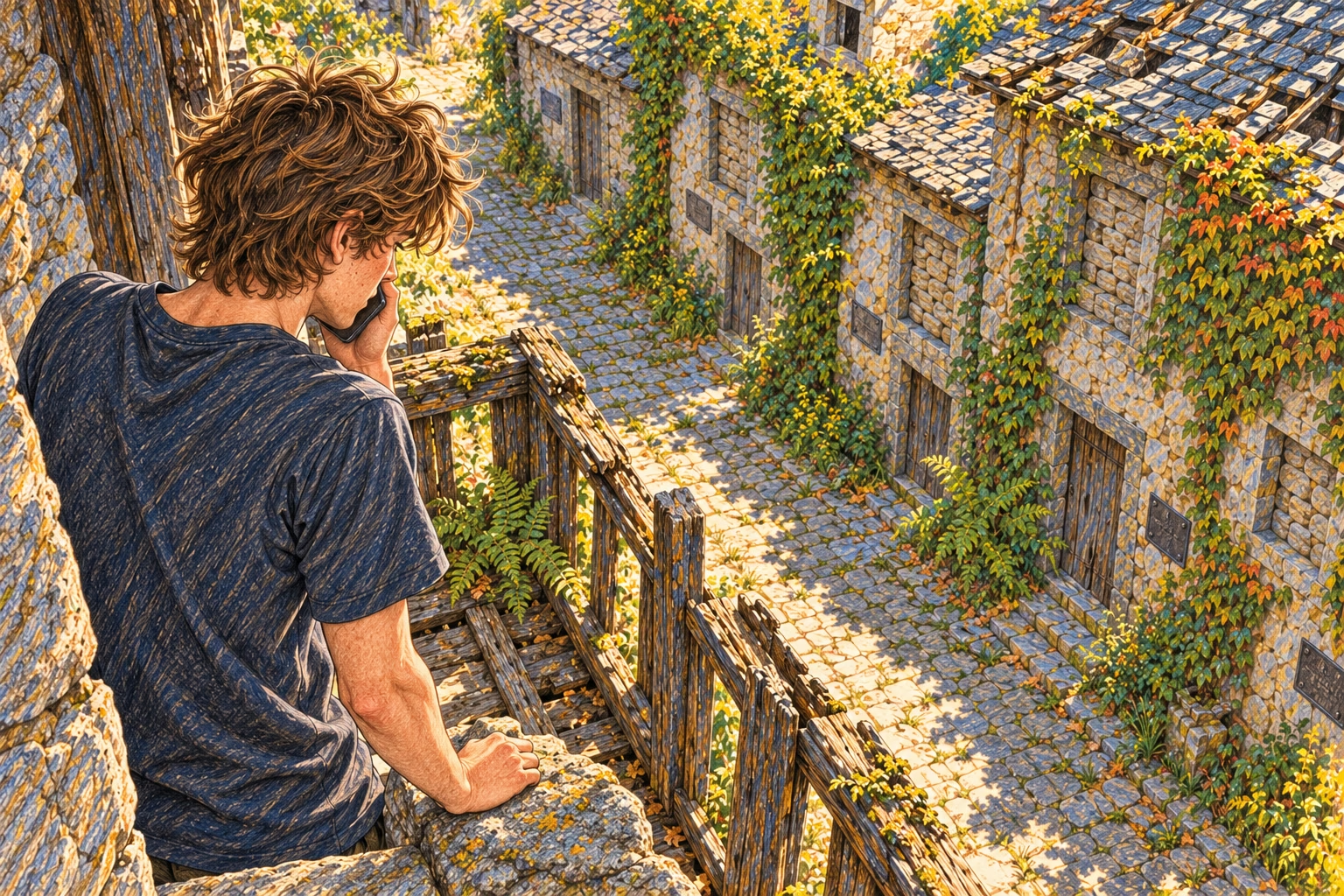
He stepped onto the balcony, feeling for the remaining boards, and got a single bar of signal by pressing himself against the railing. Everywhere else in the house, his phone was useful as a torch and not much more.
He rang Hortensia. She picked up on the second ring.
“Are you there?”
“We’re inside.”
You could hear her breathing on the other end.
“And?”
“No dressing it up, yeah?”
“No dressing it up.”
“Well, it’s standing, but only just. One side of the balcony’s come down, there’s a window with no glass and the eaves over the street are rotten. And there’s a tree growing out of a hole in the back of the roof.” He knocked on the wall with his knuckles. “The walls are perfect, Hortensia. There’s at least a metre of solid stone here!”
“And the oven?”
“The oven’s there.”
She took a while to answer.
“In one piece?”
“Absolutely smothered in ivy, but yes, in one piece.”
At the other end of the phone, Hortensia’s breath caught.
“Well,” she said at last, in her usual voice. “Now I know. Thank you, love.”
Axel looked down at the street, at the four little plaques.
“Hortensia. What if we fix it?”
The silence went on so long he looked at the screen in case it had cut out.
“I’m not putting in a penny. Or going up.”
“I haven’t asked you for anything.”
“Well, if that’s what you fancy, fancy away.”
“Do you want me to send you a photo?”
“No.”
And she hung up.
Eva was in the balcony doorway, her shoulder against the frame and her arms folded.
“We?”
Axel put his phone away.
“I’ll fix it. You’ll fix it. It’ll get fixed.” He scratched the back of his neck. “Whoever.”
“Uh-huh.”
And she went inside with the face of someone who’d caught him out.
For two hours they hauled out dry bracken, feathers and marten droppings to clear a path between the stairs and the rooms. Axel found an old bucket, and on his third trip the handle came off in his hand. He picked everything up off the floor again while Eva dragged out a sack that was heavier than it looked.
“The whole bloody forest’s been in here for a shit.”
Among the muck they found a biscuit tin full of buttons, an almanac swollen with damp and a child’s shoe with no partner. The spiders kept moving into corners they hadn’t reached yet. There was no electricity or water: the hose from the spring was broken in three places and covered in tooth marks. Outside, they could barely reach the wall through the brambles. Tins, a bed base and half a bathtub poked out of the slope.
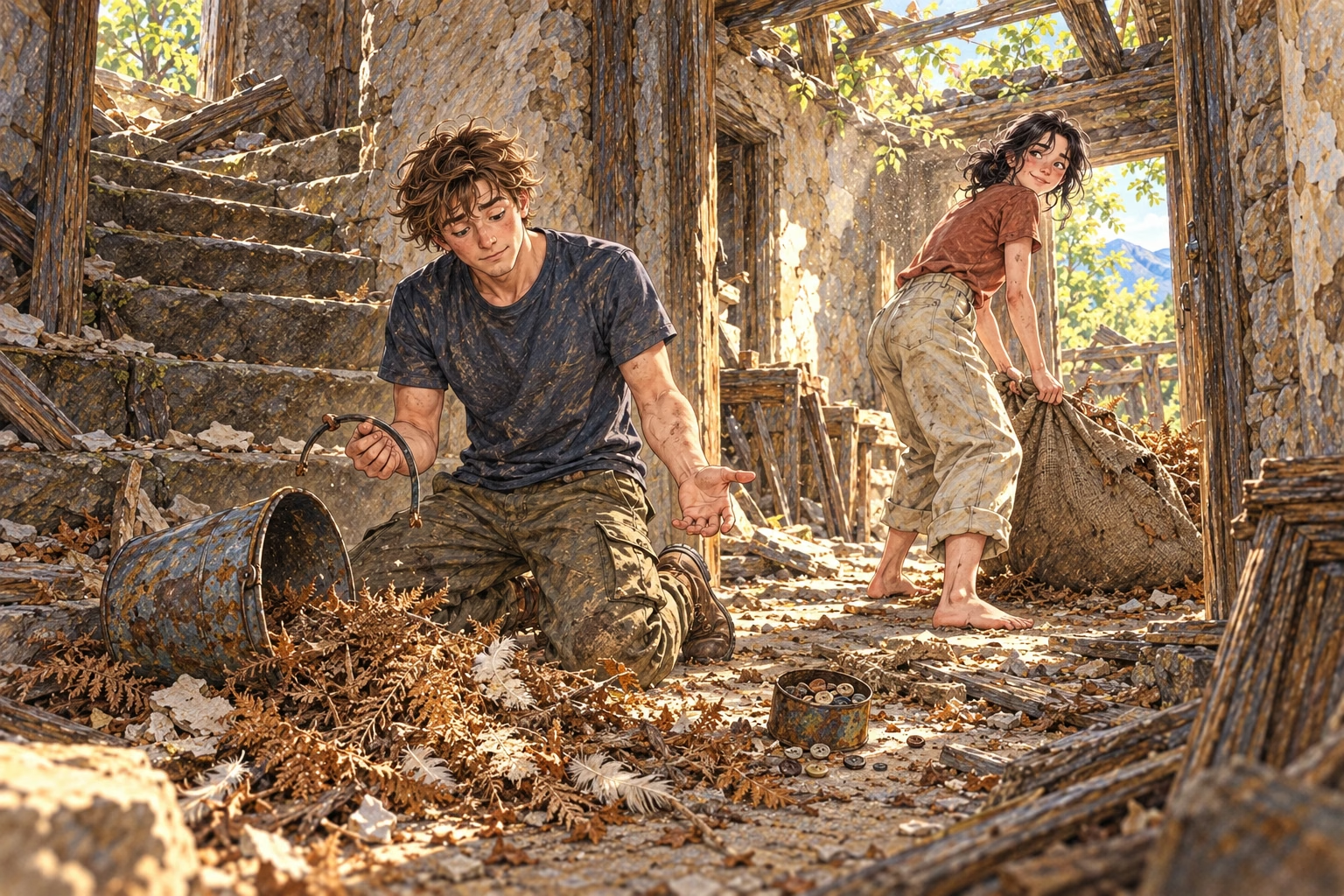
Axel lost count of all the things that needed fixing.
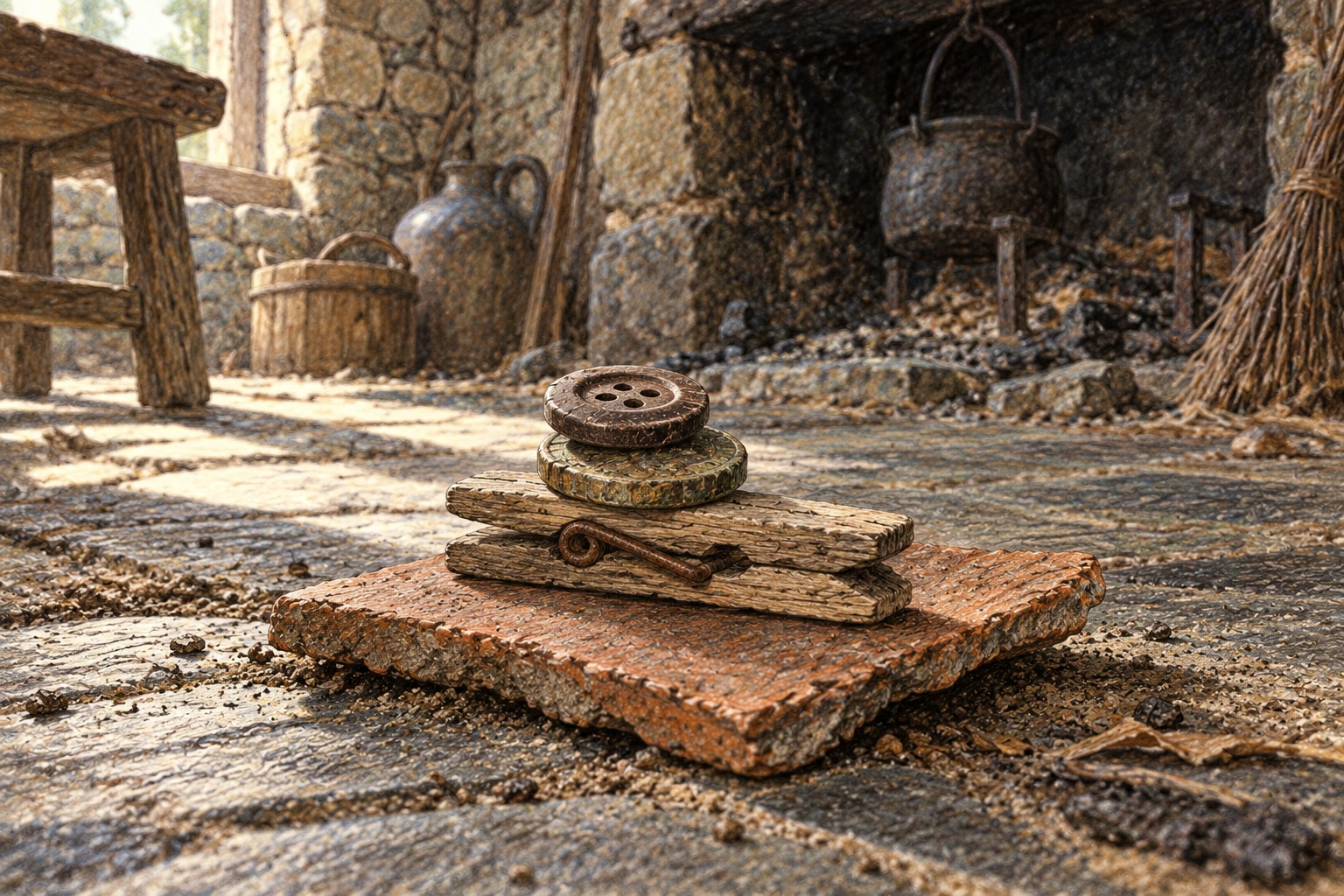
Beside the hearth they found four little things stacked with great care: a large button, a clothes peg, a piece of roof tile and a thick old coin. They made a fist-sized tower, arranged from largest to smallest.
Axel crouched down.
“Eva. Can you see this?”
Eva crouched down and looked at it.
“A pine marten. They collect stuff.”
“Biggest to smallest?”
“Pine martens do whatever they like.”
And she went off to look at something else.
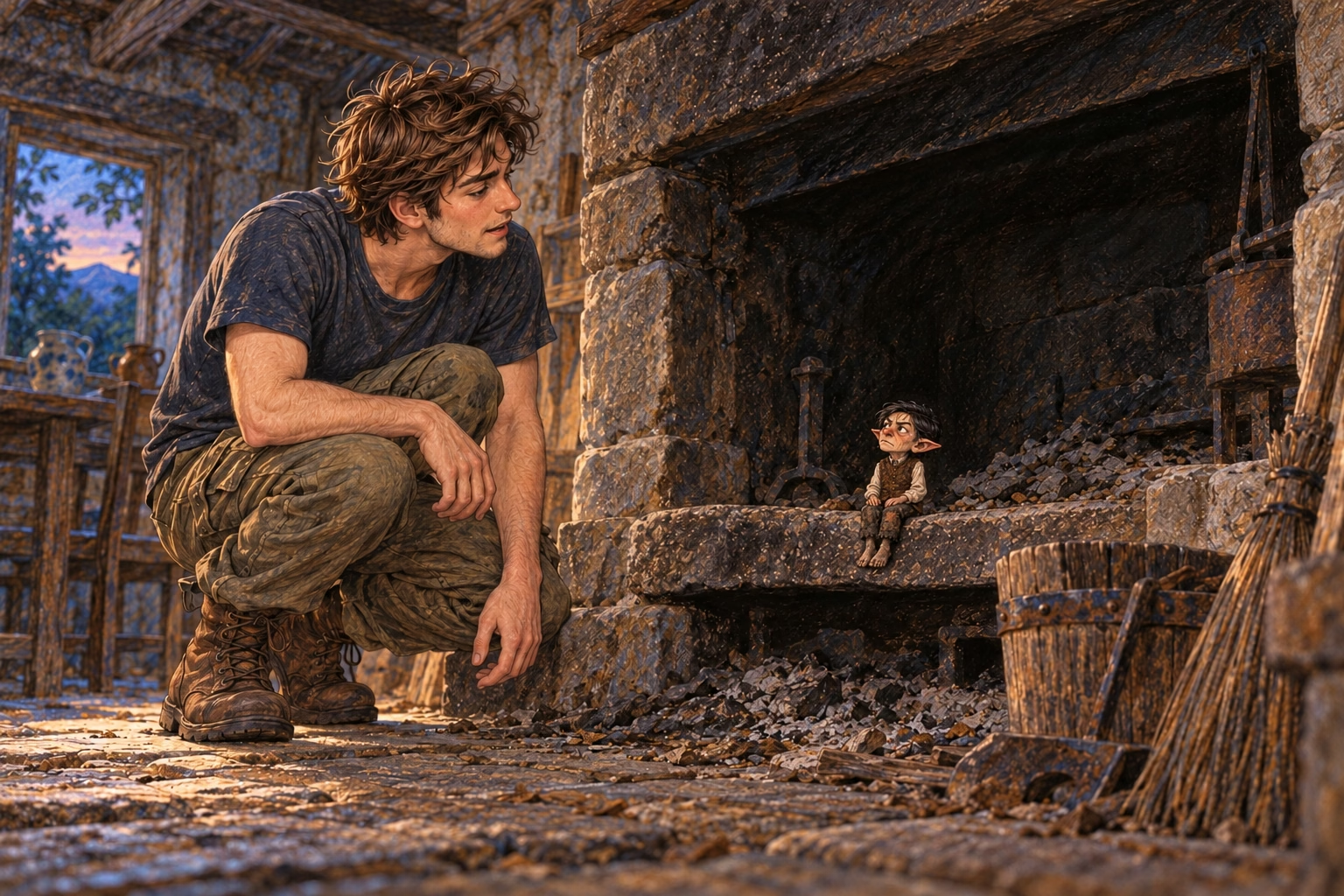
At dusk, as they were getting ready to go down and sleep in the stable, Axel saw a little creature sitting on the edge of the fireplace, legs dangling inside. Smaller than Gorgorito, he wore a waistcoat made from a rag, buttoned right to the top. His hair was impeccably combed, his back ramrod straight, and he had an air of gravity quite impressive for someone so small.
“Evening,” said Axel.
The creature looked him up and down, very slowly, like someone checking an invoice.
“Are you staying?”
The truth came out of Axel.
“I don’t know.”
The creature nodded once.
“Let me know.”
“Here. How do you…?”
But he’d already gone up the chimney. From inside, his voice echoing off the stone, he added:
“And you’ve left that slate by the door where it doesn’t go.”
“And that coin in the bucket isn’t rubbish.”
Axel lowered the light towards the bucket he’d been sweeping into. The big coin from the little tower lay among the dirt. He’d scooped it up while cleaning beside the fireplace.
“It’s not worth anything, mate.”
“It’s not yours.”
Axel took out the coin, wiped it on his trousers and set it beside the piece of tile. He looked into the black opening of the chimney, but nobody came out.
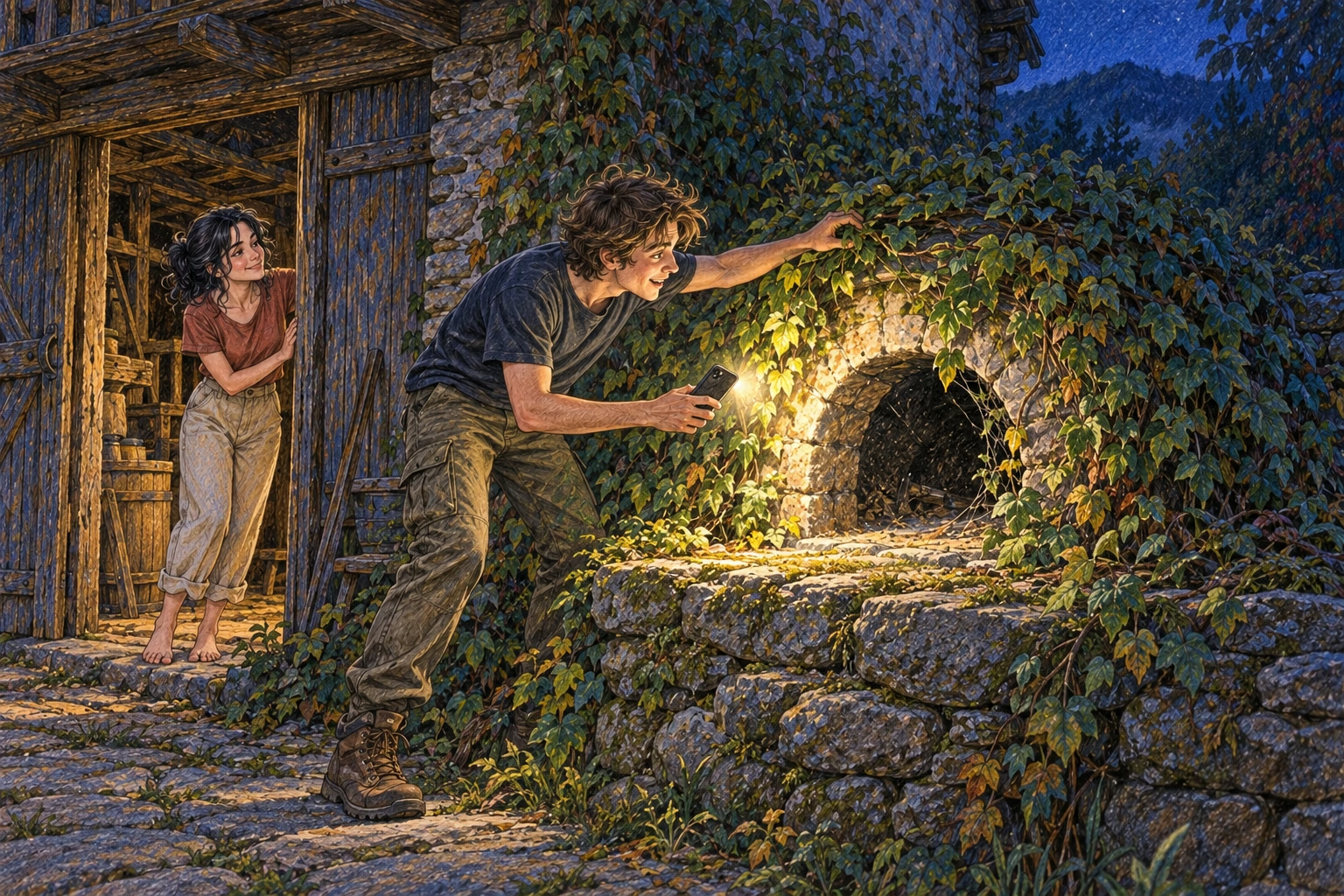
Before going down, Axel went out with his phone torch and pushed the ivy back off the lump of stone. A dome with a black mouth half a metre across and a flagstone in front, covered in moss.
He took out the flour-sack paper and read it by torchlight.
The last one on the top street, the one with the bread oven built onto the wall.
“Eva.”
“What?”
“It’s a real oven, girl. It’s here.”
Eva poked her head out onto the step.
“Well, now we know what we’re doing in March.”
“Why March?”
“Because first you have to get to September.”
And she went back in.
The lad with the car hung around at the byre door looking at the bracken and the candle stuck in a bottle. He got his wallet out.
“Look, down there there’s a hotel with eleven rooms, and it’s rammed, apparently this place has got trendy. But it’s got two left.” He already had the notes out. “I’ll pay for them. Two nights. Or three. Or however many you want. Because this is a dump, guys.”
From inside, without getting up, Eva said no.
“It’s nothing, honestly.”
“I know.”
He put his wallet away without it showing on his face. He said he’d be up at nine with coffee and went off down the street whistling.
The next morning Axel went out for a wee in the vegetable patch and stood for a while looking at the house from outside, with the eight o’clock light on the stone and on the plastic on the door. Then he went over, picked up the big bit of slate off the ground, the one with the chipped corner, and leaned it on its edge against the wall, off to one side. So it wouldn’t be in the way.
After looking at it for a moment, he picked up another piece and began a second pile beside it.