
The Bend
A rusty tin sign with the name written on it
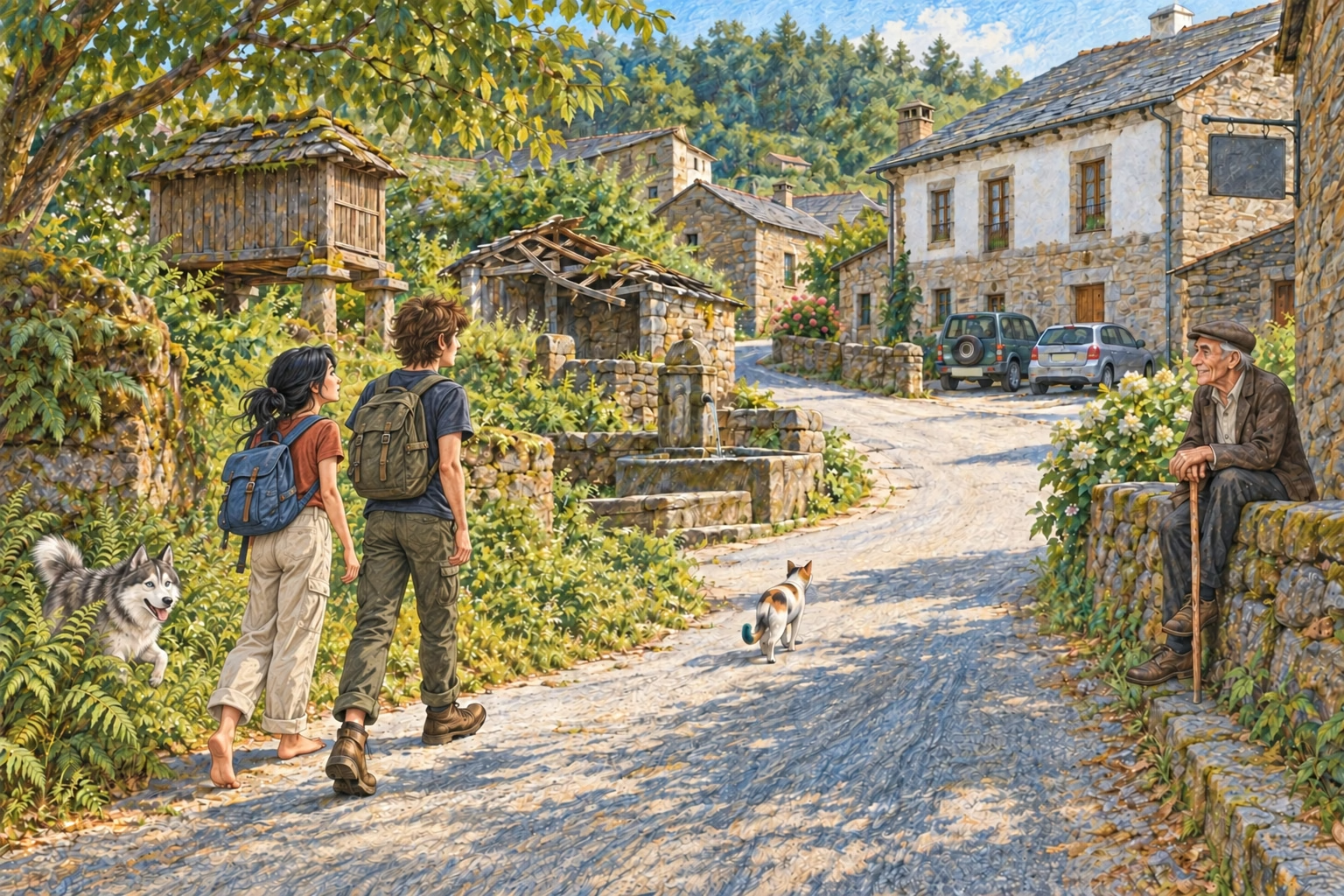
Over the last four days the air had begun to smell different and the greenery had closed in around them. The road entered a narrow valley and wound uphill between rock and ravine. Waist-high ferns grew along the verges with ancient chestnut trees, their trunks hollow enough to almost step inside. Every afternoon at the same time it rained for half an hour and then cleared.
“This is somewhere else,” said Eva.
She stopped beside a hollow chestnut tree, one hand closed over the cord round her neck. She peered inside and rested her other hand on the cold wood. It smelt of wet earth. She stayed there for a moment, breathing slowly, before walking on.
Kika was going mad. She’d plunge into the ferns, disappear and come out somewhere else covered in burrs and happy.
On the last morning they passed only four cars. The road had narrowed to a single lane with grass growing down the middle, and at eleven they found a rusty metal sign pointing towards the village.
Axel stopped in front of it with the bit of flour sack in his hand, comparing the letters like an idiot.
“It’s this one.”
“I know.”
“It actually exists.”
“Course it exists, you daft thing.”
“A sign, girl.” He knocked twice on the tin with his knuckle. It sounded like tin. “How stupid is that.”
“Take a photo of it.”
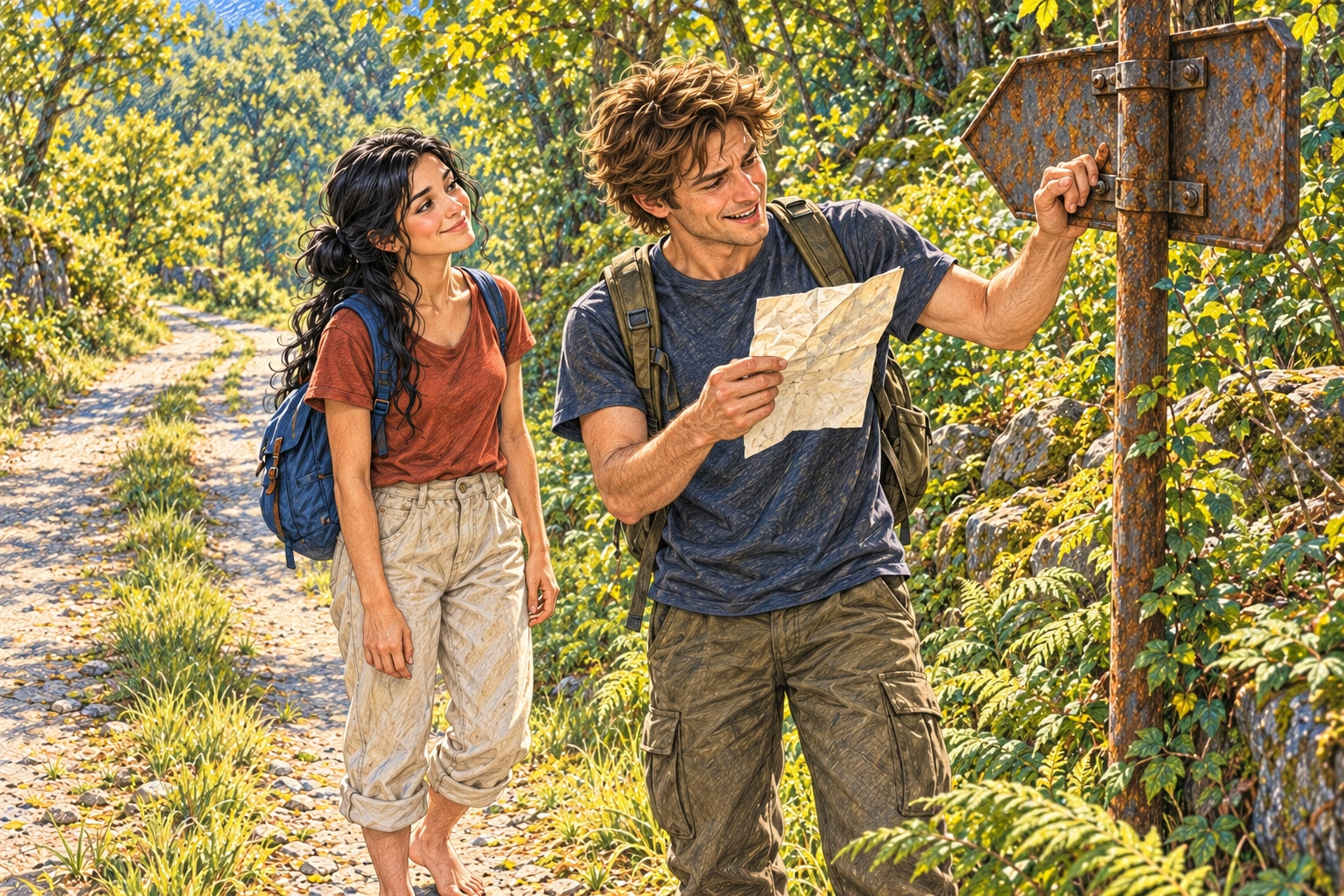
Axel stood there with his knuckle on the tin.
“You don’t take photos of a sign.”
“So what do you take them of?”
“People.”
Eva looked at him a second too long. Then she headed on up without saying anything, with Kika behind her.
They arrived at half past two, rounding a bend to find a cluster of houses. Axel had spent four months imagining that moment, always with music, but all he could hear was a bird and a tractor far away. The houses were dark stone, with slate roofs and patches of moss. There was a fountain, a washhouse with no roof and a raised granary whose legs were being eaten away. At the entrance stood a large two-storey house with open shutters, two cars parked outside and a sign that simply said HOTEL.
A man in his late eighties was basking in the sun against a low wall, his cap pulled down, with a walking stick that seemed to be there only to give him something to hold. He watched them arrive without moving.
“Afternoon,” said Axel.
“Afternoon.”
“Is this Taramundi?”
“It is.”
Axel unfolded the paper.
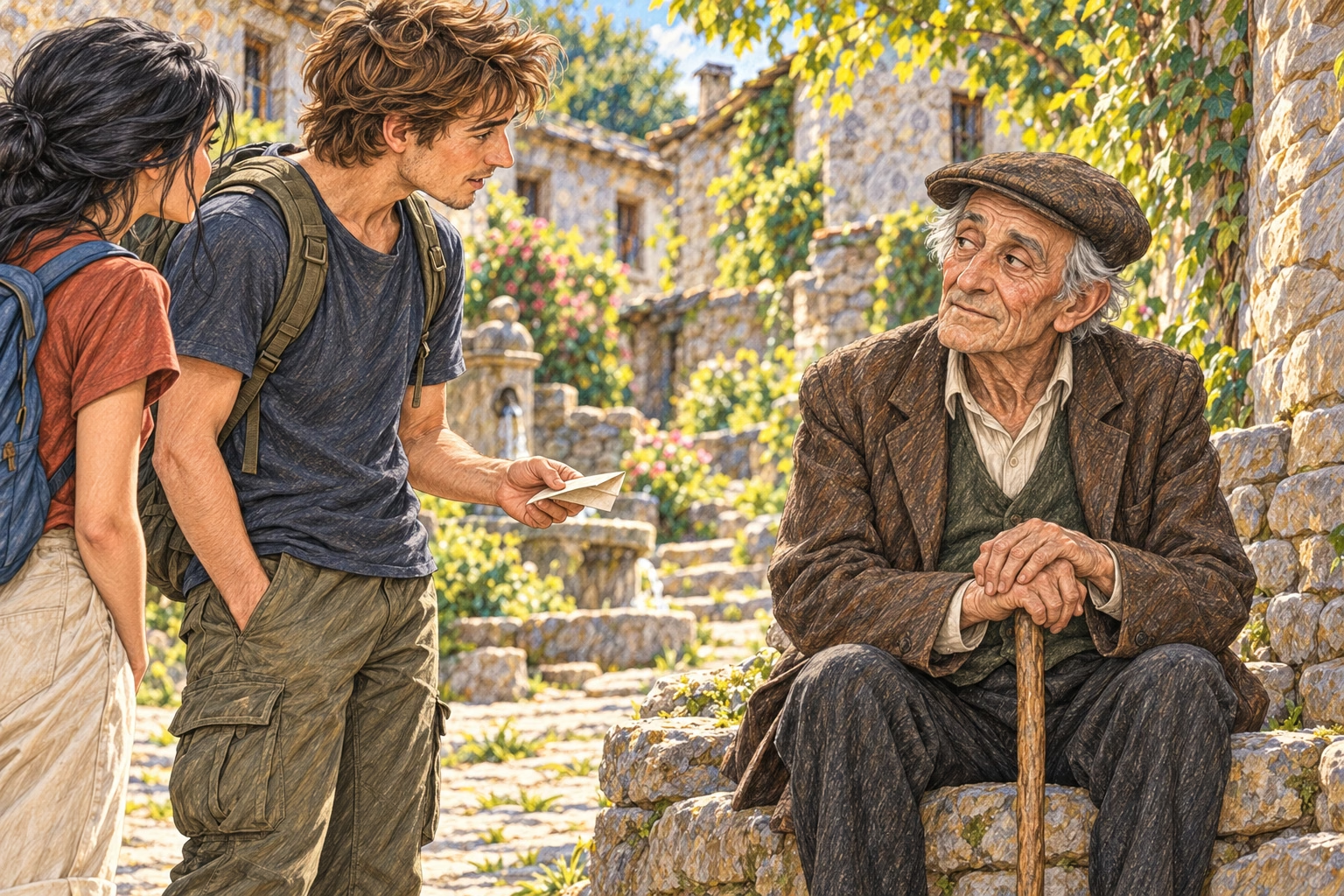
“We’re looking for a house. The last one on the top street, the one with the bread oven built onto the wall.”
The man ignored the paper. He looked at Axel first, then at Eva, on whom he spent considerably longer.
“Hortensia’s.”
“You know her?”
“Course. I sold her father a donkey.” He laughed with a noise that was half a cough. “I’m Sabino.”
“Axel. This is Eva.”
“Right.”
“It’s in a right state, mind,” said Sabino. “The house. Forty years without being opened. And now with that order on the door, they nailed it up in March. I watched them do it.”
“We know.”
“There’s nothing in there but creepy-crawlies and roots.” He straightened his cap. “And the others.”
Axel blinked.
“What others?”
Sabino waved his hand upwards, towards the street.
“The ones that are there. They get into houses that are left on their own. Always been that way.”
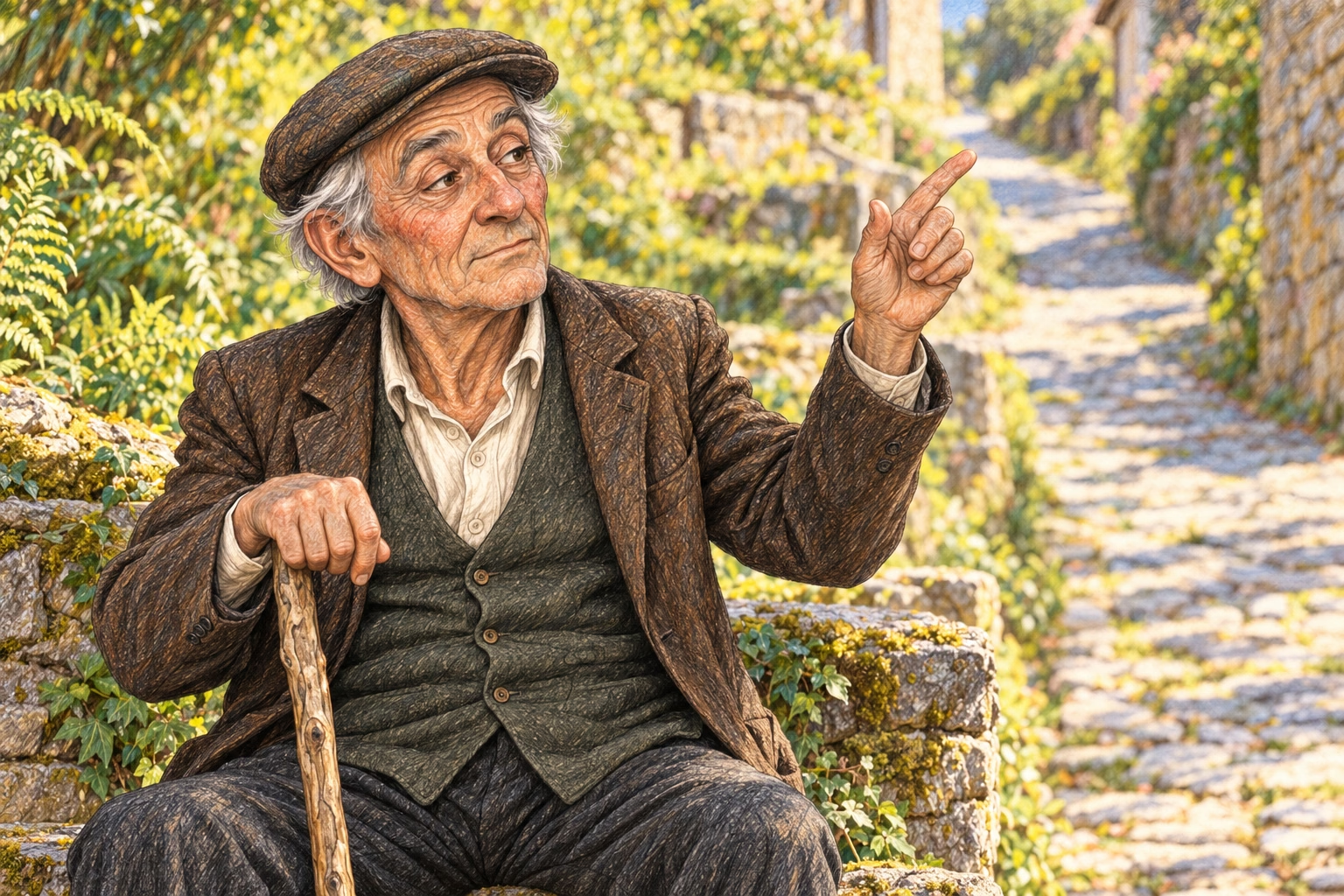
And he stopped talking, because as far as he was concerned the conversation was over.
“Sorry. The ones that get in, are they…?”
Sabino raised an eyebrow. He looked at him the way you look at a city kid asking if milk comes from cows.
“Son. It’s the top street. It’s that one. You can’t miss it.”
And he went back to looking at the sun.
The top street was forty metres of hill with loose stones. Fay went up first, tail in the air.
At the very top their journey ended, on a Wednesday at a quarter to three, in front of a swollen wooden door with a lock full of rust.
Pieces of slate lay scattered at the foot of the door like a thrown pack of cards. One was almost whole, as big as a tray, with a corner chipped off. Axel remembered the neighbour’s new windscreen. Above the lock, fixed with four drawing pins and protected by a cloudy plastic sleeve, was the notice.
Axel took his out of his pocket and unfolded it next to it.
It was the same notice. His copy had gone soft from being carried in his trousers and had a torn corner. The one on the door still had a deep-black stamp and a fingerprint over the date: the thirtieth of September.
“So now what?”
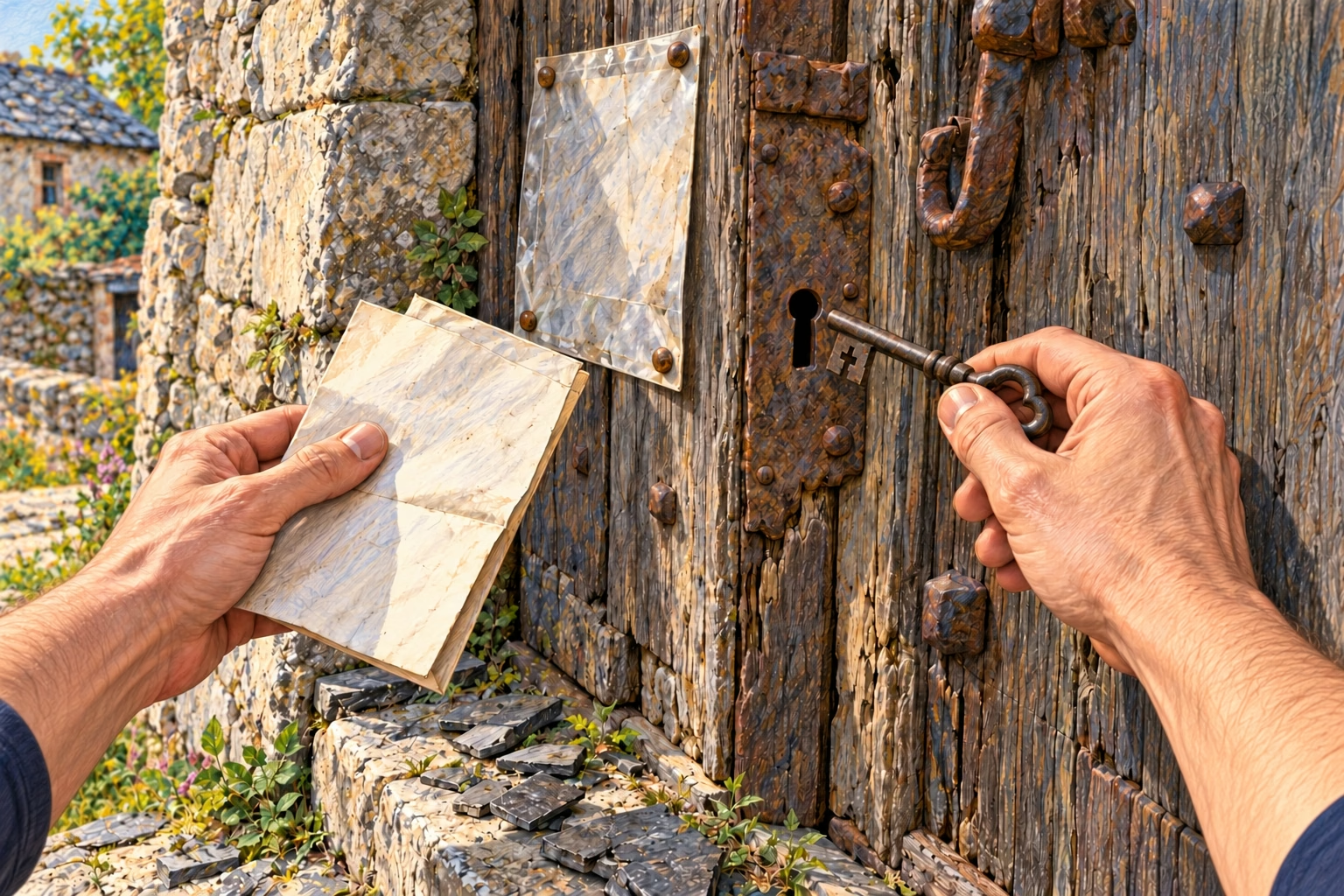
“Now you open it.”
“Right. And then?”
Eva leaned on the wall opposite and looked the front of the house up and down. Then the order.
“And then, if you want the truth, I reckon this’ll keep you going for years.”
“The order says till the thirtieth.”
“The order hasn’t walked up this hill.”
Then they heard a car coming up from the lower street in first gear, scraping its underside on every stone. It stopped twenty metres away with one wheel perched on the wall, because there was no other way to fit.
The door opened and he got out stretching, sunglasses in his hair, looking up and down the street.
“I asked an old boy where you park round here,” he said, shutting the door with his hip, “and he said wherever it fits. All right, Concierge?”
Axel kept his hand on his rucksack strap and Eva stayed leaning against the wall. He’d spent four months walking towards that door. All the lad with the car had needed was the village name.