
Tools
Eleven hours in a van and four chestnut beams
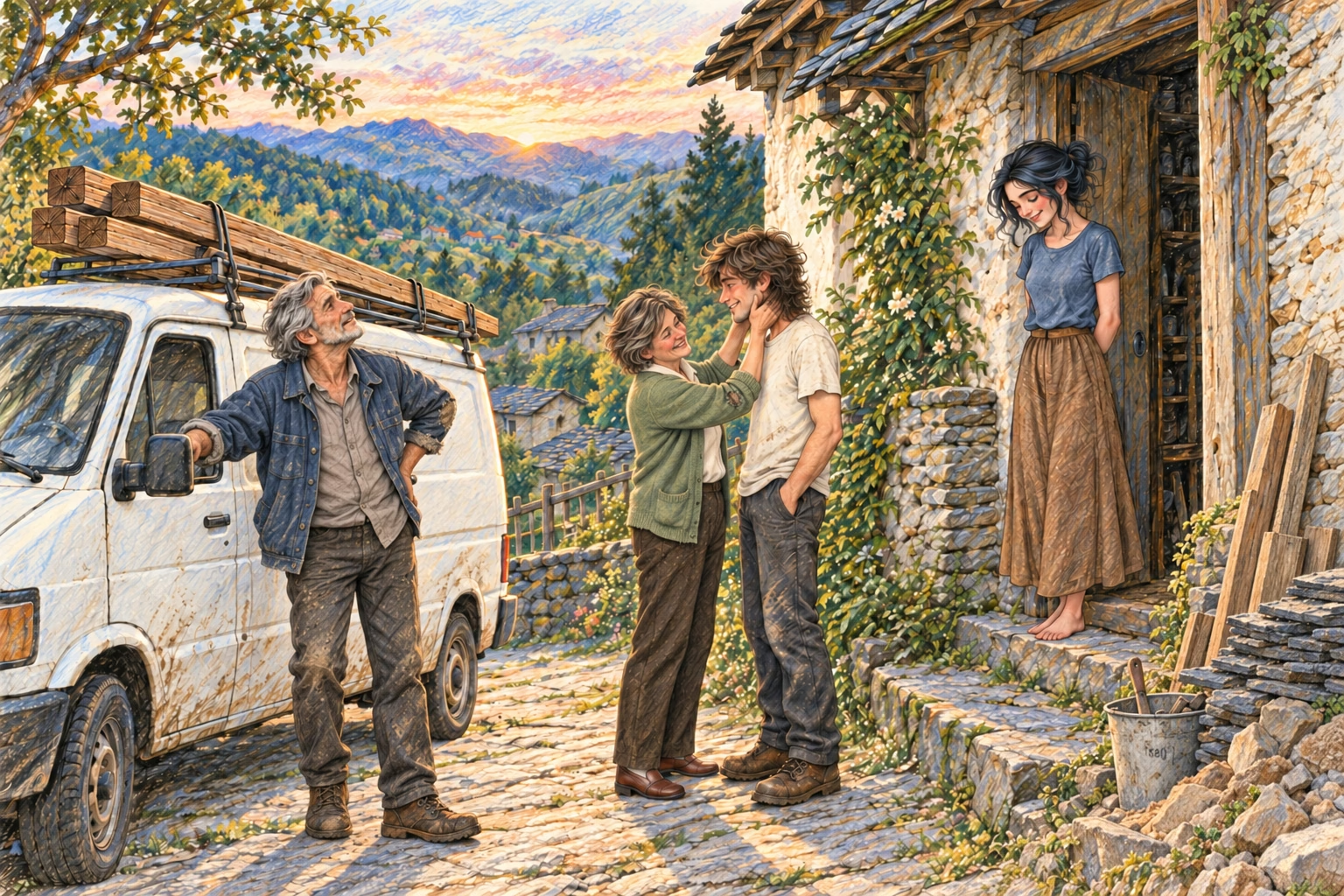
His parents turned up one Friday at half seven in the evening, after eleven hours in a van and eleven hours arguing about whether the phone was taking them the right way.
You heard them before you saw them. An engine coming up in first, a man shouting “it won’t fit up here!” and a woman answering “then don’t drive the van up it!”. And the van kept on coming.
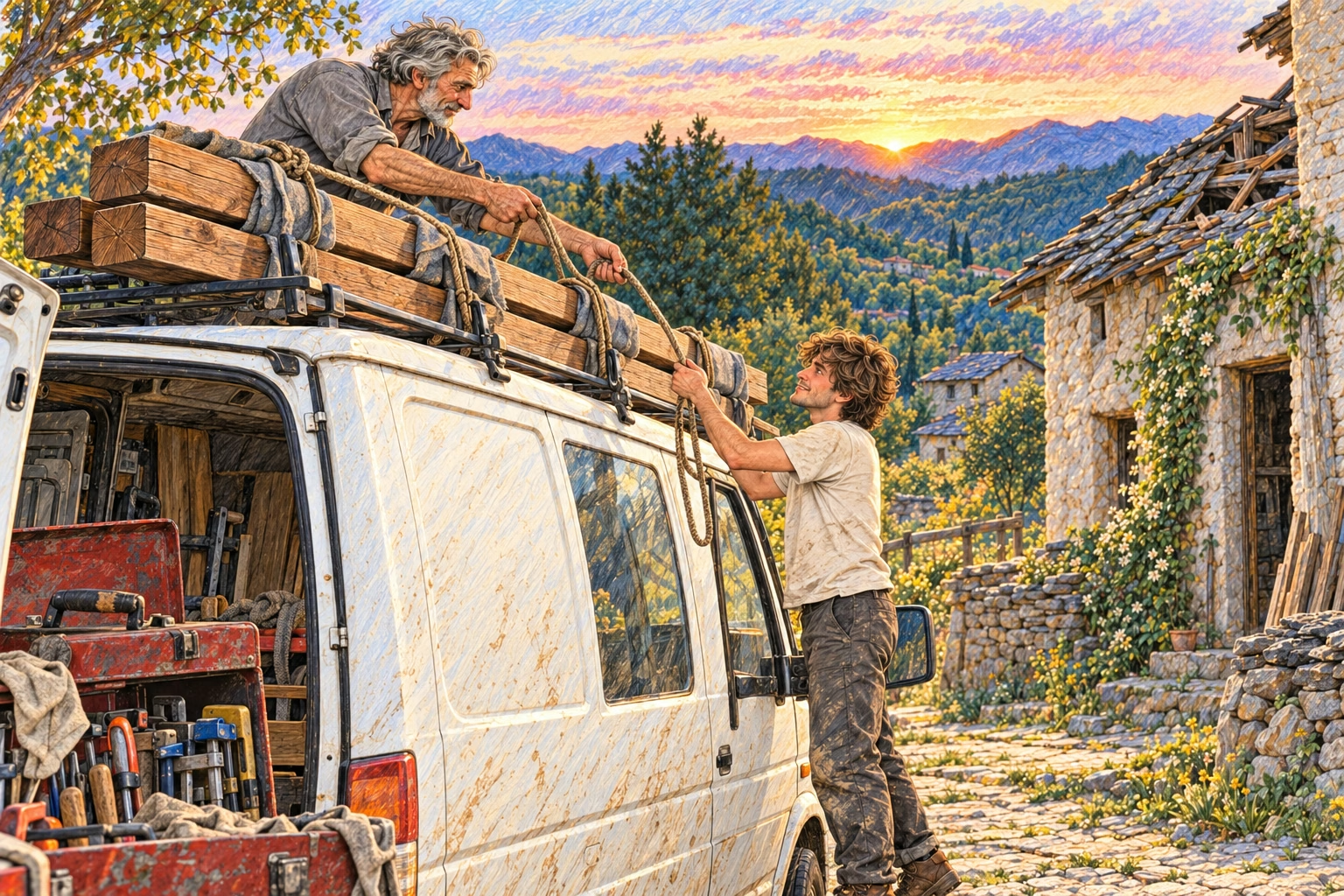
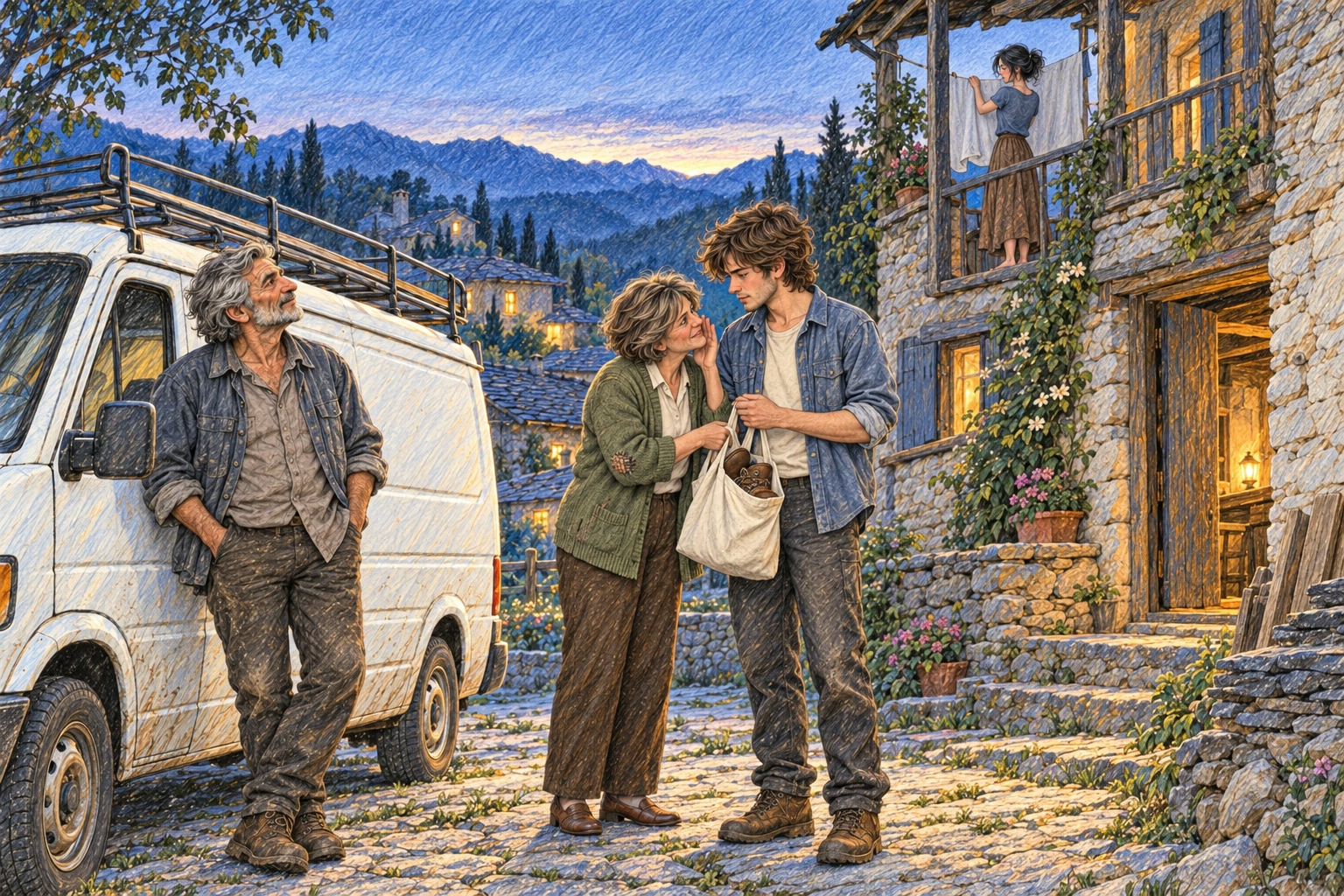
It was an old white van with four beams tied to the roof rack, sticking out at the front like the prow of a boat. It braked to a stop outside the house with a smell of hot brake pads.
His dad got out, shut the door, looked the front of the house up and down and said:
“Bloody hell.”
“Hi, Dad.”
“Bloody hell, Axel.”
He hugged him, slapped him twice on the back and went back to looking at the house.
“You’re doing this?”
“With help.”
“And the beam?”
“It’s sound.”
“Thank God for that.” He ran his hand over the stone. “Thank God for that.”
His mum got out on the other side with a groan, came over to Axel and took his face in both hands.
“You’re very thin.”
“I’m fine.”
“You’re very thin.” She turned his face to see the other side. “And very brown. Handsome, though, I’ll give you that.”
His dad was called Ximo and he made furniture. His mum, Queta, had a shoe shop on the street behind the market.

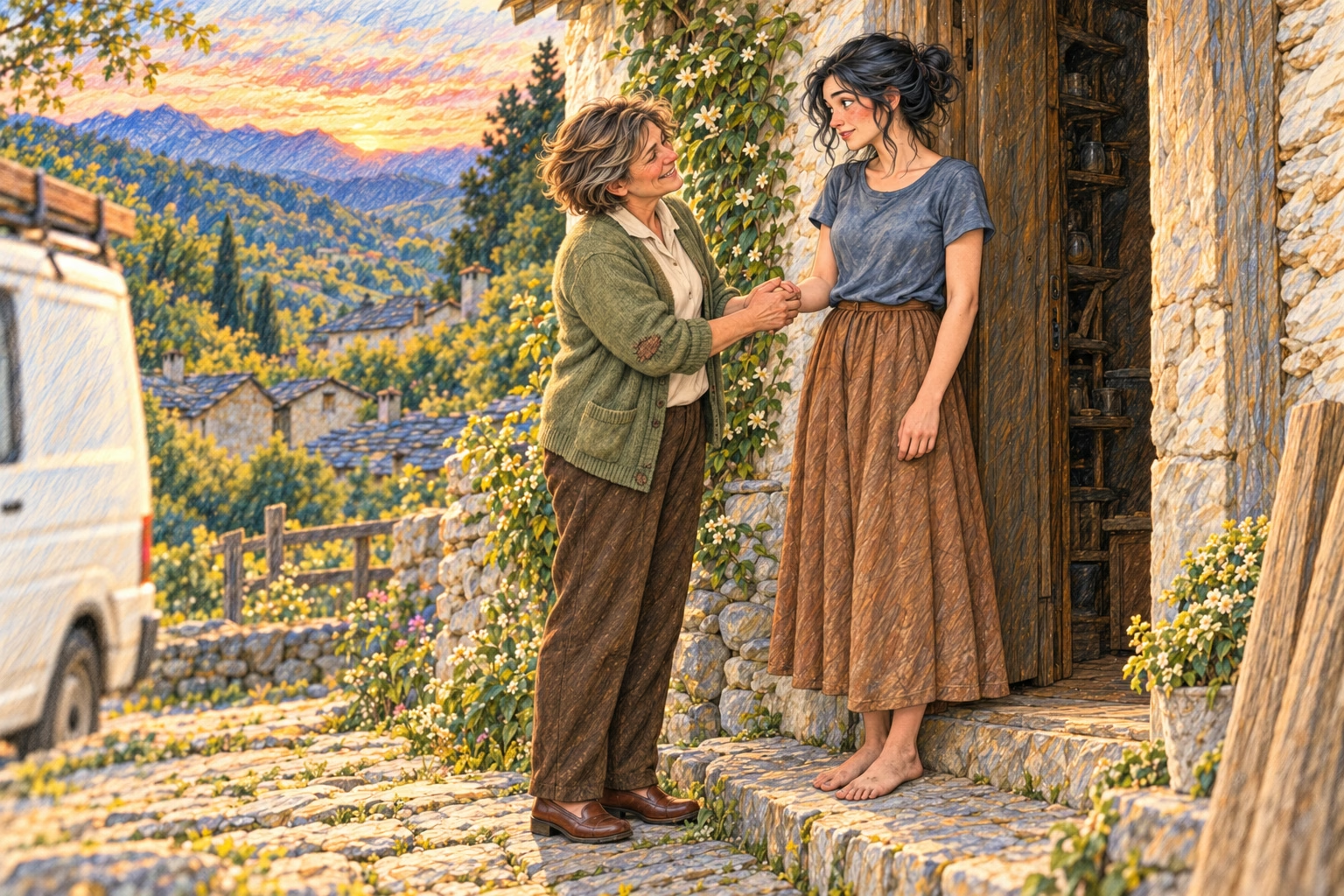
She went straight to Eva and kissed her on both cheeks.
“You’re Eva.”
“Yes.”
“I’m Queta.”
Queta gave her feet a fleeting glance, black with dirt up to the ankles, then looked straight back at her face.
“What size are you?”
Eva blinked.
“Thirty-seven.”
“Well, well. Same as me.” She patted her hand twice and didn’t let go of it.
And she went into the house without waiting for anyone to ask her in.
“She started with your feet,” Axel said to Eva.
“I noticed.” Eva looked at her toes. “I liked her, you know? But it got on my wick a bit.”
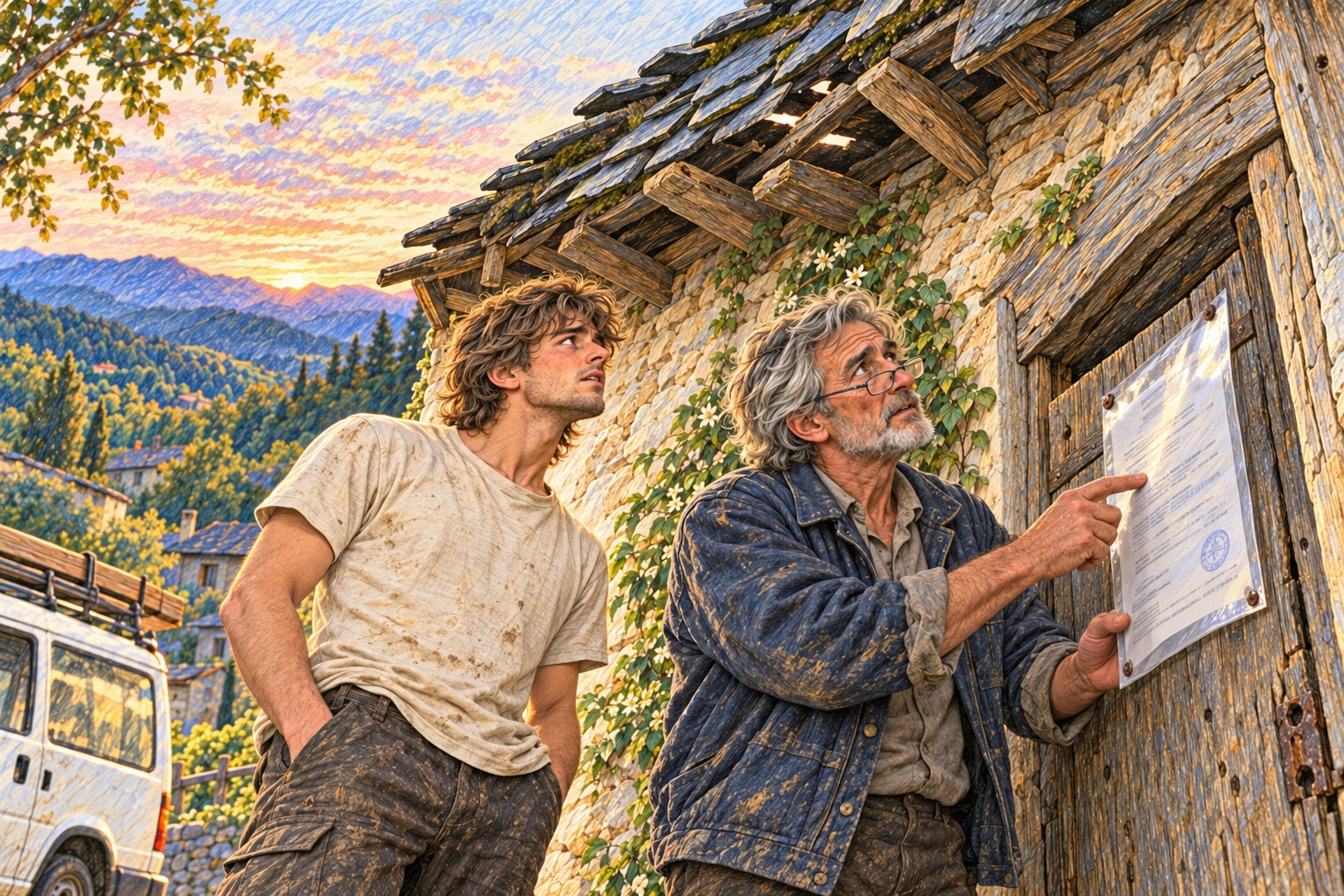
His dad hadn’t gone in. He was standing at the door with his glasses on the end of his nose, reading the order in its plastic sleeve. He read the whole thing, moving his lips, the way he read the manuals for his machines.
“And this?”
“From the council. By the thirtieth.”
His father tapped the plastic sleeve with a knuckle and stepped back to the opposite wall to examine the eaves. Slates hung over the street crooked as an old man’s teeth, with a gap where three were missing.
“Where did it come off?”
“There. It landed on the car of the woman in the corner house and smashed the window.”
“Course it did.” He took his glasses off. “And there’s you looking at the hole round the back.”
“It’s just the hole’s the big thing, Dad.”
“The hole’s what you can see. This is what falls.”
Two minutes later they heard him from the back bedroom.
“Axel! And what’s all this?”
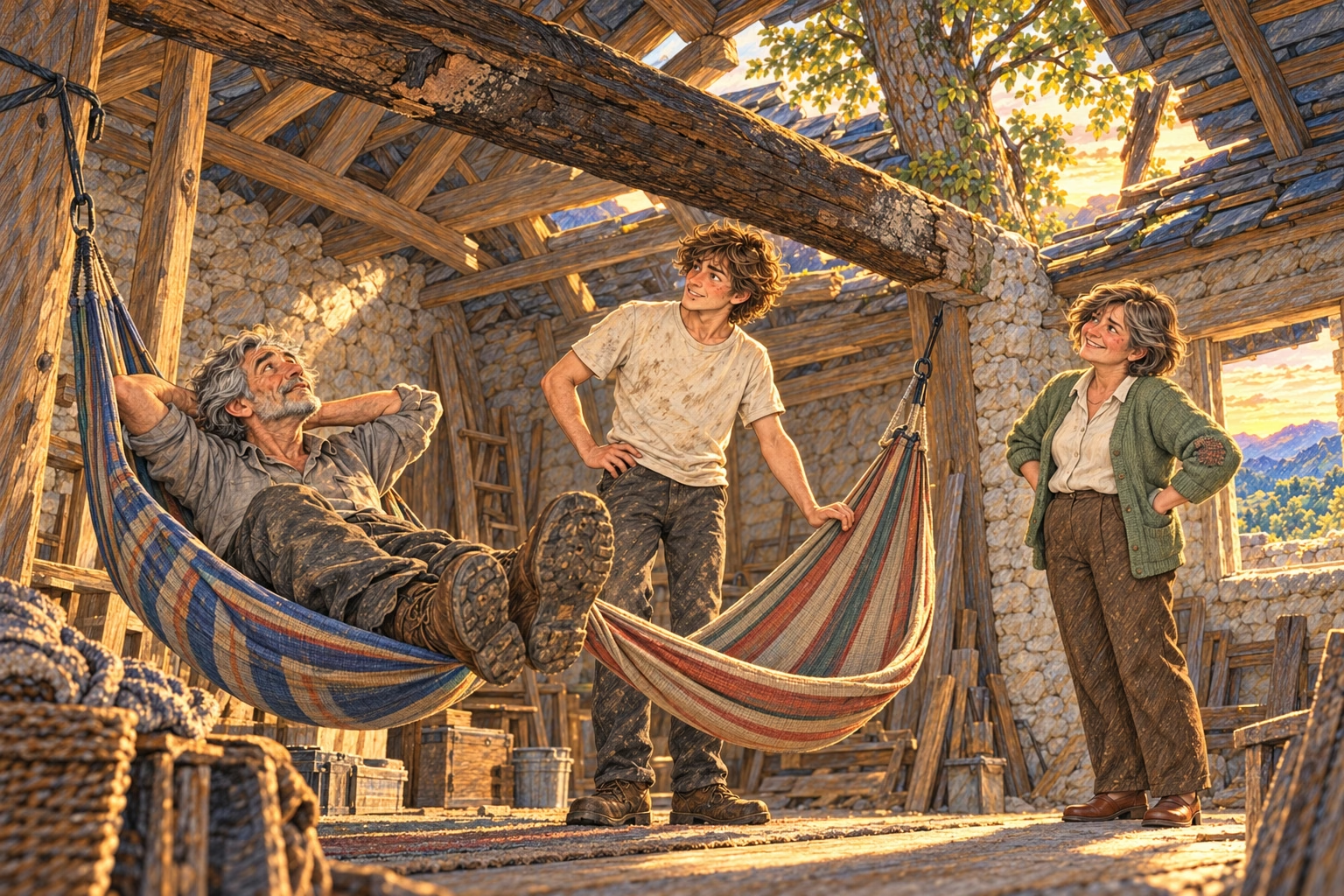
He was standing in front of the two hammocks. There still wasn’t a bed in that house.
“You sleep like a king, Dad.”
“Your back.”
He took off his jacket, sat on the edge of a hammock very, very carefully, lifted his feet up and lay there looking up.
“Bugger me,” he said after a while. “That’s not bad. I’d have one of these in the workshop.”
From the hammock, Ximo began studying the thick beam above him.
“Here. That beam.”
“It’s sound.”
“That beam’s not sound, son.”
“Úrsula looked at it from the hole.”
“Well, I’m looking at it from underneath.”
They’d filled half the van with tools, including the box Axel had known since he was five, its rubber handle worn in the same spot as ever. On the roof rack were four three-metre chestnut beams his father had been seasoning in the workshop for two years.
“And these?”
“For the roof, for Christ’s sake.”
“And how did you know…?”
“Your mum showed me the photos of the hole.” He was untying the ropes. “And I phoned the shop, because Trini’s got the number of everyone in the village, and she put me through to Úrsula. You don’t guess measurements, son.”
Axel looked at the beams, their ends wrapped in familiar old cloths.
“Weren’t these for your porch?”
“The porch has managed not to fall down for two years. It can wait.” He handed him a rope. “Give that a pull, will you? Or am I unloading the lot as well?”
Axel got out Eva’s notebook, found the back cover and crossed out a line. Four beams.
At half past seven on Saturday they started work on the side facing the street.
“The eaves first,” said his dad.
He went up Úrsula’s ladder and felt the slates on the eaves one by one, with two fingers, the way he tested melons at the market. The ones that moved came out on their own. Thirty-one in an hour.
Underneath, the batten was a biscuit. His dad pushed his finger into it and the finger went in.
“Look.”
Axel looked. And in the corner house a net curtain twitched and went still again.
By twelve the eaves had new battens and good slate, and from the street you couldn’t see a single crooked tooth. His dad looked at it from the wall, arms folded.
“That’s not smashing anybody’s window now.”
Axel carried down another tub of muck and stopped to look at the stretch of wall they had cleared.
“What this needs, more than money, is a bit of elbow grease.”
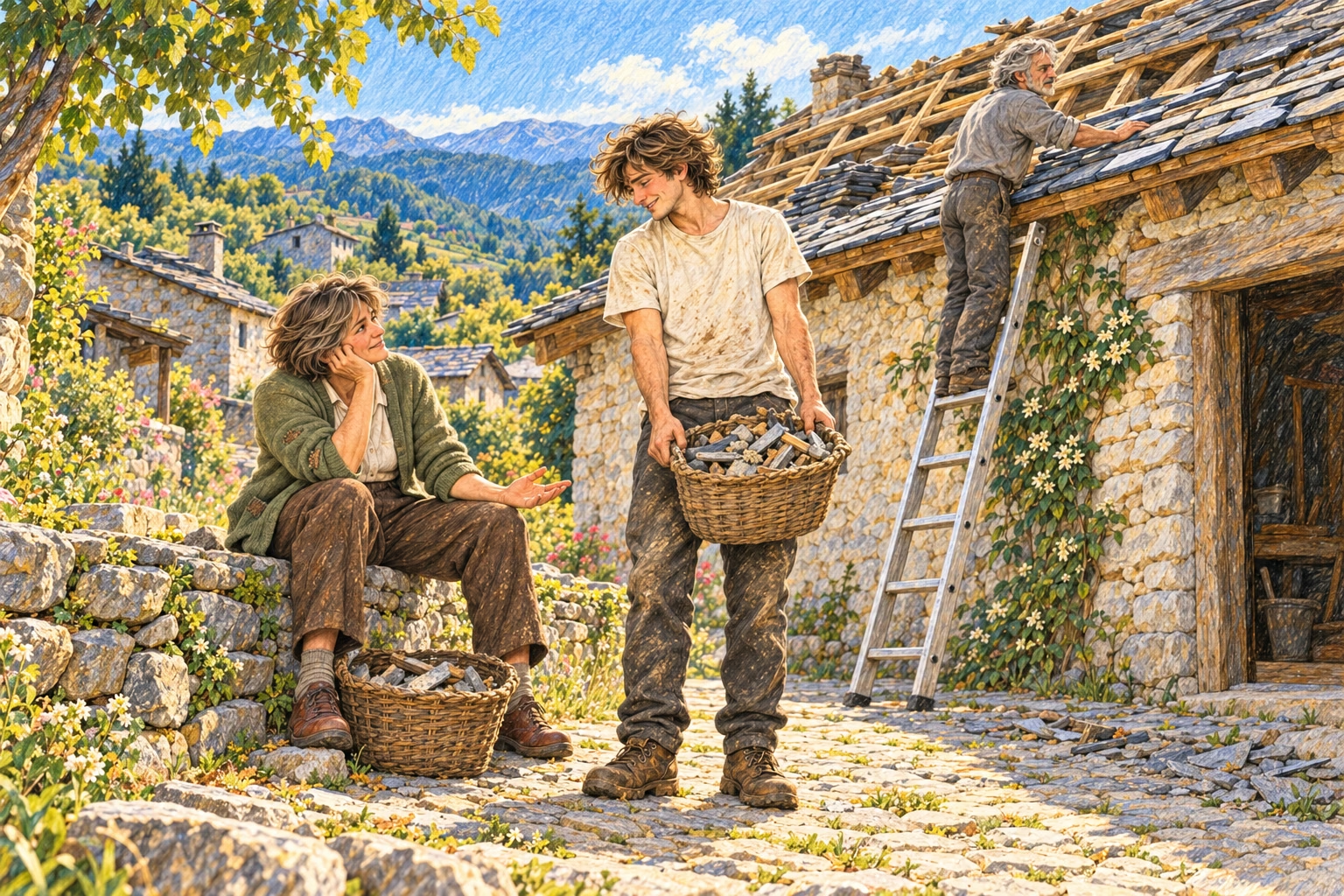
Queta had sat down on the wall with her tub between her feet.
“Well, I’ve used up mine. You can carry the next one, handsome.”
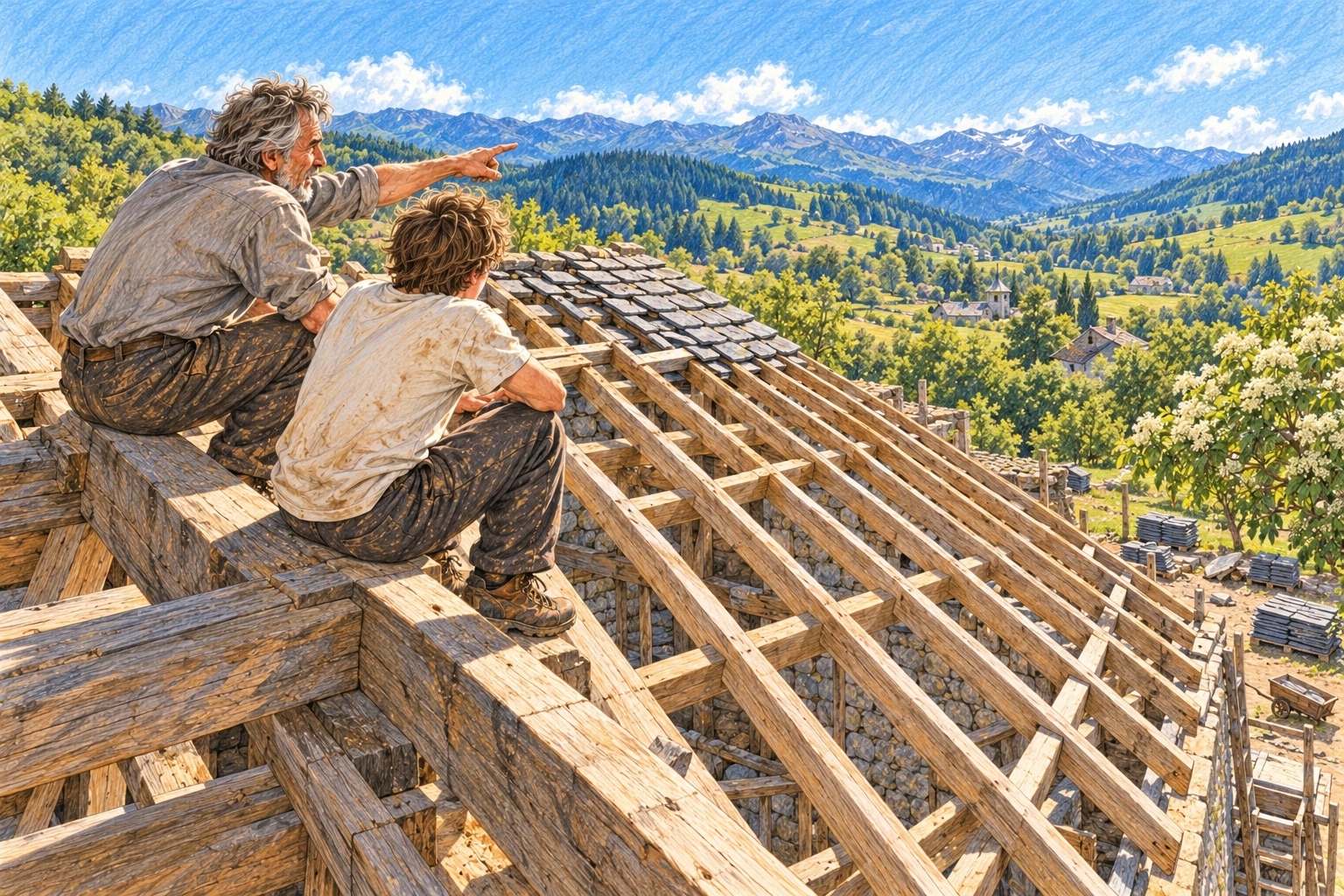
Then Ximo went up on the ridge and looked at the back slope. Battens, sky, and down in the garden the pile of slate, waiting.
“How much have you got left?”
“More than half the roof, at least.”
Úrsula had estimated the work left from the uncovered rows. Axel trusted that rather more than the sums in his notebook.
“And how fast are you getting through it?”
“With Eva sending up the slates, if nothing goes wrong, we could have it done in three weeks.”
His dad looked at the part they’d covered, then at the part still open.
“Three weeks like this one.” He pointed at the clear sky. “That counts too.”
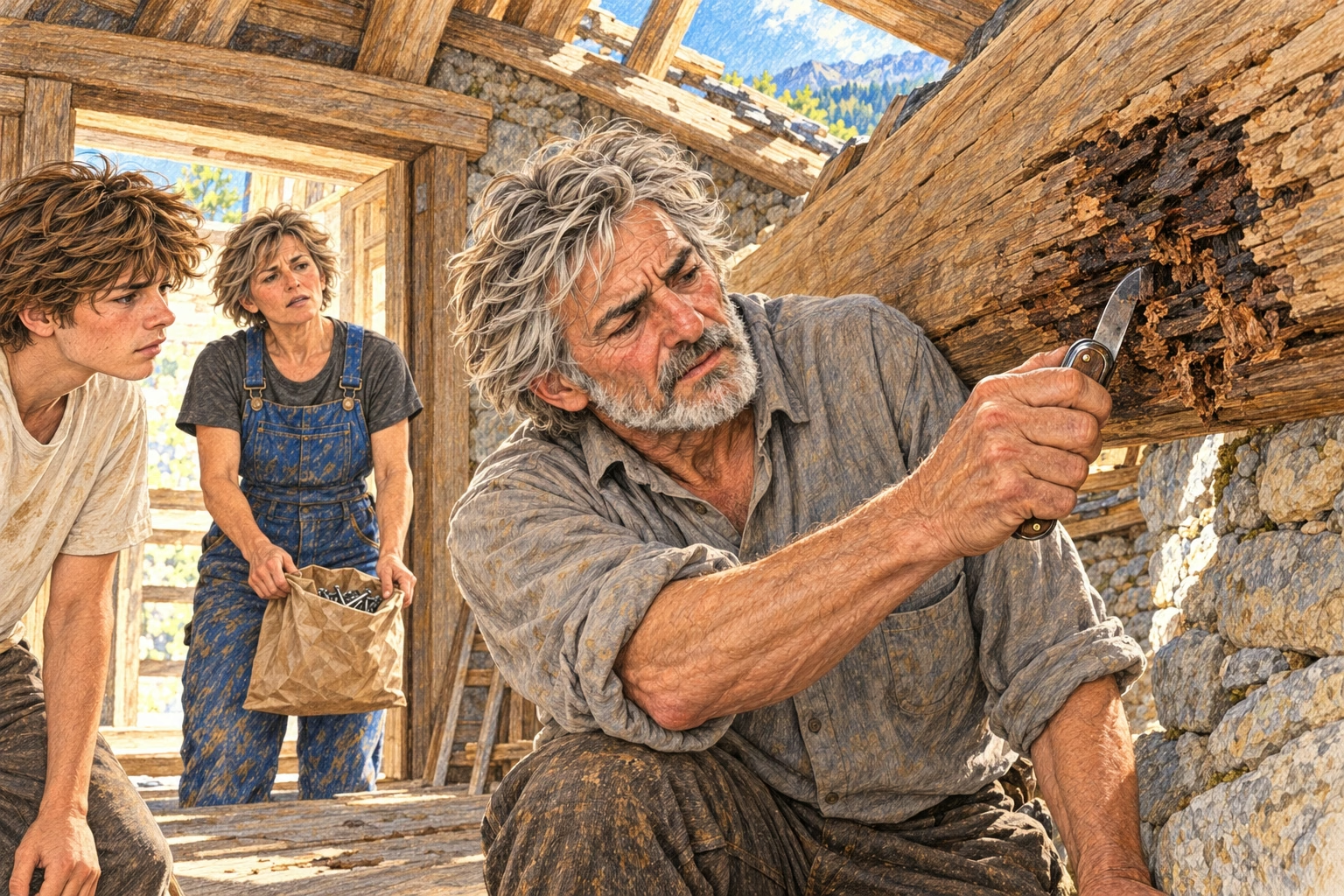
In the afternoon they tackled the thick beam. His father went along it with a rubber mallet, tapping and putting his ear to the wood. It sounded solid until, two handspans from the wall, it answered with a hollow note. Ximo took out his penknife and drove it into that spot. The blade went in up to the handle.
Úrsula had stayed in the doorway with a bag of nails. She’d said, in that very room, that if the big one was rotten you’d be going home.
She put the bag of nails on the floor.
“Well, I missed that.”
“Am I going home?” said Axel.
Úrsula looked at the beam. She looked out of the window at the roof rack on the van.
“Not you.” She wiped her thumb on her overalls. “That is.”
His dad was already measuring.
They spent the rest of the afternoon clearing the room and preparing the supports. Axel lost patience with a prop he couldn’t get into the position his father wanted. Ximo snatched it out of his hands.
“Let me, for God’s sake.”
Eva held the other end for him. Ximo paused, looking at Axel.
“Take that end. I can’t do it on my own.”
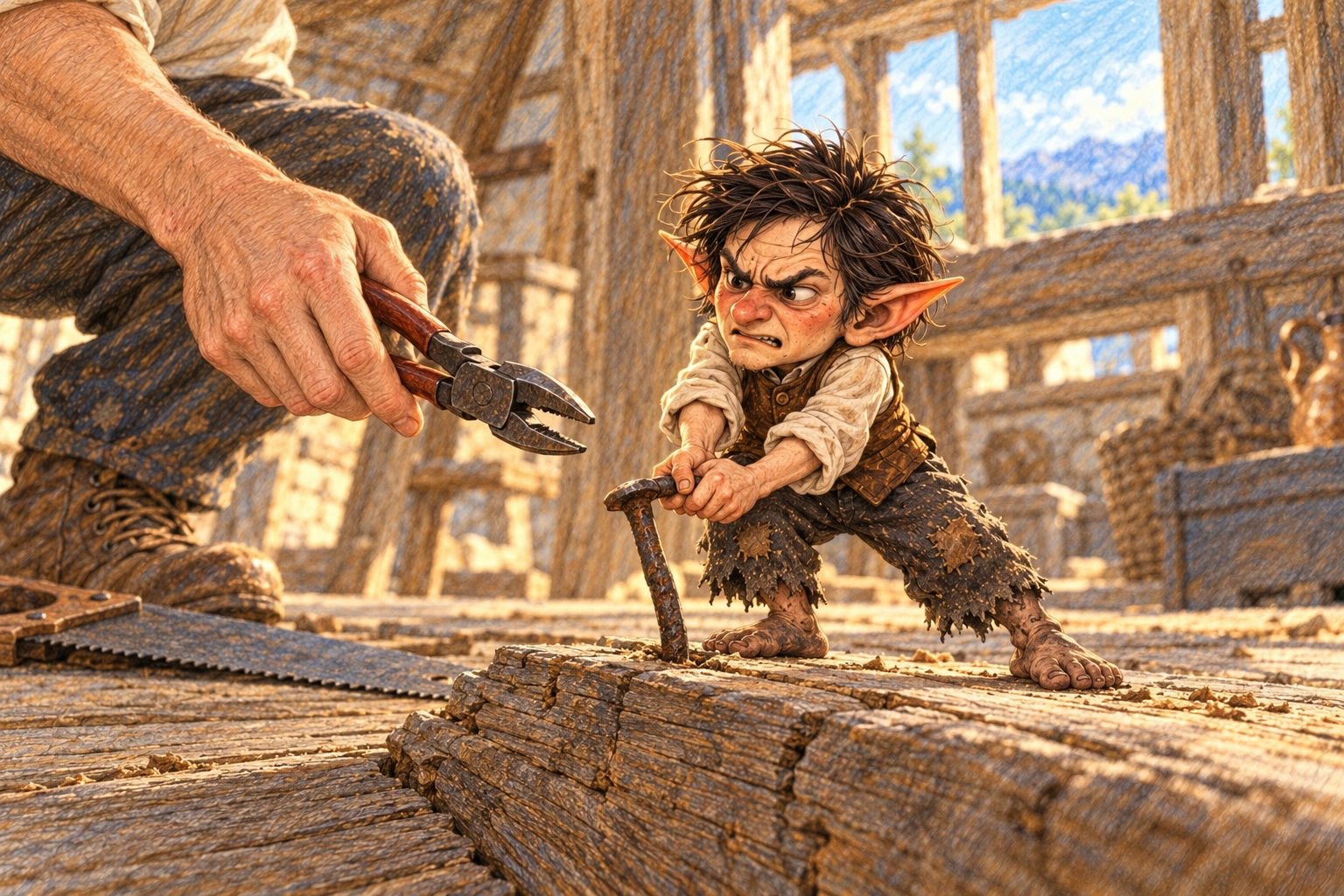
On Sunday they were upstairs before seven. When Axel went for the saw, he saw Wamba at the end of the old timber, pulling at a bent nail with both hands. It wouldn’t budge. Axel put the saw down.
“We’ve got a whole box, mate.”
The little creature went on pulling at that one.
Axel fetched the pliers. His father asked whether he was planning to keep every nail in the house now.
“This one, yes.”
He left it on the ledge. Wamba went off towards the elder without thanking him, and Axel picked up the saw again.
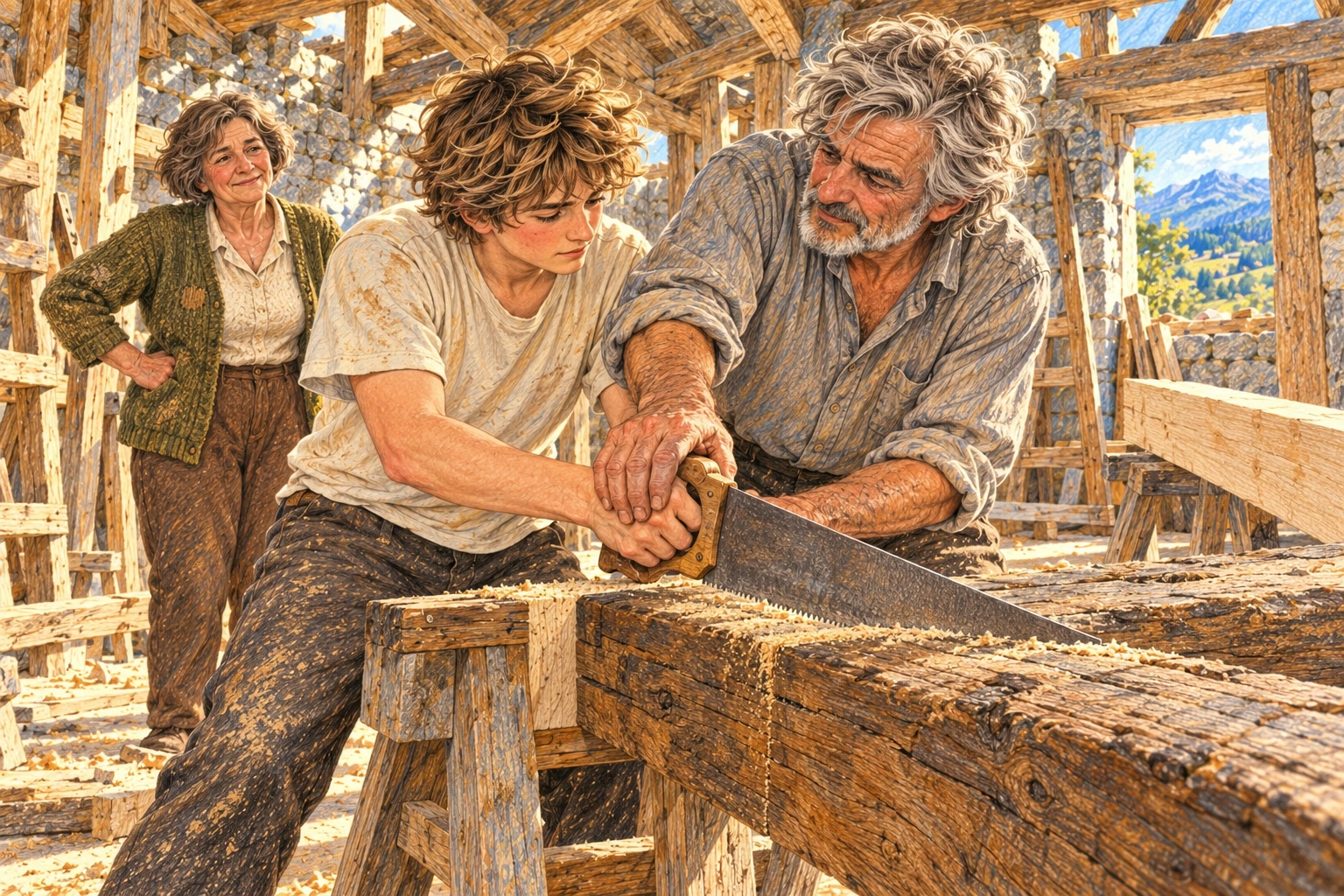
Once Ximo was satisfied with the supports, they cut the old beam together with the big handsaw. Axel kept pushing down until his father laid a hand over his to stop him.
“Don’t push. Let the saw do the cutting.”
By the fourth cut Axel was sawing on his own. Ximo stayed on the other side, watching the timber, and stopped him twice to reposition the support.
Víctor stopped to watch Ximo planing a beam by hand.
“Why don’t you buy one ready-made?”
“Because it has to fit in there.” Ximo pointed at the opening in the wall. “And that corner isn’t square.”
He laid the strip of wood marked with the opening’s measurements on the timber. There was still a little too much. Ximo swore and asked Axel to hold the other end.
“Hadn’t you already taken some off?” Axel said.
“And now I’m taking a bit more off. Just hold it.”
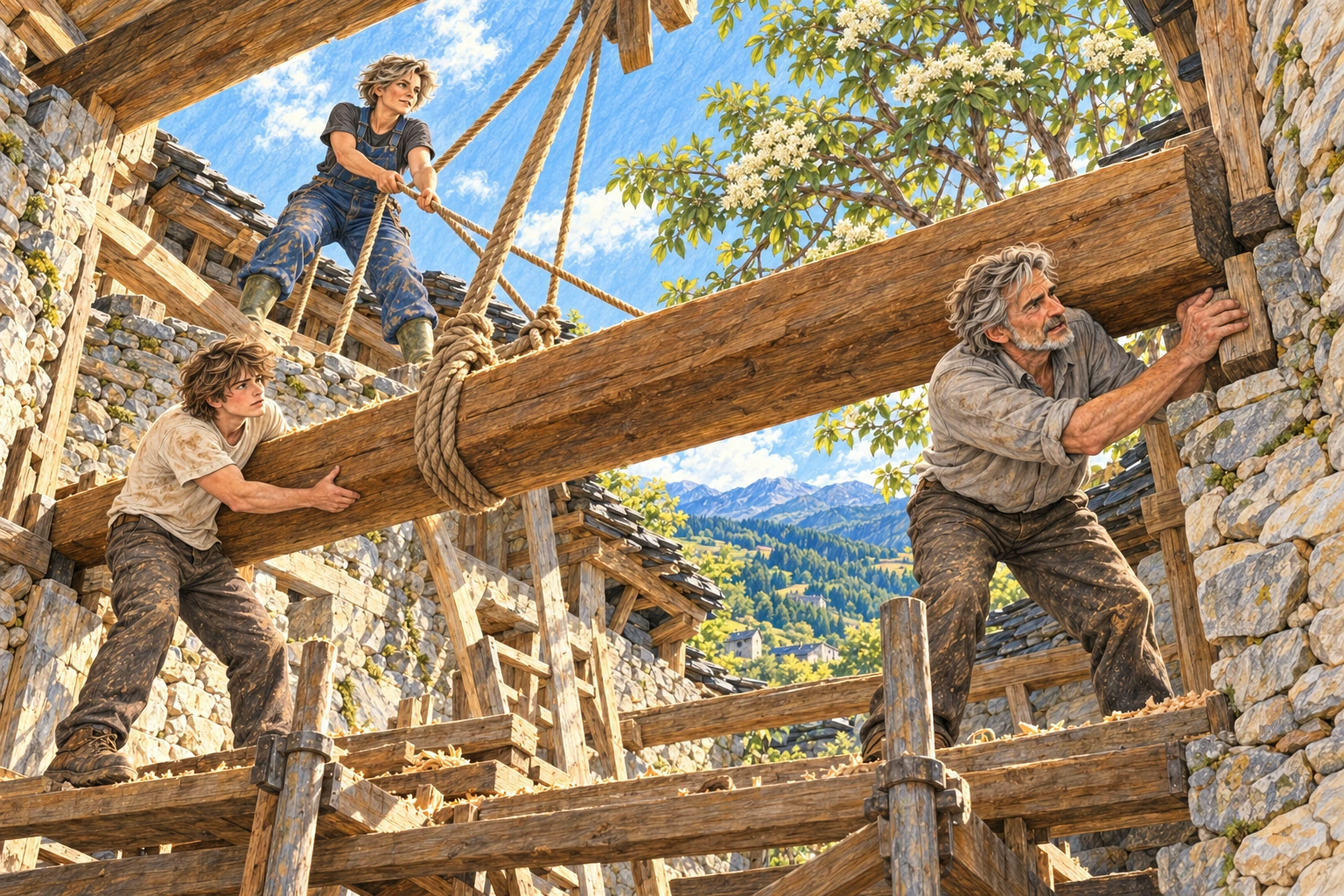
The new beam went up on the Sunday and it took half the street. Úrsula tied the ropes. Sabino directed from the wall without a clue. The frying-pan lad hauled on one and his mum shouted from the window that he’d do himself a hernia. Víctor filmed the whole thing: “this is sick, guys, this is sick”.
When the beam slotted into its socket in the stone, the thud was heard all the way down at the fountain. Ximo rested both hands on it and stayed like that for a moment, catching his breath.
“Now,” he said. “Now it’s sound.”
Axel’s hands and back ached, but he stayed up there for a while looking at the new beam. His father called up from the street that he should come down and eat. He had to call twice.
Those three nights, in the hammock, nothing came.
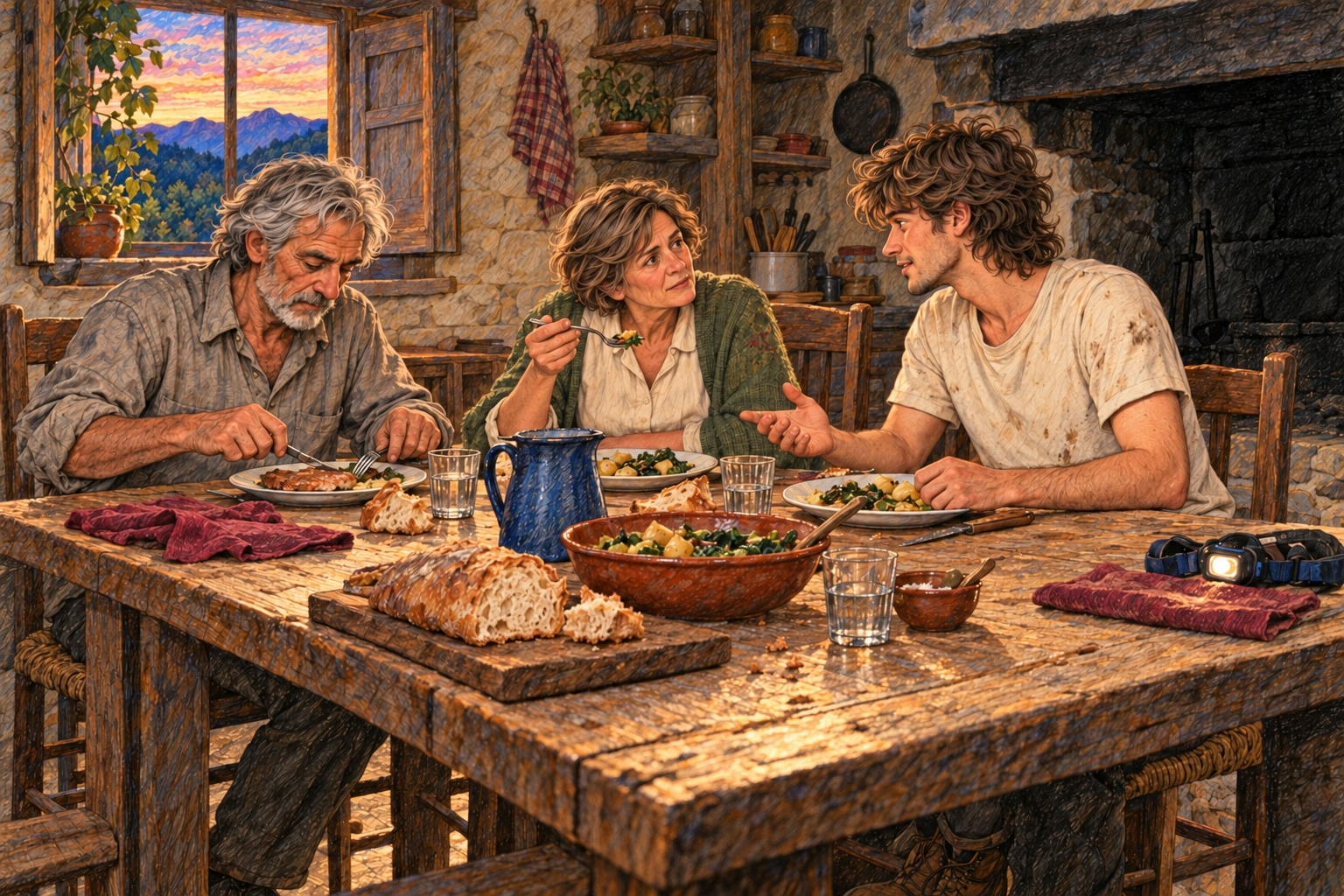
On Sunday, at dinner, his dad looked up from his plate halfway through a steak.
“You eat slower now.”
Axel spent a while trying to eat normally and couldn’t remember how that went. Then his mum put her fork down.
“Right. And what’s all this?”
“What’s what?”
“This.” She drew a circle with her finger that took in the kitchen, the house, the village. “I’ve come, haven’t I? And I’ve carried buckets. And I haven’t asked you a thing in three days.”
“I don’t know, Mum. I left home to see the sea and I’m on a roof in the mountains.”
His mum nodded slowly.
“And are you all right?”
“I’m really all right.”
“Well, then.” She picked her fork up again. “I don’t care what it is. What I want to know is if you’re all right and if you’re eating.”
And his dad, without looking up from his plate:
“And if the beam’s sound.”
That night in the hammock, Axel went through everyone who knew where he was: his parents, Hortensia, Paco, Úrsula, Trini, Sabino and half the village. Irene knew about the hole and the beam too, though she’d never climbed that street. Her name he preferred to keep to himself.
Then he remembered the feeling in the pit of his stomach and tried to find it out of curiosity, like probing with your tongue for a tooth that no longer hurts. He fell asleep before he could.
They left on the Monday at six, because his dad had a job on. They left him half the tools and two of his dad’s work shirts, worn through at the elbows.
“I’ll pick these up at Christmas,” said his dad.
“You’re coming at Christmas?”
“Reckon so.”
His mum put a bag in his hands.
“There’s a pair of boots in there, size thirty-seven, three seasons old, nobody’s going to buy them.” She looked towards the balcony, where Eva was hanging up a cloth, and lowered her voice. “And don’t tell her they’re for her. Just leave them lying about and that’s that.”
“How do you know…?”
“Son, I’ve been selling shoes for forty years. There’s people who won’t try anything on if you’re watching them.” She hooked her handbag over her shoulder. “Here. The one with the car.”
“Víctor.”
“Him. He’s wearing four-hundred-euro trainers without a single mark on them.”
“So?”
“So nothing, son.” She climbed into the van. “He hasn’t walked in them.”
The van went off down the street in first, with his dad sticking his arm out of the window on the bend without looking back.
Axel watched the van leave from the doorway, where the notice still bore the same stamp and date. He went up to the back room to look at the new beam, so pale, and the battens through which the sky still showed. The other three beams were downstairs beside the slates. They had to get them up before they could carry on covering the roof.
Úrsula came back after lunch with the lad with the frying pans, and the four of them fitted the first of the smaller beams. They had arranged to do one a day and finish on Wednesday. Gathering the ropes, Axel had to park his backside on the step to bend down. Eva passed him the last one without laughing too much.
On his usual beam sat Wamba, head up, studying the new wood.
“Well?” said Axel.
Wamba took his time answering.
“It’s sound.”