
The Other Conversation
Seven minutes leaning on a washing trough and a three-word lie
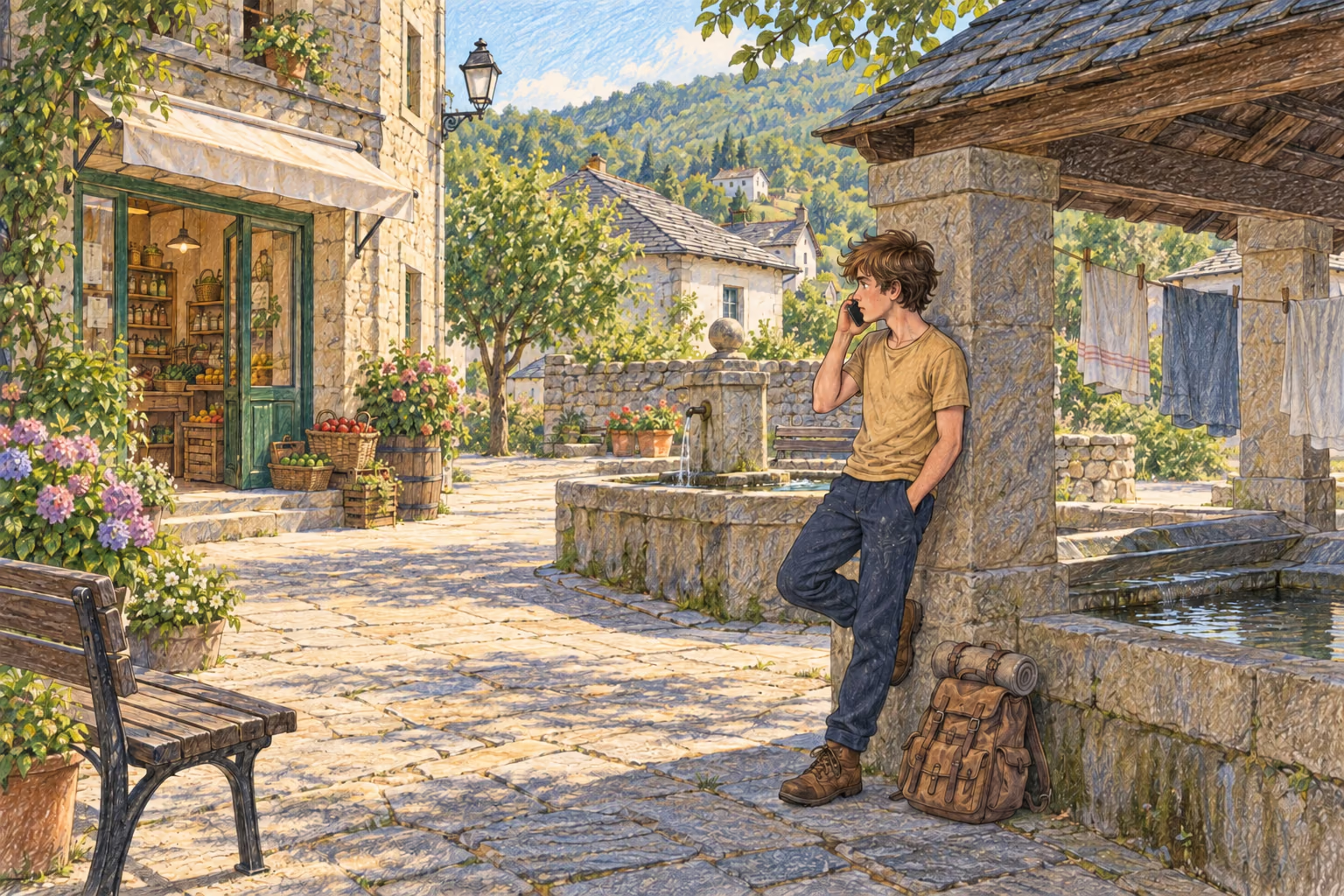
May went by entirely on back roads of the sort with grass growing down the middle, from a village with a café to a village with a fountain, sleeping wherever they were allowed and once or twice where they weren’t. There were days when the big news of the day was that their clothes had dried, and honestly, it got celebrated.
Axel spent the whole month with Irene’s number saved on his phone. Hortensia had sent it the day after the conversation about the flute, and on some nights, with Eva snoring beside him, he opened it only to close it again without calling.
The car turned up one Tuesday morning in June, in the square in Truchas, and parked beside the fountain.
The lad with the car explained three times that he’d driven two hours to get there, in case anyone had failed to appreciate the effort.
Eva was sitting on the edge of the fountain singing to a woman with a shopping trolley, who’d stopped without meaning to and now wasn’t leaving. The lad with the car waited a few paces away until she finished, then took out his phone.
“Can I record one?”
“If you shut up, yes.”
He squatted in front of her with the phone at chest height. Eva sang another song and he didn’t say a word. When she finished, he stared at the screen as though he’d won something.

“I’m getting this in front of the right people.”
“No you’re not, you pain.”
“Yes I am. Leave it with me.”
He had lunch with them. When the bill came he went to the loo, and came back with his hands still wet.
“Guys. There’s a bullfighter over the toilet. The full sparkly suit, staring right at you, like this. You can’t have a wee with a bullfighter watching. You’ve got to see this.”
Axel paid. At four the lad got in the car and disappeared down the road with his elbow out.
“Do you know what he’s called?” said Axel.
Eva thought about it.

“No.”
“Neither do I.”
“Well, aren’t we a pair.”
That afternoon, as soon as Eva went in to buy bread and milk, Axel leaned against the wall of the old washhouse and dialled the number. He reckoned he had about seven minutes. By the fourth ring he was hoping nobody would answer, but then someone did.
“Hello?”
A woman’s voice answered, sounding ordinary, a little tired.
“Hi. Irene?”
“Yes.”
“My name’s Axel. I’m… I’m with your sister.”
Silence. A very long silence.
“Sorry,” she said, and there was the sound of a door closing. “Hortensia said you might.”

“Yes.”
“Is she all right?”
“She’s all right.”
“Really all right?”
“Really all right. She’s eating, she’s sleeping, she’s laughing.”
Irene burst into tears, and Axel listened, leaning against that empty washhouse, not knowing what to do with his spare hand.
Irene was thirty, a lawyer, and still living in the flat the two of them had grown up in. She told him that without him asking.
“I know what it looks like. But if I sell it, where do I leave her the key? I’ve kept her room the same. I haven’t touched anything. And every year I ring the insurance people and tell them two people live in that flat, even though it’s just me. Because I can’t bring myself to say one.” She gave a half-hearted laugh. “That’s not right in the head, is it?”
“I’ve spent months walking towards a village I saw written on a flour sack.”
She laughed. Properly this time.
“I looked so hard for her. At first like a madwoman. I learned off by heart the clothes she took with her. I’d walk down the street looking at people. Months looking for a girl in a grey T-shirt.” She blew her nose. “And then they told me she was an adult, that if she didn’t want to turn up she wasn’t going to. And I stopped. And it’s been the worst year of my life.”

And then, out of nowhere:
“What are you, then? Her boyfriend?”
“No. A friend.”
“Right. Sorry. It’s just I don’t know anything.”
“It’s just she’s always been very much her own person. When she was little she’d go into her room and not come out. I’d tell her dinner was on the table, she wouldn’t answer, and an hour later she’d come down and eat on her own, standing up, in the kitchen.” At the other end, a glass clinked against the table. “I was twenty-two when we lost our parents. And I had plans, I can’t even remember what they were now. And suddenly I had to sign papers and know when the gas bill was due, and I had a fifteen-year-old sister who wouldn’t speak to me.” It took her a moment to go on. “I don’t know how to be a sister, Axel. I know paperwork.”
Axel looked over at the shop.
“Do you think she’d want to talk to me?”
“I don’t know.”
“No. It’s just all I want is for her to be all right. For her to come home for a while, rest, eat something hot. And then we’ll get things organised.”
Axel noticed the “we’ll get things organised”, but decided to let it go.
“Okay.”

“I’m not going to tell her what to do, you know. But she can’t be out there like that. With nothing.” Another pause. “Will you tell her I rang?”
And Axel heard himself.
“Leave it with me. I’ll work out how to do it.”
He hung up and stayed with his back against the washhouse.
Irene hadn’t even asked him his surname. She’d asked him if Eva was eating, if she was sleeping, if she was laughing.
Out of habit he glanced at the verge across the road, in case a red cap was poking out. This time there was nobody.
He texted Hortensia.
I’ve talked to her.
Two minutes later:
And?
It’s not how Eva tells it. She’s in pieces.

Hortensia’s three little dots moved about for quite a while before her reply arrived.
Be careful, love.
I will. Bit by bit.
Bit by bit, but make sure Eva knows about it, okay?
He typed “of course” and looked at it without sending. In the end he changed it to “when the time’s right” and sent that instead.
Eva came out of the shop with a bag and a baguette under her arm.
“They didn’t have any milk, mate.”
“Never mind.”
“Who were you talking to?”
He had time to say, “Your sister. Hortensia gave me her number.” Both sentences were complete in his head, and he’d even drawn breath to say them.
“Just my mum.”
“Oh.” Eva handed him the baguette to carry. “Say hi from me.”