
Yayo
Something asleep in a chimney and a whole day hauling on a rope
Víctor and the man with the folder were having breakfast together. On the Tuesday after the birthday, at quarter past eight, Axel passed the hotel on his way to buy bread. The folder lay open between their coffees and Víctor was showing him something on his phone. Eva’s tiny voice drifted out through the dining-room window.
“On opening day, we’ll put her by the water,” said the man with the folder. “With the drinks and all that. That’s content.”
Víctor turned the volume down on his phone.
“If you want her for background noise, put the radio on.”
“Come on, it was an idea.”
“Then have another one. If she sings, you listen.”
He put the phone face down beside his coffee. The other man carried on talking about the opening.
Axel bought the bread and went back up the street on the other pavement.
At twenty to nine Víctor came up after him and stopped in the kitchen doorway. Eva was standing there with her cup.
“You’re not going up on the roof today. You’re coming with me.”
“Where?”
“A mate of mine has a studio in Valdoria, with a proper booth. I want you to see it. We leave in twenty minutes.”
He said it while spinning his keys round a finger, as though everything had already been decided. Eva held her cup halfway up and tried to catch Axel’s eye. He looked down at his coffee. Then she said yes.

When she put the cup down she spilled a little coffee and didn’t even wipe it up. Eva, who cleaned the stove before putting it away.
Axel wiped the coffee up with the cloth. He couldn’t think of anything to say that wasn’t petty.
Twenty minutes later they heard the car going down the street scraping its underside. Fay watched it go from the top of the wall and didn’t move.
Úrsula turned up at nine with the hammer. She’d arranged to give them a hand on Tuesday and Wednesday.
“Where’s the girl?”
“Gone for the day.”
Úrsula looked at the roof, then at the pile of slate waiting in the garden. It had to go up by hand, bucket by bucket, on the rope. She wiped her thumb on her overalls before saying anything.
“Oh.”
And went up.
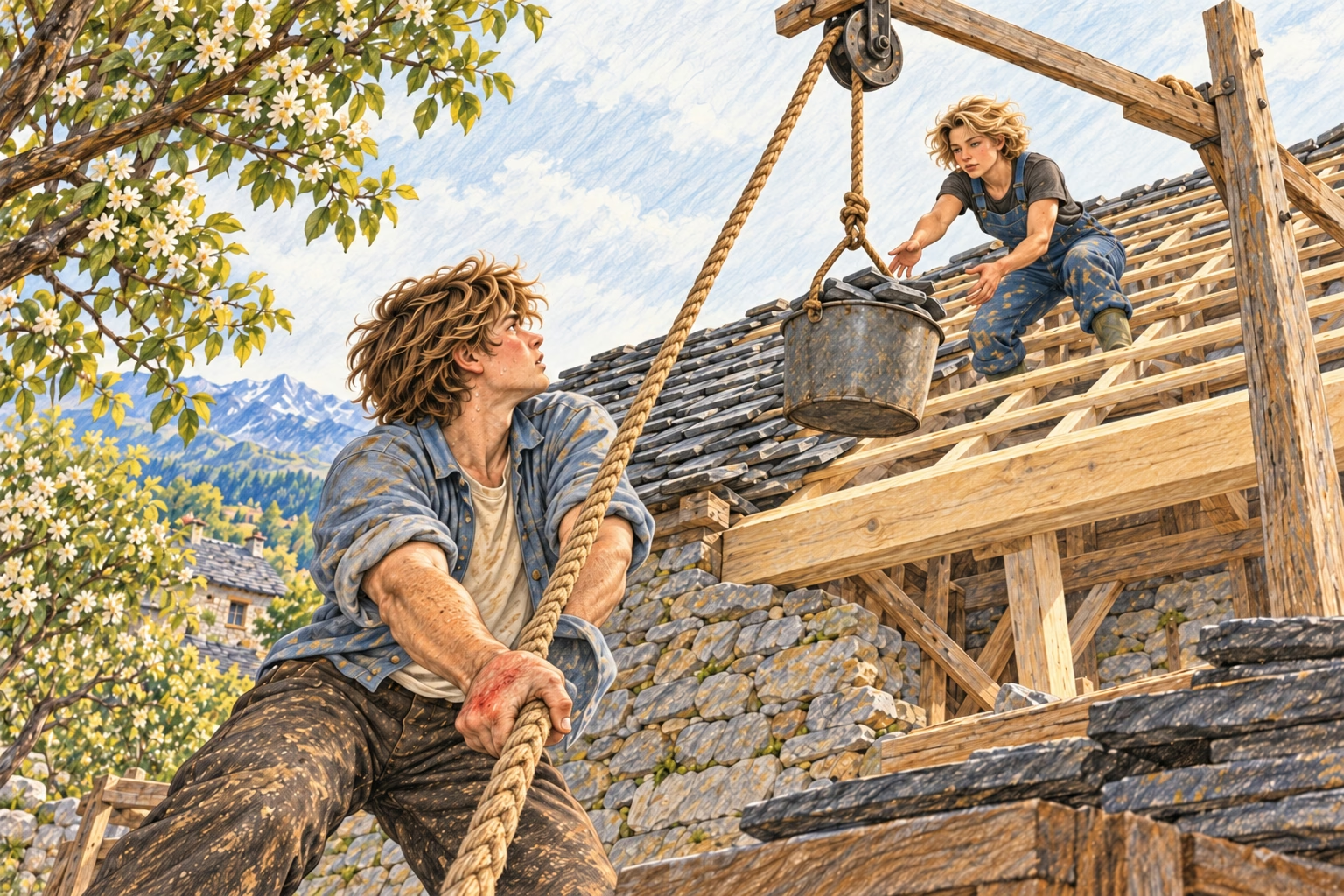
Axel spent the whole day fighting the rope, which is a donkey’s job with the one advantage that nobody asks the donkey about the girl. Úrsula laid the slates above and he did everything below, which was fill the bucket, haul it up, wait for it to be emptied and start again, and at noon the rope split his palm in the same place as always.
“Sodding thing,” he said to the rope.
The rope stayed the same.
At two, with his hand wrapped in a cloth, he got up on the kitchen stool. It was the third time that day.
Wamba had shown him, two days after the ladder business. Axel was coming up the stone stairs with an armful of firewood and Wamba appeared at the top, in the doorway, and stood there waiting.
“Come up.”
“I’m coming up.”
“To the hearth, I mean.”
Axel put the wood down and looked into the chimney opening, black as the inside of a boot.
“I can’t see anything.”
“Then put the light on.”
He went and got the head torch, climbed onto the stool and stuck his head up the flue.
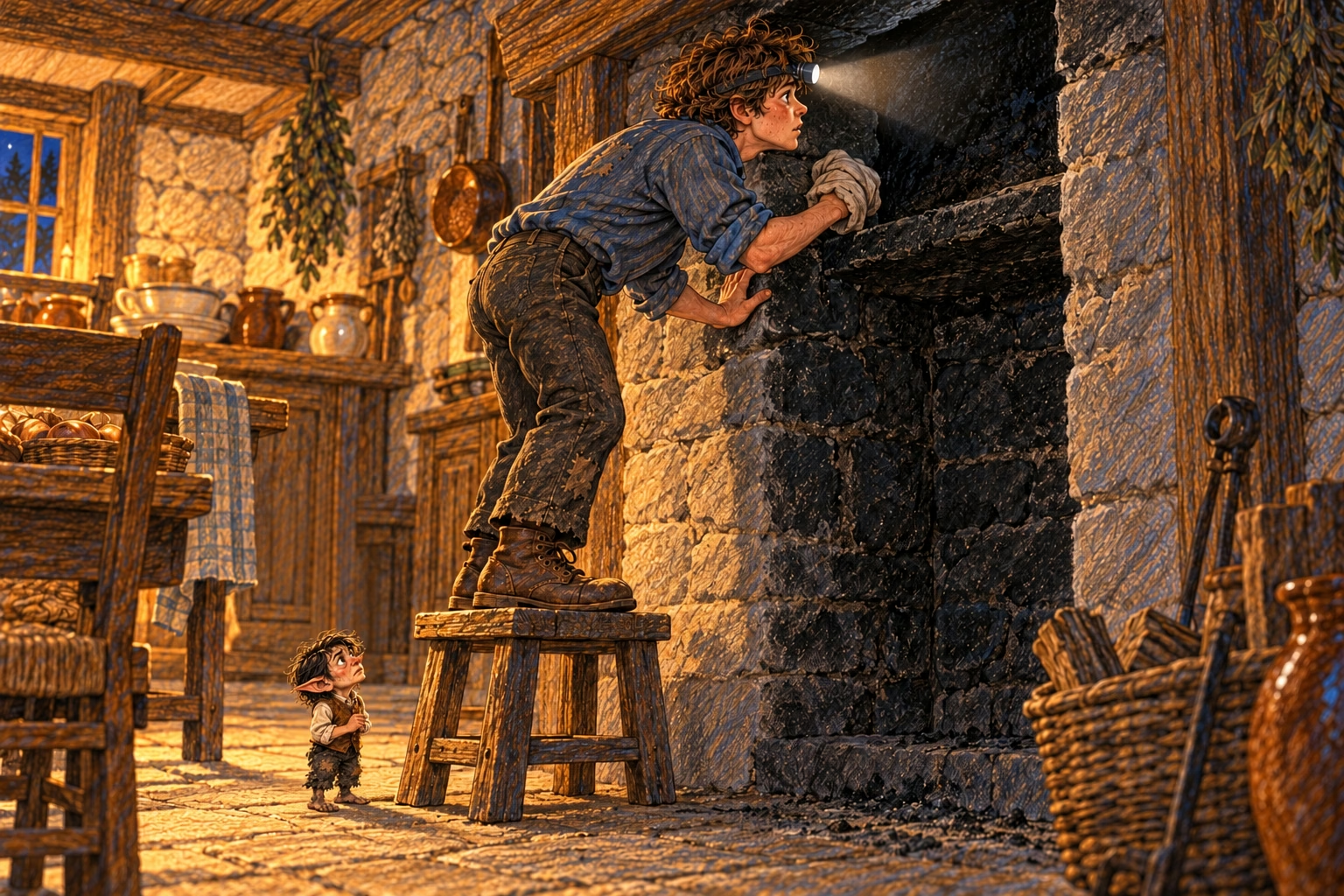
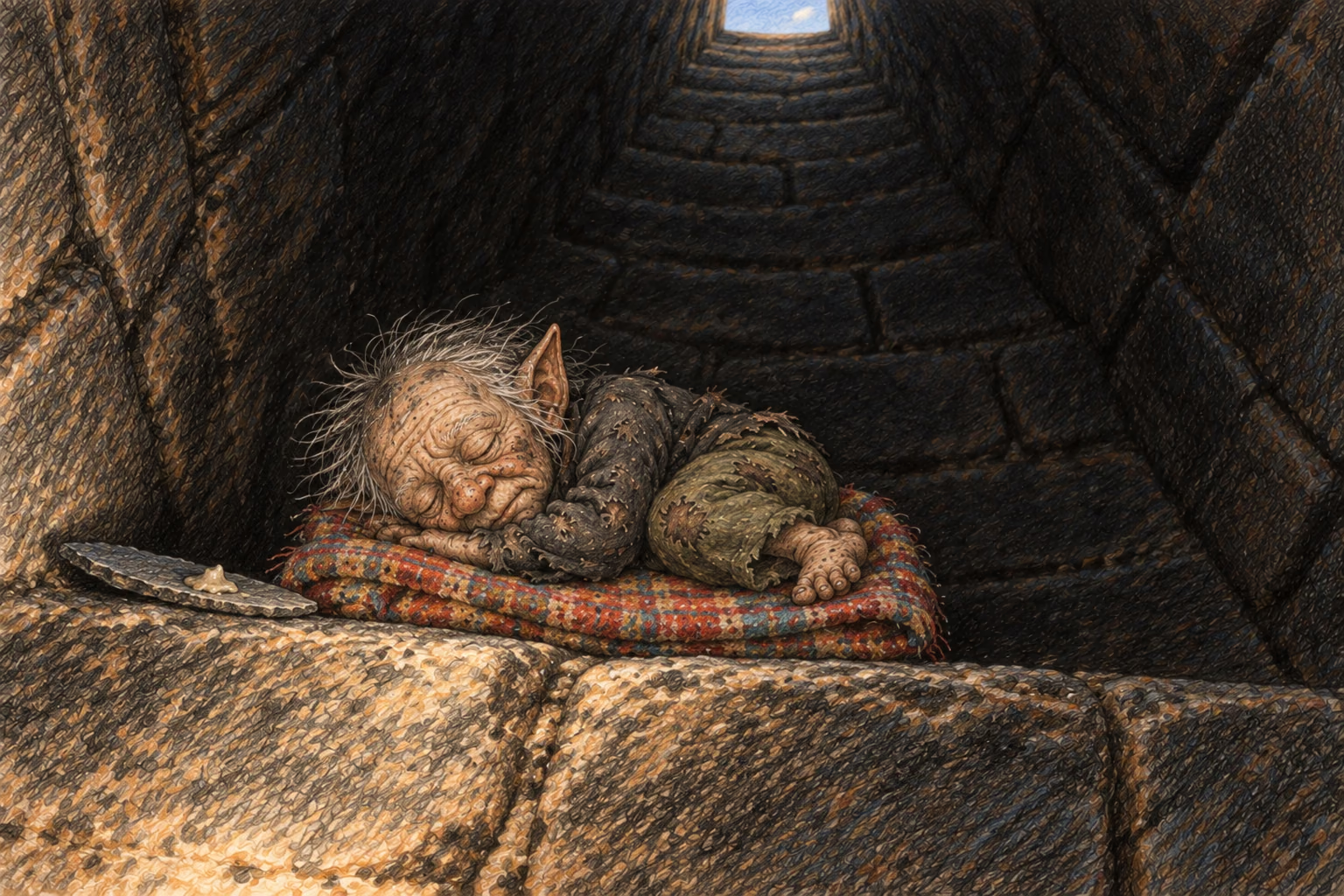
On a stone ledge inside, a metre and a half above the floor, he made out a dark shape smaller than a fist. It looked like a forgotten rag under a layer of soot as old as the house, until he saw it move. It was breathing, very slowly, every four or five seconds.
“Is he asleep?” said Axel, really quietly.
“He’s asleep.”
“Since when?”
Wamba thought about it.
“Since I’ve been here, I’ve never seen him awake.”
“And how long have you been here?”
“I’ve been here.”
“And doesn’t he get cold in there, poor thing?”
Wamba didn’t answer. He went to his beam and didn’t open his mouth again all day.
From then on he climbed onto the stool every morning to check the shape was still breathing.
One night he asked Eva for a bit of the tartan blanket. Eva took the bread knife, cut a square off one corner and gave it to him folded.
He left the scrap of blanket on the ledge in case the creature was cold. The next morning he found it neatly spread beneath the shape. Someone must have gone to an enormous amount of trouble to get on top of it.

One morning, with him up on the stool, Eva said from the washing-up bowl:
“Here. Does that one eat?”
Axel pulled his head out of the flue.
“I don’t know.”
“Oh.”
And she carried on scrubbing. Axel stayed up on the stool with the head torch on. “That one,” she’d said.
That afternoon he went down to the shop for cheese and waited till there was nobody about.
“Trini. In the chimneys round here, does anything sleep?”
Trini wrapped the cheese and weighed it.
“Course. Bats. In the chimneys that aren’t used. They get in at the top and find a little gap. Sometimes you hear a noise, sometimes you’d never know they were there.” She shut the till drawer. “You leave them be. And before you light a fire, make sure they’ve gone.”
He walked up the street feeling much better, until he remembered the piece of blanket neatly tucked beneath that little bundle.
That Tuesday, while Axel nursed his split palm and Eva was in Valdoria, the creature was still there, curled up in a ball on his square of blanket.
“Yayo,” he said to it.

He didn’t know why. It just came out.
He stayed with his head inside, listening to that thing breathe. And counting, without meaning to and without being able to stop.
One. Two. Three. Four.
He knew perfectly well how long four seconds is without air going in.
Getting down from the stool, he caught himself worrying about what would happen if the creature got ill. He’d spent all those mornings checking on him without once wondering whether he was real. Whether he might be cold, though, had crossed his mind at least four times.
He went down to the garden and carried on hauling the rope.
At that same hour, in Valdoria, Eva tried clapping inside the booth and waited for the echo. Nothing came back. The walls had swallowed the sound whole.
“A mosquito would be bored shitless in here,” she said.
Víctor’s friend laughed on the other side of the glass. He pointed to the headphones on the music stand.
She put them on. First she heard her hair brushing against them, then her own breathing, huge. She drew back from the microphone, uncomfortable hearing herself so close.
“Is this recording already?”
“No. We’re listening. Try whatever you like.”
Try whatever she liked, he said. With that desk full of buttons, both men watching her and a clock over the door, all Eva managed was a cough. There wasn’t even anything in her throat.

Víctor gave her two thumbs up from behind the glass. She looked at the floor so she wouldn’t have to see him. A stain on the carpet beside the stand. That she could look at.
She started a song she never sang in the street because it took a while to get going and people walked off. Nobody walked off here. She could leave the gap between one line and the next without rushing to fill it. By the second verse she wasn’t looking at the stain anymore.
She liked it. She liked it a lot, which caught her far more off guard than the headphones. She’d spent months explaining that the street was enough, and now she wanted to hear what her voice did alone in that room. Not the one at the fountain on Víctor’s phone. The one coming out now.
She finished with one hand still in the air, unsure what to do with it. The man at the desk waited until she lifted one earcup.
“Would you come back another day, when we’ve got a bit more time?”
Eva was going to say she had a roof to fix. She did. She also wanted to come back.
“How much time?”
He turned to a diary. Víctor was already talking about phone calls and people, but Eva kept the headphone against her ear. She wanted to try another song. A whole one, before anybody started organising what came next.

At seven Úrsula sat on the ridge, drank half a bottle of water in one go and looked at how little they’d done.
“We haven’t done half what you did yesterday. You can’t be up here and down there on your own, lad.”
“Then we’ll do twice as much tomorrow.”
“We’ll see about tomorrow. We’re a day behind.” She screwed the top back on the bottle. “With the thirtieth coming.”
Axel had plenty he could say, but he’d been talking to Eva’s sister behind her back since June. He imagined the conversation and thought better of reproaching her.
They got back at eleven at night. Eva got out of the car with some papers stapled together under her arm and went up the street quickly.
Víctor stayed at the door, looking at the cloth round Axel’s hand.
“What’s that?”
“The rope.”
“Mate, you’re wrecking your hands and your savings on some old lady’s house.” He laughed, not meaning anything by it. “What for?”
“Because I sleep here.”
“Well, buy yourself a mattress, it’s cheaper.”
And he went off to sleep at the hotel.

The next morning, while she washed up, Eva told him about the studio visit. She spoke quickly without turning round, scrubbing the pan harder than it needed.
“Headphones that weighed more than Fay, man. And carpet all the way up to the ceiling, I don’t know what those people have got against noise.” She scrubbed at the pan. “Víctor’s mate played the fountain one twice in a row. And then he said a date.”
“What date?”
“Thursday the twenty-fifth. An audition. Three hours of studio time, paid for.”
“And are you going to go?”
Eva put the scourer in the pan and went at the same spot for a good long while.
“I don’t know.”
That night the studio papers were under her sleeping bag, in the hammock, folded in half. Axel saw them as he hung up the head torch.