
What Is Inside
In that village nobody wondered whether they existed
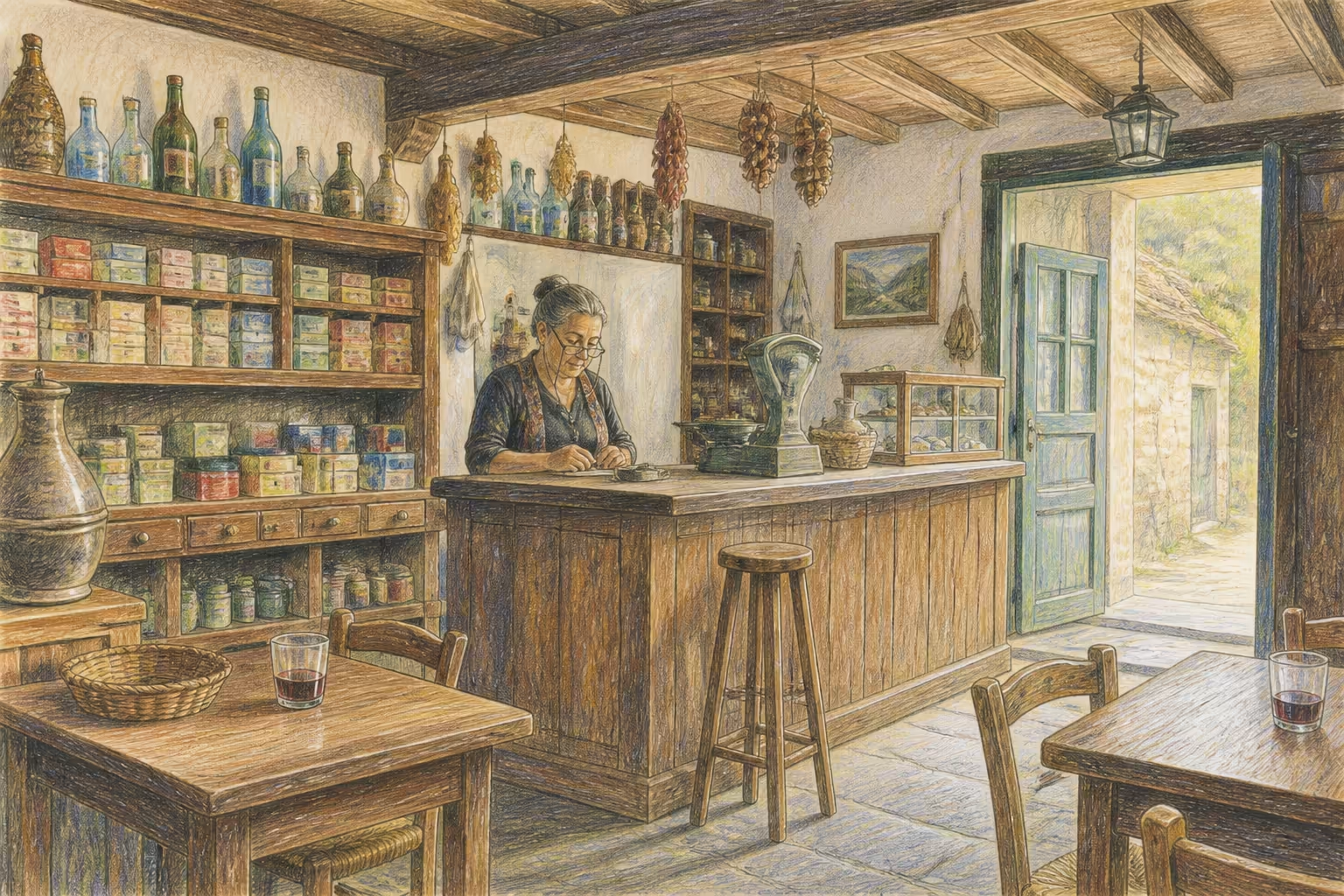
Down by the fountain there was a place that was shop, bar, tobacconist and where the parcels were left. It said ALIMENTACIÓN TRINI on the sign, and Trini was a woman of about sixty with her glasses hanging from a cord and a way of looking at you that made you feel she already knew what you had come for.
“You’re the ones from Hortensia’s house.”
They had been in the village twenty-two hours.
“Yes.”
“I know.”
She put two coffees in front of them without their asking. They bought the basics and Trini kept telling them what they needed before they had thought of it.
“Not candles, there’s no electricity up there. Take head torches, I’ve got two.”
“All right.”
“And a broom. Without a broom you’re going nowhere.”
“All right.”
“And gloves, love, the nettles up there are the bad ones.”
Eva took gloves.
When she was already ringing it up, with her glasses on and working the till, Axel came out with it. He had been rehearsing it since the fountain and it came out terribly.
“Listen. One thing.” He cleared his throat. “In the house there’s… we think there’s something.”
Trini looked up over her glasses.
“Rats?”
“No.”
“Pine marten?”
“Pine marten too, I think. But no.”
He stopped, because he didn’t know how to go on without it sounding like what it sounded like.
Trini waited two seconds. And then she looked down at the receipt and carried on with what she was doing.
“Well, put something sweet out for them and that’s that.”
Axel stood there with his wallet open in his hand.
“Sorry?”
“Put something sweet out for them.” She tore off the receipt. “A bit of sugar on a plate, or honey. And don’t sweep at the foot of the stairs, that annoys them.”
“Sorry, don’t sweep where?”
“At the foot of the stairs.” She looked at him as if she were talking to a foreigner. “Sweep the other way.”
“And if I sweep that way?”
Trini, for the first and only time in the whole conversation, lifted her head from the receipt and looked him straight in the face.
“Then don’t sweep that way,” she said.
And she went back to the till.
“That’s twelve euros forty.”
They went out into the street and Axel sat down on the rim of the fountain. Eva sat beside him.
“Are you all right?”
“I don’t know.” He looked down at the ground. “It’s that I’ve had this for twenty-six years. Twenty-six. Without telling a soul. Thinking I was losing my mind. And that woman has just told me to sweep the other way as if she were telling me where the bins are.”
“Yes.”
“And she didn’t even look up, Eva. She didn’t even look up.”
In the next four days it happened to him three more times.
It happened with a man who was loading firewood and who, when Axel asked him about a wall, told him not to touch that part of the hay barn “because somebody sleeps there”.
It happened with a woman who saw him going up with the wheelbarrow and told him that if he was going to move the pile of rubble he should give warning out loud first.
“Warn who?”
“Just warn, man. It costs nothing.”
And it happened in the shop again, when a lad of about thirty who was having a coffee said, out of nowhere and talking to Trini, that a frying pan had come off a hook again and that made three.
And Trini said:
“Then hang something else there.”
And the lad said:
“Mmh.”
And that was all. There was no wink. There was no complicit smile. There was nobody saying “well, it’s a silly thing we say round here”.
They talked about the frying pan the way you talk about the damp.
So on the fourth day Axel went back down to the shop and asked Trini the question a different way.
“Trini, one thing. The people round here, when a house has been shut up a long time, what do they say is inside?”
Trini was arranging tins and didn’t stop.
“Damp.”
“Mmh. Apart from the damp.”
“Rats.”
“Apart from the rats.”
There she did stop. She turned round with a tin of tomatoes in each hand and looked at him over her glasses for a good long while.
“Son,” she said. “Have you come here to do up a house or to ask questions?”
“To do up a house.”
“Then do it up.”
She went back to the tins. And Axel went out into the street not knowing whether he had just received a no or a yes, and with the absolutely clear sense that that woman knew perfectly well what he was asking her.
And that was the night when he came completely unstuck.
They were in the byre, lying on the ferns, with the head torch hanging from a nail.
“It’s worse,” he said.
“What’s worse?”
“This. It’s worse than in the city.”
Eva turned over.
“Look. In the city I saw things and nobody saw them and I thought: I’m in a terrible state.” He put his hands behind his head. “All right. Bad, but clear. It was me.”
“And?”
“And here it turns out everybody talks about them. Everybody. And nobody sees them.” He propped himself on an elbow. “Because they don’t see them, all right. I’ve watched. Trini doesn’t look at the floor. The firewood man doesn’t look. Nobody looks anywhere. They don’t see anything.”
“But they say it.”
“They say it the way you say ‘touch wood’.” He was quiet a moment. “Like my grandmother, who when she dropped bread on the floor kissed it before throwing it away. And it wasn’t that she believed anything. It’s that that’s how it was done.”
He let himself fall onto his back again.
“So then what? That I see a thing that round here is a saying?”
Eva sat thinking a good while.
“And what would you prefer?” she said.
“Sorry?”
“What would you prefer. That it’s true, or that it’s a saying.”
Axel was going to answer and realised he didn’t know. He had spent twenty-six years wanting it to be a lie and four months wanting it to be true, and he had not once thought about which of the two things he wanted.
“I don’t know,” he said.
“Exactly.”
“And you?”
“Me what?”
“What would you prefer.”
Eva was quiet a while, with her eyes open on the ceiling, and even that could be heard.
“I have lived a year and a half thinking people are rubbish,” she said. “And I’ve spent four months on a road with a bloke who puts sugar on a shelf.”
“That doesn’t answer.”
“I know.”
She turned over towards the wall.
“What I’d prefer is not having to choose,” she said. “That it be true and a saying on top. Both things.”
“That’s cheating.”
“Then I cheat.”
And she went to sleep, leaving him with that. She always did it: she came out with the thing and went to sleep, and sometimes Axel loved it and sometimes it made him want to throw a boot at her.
The next day, Axel put a plate on the shelf of the hearth with two spoonfuls of sugar. He did it on the sly, when Eva went down for water, and he felt absolutely ridiculous doing it.
And when he turned round, Fay was sitting in the doorframe, looking at him, with the calm of a civil servant who has watched the same paperwork go past a thousand times.
“You say nothing,” Axel told him.
Fay yawned.
In the afternoon the sugar was still there. At night too.
And the next morning the plate was empty and clean, and there was a trail of ants coming up the wall from a crack.
Axel gave the ants a good long look.
Then he put out more sugar.