
Vacancies
A road blocked, a guest house shut and a rice dish for nine

Half the hillside had come down at five that morning and buried the road two kilometres further up. The machines had been at work ever since, but the sign said there’d be no getting through until the next day. The village sat at the bottom of a funnel, with no way round by car.
Stranded there were an elderly couple, a farm machinery parts salesman who wouldn’t stop shouting into his phone, a cyclist who was taking it rather better, and a lad with a low, dark-grey car whose underside was already well scraped. He came walking back from the roadblock with sunglasses in his hair and his hands in his pockets. Tall and dark-haired, he had meticulously maintained three-day stubble and a white T-shirt that hadn’t acquired a single crease on the journey.
“I offered the digger bloke two hundred,” he said as he got there.
“What for?” said Axel.
“To clear me a gap.”
“And?”
“He can’t.” He laughed, loving it. “There’s half a mountain on top. Cracked me up.”
Kika sniffed his trainers and ten seconds later had her head on his knee, which is what Kika does with anyone. Fay watched him from the top of a wall and didn’t come down.
“You lot walking?”
“Walking.”
“Legends.”
He meant it, no piss-take. Axel liked him in three seconds.

They could have carried on along a footpath that skirted the blocked stretch of road. But it was seven in the evening, their clothes hadn’t dried in three days and Hortensia kept touching her hip when she thought nobody was looking.
In Valdelera they found the Hostal La Parada, a three-storey building with closed shutters and a dry vine over the door. The sun had faded the letters on the sign to pink, and half the neon tubes were missing.
Hortensia rang four times at a bell that sounded miles away inside the house. A woman of about seventy opened the door in a checked dressing gown, looking as though she wondered who the hell had remembered she existed at this time of day.
“We’re closed.”
“I can see that, love.”
“My husband closed it six years ago and died the year after. So there you are.”
“It’s just there’s five people out there who can’t get through. And it’s going to rain again.”
The woman looked over Hortensia’s shoulder. The couple in their car, windows steamed up. The rep pacing round with his phone glued to his ear. The girl with the bike sitting on the kerb. And the lad, leaning on the bonnet of that low car with his arms folded, looking at the front of the hotel like he was thinking of buying it.
“I haven’t got a hotel.”
“You’ve got beds.”
“I’ve got beds that aren’t made.”
“Then we’ll make them.”
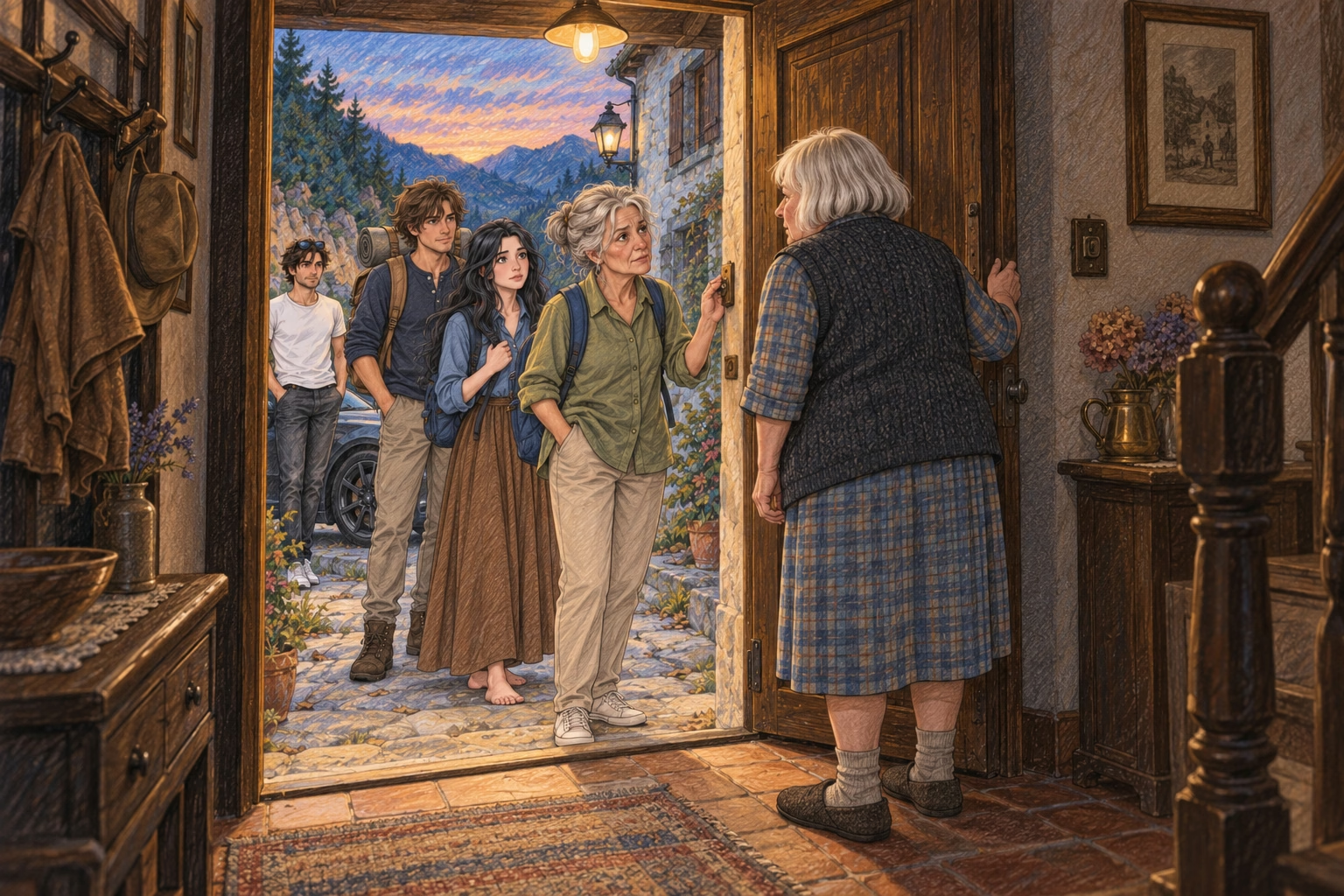
The woman looked at Hortensia. She looked at Axel. She looked at Eva, barefoot, with a cat in her arms and a dog at her side.
“I’m seventy-three and I’ve got a titanium hip.”
“You don’t have to do a thing,” said Axel.
“I’ve heard that plenty of times, love. Then you all leave and the sheets stay here.”
Hortensia leaned against the doorframe and rubbed her hip.
“She’s right. We’ll see to the beds tomorrow as well.”
“And the kitchen,” said Axel.
The woman’s name was Otilia. She kept them at the door for twenty minutes, explaining where things were and what didn’t work. At last she stepped aside just far enough to let them through.
“One night. Tomorrow, when the road opens, that’s it. And leave the beds unmade, I’ll cover them up and be done with it. I’m not reopening the guesthouse.”
“One night,” said Hortensia.
“You have to run the hot water for three minutes, it comes out brown. And there’s nothing in the kitchen, and when I say nothing I mean nothing. And another thing: I’m not charging.” She held up a finger. “Not one euro. I’m not registered and I haven’t got any of the paperwork.”
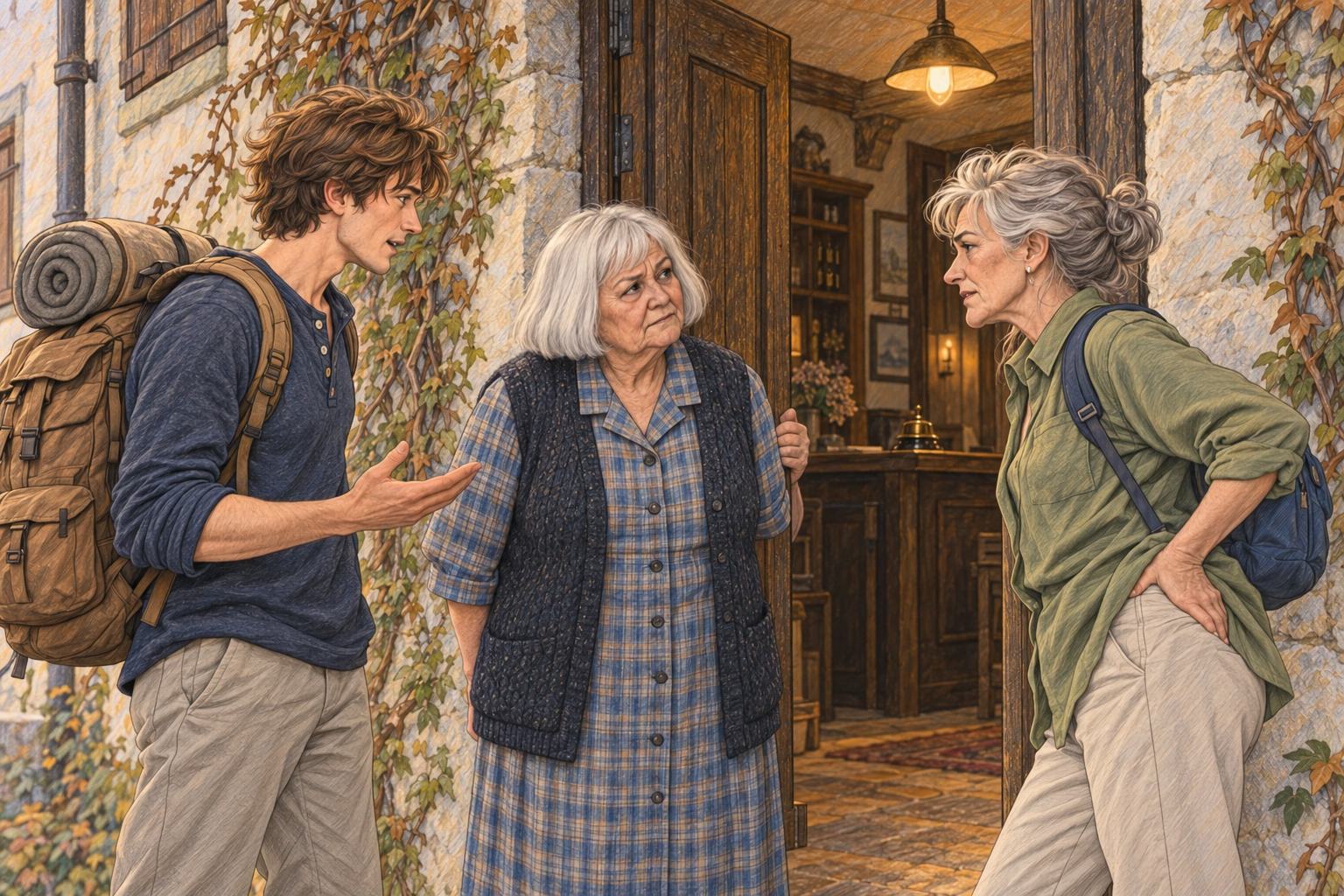
“Then we’ll put out an envelope for the expenses,” said Hortensia. “Everyone can leave what they can afford.”
Axel stepped behind the reception desk, put his hands on the wood and glanced at the key board. Without thinking, he slipped into the voice he hadn’t used for weeks:
“Good evening. Are you together or separate?”
The rep, who’d spent two hours shouting at his phone, was completely disarmed.
“Er… Just me. One.”
“Perfect. Number five, it looks onto the courtyard so the digger won’t bother you.”
He had no idea if number five looked onto the courtyard. Otilia reached past him from behind and swapped one key for another.
“Number four. Five faces the road.”
“Number four, sorry.” Axel put the right key on the desk and turned round a notebook he’d found in a drawer.
“If you could just put your name down here.”
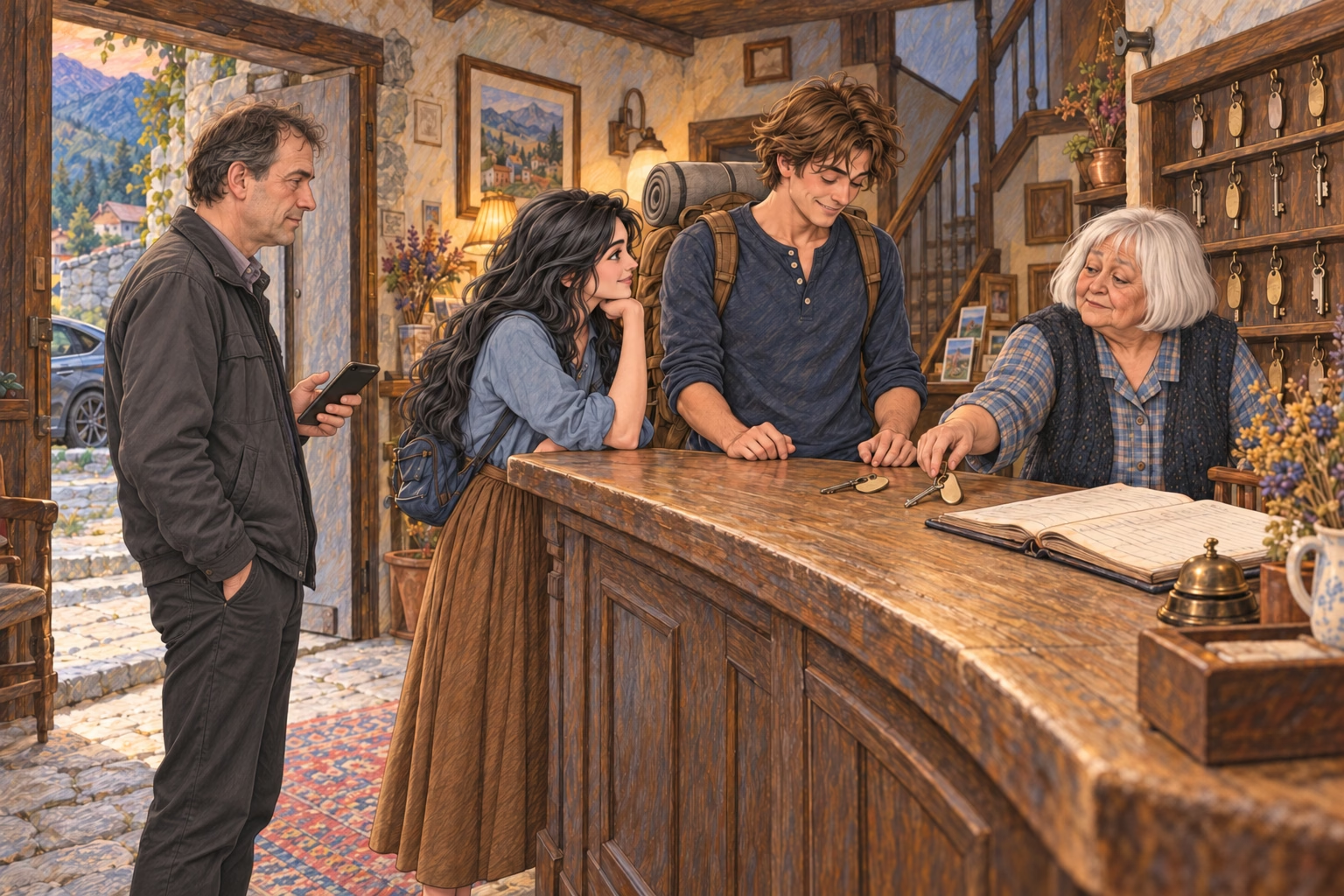
The lad with the car came last, hands in his pockets.
“Give me the worst one.”
“Sorry?”
“The worst one you’ve got. I’m off tomorrow anyway.”
Axel gave him number three, which looked onto the road and the digger. The lad said perfect without looking at the key.
Otilia was watching all of it from the kitchen door with her arms folded.
“You know what you’re doing, don’t you?”
“Four years.”
“It shows.”
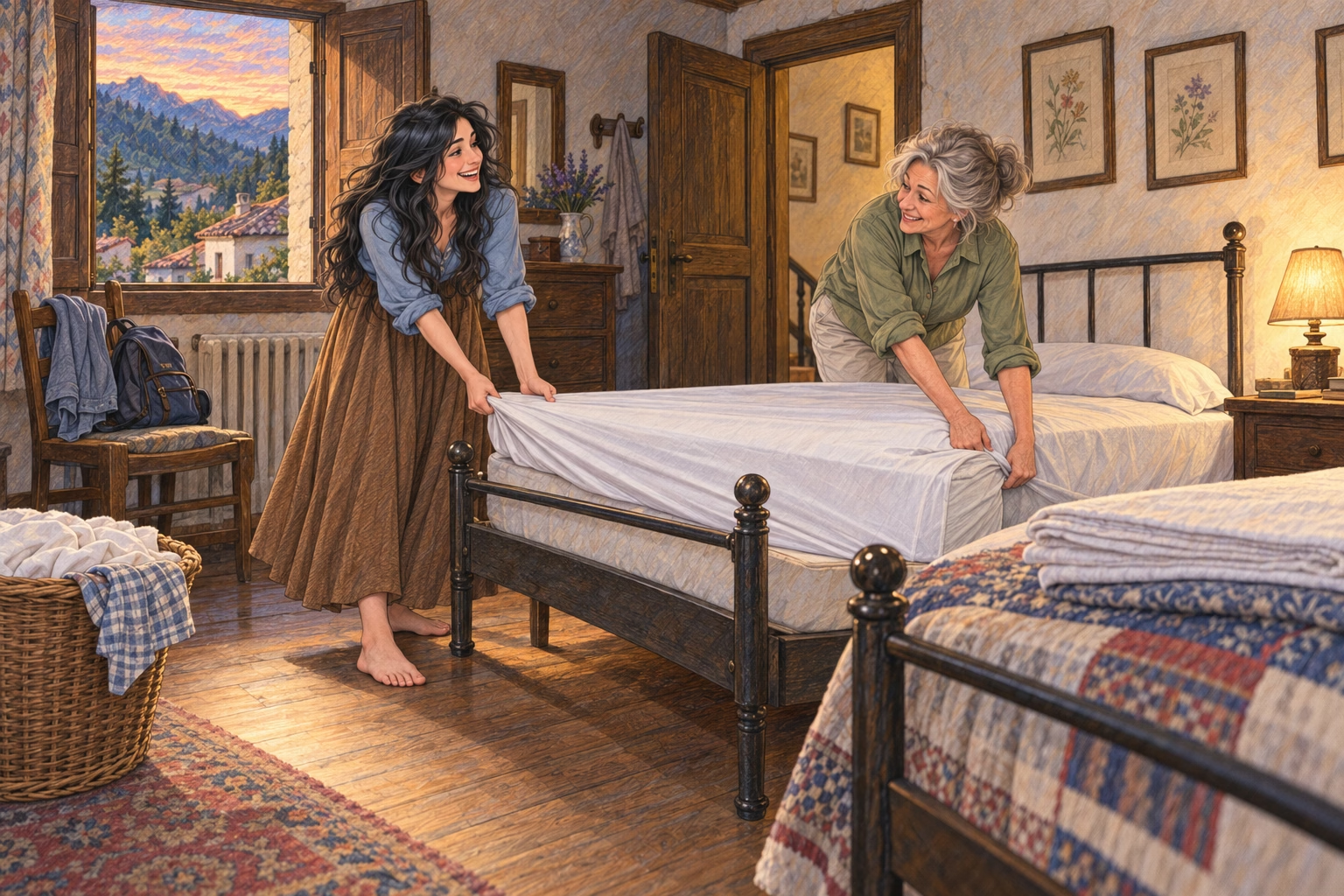
Eva and Hortensia made eight beds in an hour and a quarter and put all the clothes the three of them had brought into Otilia’s washing machine. From downstairs you could hear Hortensia explaining how you put a fitted sheet on, Eva saying her way worked too, and the pair of them cracking up every two minutes.
There was plenty of room in the kitchen and the pans were clean and hanging in their places, but at first glance there wasn’t a scrap of food in sight.
“There’s nothing here,” said Otilia.
“There’ll be something, surely.”
After some rummaging they found rice, two jars of tomatoes, a string of garlic and half a crate of onions that could still be saved. Axel pulled a bag of cuttlefish from beneath a brick of ice in the freezer and looked out into the yard, where Otilia had parsley and an enormous rosemary plant in pots.
“You can make a rice dish out of this.”
“For nine?”
“For nine.”
Otilia pulled up a stool and sat down to peel the onions.
“Do you know how long it’s been since that cooker was on?”
“No.”
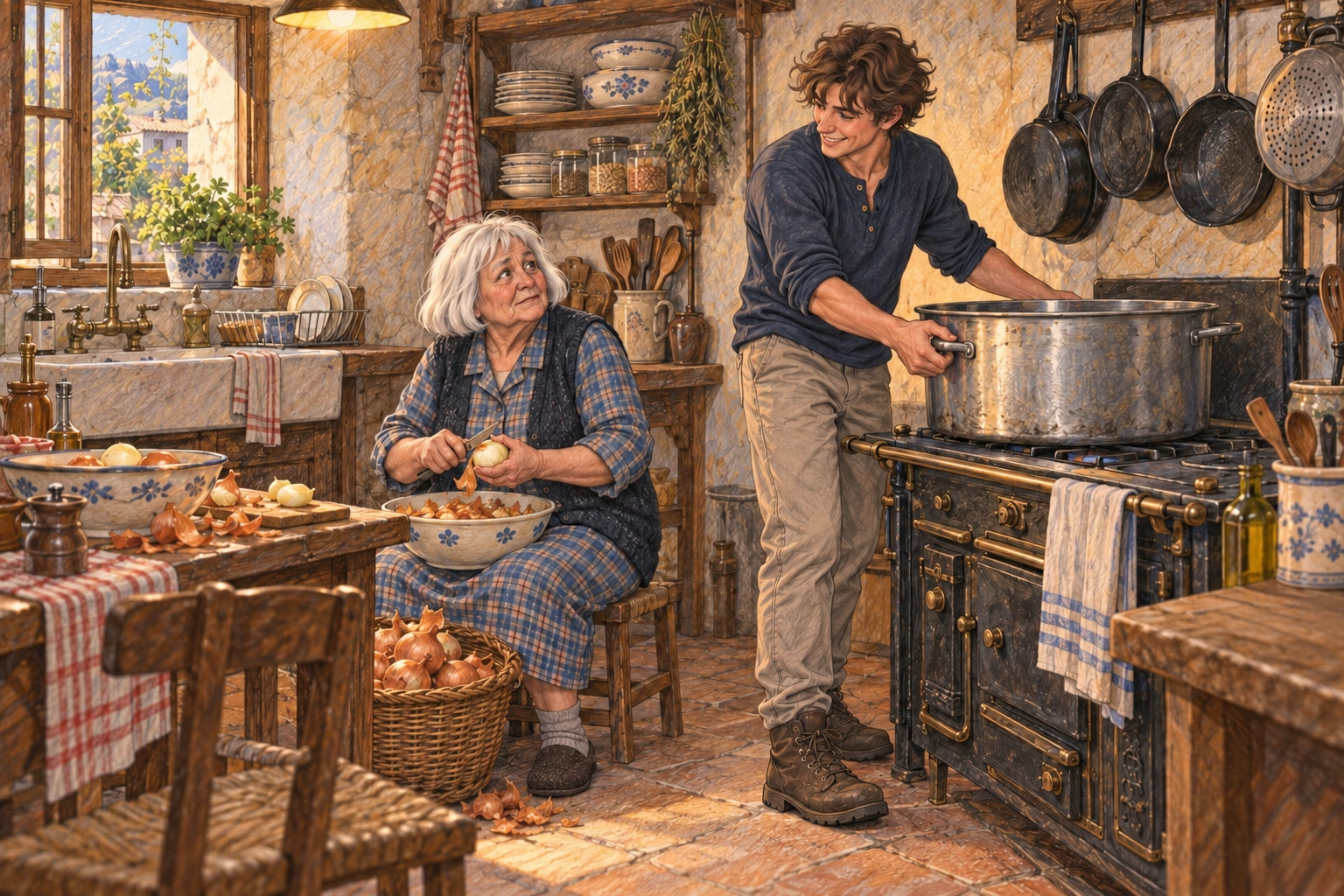
“Since we closed. I manage with the little stove. A fried egg, a bit of soup. Then I wash one pan and I’m done.”
Axel lifted the big pan onto the cooker. Even empty, it wouldn’t fit all the way into the sink.
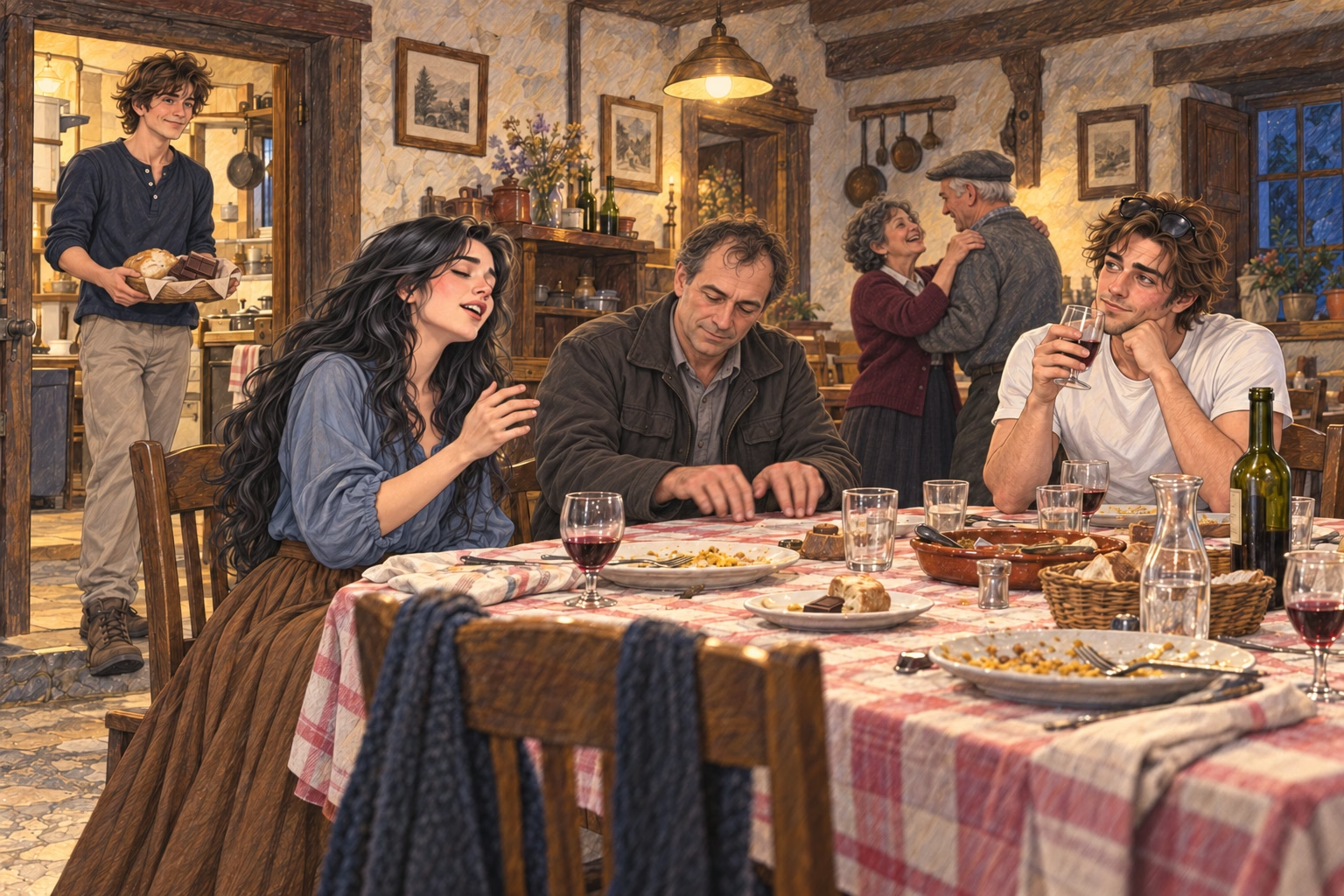
They all had dinner in the dining room, at the long table, Axel chewing slowly the way he’d been chewing for a few weeks now without having noticed. The couple were going to a funeral, were running late and were in a cracking mood, because the dead man, they said, had been a scoundrel. The girl with the bike was German, had been pedalling for nine days and wasn’t catching half of it, so Axel spent the dinner translating for her under his breath, which was what five languages were for. The rep turned out to have played the drums when he was young.
When it was the car bloke’s turn, he told them about the ham.
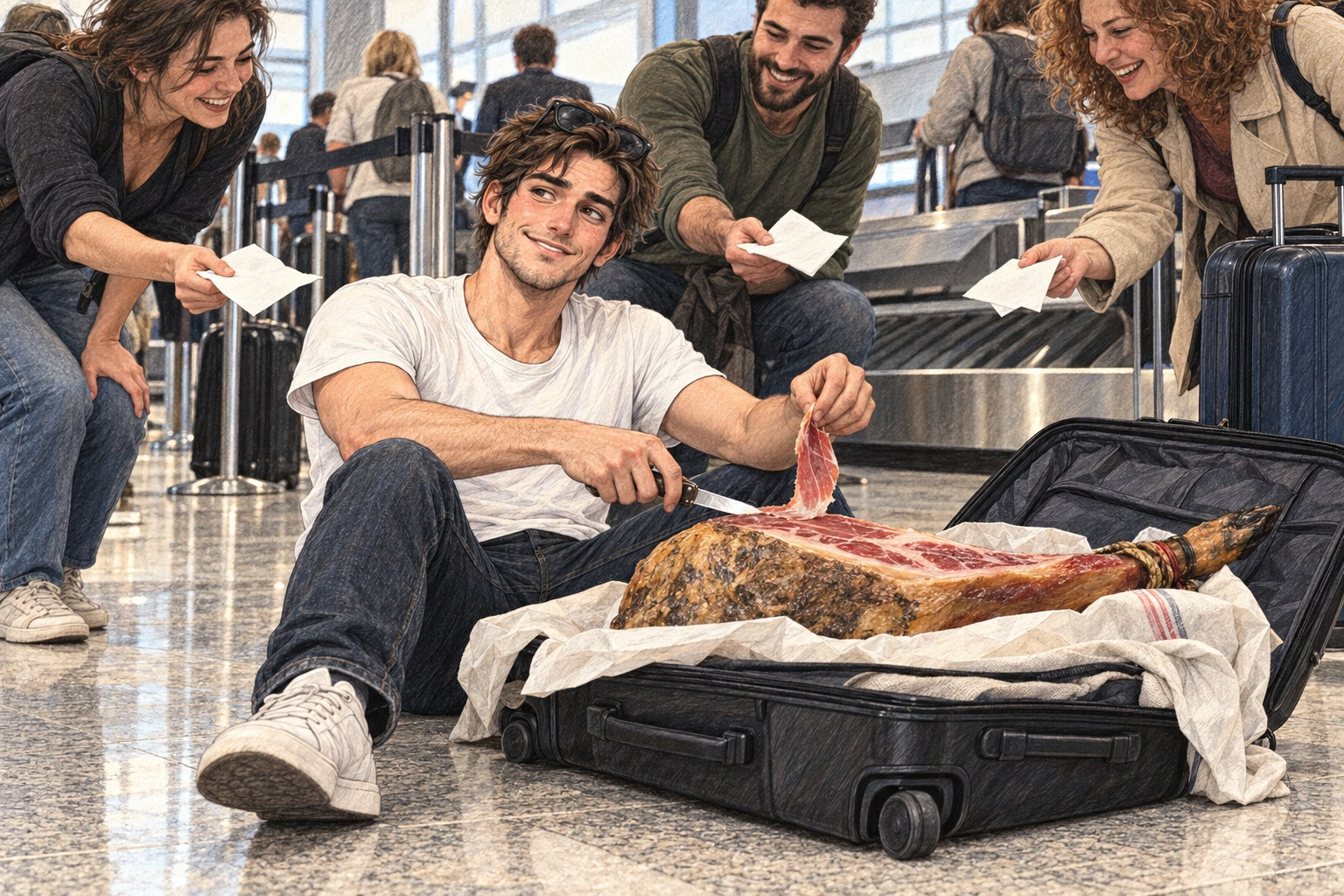
“So I say to the check-in bloke: listen, I’m not checking this case, there’s a ham in it. A whole one, yeah? The full leg. And the guy says the ham can’t go in the cabin. And I go, fine, I’ll eat it here, then.” He leaned back in his chair. “And I sit down on the floor, next to the belt, get my knife out and start carving.”
“No!” said Hortensia.
“Three slices. By the fourth I had half the queue lined up with napkins. By the fifth a bloke in a tie comes out and says please, sir, the ham can fly.” He raised his glass. “I bought it the seat next to me. The ham had the window.”
“Oh, this lad,” Hortensia kept saying, wiping her eyes with her napkin.
He didn’t ask where they’d come from, where they were going or what their names were. And nobody asked him either. They were all crying with laughter.
For pudding, which was bread and chocolate because there was nothing else, Eva started to sing. The rep kept time on the table with his hands, surprisingly well. The funeral couple got up and slow-danced between the table and the wall, very slowly and very badly.
For the first time in two hours, the lad with the car went quiet, his glass halfway to his mouth. He didn’t speak again until Eva had finished.
“Sorry. Did you just make that up?”
“Yeah.”
“What do you mean, yeah?”
From the kitchen doorway, Axel stopped with the bread and chocolate halfway to his mouth.
“I mean I just made it up.”
The lad leaned back in his chair and rubbed his hand over his mouth.
“Okay. Okay, okay, okay.”
The lad with the car tapped the table twice and stopped with his fingers raised.
“That gap at the end. You waited for this one to shut up.” He pointed at the salesman. “You kept drumming and she just waited, cool as you like, till you stopped.”
“Oi, I’m playing on a tablecloth here,” said the salesman.
Eva burst out laughing.
“I know a bloke who records local bands,” the lad with the car went on. “He’s got a studio. He hears this, he’ll want you there tomorrow.”
“No, you pest. I don’t record.”
“Yet.”
He wrote a number on a napkin, folded it in four and tucked it under her plate.
Before going up he asked Axel for his phone, dialled and hung up after the first ring.
“Now you’ve got mine. In case you’re ever nearby.”
Axel stood looking at nine digits on the screen. He pressed save without putting a name to it.
On the stairs, Axel realised he’d spent half the meal listening to a bloke whose name he didn’t even know. And he already had his number saved.
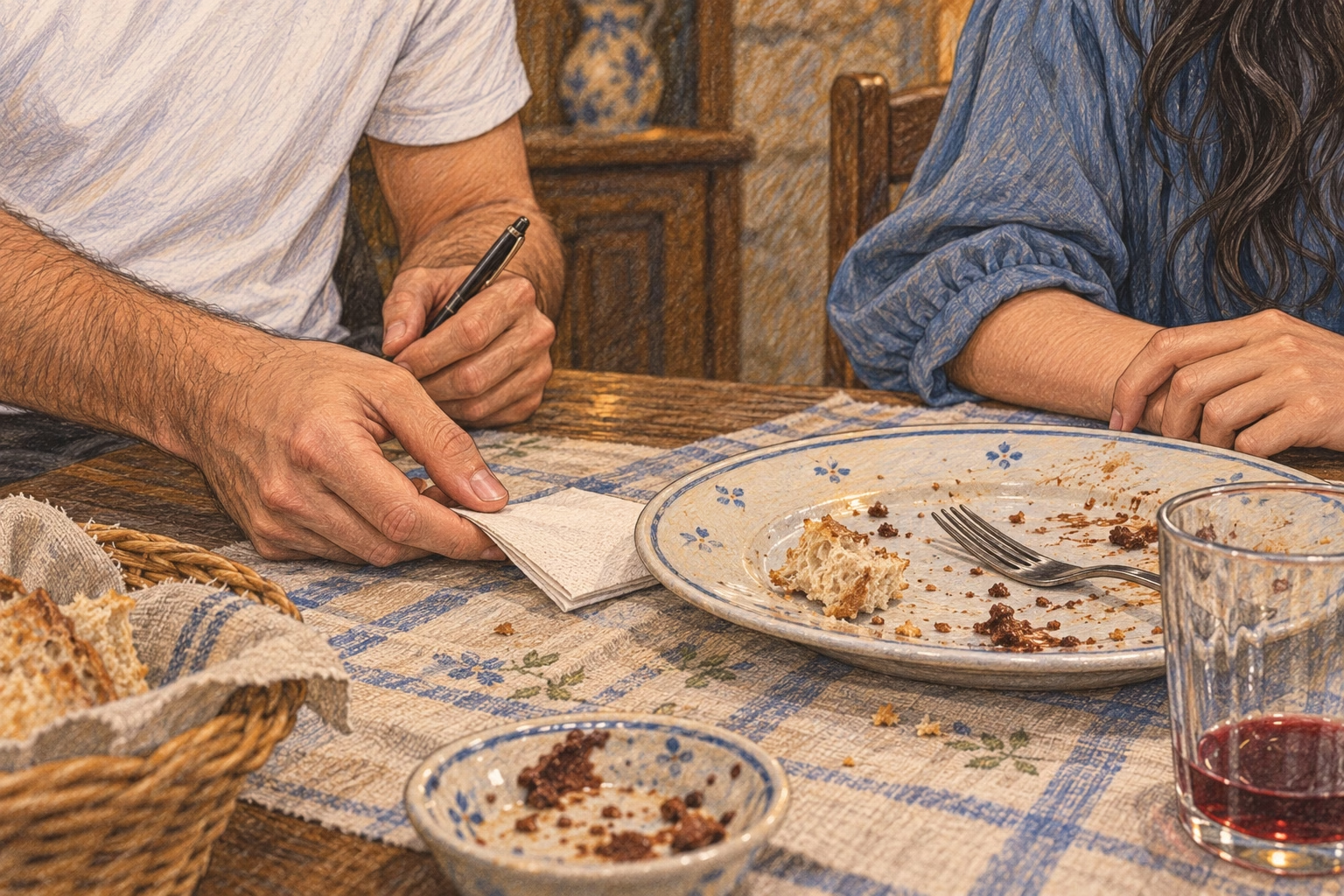
In the morning the road reopened and the guests filed past the reception desk. The envelope grew quite fat. The cyclist left what she could and still apologised for not leaving more.
Axel watched the lad with the car stop in front of the envelope and rest two fingers on it for a second, as though greeting someone. Then the lad went out into the street to check his phone.
He was the last of the five to go, because he spent twenty minutes at the door showing Eva something on his screen. As he pulled away he wound the window down.
“Message me!”
And off he went, scraping the bottom of the car on the speed bump on the way out.
At eleven they were still there. Eva and Hortensia were bringing down the bed linen and hanging out each load as it came out of the washing machine. Axel had been in the courtyard for ages, with the big pan balanced on its side in a washing tub. Every time he managed to scrub the bottom, water slopped out over the side and into his boots.
“Next time I’m making sandwiches,” he said.
“You still have to cut the bread for nine,” Otilia called back from the doorway.

Once they had hung out the last load, they covered the mattresses with old bedspreads. All the keys were back on the board at reception.
“Not even at weekends?” Axel asked.
Otilia stopped with a bedspread half folded.
“Would you come and do this on Mondays?”
“I don’t know where we’ll be.”
“Exactly.”
Axel passed her the last bedspread. They spread it over the bed together, and Otilia smoothed the corners with her palms.
They left after eating the leftover rice, with clean clothes and Axel’s boots squelching. Otilia brought two chairs out to the door, sat on one and put her feet up on the other to see them off.