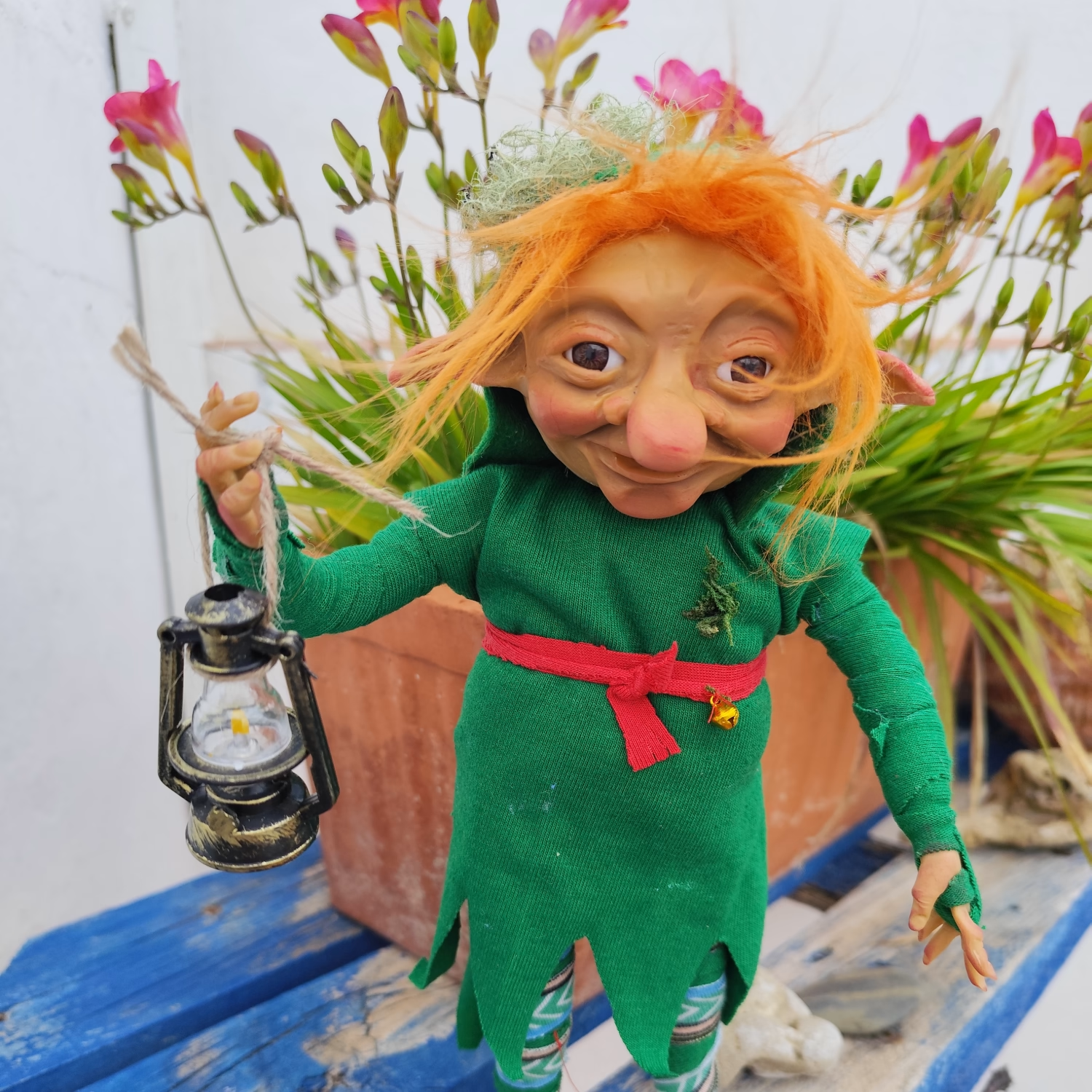
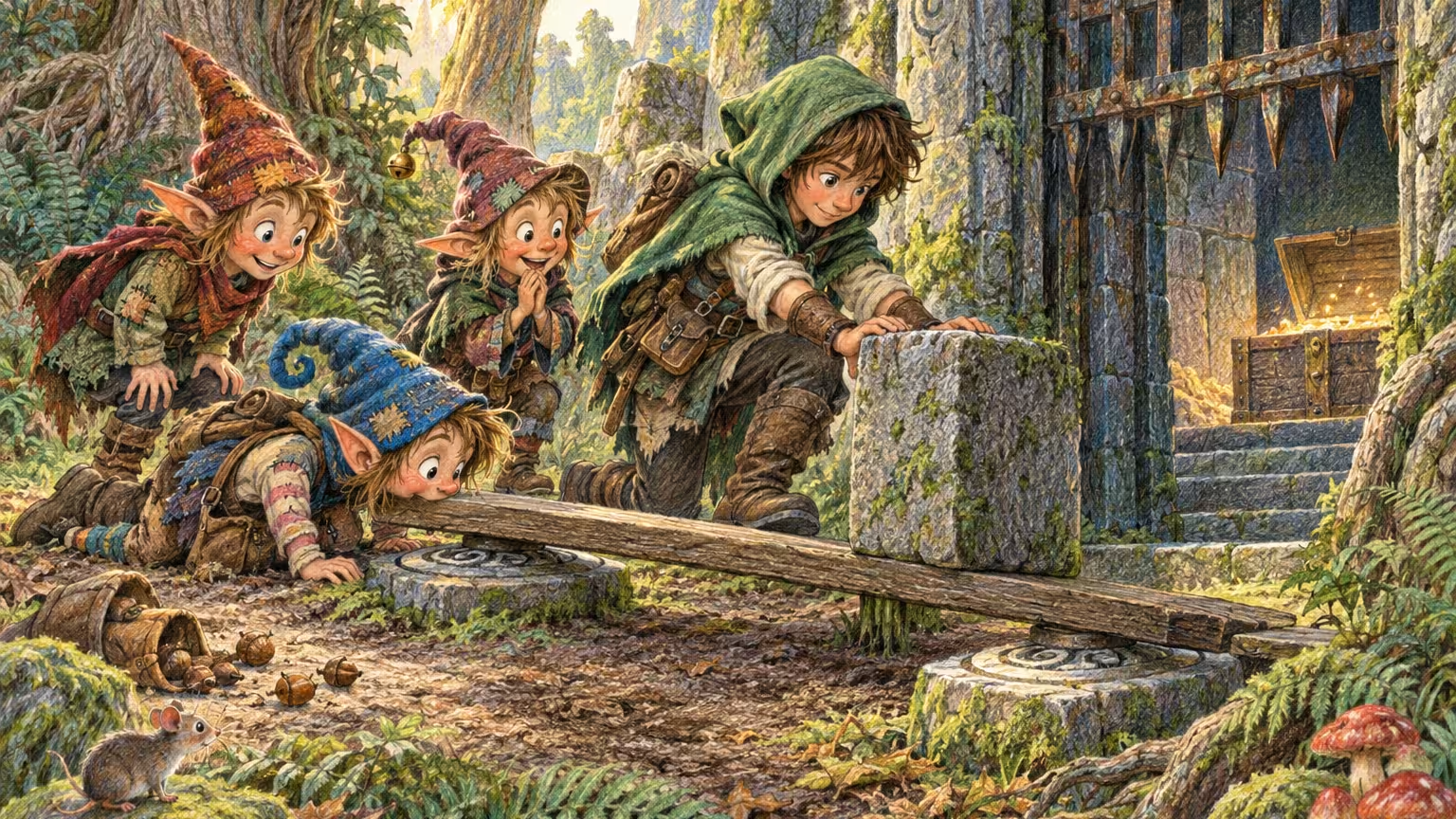
We'd spent twenty minutes shouting at a stone doorway. We'd tried “open sesame”, “please” and “will you OPEN, our dinner's getting cold!” Nothing. The door was taking it remarkably well. We were not.
Then Link emerged from the ferns. He looked at the floor, the gate and the plank we'd been sitting on while arguing. He didn't even draw his sword.
We exchanged a look. We knew that face. A Magikito was about to have an idea, and unfortunately it looked as though we'd have to get off the bench.
Why Is Link a Magikito?
Link is a Magikito because he meets the world with curiosity, makes something useful out of whatever he finds and helps the people he meets. Being a Magikito is a way of living, too. That woodland magic begins with wanting to understand things and making room for others.
The hat suits him, obviously. But the real giveaway is that look which says there's something here we haven't discovered yet. We brownies wear exactly the same expression outside a secret doorway and beside a pot left cooling. A calling and a craving can be surprisingly hard to tell apart.
In Ocarina of Time, his adventure begins in Kokiri Forest. Those paths winding between the roots make us feel at home. Grow up with leaves rustling overhead and you learn to listen to the woods. Even that tree over there, creaking away all afternoon. It might just want its back scratched.
Link has plenty of adventures behind him. Hyrule's ages change, and that same adventurous, caring spirit keeps finding its way into the world. We Magikitos have recognised one another by it for a very long time. There are plenty more of us about, forever arriving late because we found something wonderful on the way.
There's a Brain Under That Hat
We love a legendary sword. Lovely bit of kit. But our favourite Zelda moments often happen when the sword stays put and a room quietly asks us to think. A block, a current, a suspicious wall. Something matters here. We just haven't spotted what.
The Triforce associates Link with courage and Zelda with wisdom. We're fond of the sort of courage that lets you take a first step, try an idea or help someone before you've got everything figured out. Plenty of woodland discoveries begin with slightly wobbly knees and an overwhelming urge to find out.
When you play, that curiosity rubs off on you. You're the one looking, testing and working it out. Link gets the heroic pose. You earned that sudden “oh, you BEAUTY” and the triumphant trip to the kitchen for a biscuit.
Two Switches, One Unhelpful Committee
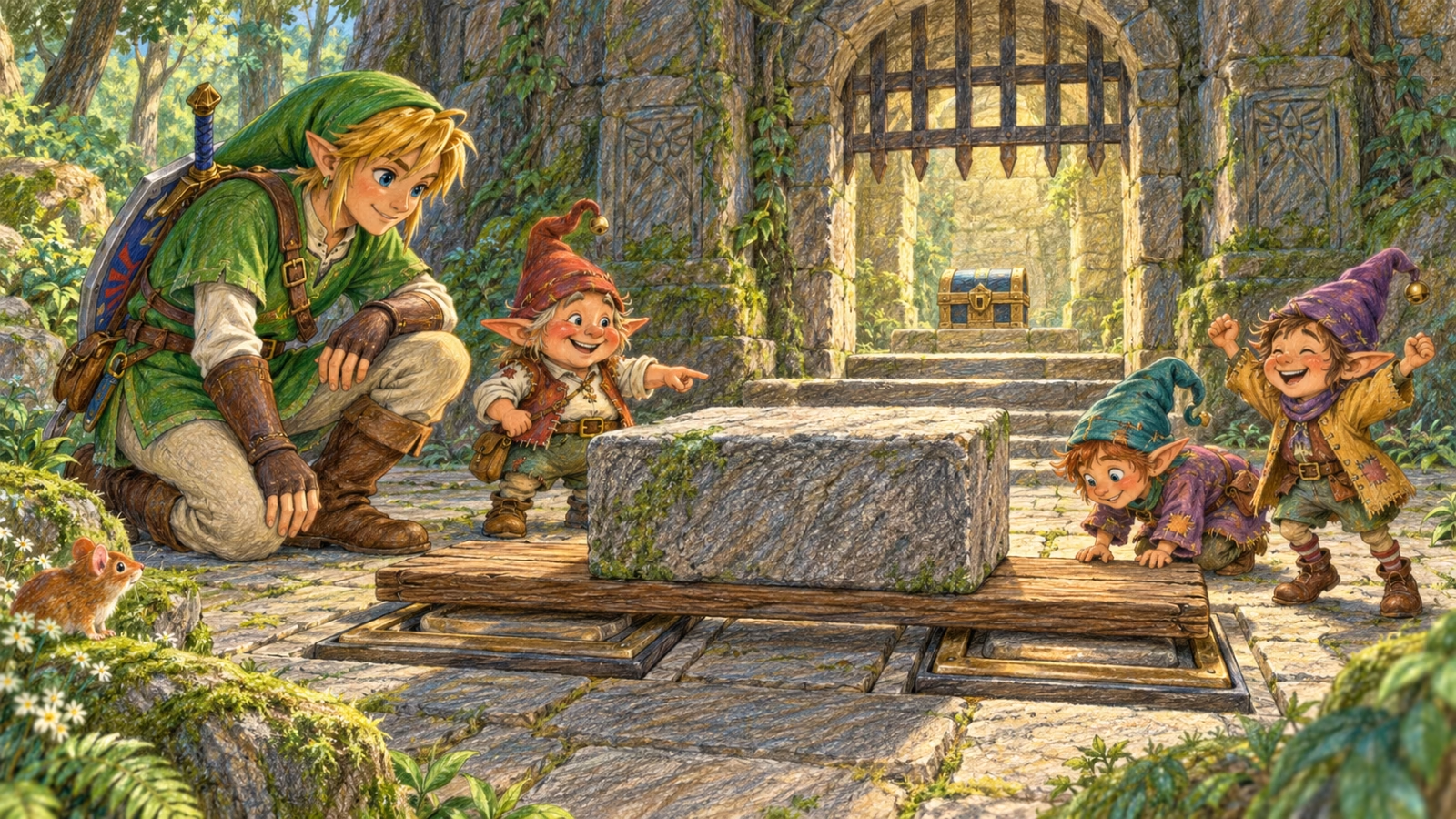
Our doorway had two square pressure plates sitting close together. Each pulled back a different bolt. Both had to stay pressed for the gate to rise. Beyond it sat a chest. Adventure beckoned. So did a fairly impressive patch of damp.
Link stepped on the first plate. Click. The left bolt slid back. When he stepped off, it returned. He tried the other plate and moved the right bolt. We'd been negotiating with the door. He was finding out how it worked.
A narrow, solid stone block stood in the corner. It was heavy. Link dragged it onto the first plate, then stood on the second. Up went the gate. We cheered. He stepped towards the chest. Down went the gate.
One of us volunteered to take his place. Nothing happened. All three of us climbed on, pockets bulging with acorns and self-belief. Still nothing. We simply weren't heavy enough. Remaining there as a ceremonial paperweight wasn't much of a career plan either.
That left our plank. It was long, stiff and wide enough to hold the block. One end could rest on each plate, leaving the middle clear of the floor. The block alone couldn't reach both plates at once.
We'd Been Sitting on the Answer
We laid the plank across the two plates and dragged the block towards its middle. At first the load sat off-centre and only one plate sank. We nudged it over, watching the bolts. With the weight shared between the two ends, both plates went down. The block was heavy enough. The gate stayed up.
We'd stopped looking for two heavy things and found a way for one thing to press in two places. “The bench” had become the missing tool. Nothing had happened to the wood. Something had happened to our thinking.
One of us said he'd had that idea ages ago. This was the same brownie who'd suggested showing the door a picture of an open door to make it jealous. We let him have it. A little dignity is nice after all that faff.
A Different View of the Same World
In The Minish Cap, Link shrinks down to help the tiny Minish. We love watching him step into a world most people walk straight past. Link takes small things seriously: he stops, listens and lets himself be surprised. We'd always keep a place for him by the fire.
We know how a walk changes when a tree root comes up to your chest. What looks like an unremarkable gap to you might be our front door. If you want to understand the place, you'll have to crouch. A grand view is lovely, but it doesn't show you everything under your nose.
In another adventure, Tears of the Kingdom, Ultrahand lets Link move and attach objects. Which gets us wondering: what else could this thing do? We asked a colander that once. Ended up opening a planetarium for snails.
That's where Zelda meets our fondness for making things up. An idea needs a little trial run. If the plank tips, adjust it. Imagining a bridge is wonderful. Checking that it reaches the other side is a useful extra.
What Kind of Thinking Do Zelda Puzzles Involve?
A puzzle can ask you to spot a clue, remember a rule and test an idea. Sometimes you need a different approach. Getting stuck isn't a measure of your intelligence, and asking for a hint or opening a guide doesn't make you a worse player.
At our doorway, changing one thing at a time helped. First we found out what each plate did. Then we tried the weight. If we'd moved everything while shouting and playing a flute, we'd never have known what opened the gate. We'd probably have credited the flute. Musical careers have started on less.
It's more fun working things out together, too. Somebody spots a mark you missed. Somebody asks a seemingly silly question and the whole thing clicks. The one who was lost yesterday might solve it tomorrow. We can all be chuffed without appointing a permanent genius.
The Least Impressive Treasure in Hyrule
We opened the chest. Inside was a ladle.
Two bolts, a gate, a pressure mechanism and several tonnes of stone. For a ladle. Whoever built the place had considerable talent and perhaps needed a quiet word with someone.
Link held it up with such solemn pride that we fell about laughing. Then he handed it over. That evening we used it to dish up the stew. He sat on the grass while we perched on a log, legs dangling and egos still a little dented.
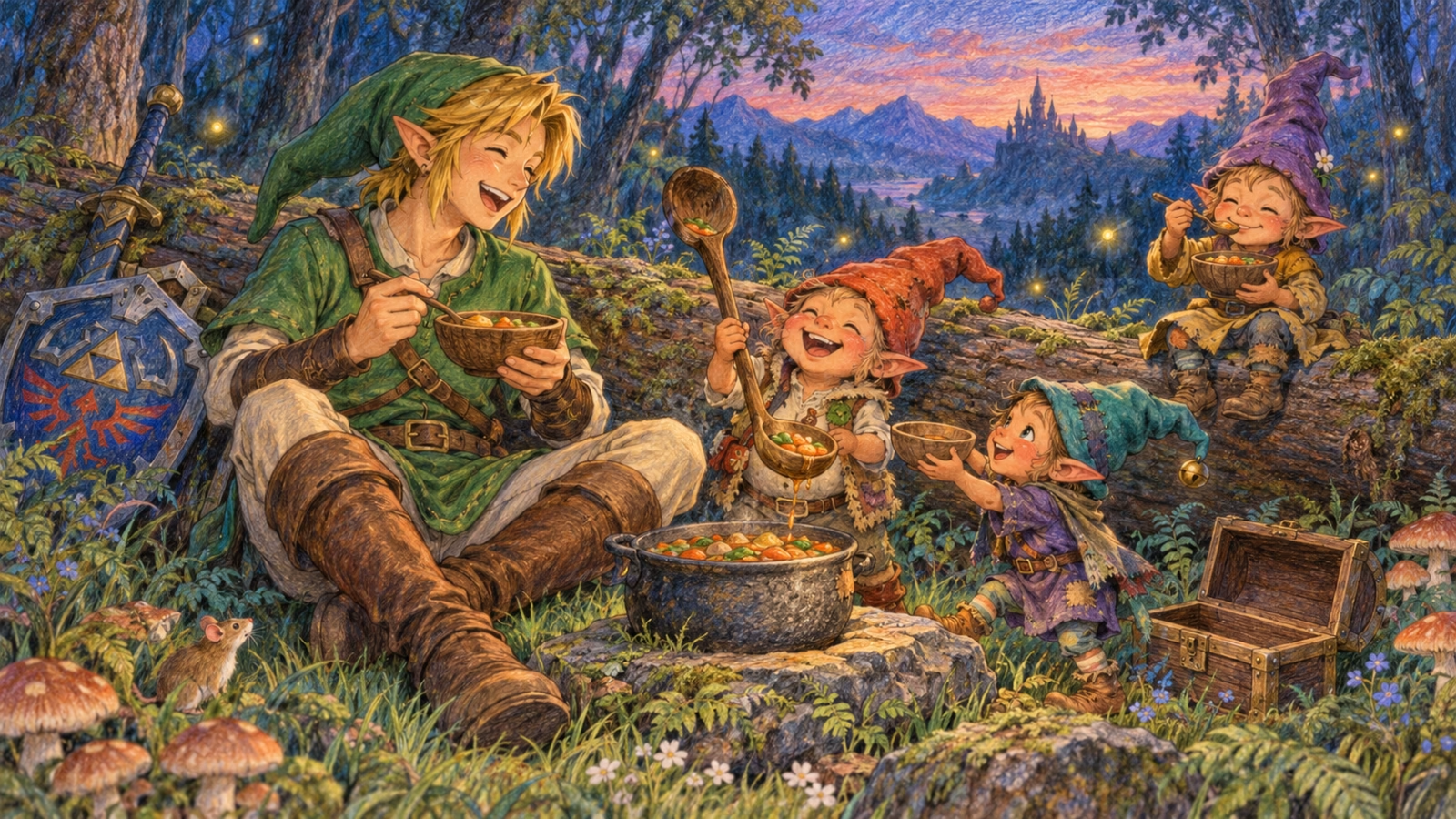
Link is a Magikito through and through. That evening he stayed for supper, muddy boots and all, and laughed with us about the treasure. In our woodland way of looking at life, an adventure gets even better when there's somebody to tell it to.
If you've ever finished playing Zelda, gone for a walk and eyed a tree as though it might be hiding a secret, you know the feeling. A little of the adventure comes with you. You want to turn that stone over, take the longer path and see where it goes. That's where you'll find us Magikitos, probably arguing about who ate the last biscuit.
Some Magikitos venture into dungeons. Others make room at the table when they see you coming. Sometimes it's the same fellow, with a sword against the tree and a ladle in his hand.
He took his sword when he left. We kept the ladle in a drawer. You pull the handle and it opens. Marvellous improvement.