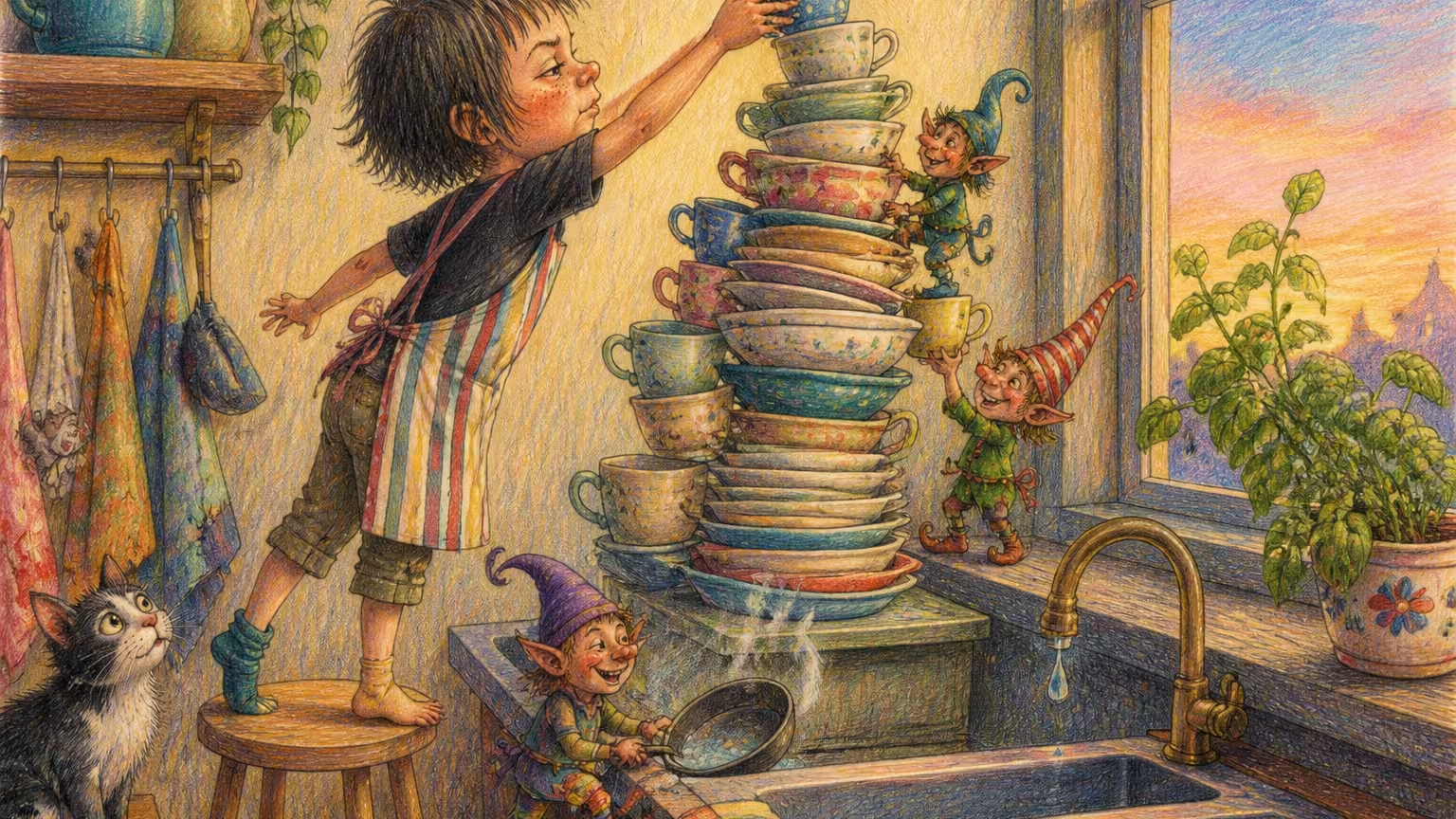
Last night the tower of plates in the sink reached a height that really should have needed planning permission. Nobody built it. Nobody got up at three in the morning with a burning ambition to balance mugs on top of bowls. It stacked itself, which is what plates do the moment you leave them to their own devices.
And here's the bit we Brownies have been chewing on for centuries: that's not you being lazy. That's just the universe quietly getting on with its little job. Everything that exists is, deep down, absolutely dying to turn into rubbish. Nose hair grows outwards without being asked, crumbs spread across the counter as though the most generous sower who ever lived had come through and flung them there, your body pipes up halfway through the film to say it needs the loo, and the drawer full of cables ties itself in knots while you sleep. None of that was your doing. All of it was entropy, the hardest working force in the cosmos and the only one that never takes a day off.
The wild part isn't that the world falls apart. The wild part is that you, every single day, win a few hands off it.
What Is Entropy and Why Does Everything Slide Into Mess?
Entropy is a measure of how disordered a system is, and the second law of thermodynamics says that in a closed system it never drops on its own: it climbs or it holds steady, never reverses by itself. Bring that into the kitchen and it clicks instantly. There are millions of ways for your plates to be strewn about and only a handful of ways for them to be stacked properly, so randomness is playing with a marked deck and mess wins by sheer statistical landslide. Tidiness isn't the natural state. Tidiness is the exception. Every time you put a plate where it belongs you're rowing against the widest current there is, and that current has nothing personal against you, it just runs downhill because downhill has room for everyone.
Which is why an empty house never tidies itself. A rock doesn't comb its hair. An abandoned wood doesn't rake up its own leaves. Matter with nobody living inside it sprawls out and feels no shame whatsoever.
The Only Things That Climb Are Alive
Notice one thing and you'll never quite unsee it: in the whole known universe, the only things that go uphill are the ones that breathe. A cracked glass doesn't reassemble. An eroded mountain doesn't heave itself back up. But an ant rebuilds the nest you trod on, a tree grows back the leaf it dropped, and you, without making a fuss about it, gather up every night what the day scattered.
A physicist called Erwin Schrödinger thought hard about this in 1944, asked himself what on earth life actually is, and landed on a gorgeous answer: a living thing is a little whirlpool that feeds on order so it won't dissolve. He called it feeding on negative entropy. We put it shorter, wearing an apron: being alive means doing the washing up. And washing up costs energy, always, because order isn't free anywhere in the cosmos. You pay for it in heat, in hours and in your lower back.
Mess Never Announces Itself
The sly thing about entropy is that it never arrives all at once. You'll never hear a crash. It just quietly totals up, a plate today, two shirts tomorrow, a tangled charger on Thursday, until one morning you open your own bedroom door and the place is an absolute tip and you can't work out where to even start. It isn't that you failed at something big. It's that you stopped winning small hands, and small hands collect on themselves.
That's where that very recognisable paralysis comes from, standing in the doorway staring at the damage without moving. The pile is frightening because you see all of it at once. And the only way to undo it is the opposite of how it was made: piece by piece, with your hands, no heroics required. One plate. Another plate. That's all elbow grease has ever meant, not lifting the whole house with a roar, just starting on the first item and letting the second come along on its own.
And the Stubbornest Front Is You
Because entropy doesn't stop at the worktop. It grows inside you too. Hair fires off in directions nobody chose, nails advance, teeth quietly acquire a coating unless you intervene, and your body requests the loo with a punctuality that frankly borders on rude. Your own body falls into disorder while you're still wearing it.
And there's the finest joke in the whole business, one that's fascinated us forever: you spend half your life keeping the house in order, and the other half keeping in order the creature that keeps the house in order. You shower, you cut your nails, you brush your teeth and you sleep, which is the cheapest overnight maintenance going. Nobody pays you for any of it. You still do it daily, because somewhere in your bones you know that whoever stops doing their own upkeep goes out sooner.
Why Does Cleaning Up Feel So Good?
Because your head pays you for winning a hand off entropy. Tidying turns a vague, shapeless problem into a visible finished result, and the brain rewards exactly that: a before and an after you can take in with one look. There's also an old, practical reason sitting behind the good feeling. A creature that didn't care about filth would eventually be eaten by its own filth, so nature stapled a little jolt of pleasure onto the act of clearing up so that no animal would forget to bother. The contentment you feel standing in a gleaming kitchen isn't some soft reward you invented for yourself. It's the receipt for a battle won, signed by biology.
And mind the nuance, because the nuance is the good stuff: the pleasure doesn't come from having a clean house. It comes from having cleaned it. Walk into a spotless kitchen tomorrow that somebody else sorted out and you'll find it pleasant, fine, nothing more. The deep glow, the one that leaves you sat down grinning like an idiot at your own worktop, comes from the effort you put in. No uphill, no prize. The bill and the tip are the same thing.
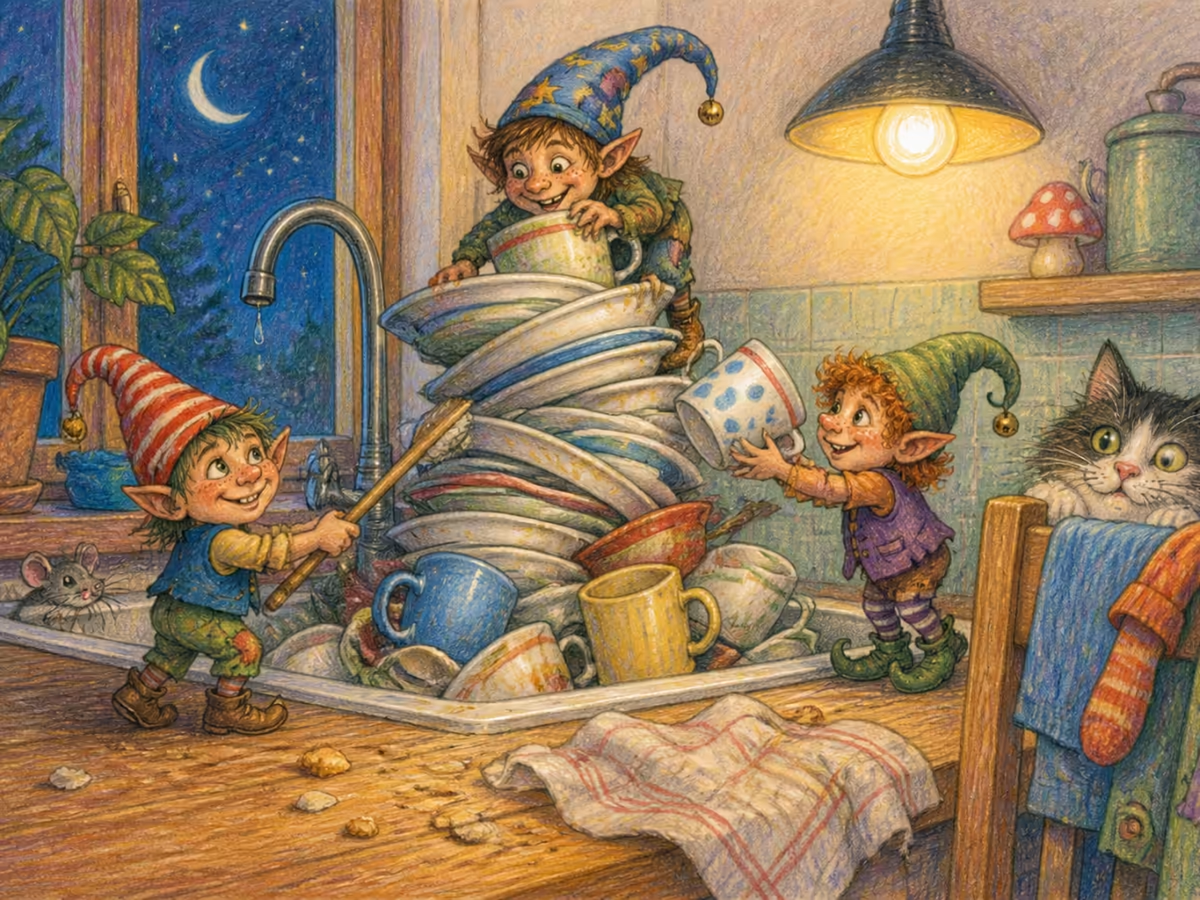
We know that tower well, because now and then we've given it a little nudge just to see how far it'll go. And we know something the sink keeps quiet about: it looks like a punishment and it's actually an invitation.
There's a specific pleasure stored in there that you can't get hold of any other way. You can't buy it, download it, or be given it. Only the mess itself hands it over, and only once you've undone it with your own hands.
Entropy isn't fighting you. It's just going downhill. You're the only one climbing.
Winning Isn't Winning Forever
Here comes the part you humans struggle with and we find hilarious. You'll wash those plates and tomorrow there'll be plates again. You'll trim that nose hair and it'll come back. You'll sort the drawer and in a fortnight it's a jungle of cables. Entropy never surrenders, and it isn't stubbornness either: it isn't even fighting, it's just letting itself fall.
Rather than getting you down, this ought to lift a weight off you. Nobody is asking you to win the war. The job is to win today's hand, and tomorrow, tomorrow's. The Japanese have a beautiful name for getting along with wear and tear instead of scrapping with it, and that's what wabi-sabi and the beauty of the imperfect is all about. A plate with a little use mark on it isn't a failed plate. It's a plate with a biography.
There's a Brownie trick for making the hill less of a hill, too: own fewer things that can go untidy in the first place. Every object that moves into your home brings its own surface area of chaos, its dust, its shelf and its moving day. That's why soulful minimalism isn't about living inside a white warehouse, it's about shrinking entropy's pitch.
Resting Is Part of the Deal Too
Let's be clear, because Brownies aren't the scouring-pad police: this isn't about living with a cloth permanently in your hand. You climb the hill in bursts and then you stop. A body that never rests doesn't tidy anything, it just shifts objects around with the lights off behind its eyes, and we went into that at length in the art of doing nothing. Entropy can wait an afternoon. It's been waiting fourteen billion years, it's in no rush.
What is worth doing is choosing your battlefield well. We kitchen Brownies are in no doubt about it, and it's no accident that the place where tidying feels best is the exact place where the cooking happens. There the fight against disorder converts straight into hot food, which is the oldest and most delicious way of imposing order on the world. In fact cooking is the highest art for precisely that reason: you take loose, scattered, raw things and you order them until they turn into something that makes people happy.
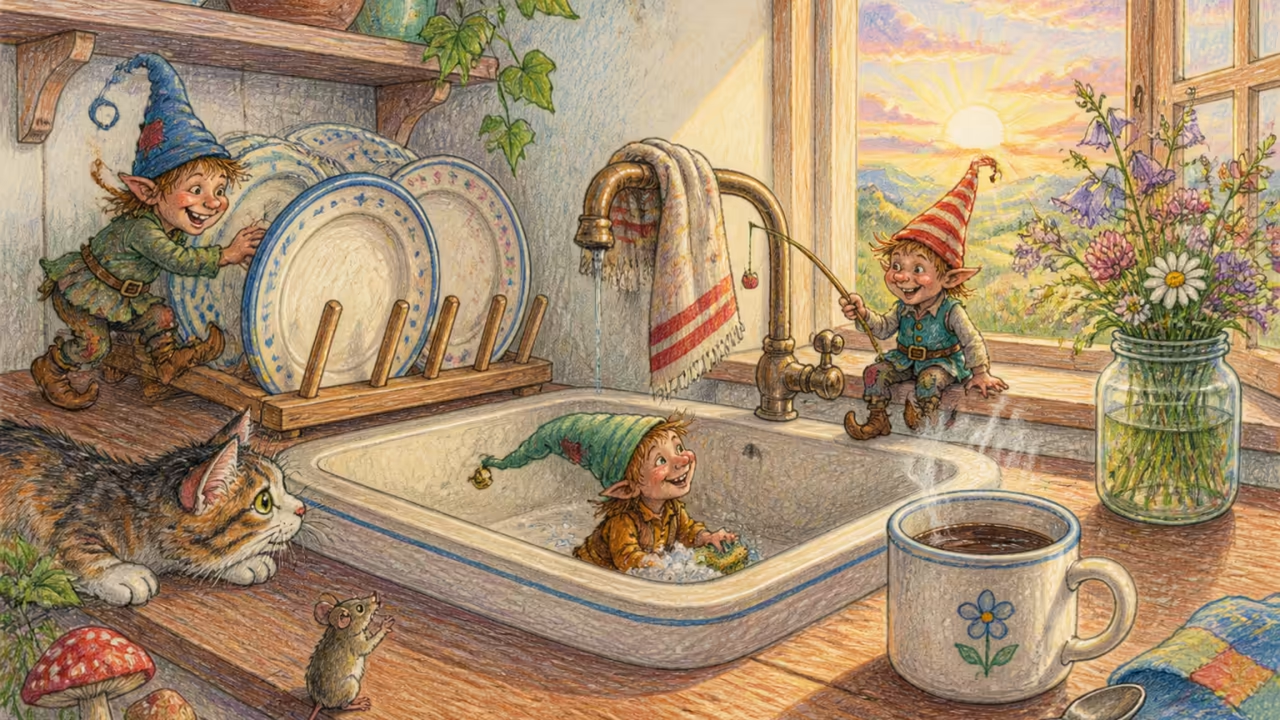
So next time you're squaring up to the tower of plates, rename the job. You're not doing a household chore. You are being, for eleven whole minutes, the only force in the known universe capable of making something go uphill. The entire cosmos is busy scattering, and you, armed with a scourer and a face on, are busy gathering.
We've been watching you lot do that from behind the spice jars for centuries, and we still think it's the bravest thing that happens in this house. Entropy always comes back, true enough. But so do you.