We live in a world obsessed with perfection.
Perfect photos, perfect bodies, perfect homes, perfect lives. Everything filtered, edited, polished until there’s not a single trace of real life left.
And right in the middle of all that, there’s a Japanese philosophy that says the opposite: imperfection is where the beauty is.
It’s called wabi-sabi (and its sibling practice, kintsugi, takes it even further). And honestly, it might be exactly what you need to hear right now.
What is wabi-sabi?
Wabi-sabi is tricky to translate because it’s more of an idea than a word. But let’s try:
- Wabi: The beauty of what’s simple, humble, and a little imperfect.
- Sabi: The beauty that comes with time, use, and getting older.
Together, they shape a way of seeing the world that celebrates:
- Cracks in pottery
- Wood worn smooth by years of use
- Wrinkles on skin
- Objects that tell stories through their little flaws
- The beauty of what’s unfinished, changing, and temporary
Why is everyone so obsessed with perfection?
Social media has kind of messed with our heads.
You see “perfect” lives all day. Bodies with zero cellulite, homes with no dust, relationships with no conflict. And your brain starts believing that’s normal, like you’re the only one who doesn’t have everything under control.
But it’s a lie.
Everyone has cracks. Everyone has crappy days. Everyone has clothes on the floor and half-dead plants.

The difference is, some people filter that reality, and some don’t.
Wabi-sabi reminds you that chasing perfection is exhausting and impossible. And that there’s another way to live: accepting and celebrating the imperfect.
What does wabi-sabi look like in real life?
Kintsugi: repairing with gold
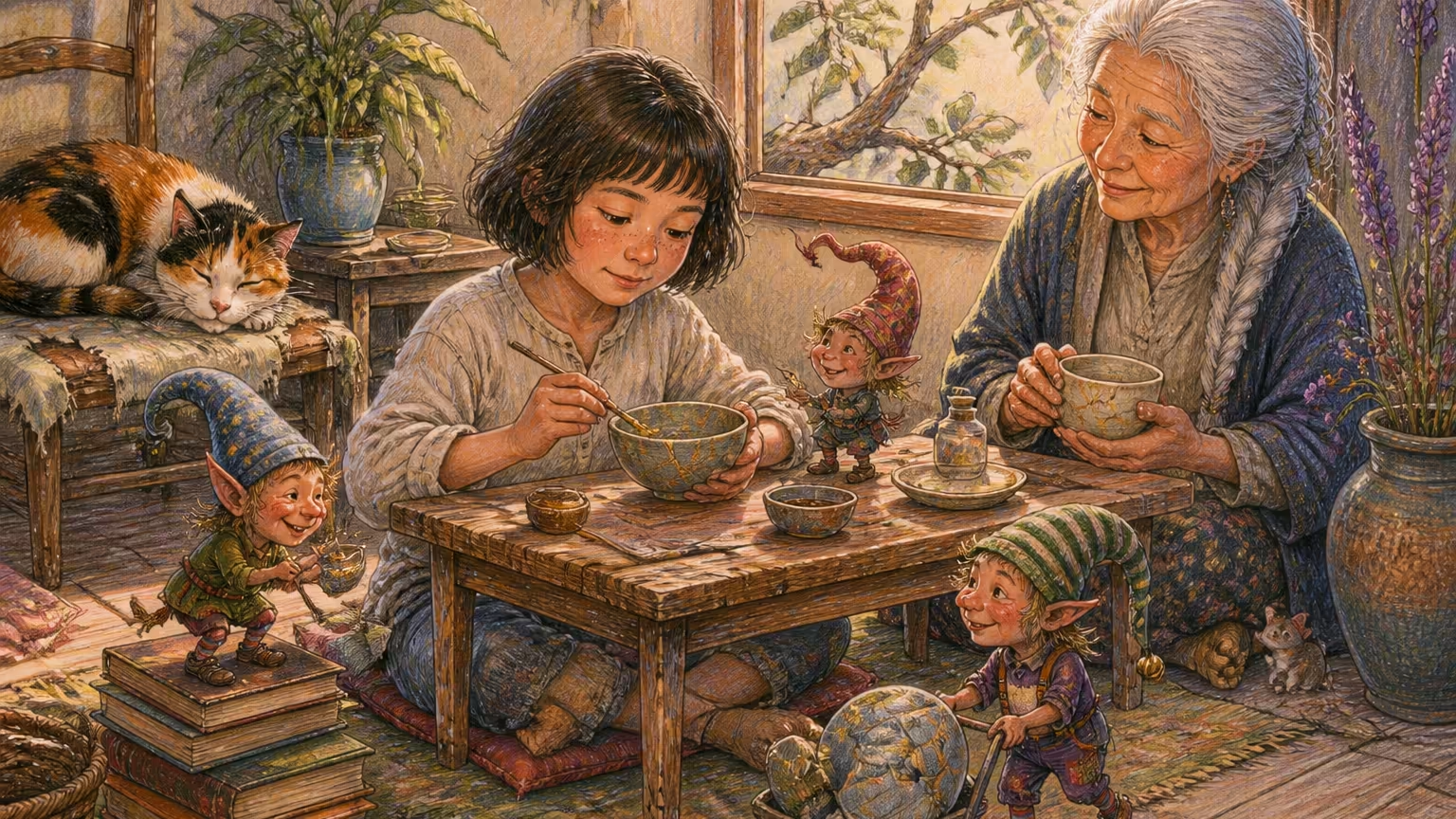
In Japan, when a ceramic bowl breaks, they don’t throw it away. They repair it with lacquer mixed with gold dust.
The result is that the cracks are traced in gold, visible, honoured. The object isn’t just fixed, it becomes more beautiful and more valuable because it was broken.
It’s the perfect metaphor: your scars are part of your story, not something to hide.
Furniture with a past
A perfect brand-new Ikea table has no soul. A table you inherited from your grandma, with knife marks, coffee stains, and memories from a thousand meals, that one does.
Wabi-sabi values objects that age, that wear down, that show time passing. Because those “flaws” are stories.
Japanese gardens
Zen gardens aren’t perfectly symmetrical or spotless. They have moss growing between stones, twisted branches, uneven surfaces.
That “imperfection” is on purpose. It’s nature being nature, without forcing fake order onto it.
Handmade figures
Something made on an assembly line is identical to a thousand others. No personality.
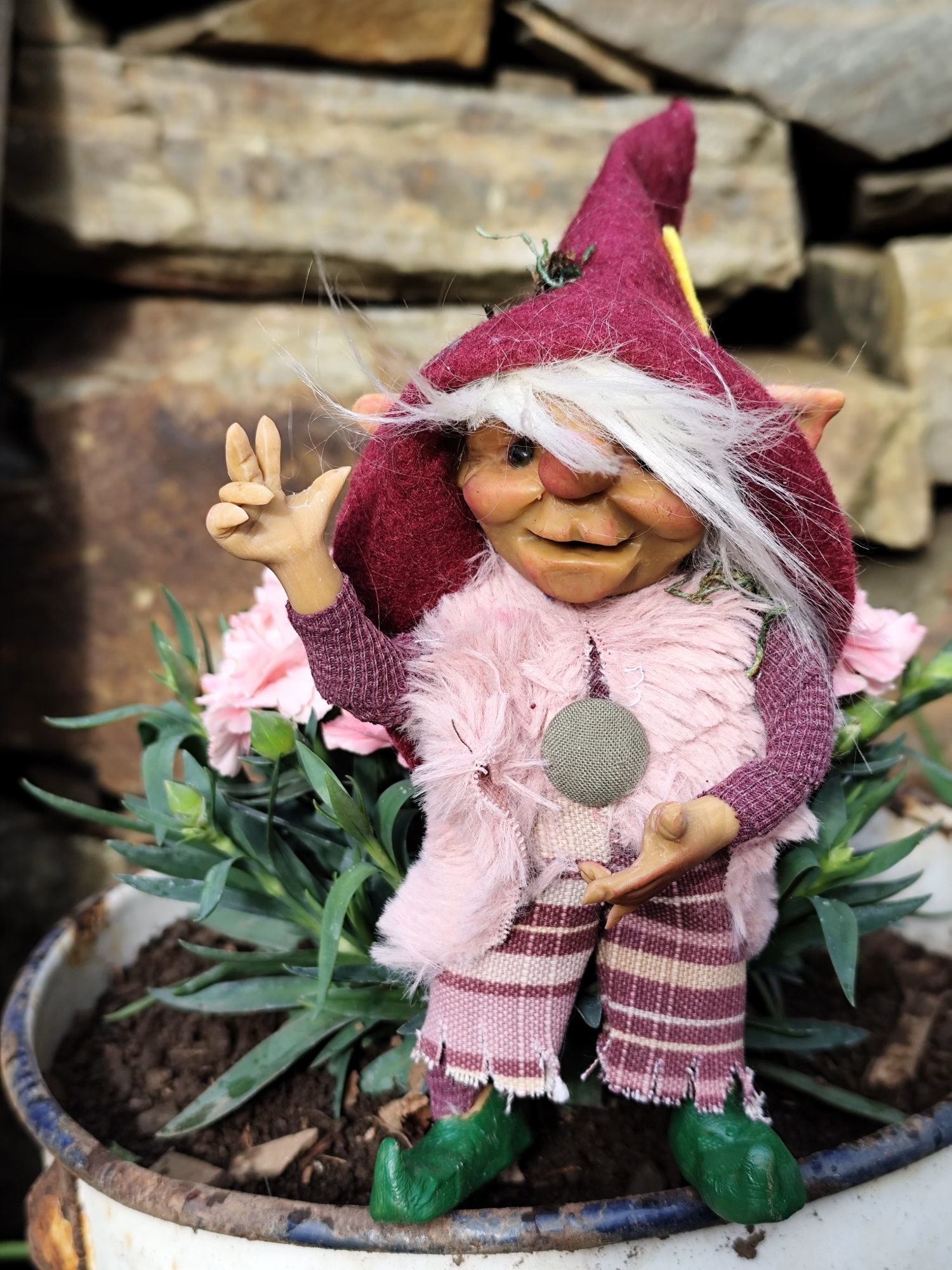
A handmade Magikito might have one eye a tiny bit bigger, a smile that leans to one side, a hat sitting cheeky. And that’s exactly why it has soul. Imperfection is what makes it one of a kind.
How to bring wabi-sabi into everyday life?
1. Stop hiding imperfections
That scar, that wrinkle, that scratched-up object, it’s not something to “fix”. It’s part of your story.
You don’t need filters in every photo. You don’t need perfect makeup every day. Your real face, with dark circles and a breakout, is fine too.
2. Choose objects with a story
Instead of buying brand-new, perfect, generic decor, look for things with a past:
- Second-hand furniture with marks from time
- Handmade pottery with uneven textures
- Unique artisan pieces instead of mass production
- Heirlooms that carry family stories
This isn’t about hoarding old stuff. It’s about choosing things with soul instead of sterile perfection.
3. Make peace with “useful” mess
Your home doesn’t have to look like a magazine. If you’ve got stacked books, plants doing their own thing, cushions out of place, it’s your home, not a showroom.
Wabi-sabi values lived-in spaces over staged spaces.
4. Celebrate getting older
Getting older isn’t failure. It’s living.
Your wrinkles are maps of your smiles. Your grey hairs are time medals. Your body changing is proof you’re alive and actually experiencing life.
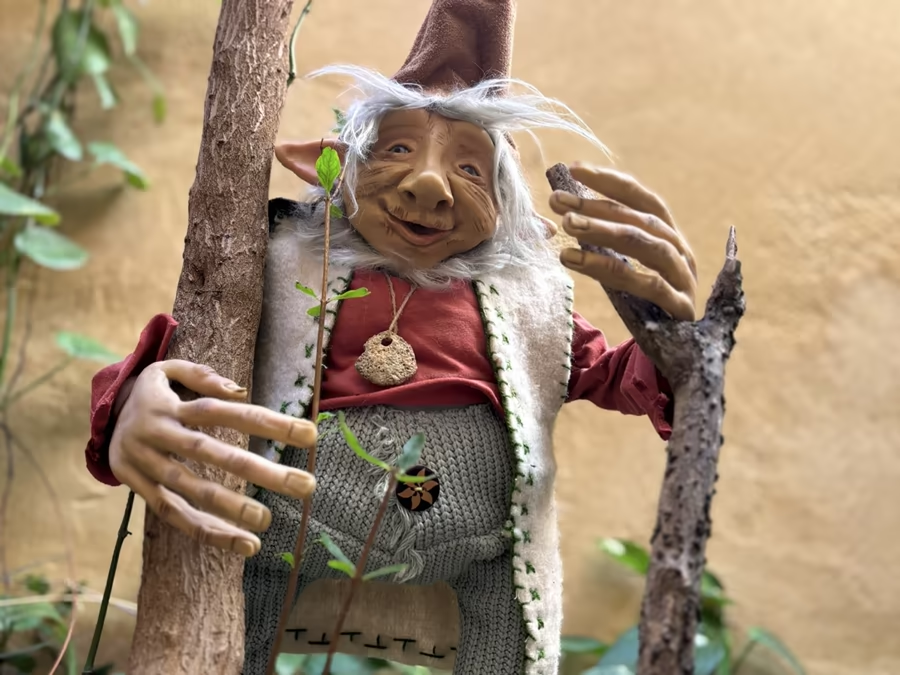
Wabi-sabi doesn’t fight time. It accepts it, respects it, celebrates it.
5. Make friends with your mistakes
That project that went sideways. That relationship that ended. That rough season you lived through.
They’re not failures to erase. They’re experiences that shaped you. Human kintsugi: cracks repaired with learning make you more special, not less worthy.
Wabi-sabi vs minimalism
A lot of people mix up wabi-sabi and minimalism. They overlap a bit, but they’re not the same:
| Minimalism | Wabi-sabi |
|---|---|
| Less is more | Simple is beautiful |
| Perfect order | Organic order |
| Clean, polished | Worn, lived-in |
| White, neutral | Natural textures, earthy tones |
| Remove what’s unnecessary | Honour what’s imperfect |
Both push back against excess, but wabi-sabi embraces imperfection, while minimalism often aims for a near-perfect simplicity.
You can mix them: minimalism with imperfect objects that still have soul.
What wabi-sabi is NOT
Before you run off in the wrong direction:
- It’s NOT laziness: It’s not “whatever, anything goes”. It’s choosing what’s real over what’s fake.
- It’s NOT dirt: A house dusty for months isn’t wabi-sabi. It’s neglect. Wabi-sabi likes simple and clean, it just accepts natural imperfections.
- It’s NOT an excuse for sloppy work: Doing a bad job isn’t wabi-sabi. It’s doing your best with care and accepting it will never be perfect.
- It’s NOT a hippie aesthetic: This isn’t about crystals and dreamcatchers. It’s a philosophy about accepting reality.
The key difference: Wabi-sabi is making your best effort and accepting an imperfect result. It’s NOT skipping the effort and calling it “wabi-sabi”.
Why wabi-sabi matters in the modern world
The world constantly tells you you’re not enough.
Not pretty enough, thin enough, successful enough, rich enough, productive enough, happy enough…
So you spend your life chasing an “upgraded” version of yourself you never reach, because the finish line keeps moving.
Wabi-sabi cuts that crap off at the root.
It tells you: you’re enough right now. With your cracks, your wrinkles, your bad days, your half-finished projects. Not when you achieve X thing. Now.
It’s not giving up. It’s being real. It’s stopping the fight against life’s imperfect nature and actually living it.
You’re practising wabi-sabi if...
- You value objects with a story over perfect new things
- You accept your wrinkles, scars, and marks of time
- You prefer imperfect handmade over mass-produced
- Your home looks lived-in, not like a catalogue
- You see beauty in what’s worn, old, and used
- You don’t try to hide every imperfection with filters
- You get that “good enough” is often better than “perfect”
Living with golden cracks
Life will break you. More than once. That’s part of the deal.
The question isn’t whether you’ll break, it’s how you’ll mend.
You can try to hide the cracks, pretend you were never broken, chase an impossible perfection.
Or you can do kintsugi on yourself: repair the cracks and leave them visible. Turn your wounds into part of your story, not something to hide.
That’s where real beauty is. Not in untouched perfection, but in lived imperfection, accepted, respected, honoured.
That’s wabi-sabi. And it’s way more real, and way more valuable, than any Instagram filter.