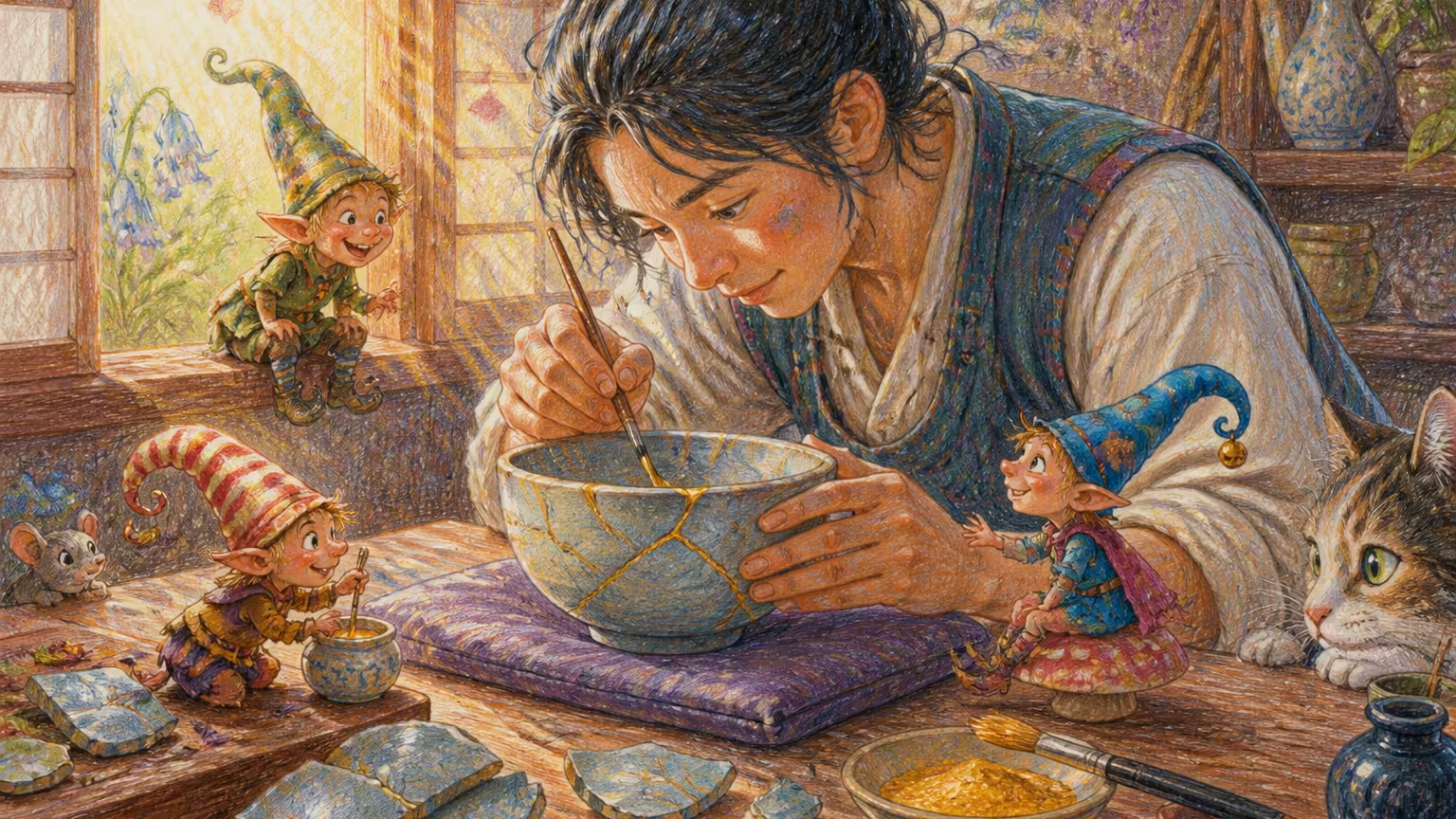
In Japan, when a bowl breaks, they don't throw it away. They repair it with gold. And the broken bowl becomes something more beautiful than the original.
Read that again. Because that sentence contains one of the most powerful ideas humanity has ever produced.
It's called kintsugi (金継ぎ). Literally, "golden joinery". And it's way more than a ceramic repair technique. It's a whole life philosophy compressed into a golden crack.
The story: a shōgun, a bowl, and an obsession
Legend says that in the 15th century, the shōgun Ashikaga Yoshimasa sent a broken tea bowl to China to be repaired. The Chinese sent it back stapled with metal clamps that worked, but they were ugly. Really ugly. And Yoshimasa, a top-tier aesthete, wouldn't accept it.
So he asked Japanese artisans to find a way to repair the bowl that was not just functional, but beautiful. And the artisans, in a stroke of genius that would change Japanese aesthetics forever, decided to fill the cracks with lacquer mixed with gold powder.
The result was extraordinary. The golden cracks didn't hide the break. They celebrated it. The broken, repaired bowl was more fascinating, more complex, more beautiful than the original intact bowl. The gold lines told a story. They said: "Yes, I broke. And look how beautiful I am now."
Yoshimasa went crazy over the result. And the technique spread across Japan, becoming one of the most refined artistic practices in Japanese culture.
The technique: patience, lacquer, and gold
Real kintsugi (not the glue-and-glitter version sold in Amazon kits) is a long, meticulous process. A single piece can take weeks or months to complete.
The basic steps are these:
- Gather all the fragments. Every piece matters. Every shard, no matter how small, has its place.
- Join with urushi. Urushi is a natural lacquer extracted from the Toxicodendron vernicifluum tree. It's strong, durable, and fun fact: it irritates the skin during application. Working with urushi requires gloves and experience.
- Wait. The lacquer needs time to cure. Weeks. You can't rush it. No shortcuts.
- Apply the gold. Once the lacquer is cured, gold powder is dusted over the joins. The gold sticks to the lacquer and creates those shiny lines that are kintsugi's signature.
- Polish. Polish carefully until the golden lines feel smooth. The bowl has to be usable. Not just for looking pretty, it's for giving it some action.
This whole process requires one thing our culture has decided is disposable: patience. There's no quick version of kintsugi, just like there's no quick version of real craftsmanship. There's no hack. No five-minute tutorial. Time is part of the repair. Just like in life.
Why does broken have more value in kintsugi?
This is where kintsugi stops being craftsmanship and becomes philosophy. Because the central idea of kintsugi isn't "repair pretty things". The central idea is this: breakage doesn't subtract value. It adds.
In Western culture, broken things get thrown away. Damaged things get discarded. Scarred things get hidden. "Like new" is the highest compliment we can give something repaired. We want it to look like it never broke. Like it has no history. No past.
Kintsugi says the exact opposite. It says: this object's history includes its breakage. And that breakage is part of what makes it unique. Hiding it would be lying. Celebrating it is honoring its complete story.
Does that ring a bell? Because this applies to people exactly the same way.
We're all broken somewhere. We all have cracks: failures, losses, disappointments, mistakes. And culture tells us to hide them. To pretend everything is fine. To look "like new".
Kintsugi says: show your cracks. Fill them with gold. Because those cracks are your story. And story is what gives you wisdom. And your story is the most valuable thing you have.
Magikitos and imperfection: a love story
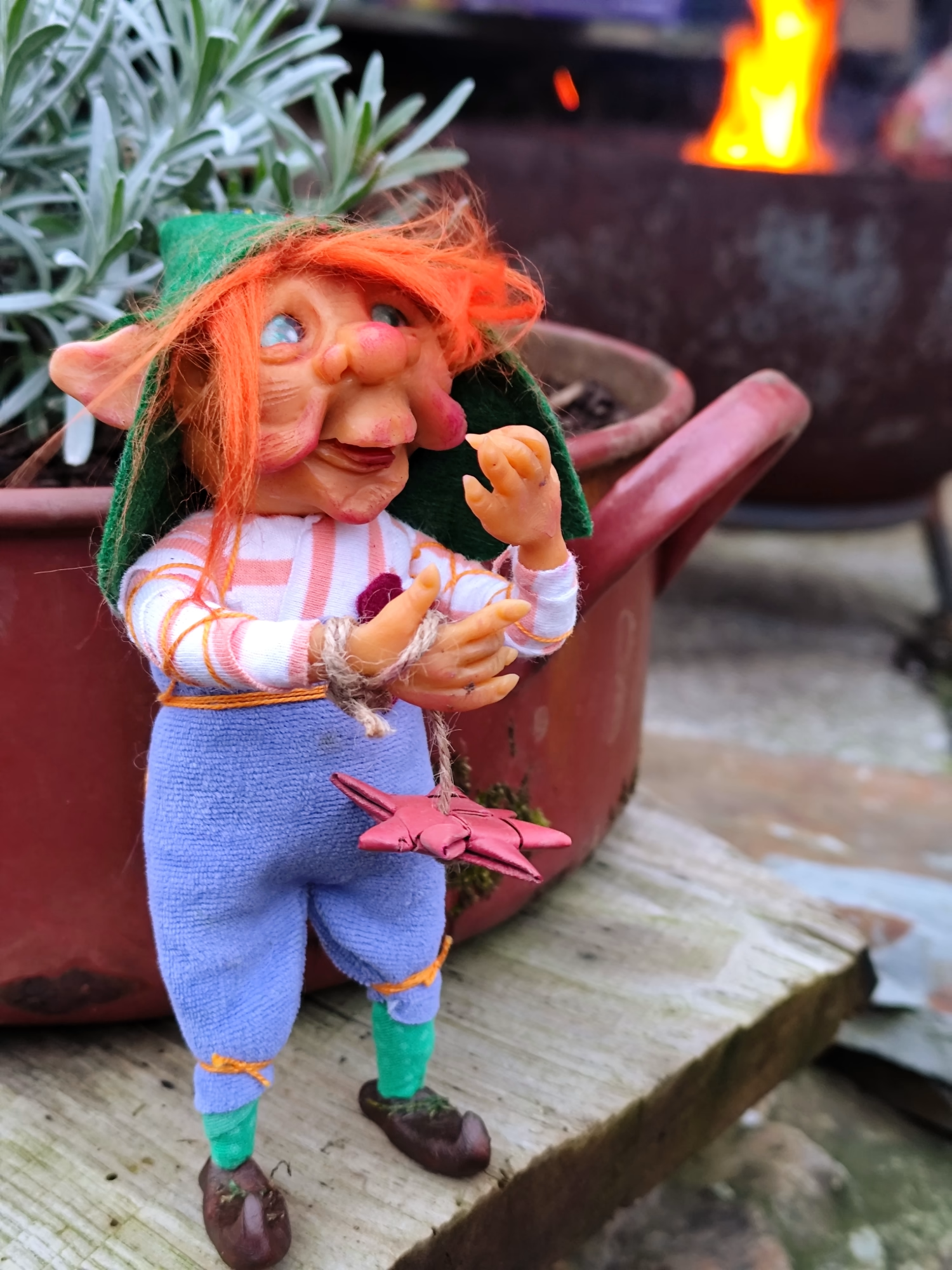
Magikitos are made by hand, one by one, without molds. And that means none of them is perfect. None is symmetrical. None has exactly identical eyes, exactly centered nose, or exactly straight smile.
And that's precisely what makes them special.
Each Magikito has its own asymmetry, its own quirk, its own "imperfection" that is actually its personality. One has a nose slightly crooked. Another has one eye bigger than the other. Another has a mushroom slightly tilted. And each of those "imperfections" is what makes that Magikito that Magikito and not another one.
When shaping a figure, we want it to look alive. Life is not symmetrical. Trees do not grow straight, mushrooms do not sprout in the centre and faces have their differences. Nature uses neither ruler nor compass. Neither do the Magikitos.
It's kintsugi philosophy applied to creation, pure wabi-sabi: not hiding what makes each piece different, but celebrating it. Not seeking industrial perfection, but artisanal authenticity. It's the Magikita philosophy in its purest form.
What is emotional kintsugi?
Let's get personal. Because this philosophy is useless if it stays on bowls.
We've all been broken. By a breakup, a professional failure, a loss, a betrayal, an illness. And the first reaction is always the same: wanting to go back to "before". Wanting to be "like new". Pretending it didn't happen.
Kintsugi proposes something radically different: don't go back. Don't pretend. Don't hide. Instead, acknowledge the break, repair it carefully (and that takes time, like urushi) and let the scars show. But not as marks of weakness. As lines of gold.
Every person who has overcome something hard has a strength they didn't have before. An empathy they didn't know. A depth that didn't exist. Those are the golden lines. And they're more valuable than any "perfect" version of yourself you ever imagined.
We're not saying breaking is fun. It's not. It hurts. But we're saying that after the break, what remains can be more beautiful, stronger, and more fascinating than what was there before. If you repair yourself with gold instead of shame.
Three kintsugi questions to ask yourself today
You don't need to buy a Japanese repair kit (though if you want to, go ahead). You can apply kintsugi to your life with these three questions:
- What crack am I trying to hide? Identify it. Name it. That alone is an act of courage.
- What did I learn thanks to that break? Look for the gold. There's always something. Patience, compassion, strength, perspective. The break always leaves a hidden gift.
- Can I show this scar without shame? Not to everyone. Not everywhere. But to someone? At some point? Sharing your cracks with someone you trust is the human equivalent of filling them with gold.
You don't have to answer them now. But let them stay with you. Like a golden crack that shines every time light hits it.
The most valuable bowl in the museum
In the Tokyo National Museum there are kintsugi bowls worth more than intact bowls from the same period and the same artisan. Literally. The Japanese art market values a broken piece repaired with gold more than a piece that never broke.
Think about that. In a culture that has decided that an object's history (including its destruction and repair) is what gives it value. Not its perfection. Not its original state. Its complete journey.
Magikitos understand this because they're born from hands that understand it. Hands that don't seek the perfect piece, but the living piece. The same hands that shape each piece in the Taramundi workshop. The one with character, personality, history. The one that looks at you from the shelf with one eye slightly higher than the other and precisely because of that seems to be winking at you.
That's the magic of kintsugi. You don't have to be perfect to be valuable. You have to be authentic. And cracks, when filled with gold, are the most authentic thing there is.