Making coffee can be a chore, or it can be a ritual. The difference is just one thing: attention.
We’re not talking productivity, “optimized” morning routines, or waking up at five to become a “better version of yourself”. We’re talking about something way simpler, and way deeper (a bit like kintsugi for your daily routine): turning the gestures you already do every day into moments that mean something.
A ritual doesn’t need candles, incense, or background music, although if you’re into that, go for it. A ritual only needs you to be there while you do it. Do it on purpose. And for that moment, don’t be somewhere else in your head.
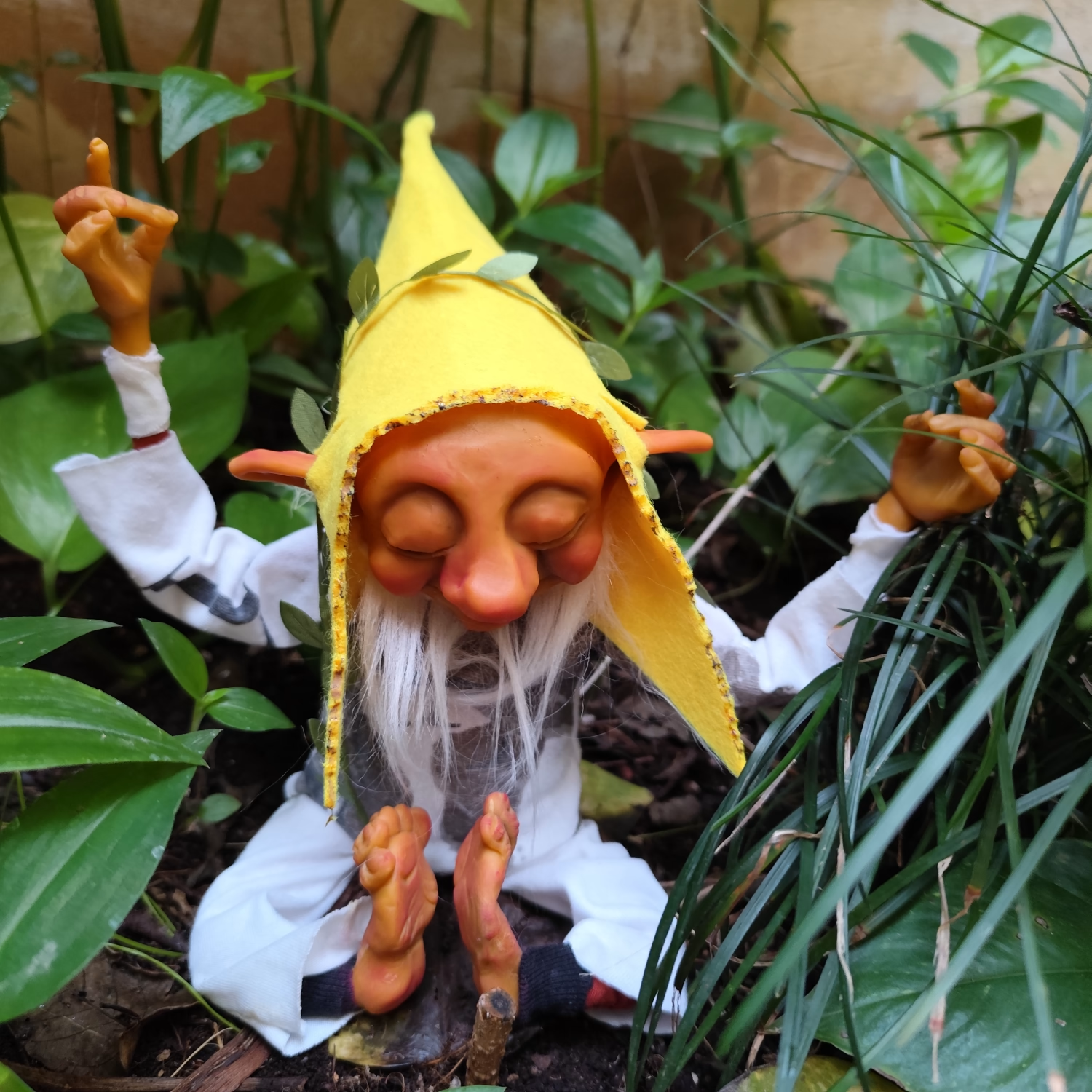
The Magikitos know this well. They’re basically the royalty of everyday rituals. You wanna know which ones? Alright then, hold on tight.
Why Is Morning Coffee the Most Underrated Ritual on the Planet?
Something like 8 out of 10 people have coffee in the morning. And almost all of them do it while staring at their phone, replying to messages, and cursing the alarm. Coffee becomes a task. Just one more link in the morning assembly line: shower, get dressed, coffee, rush out.
Nope. Your coffee deserves better.
Making coffee with intention looks like this: warm the water without rushing. Listen to it start to bubble. Smell the ground coffee before it goes in (that smell, honestly, that smell). Wait for it to brew without running off to do something else. Pour it into a mug you actually like, not the first cup you grab. Sit down. Take the first sip with your eyes closed.
Thirty seconds more than usual. Thirty seconds that change the tone of your whole morning.
In Japan, there’s a whole tea ceremony that can take hours. We’re not asking for that. We’re asking for thirty seconds of real attention. Not being somewhere else. Telling your brain, “This moment is real, and I’m in it.”
The Magikitos, by the way, have their own morning ritual. They wake up with the first sunbeam, wiggle their toes (the ones they’ve got), do a ridiculously dramatic yawn, and sit there watching how the light shifts in the room. They don’t do anything. They just look. And that “doing nothing” is what charges their batteries for the day.
Cooking: Meditation with a Knife
Cooking might be the most overlooked thing in the whole wellness universe. Everyone talks about meditating, yoga, mindfulness. Meanwhile the kitchen’s there, patiently waiting for someone to notice what it really is: one of the strongest meditation practices out there.
Think about it. When you cook for real, not when you shove leftovers in the microwave, you’re using all five senses at once. The smell of garlic turning golden. The sound of oil crackling. The way a pepper changes colour as it softens. Dough stretching under your fingers. The taste of the sauce you check before serving.
It’s hard to obsess over bills while you’re chopping an onion. Your brain can’t juggle abstract worries and complex sensory tasks at the same time. Cooking pulls you into the present. It kidnaps you from the past and the future and drops you right into now.
And then there’s feeding someone. Making food for another person, or for yourself, because that counts too, is pure care. It’s saying, “I love you enough to spend time making sure you’re nourished.” That’s a ritual, by definition.
The Magikitos have an official cook. He’s tiny, wears a white hat that’s way too big, and takes meal prep with a seriousness that’s honestly funny. Because for Magikitos, cooking isn’t a household chore. It’s an event. Ingredients get discussed like it’s a council meeting. The recipe gets voted on. And the first bite is celebrated with a round of applause.
Too much? Maybe. But next time you make the perfect omelette and it turns out amazing, try applauding yourself. You’ll feel ridiculous, and ridiculously good.
Walking: A Moving Prayer
We’re not talking walking to get somewhere. We’re talking walking just to walk. No destination, no hurry, no podcast in your ears.
In plenty of spiritual traditions, walking is a kind of prayer. People on long pilgrimage trails know it. Buddhist monks who practise kinhin, walking meditation, know it. First Nations and Aboriginal songlines and long walks of connection know it too. Walking with no external purpose is one of the oldest ways to feel the world, and yourself, again.
What turns a normal stroll into a ritual? Three things:
- Intention. Before you go out, decide this walk isn’t about arriving anywhere. It’s about being on the way.
- Attention. Look around like it’s your first time. The tree on the corner you’ve never really noticed. The texture of the pavement. The way the light hits the rooftops at that exact hour.
- Silence. No headphones, no calls, no WhatsApp. Your mind will be loud at first. Let it. It’ll get tired and quiet down. That’s when the walk really starts.
Twenty minutes. That’s all you need to turn a walk into a ritual that changes your day.
The Magikitos are terrible walkers, by the way. Their legs are ridiculously short and they trip over everything. Still, every sunset they go out for what they call “the long-shadow route”. They move slowly, they don’t have a choice. They stop every two steps to sniff things. And they celebrate every ant they spot like it’s a scientific breakthrough. If that’s not a ritual walk, we don’t know what is.
Tidying Up: The Art of Putting Things Back Where They Belong
Marie Kondo said it and the world lost its mind. But the idea that tidying your space tidies your head is way older than any bestseller. Zen monks sweep the temple every morning not because it’s dirty, but because the act of sweeping is the practice.
We’re not asking you to throw out your whole wardrobe and keep three shirts that “spark joy”. We’re asking something humbler: pick a moment in your day to put one thing back where it belongs. Just one.
It can be the coffee mug you just turned into a ritual. Wash it, dry it, put it away. With attention. No rush. Like a little closing gesture.
It can be making the bed in the morning. Not because “you have to”, but as a sign of respect for your space. A “thank you, bed, for last night’s rest. Here you go, ready for tonight.”
It can be clearing your desk at the end of the day. Not as an obligation, but as a closing ritual. “Work is done. This space is mine again.”
The Magikitos have a big problem with this one. They’re chaos at tidying. Things fall, places get mixed up, and sometimes they put socks in the fridge. That’s basically how the legend that Brownies steal socks was born. But they try. Every night before sleep, each Magikito puts one thing back. Just one. And for a fifteen-centimetre creature with porcelain fingers, that’s pretty impressive.
Winding Down: The Ritual Almost Nobody Does
We’ve got morning rituals. Sort of. Coffee, shower, the news. But the end of the day, that little bridge between “doing” and “resting”, almost nobody turns that into a ritual. People just turn off the TV, check their phone one last time, and collapse into bed.
That’s not winding down. That’s a faceplant.
A closing ritual can be anything that clearly, consciously marks the end of the day:
- Set out tomorrow’s clothes, not for productivity, but as a care move for tomorrow-you.
- Write down three good things that happened today. No fancy journal needed. A note on your phone works.
- A herbal tea in silence. No screens. Just you and the cup.
- Look out the window for a moment before you close the curtains. Say goodbye to the day.
What matters isn’t what you do. It’s that you do it on purpose. That you mark the moment. That you tell your brain, “Done. Now comes rest.”
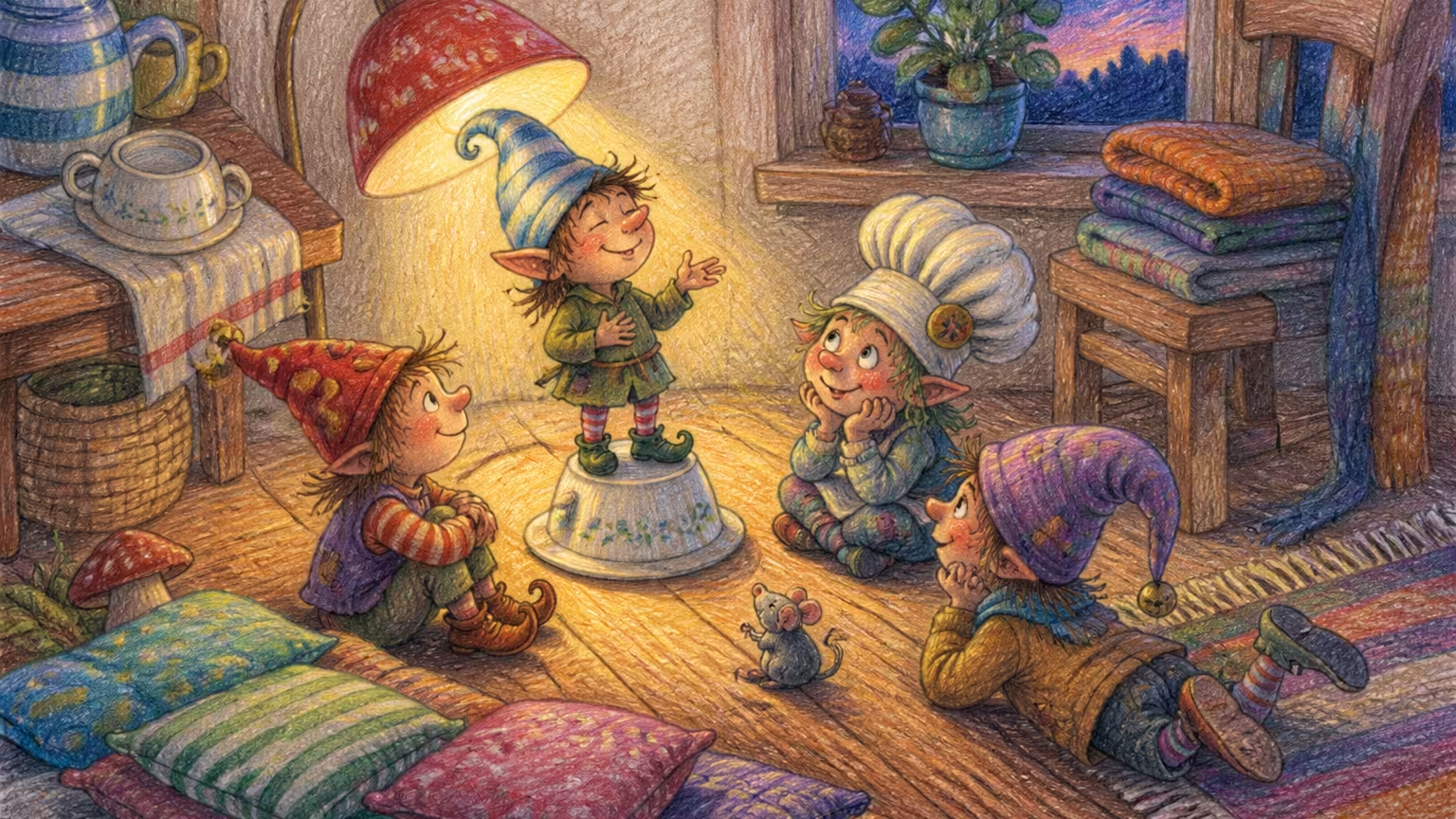
The Magikitos have a gorgeous closing ritual. When night falls, they all gather in the warmest spot in the house, usually near a lamp, and share the best moment of the day. One by one. No interrupting. Whoever had the best moment gets the honour of choosing the group sleeping position. It usually ends with everyone in a messy pile of arms, legs, and hats, but the intention is sweet.
Where Does the Magic Actually Live?
You know what makes a gesture a ritual? Repetition. A pretty Sunday coffee is a nice gesture. The same coffee, made the same way, every morning, with the same attention, becomes a ritual. And rituals have something loose gestures don’t: they build meaning over time.
Every time you repeat your ritual, it picks up a little more weight. Your favourite mug isn’t just a mug anymore. It’s your ritual mug. Your sunset walk isn’t just a walk. It’s your moment. Your reading corner isn’t just a chair. It’s a temple.
Rituals turn ordinary into sacred. No religion required. No special belief needed. Just conscious repetition.
One Ritual You Can Start Right Now
Pick one. Just one. The easiest one. The one that takes the least effort. The one you can do tomorrow without changing your life.
It can be coffee with attention. It can be a ten-minute walk with no headphones. It can be making the bed as a small thank-you. It can be writing one sentence before sleep.
Do it tomorrow. And the next day. And the one after that. Not because “you should”. But because every time you do it, you’re saying, “This moment matters. I’m here. And that’s enough.”
The Magikitos ritualise everything because they know something we forget way too often: life doesn’t happen in the big events. Life happens in the tiny daily gestures. In the coffee, the walk, dinner, the moment you switch off the light. And if those gestures are conscious, then your whole life becomes something extraordinary.
No need to disappear on a retreat. No need to meditate for two hours. No need to change anything except one thing: pay attention to what you’re already doing.
Turns out that, and only that, is where the magic is.