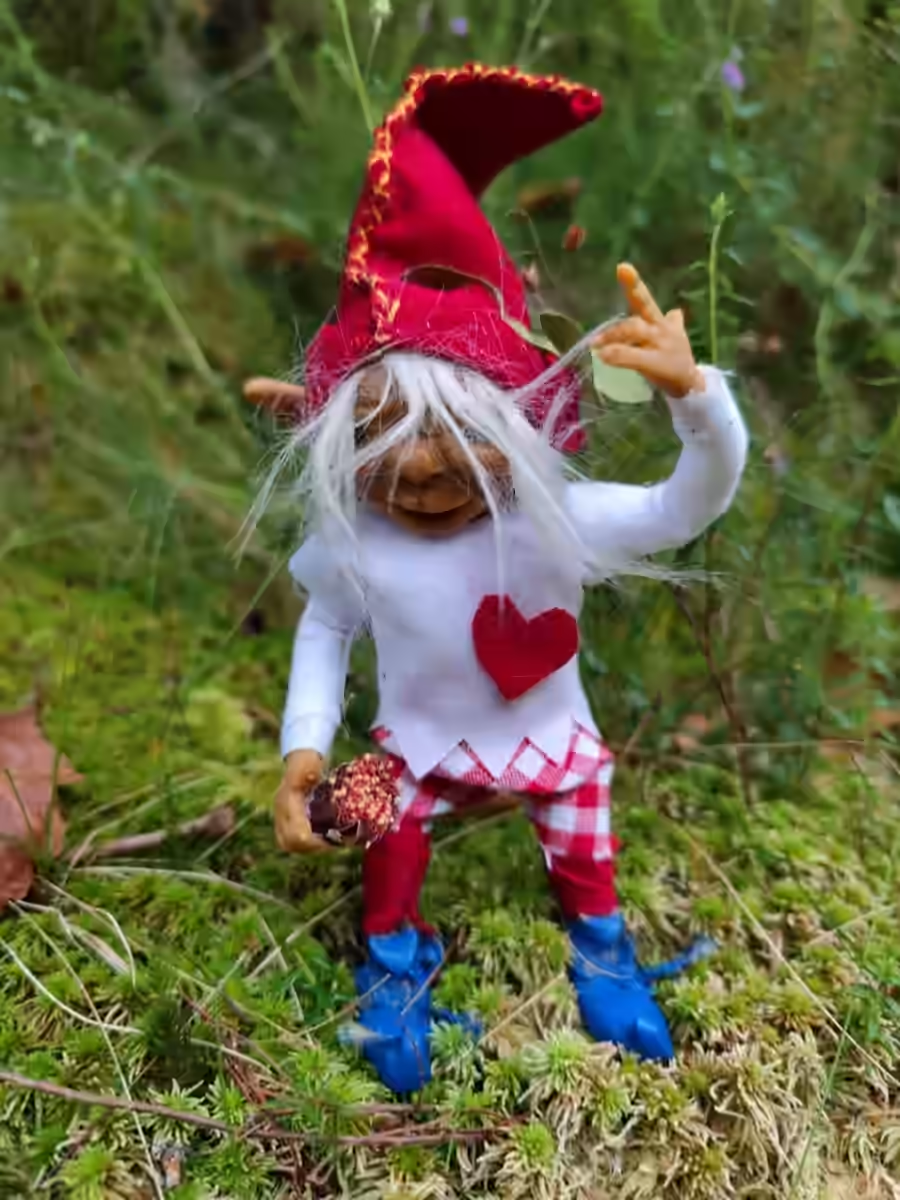
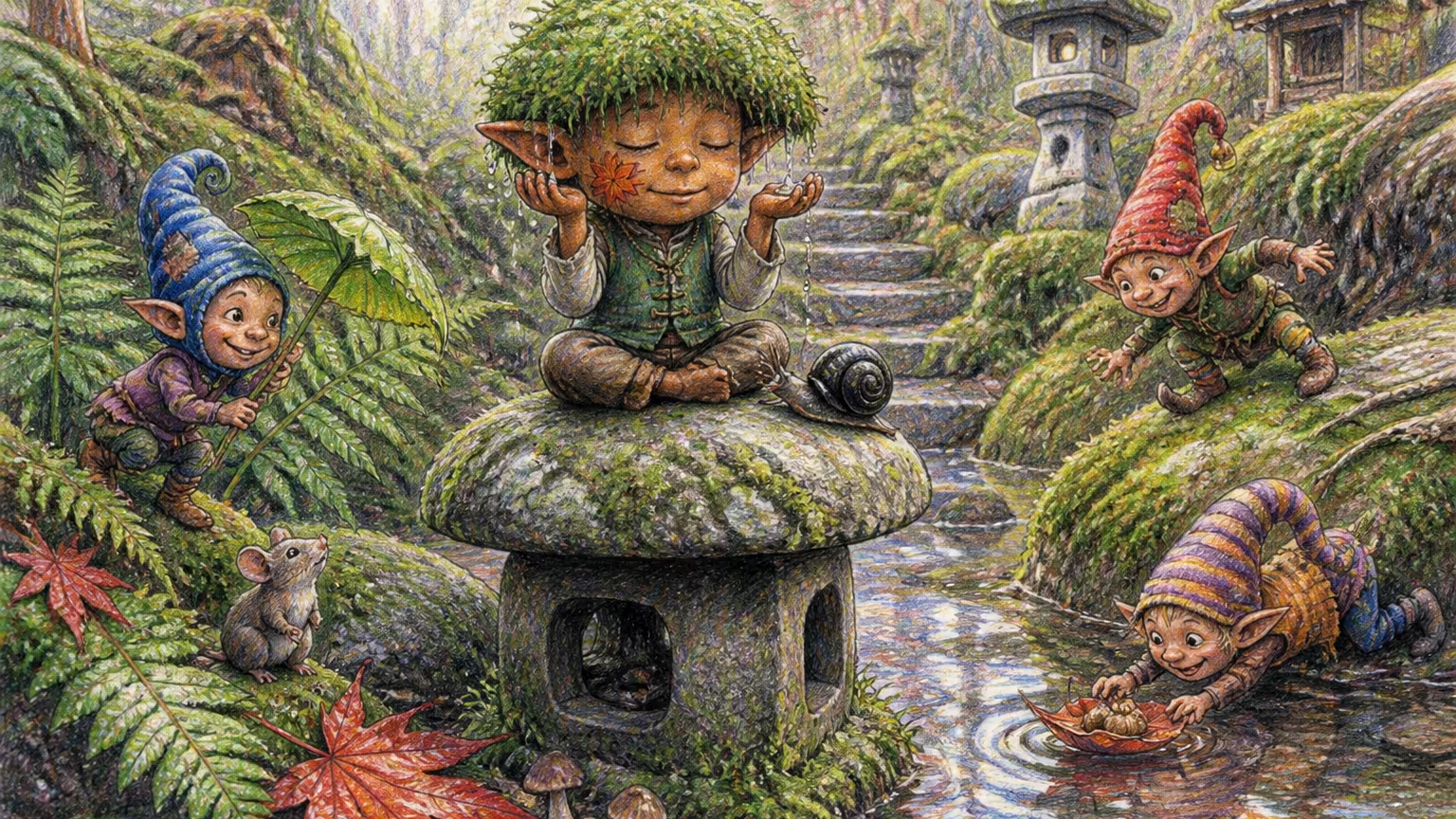
Moss has been on Earth for 350 million years. Three. Hundred. Fifty. Million. Even before forest bathing had a name, moss was already there, doing its thing. It’s older than trees, older than flowers, older than dinosaurs. It was here before almost everything you can name. And it’s still here, quietly doing its thing, growing in silence on stones, on logs, and on Magikitos’ heads.
And nobody talks about it.
Seriously, when was the last time someone told you a story about moss? We talk about majestic trees, jaw-dropping flowers, huge wild jungles. And moss, which has been here since before all that, stays in the background. Nature’s forever supporting actor. The quiet hero nobody claps for.
So today it gets its moment. Because moss deserves it. And you’re about to be amazed.
350 million years, just to get some perspective
To wrap your head around what 350 million years means, here’s the vibe:
- Dinosaurs showed up about 230 million years ago. Moss had already been hanging out here for 120 million years when the first dinosaur arrived.
- Flowers appeared around 130 million years ago. Moss already had 220 million years of practice.
- Trees as we know them are about 350 million years old too, but mosses and liverworts were the first plants to move onto dry land.
- Modern humans have been around for about 300,000 years. Moss has a head start of 349,700,000 years. Give or take.
And in all that time, moss hasn’t changed much. Because it doesn’t have to. It found a formula that works, and it’s stuck with it for hundreds of millions of years. That’s not stubbornness. That’s evolution being smart.
How does moss survive without roots? Nature’s slickest trick
Moss doesn’t have roots. Read that again, because it’s kind of a big deal. Moss doesn’t have roots.
So how does it survive? By soaking everything up straight from the air and rainwater. Every centimetre of moss is a living sponge, catching moisture, nutrients, and tiny bits from the world around it. It doesn’t need to dig into soil. It doesn’t need to compete underground. It just… drinks the air.
And that means it can grow where almost nothing else can. On rocks. On rooftops. On fallen trunks. On the walls of a 12th-century church. On a Magikito’s head (and honestly, they don’t mind). Moss doesn’t need soil. It needs moisture and time. And time is something it’s got plenty of.
Those little threads you see at the base (rhizoids) aren’t roots. They’re anchors. They hold on, they don’t feed. It’s like moss is saying, “I’ll grip here, but my dinner comes from the air.” Almost no other plant gets to live like that.
The forest’s sponge
Did you know a single square metre of moss can soak up to 20 litres of water? Twenty litres. In one square metre. It’s basically a giant sponge laid over the forest floor.
And that matters a lot for the ecosystem. Moss:
- Keeps forest humidity steady. It drinks water when it rains, then releases it slowly when things dry out. A natural auto-watering system.
- Helps stop erosion. By covering the ground like a carpet, it stops rain from dragging soil away. Without moss, lots of slopes would end up bare.
- Filters water. Water that runs through moss comes out cleaner. A top-tier natural filter.
- Builds tiny micro-homes. Inside a moss carpet, hundreds of tiny species live: mites, tardigrades, rotifers, nematodes. It’s a miniature jungle.
- Locks away carbon. Sphagnum moss peatlands store more carbon than all the world’s forests put together. Moss might be one of the best climate allies we’ve got.
A forest without moss would be like a house without foundations. It might stand for a bit, but sooner or later it all falls apart.
Japanese moss gardens, when Japan fell for green
In Japan, people have been cultivating moss for centuries as an art form. Not just any art either, zen art.
The Saihō-ji temple in Kyoto (known as Kokedera, “the moss temple”) has a garden with more than 120 different moss species. It was designed in the 14th century by the zen monk Musō Soseki, and it’s one of the most serene places on the planet. The whole ground is covered in moss, all in different greens, like an aquarelle painting you can walk into.
To visit Saihō-ji you have to ask permission weeks in advance. They don’t sell tickets. You write a letter, yes, a paper letter, to the temple requesting entry. If you’re accepted, the visit starts with calligraphy and meditation before you even step into the garden. Because moss isn’t something you rush past. You take it in.
Japan gets something about moss that a lot of us still miss: it’s not decoration. It’s presence. A moss garden doesn’t shout, doesn’t fight for your attention, doesn’t try to impress you with loud colours. It just sits there, green, soft, quiet. And inside that quiet there’s a depth flowers can’t really offer.
Why does moss smell so good after rain?
There’s a smell everyone knows, but hardly anyone can name: the scent of wet earth after rain. It’s called petrichor, and it might be the most universally loved smell there is.
Well, a big part of that smell comes from moss. When rain hits a mossy surface, geosmin molecules (made by soil bacteria) get released into the air, mixing with compounds the moss itself gives off as it rehydrates. The result is that impossible-to-describe scent that instantly drops you into a damp forest, a country path, something your brain files under “safe” and “good”.
Petrichor hits so deep that scientists think our reaction to it is baked in by evolution. For our ancestors, the smell of rain on soil meant fresh water, renewed plants, and food. That old reptile brain still reacts the same way. It smells wet moss and goes, “Good. We’re safe.”
Magikitos smell like moss. Not all the time, they’re not plants after all, but when the air gets damp, that real little patch of moss they carry on their head releases a soft scent that triggers that exact feeling. A tiny reminder, through your nose, that the forest isn’t far away. It’s right there on your shelf.
Bioindicator, moss doesn’t lie
Scientists use moss as a bioindicator of air quality. Since moss absorbs everything straight from the air (no roots to shield it), it builds up exactly what’s in the atmosphere inside its tissues. Pollution? Moss takes it in. Heavy metals? Moss concentrates them. Clean air? Moss thrives.
It’s like a live, natural sensor. If moss is healthy somewhere, the air is good. If it dies off or won’t grow, something’s not right.
When you see moss growing lush in the forests of Taramundi, you know the air there is clean. When you see moss covering stones in a mountain stream, you know the water is pure. Moss is living proof that an ecosystem is working.
And when you see moss on a Magikito’s head, you know that creature comes from a place where nature still calls the shots. Where the air smells green and the rain sounds like music.
Quiet toughness
Moss has a superpower nobody expects from something so soft and discreet: it can survive being completely dried out.
Lots of moss species can lose almost all their water, stay dry and apparently dead for weeks, months, even years. Then rain comes back, they rehydrate, and they’re alive again like nothing happened.
Some mosses have been rehydrated after sitting in herbariums for more than a hundred years, totally dry. And they started growing again. A hundred years without water. Still alive.
That’s not just resilience. That’s cosmic stubbornness. The kind of determination that would make any motivational coach tear up.
Tardigrades (those tiny indestructible micro-creatures that can handle the vacuum of space) live in moss. It’s their favourite home. The toughest beings on the planet chose to live inside one of the toughest plants on the planet. Not a coincidence. Survivors recognise survivors.
Why it grows on Magikitos
At this point, the question almost answers itself. But let’s say it anyway.
Moss grows on Magikitos because Magikitos are forest creatures. And in a forest, moss is everywhere. On stones, on trunks, on roots, on the ground. Moss is the forest’s texture. Taking moss away from a forest is like taking the salt out of the sea.
But there’s more. Moss on Magikitos goes way beyond decoration. It’s pure identity. Proof that this creature has been in the woods. That it’s slept on damp stones, walked through ferns, and breathed the same air as Taramundi’s centuries-old chestnuts.
The moss on a Magikito is real moss. Not green plastic glued on. It’s mountain moss, carefully gathered, treated so it lasts, and placed on each creature like a leafy crown. Every Magikito carries a piece of forest on its head. Literally.
And that’s the beauty of moss: it doesn’t need to be flashy to be essential. No showy flowers, no loud colours. But without it, a forest wouldn’t be a forest. Rivers wouldn’t run clean. The air wouldn’t smell of petrichor. And Magikitos wouldn’t be Magikitos.
Three hundred and fifty million years of silence. Of growing slowly, of soaking everything in, of surviving everything. Moss is nature’s most low-key hero. And it was about time someone said it out loud.