
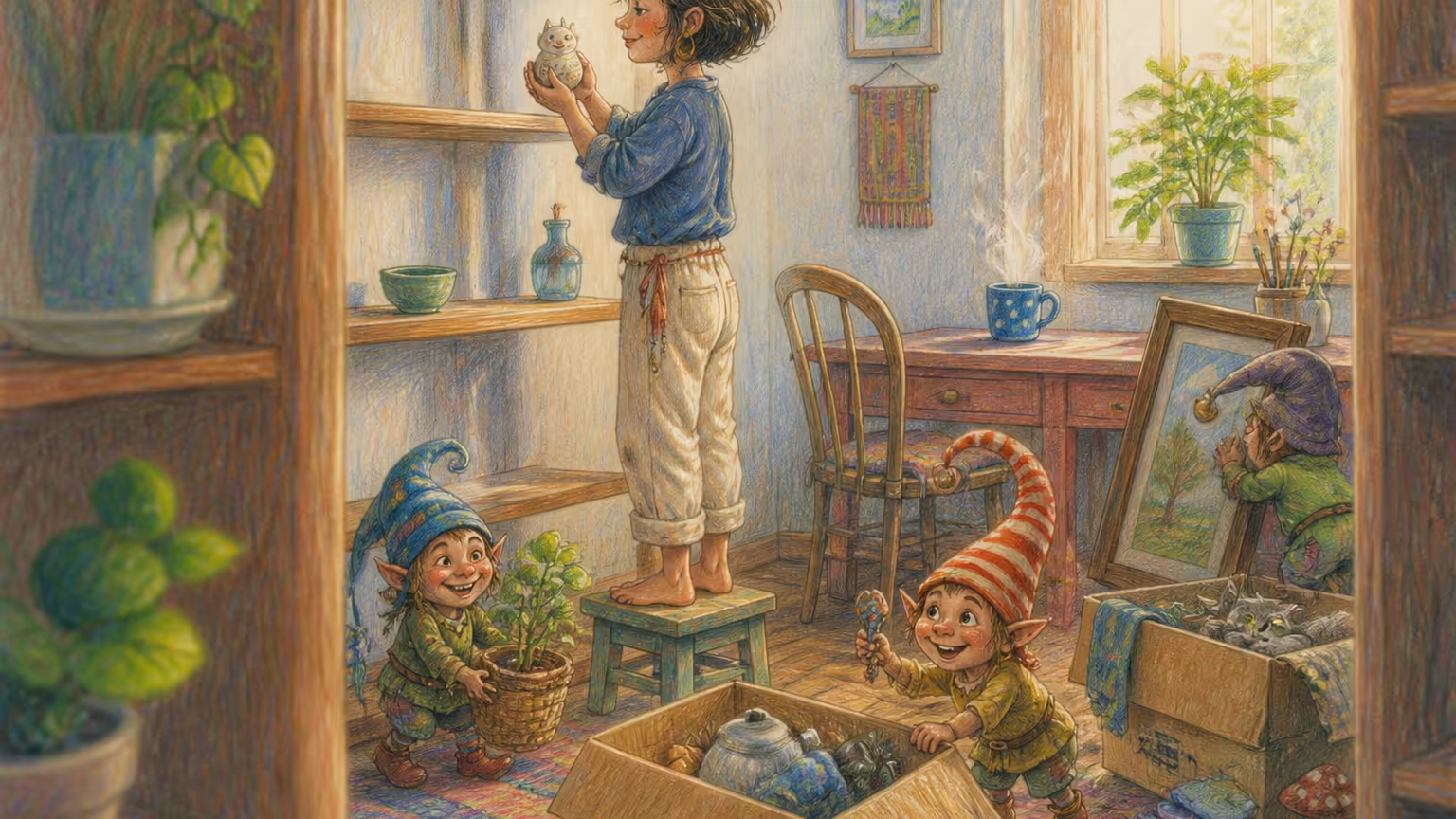
You open a drawer for the scissors and find five tin openers, a cable of unknown ancestry and a key to a door that may no longer exist. The scissors, naturally, are elsewhere. The tin openers appear to have formed a committee. Nobody is taking minutes.
It is tempting to clear out the entire house. Then you find a postcard, remember who sent it and lose the urge to chuck everything. Quite right too. Making room to cut a piece of paper needn't require every keepsake to submit a planning application.
What does living with less mean?
As an approach to everyday life, minimalism involves reducing possessions and consumption to make room for what matters to you. There is no number of belongings that suits everyone. Here we are trying a few practical ideas, without turning the house into an assessment of your character.
Some people love a nearly empty room. Others enjoy books, colour and shelves full of memories. A colour scheme cannot tell you how much soul a home has. More useful questions are whether you enjoy living there, can find what you need and can look after the things you want to keep.
Not everything has to earn its keep
A frying pan helps you cook. A photograph might remind you of your grandad. A cold porcelain woodland figure may appeal because he looks as though he is plotting something. These are different reasons to keep things. You needn't invent a practical job for the little chap to justify liking him.
Nor is everything kept “just in case” clutter. A hard-to-find spare part, an occasional-use tool or clothes for another season can be worth keeping. Giving something away and buying it again later won't necessarily save space, money or effort.
Questions that help more than a quota
| What you have | A useful question |
|---|---|
| Something you use | Can I reach it when I need it? |
| A keepsake | Do I want to keep it, even if it isn't on display? |
| Several similar things | Do they do different jobs, or could I manage without some? |
| Something broken | Can it be repaired, and is that worthwhile for me? |
Your answers may change with a move, caring responsibilities, working from home or a new hobby. There is no reason to keep the same inventory throughout your life.
Leave Marie Kondo out of the furniture fight
Marie Kondo distinguishes her method from minimalism. Keeping things you cherish can include a sizeable collection. An empty home is not the objective.
Presenting another approach as her method's “superior” successor would create a competition we don't need. Explore different ideas and take what helps. The suggestions below are an everyday experiment, not an official version of the KonMari method.
Start somewhere small
Choose one specific nuisance
Perhaps there is nowhere to put a plate on the table, or finding the keys is a daily faff. Start there. Emptying every cupboard at once can leave you with nowhere to sleep and no enthusiasm left before supper. One drawer offers plenty of entertainment.
Work out what each item needs
Separate what you are keeping, returning, repairing or passing on to somebody who wants it. Before donating, check what the organisation accepts and in what condition. Things that cannot be used again need the appropriate local collection or disposal service. A bag by the door is still a job waiting to happen.
If a keepsake leaves you unsure, put that decision aside. You don't have to sort out your whole life while sorting a drawer. Discuss shared belongings with the other people involved. Being keen to declutter does not make their things yours to give away.
Try the space before buying a solution
Put what you are keeping somewhere you can reach and remember. Try boxes and dividers you already own first. Buying twelve organisers for six bits and bobs can be a remarkably expensive way of getting back to square one.
There is room for the red hat
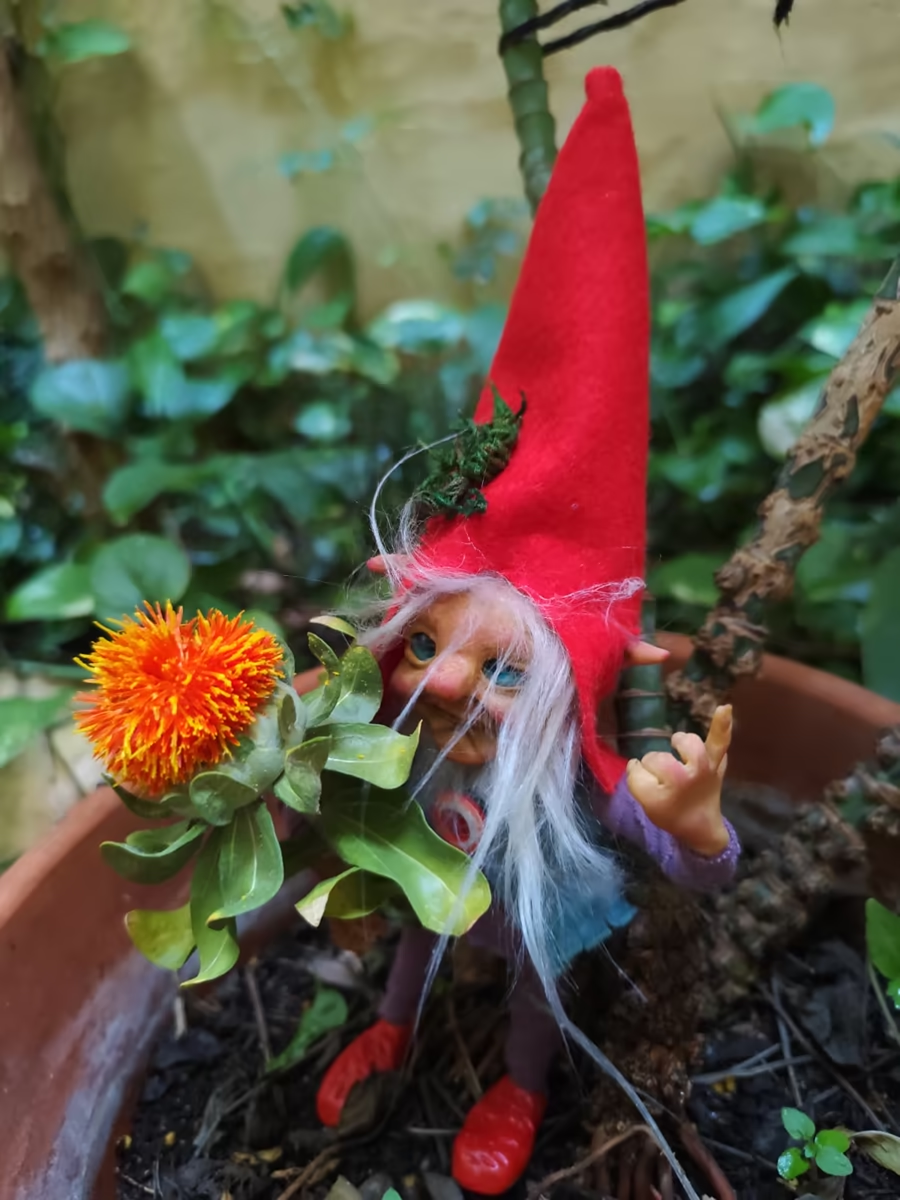
When we talk about objects “with soul”, we mean affection, stories and personal taste. That might mean a handmade figure, a mass-produced mug or a stone you already treasure. Price and rarity don't decide how much something means to you.
In Magikitos fiction, Magical Sparks help shape the woodland characters. The figures represent them. That imaginative game can sit alongside your memories, but it doesn't give an ornament real protective powers or mean you need to buy one. Your own little treasures are a perfectly good place to start.
Looking after things needn't mean spending more
A handmade piece can be beautifully made, and so can a factory-produced object. Price alone doesn't tell you how long either will last. Look at materials, joints, care requirements and repair options. Our comparison of handmade and mass-produced objects explores the differences without making every purchase a moral test.
You don't need to replace an inexpensive item that works with its designer “minimalist” equivalent. Cold porcelain doesn't become indestructible because somebody shaped it by hand, either. Looking after what you have is usually a more concrete task than pursuing the perfect collection.
Must something go whenever I bring something home?
No. “One in, one out” can help when a particular cupboard is too full, but it is optional. Getting rid of something necessary just to balance the numbers makes little sense. Start with what you need and the space available.
If a purchase can wait, give yourself some time. Check whether you already own something suitable, could borrow it or can comfortably afford it. There is no magical thirty-day point at which a passing fancy automatically becomes a sensible buy.
A home that fits your life
In the kitchen, consider how many people eat there and when you can wash up. In the wardrobe, think about weather, work and laundry. In your workspace, keep what you need within reach. Let the quantities follow your life, rather than arranging your life around the quantities.
A clear patch can be useful for working, playing or putting down a mug. It doesn't have to cure stress or improve productivity. If you can find the scissors and still have the postcard you wanted, you have achieved something worthwhile. The committee of tin openers can meet another day.