The word “altar” sounds religious: candles, saints, complicated rituals... But a modern personal altar isn’t about that.
It’s simply a physical space dedicated to what matters to you. That’s it. A place where you keep meaningful objects that hold your intentions, your values, or just make you feel good.
You don’t need to believe in anything specific. You don’t need elaborate rituals. You just need the conscious choice to create a space that feels like YOUR safe corner.
This guide shows you how to set up an altar that’s practical, personal, and free of forced woo-woo.
What is a personal altar?
Personal altar = a physical spot where you place your attention on purpose.
It can be:
- A meditation nook with a cushion, a candle, and calming objects
- A small table with photos of people you love
- A shelf with objects that represent your goals (trips, projects, dreams)
- A space with natural bits (stones, plants, branches) that ground you
It works because our brains love dedicated spaces. When you create one specific place for reflection, gratitude, or intention, your mind starts treating it like an anchor.
Why create an altar?
An anchor for mindfulness
When you walk past your altar, it nudges you back into the present. It’s like a mindfulness practice built into your space.
Clearer intentions
Seeing objects that represent your values or goals every day strengthens your commitment. This isn’t “mystical manifestation.” It’s basic psychology: visual reminders work.
A pause button
Modern life is a constant rush. An altar is a place where you STOP. You breathe. You come back to yourself.
A way to show who you are
Your altar says a lot without a single word. It’s a tangible self-portrait of your inner world.
How to create your altar step by step?
Step 1: Pick the purpose
Not all altars are the same. Ask yourself: What do I want this space for?
Examples:
- Meditation altar: A spot for a daily calm practice
- Gratitude altar: A place to remember what you value
- Intention altar: A space that supports goals and projects
- Grief altar: A place to process loss and honour memory
- Creativity altar: A space that sparks your creative side
- Nature altar: A connection point with natural elements
You can have several altars with different purposes. Or one that blends a few.
Step 2: Choose the location
Your altar needs a place where:
- You’ll see it regularly (not hidden in a closet)
- You can have privacy if you need it (not in everyone’s walkway if you live with others)
- You feel comfortable spending time
- There’s a stable surface (table, shelf, floor with a cloth...)
Common options:
- A bedroom corner (private personal altar)
- A little table by a window (natural light)
- A dedicated shelf
- The floor with a meditation cushion + objects around it
If you’re into Feng Shui, think about direction and how the room’s energy flows.
Step 3: Choose a base and a simple structure
Your altar can be:
- A small dedicated table
- A pretty tray on top of existing furniture
- A single shelf
- A cloth/tablecloth on the floor
- An open wooden box
Important: the material changes the feel. An altar on a cheap plastic tray doesn’t feel the same as one on wood or stone. Pick what clicks with you.
Step 4: Choose your objects (this is the fun part)
This is where the altar becomes YOURS. No strict rules, just helpful principles:
Natural elements (grounding)
- Stones, crystals, shells
- Living or dried plants
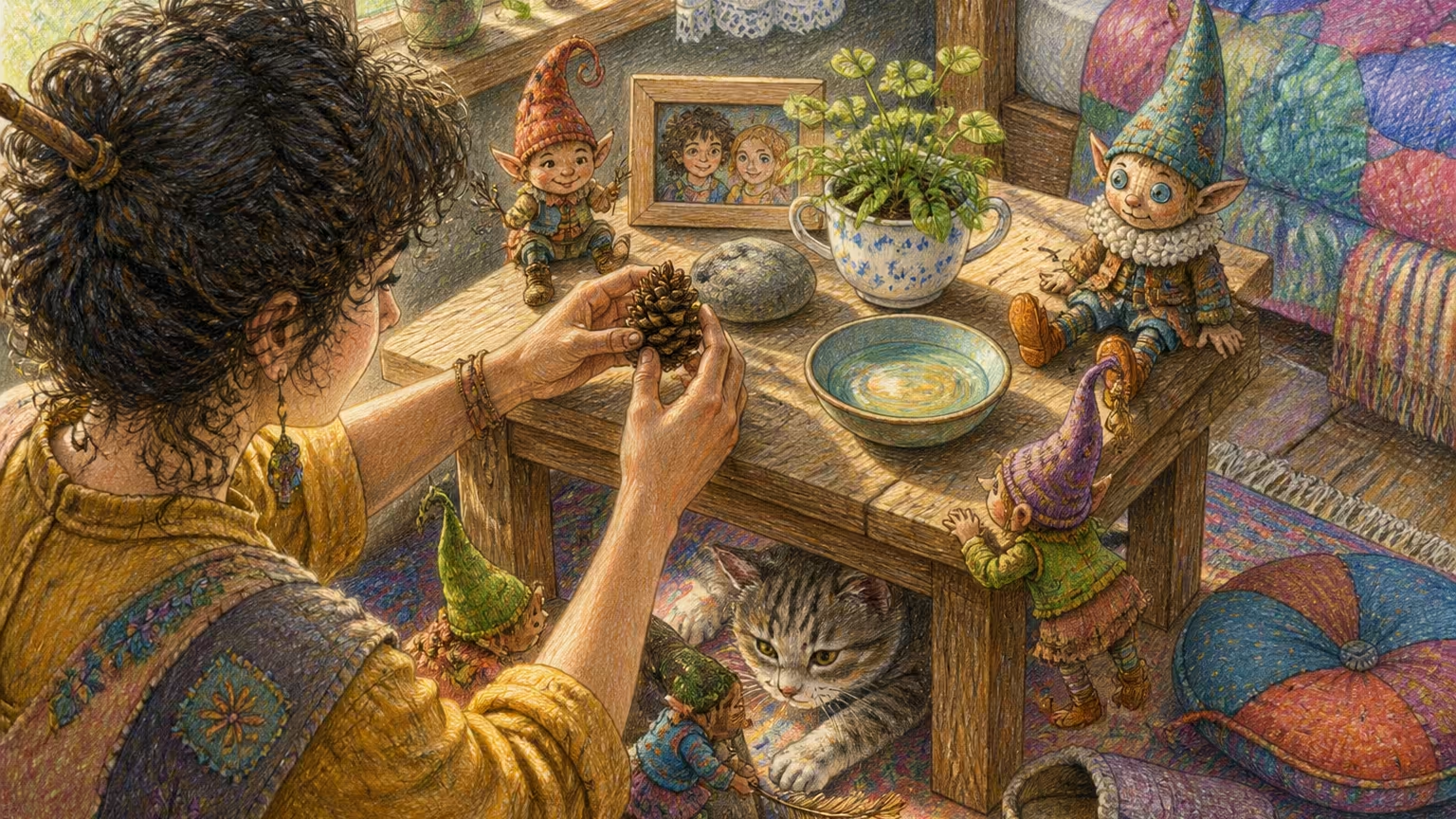
- Branches, pinecones, little forest finds
- Water in a bowl (a symbol of flow)
Objects with personal meaning
- Photos of important people or places
- Meaningful gifts
- Souvenirs from memorable trips
- Heirlooms with family stories
Symbols for your intentions
- If you want calm: Magikito with a Spark of Calm, candles, feathers
- If you’re working on creativity: Spark of Creativity, art tools
- If you’re focusing on home: Spark of Home, objects that feel like shelter
- If you want protection: Spark of Protection, symbols that make you feel safe
Sensory elements
- Candles (soft light, the little lighting ritual)
- Incense or essential oils (smell)
- A bell or singing bowl (sound)
- Nice textures (velvet, silk, polished wood)
Types of altars by purpose
Meditation altar
Purpose: A space for a daily meditation practice.
What to include:
- Meditation cushion or bench
- A candle (a visual focus point)
- Magikito with a Spark of Calm
- Incense or a diffuser
- A bell to mark the start and end
Gratitude altar
Purpose: A daily reminder of what you value.
What to include:
- Photos of people you love
- Objects that hold happy memories and wins
- A gratitude journal
- Symbols of abundance (pinecones, seeds, nuts)
Creativity altar
Purpose: To wake up inspiration and creative flow.
What to include:
- Magikito with a Spark of Creativity
- Your art tools (brushes, pen, etc.)
- Work you admire (postcards, prints)
- Objects that inspire you visually
- Bold colors, fun textures
Intention / “manifestation” altar
Purpose: To keep your focus on goals and projects.
What to include:
- Images that represent your goals
- Written phrases or mantras
- Magikito with a Spark of Fortune or Adventure
- Objects that symbolize what you’re building
Nature / elements altar
Purpose: To connect with the earth and natural cycles.
What to include:
- A nod to the 4 elements: earth (stone), water (bowl), fire (candle), air (feather)
- Magikito with a Spark of Nature
- Living plants you care for
- Nature finds (shells, branches, leaves)
Common mistakes when creating altars
Mistake 1: Copying Instagram altars
Someone else’s altar isn’t your altar. Get inspired, sure, but it should reflect YOUR vibe, not an influencer’s.
Mistake 2: Adding objects that don’t mean anything to you
“Altars are supposed to have crystals”... If crystals do nothing for you, skip them. Only include what actually connects you.
Mistake 3: Making it too complicated
An altar with 50 objects feels chaotic, not sacred. Less is more. 3 to 7 meaningful objects beats 30 generic ones.
Mistake 4: Setting it up and never using it
An altar that only gathers dust loses its point. Visit it, care for it, update it. It’s a living practice, not static decor.
Mistake 5: Objects with no story
Buying “altar stuff” at a spiritual shop doesn’t automatically make it meaningful. Your objects should have history, a real link to you.
Golden rule: If you can’t say why each object is on your altar, it probably shouldn’t be there.
How to keep your altar alive and evolving
Regular cleaning
Your altar collects dust like any surface. Clean it weekly. That’s part of the ritual too. As you wipe, you reconnect with each object.
Seasonal refresh
Swap elements with the seasons. Fresh flowers in spring, dry leaves in autumn. It keeps your altar alive and tuned to natural cycles.
Let it change with your life
Your altar should grow with you. What worked two years ago might not feel right now. It’s totally fine to remove objects, add new ones, or change the purpose completely.
Your “visit” ritual
Build the habit of visiting your altar every day, even for 30 seconds:
- In the morning: set your intention for the day
- At night: gratitude for the day you had
- When you need calm: breathe in front of it
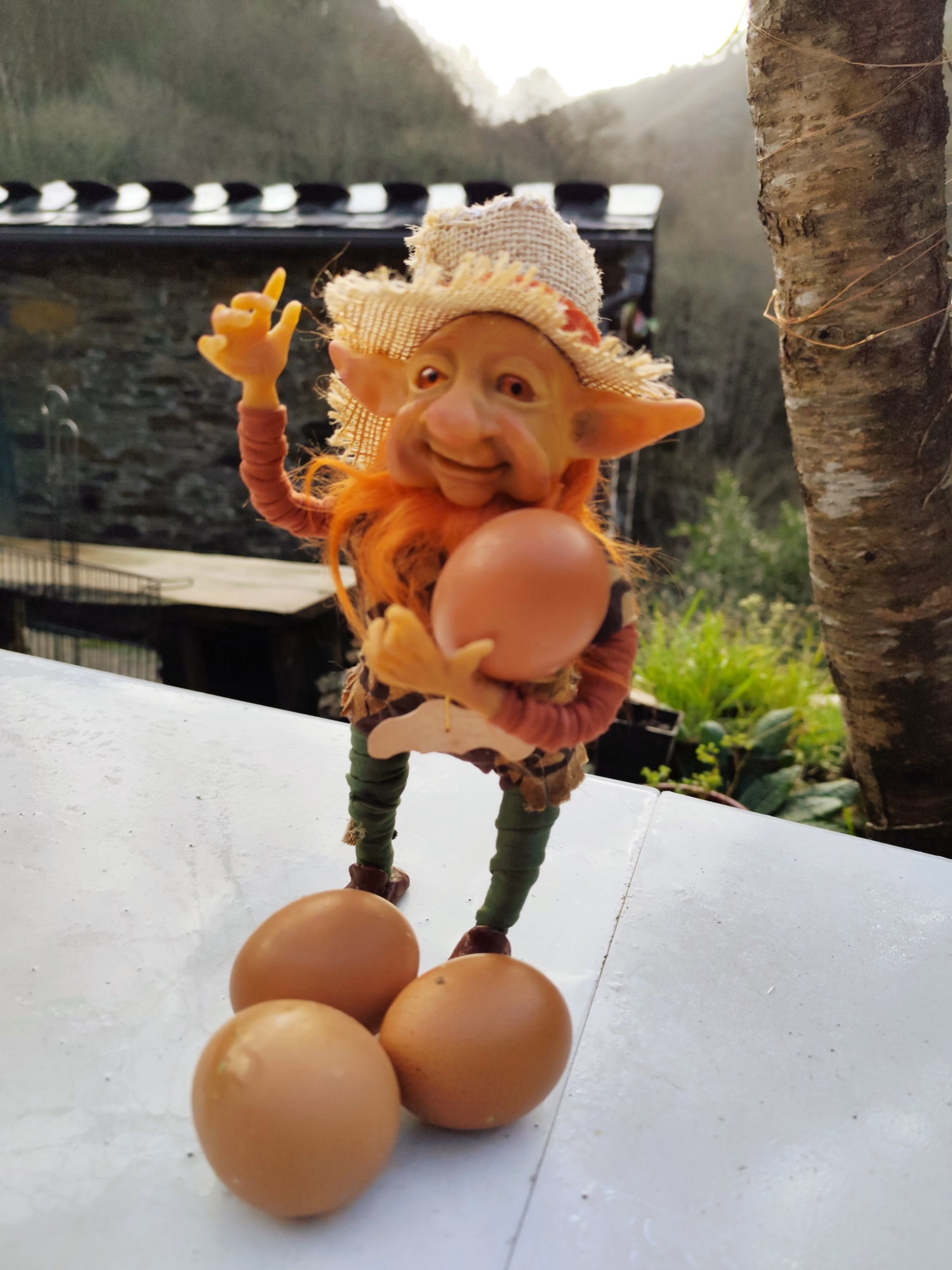
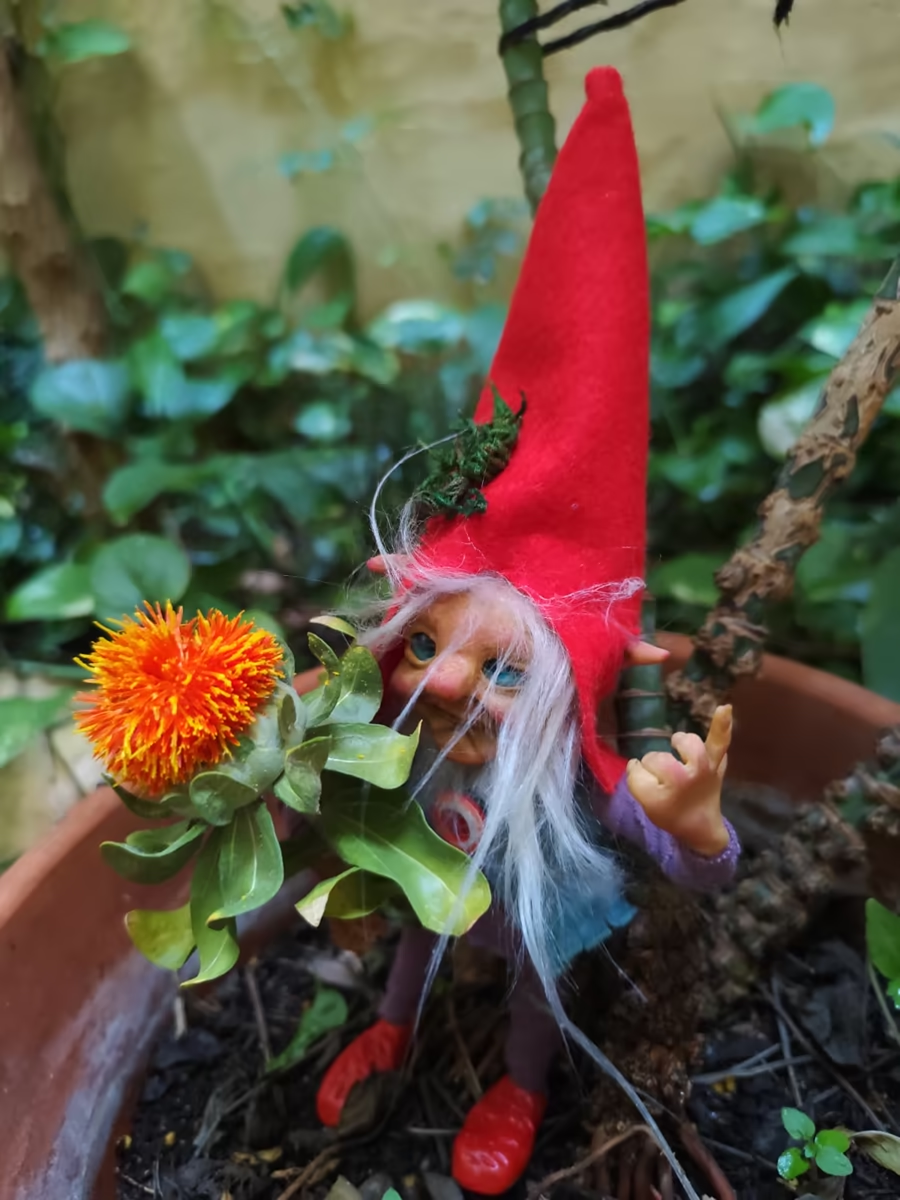
Magikitos as altar guardians
Lots of people include a Magikito as the guardian of their altar. Why do they work so well?
- A real presence: Not an abstract symbol. A being with its own personality.
- Handcrafted and one of a kind: No two are the same. Your guardian is literally unique.
- Specific Sparks: You choose the energy you need (Calm, Creativity, Protection...)
- An emotional bond: Not a generic object grabbed from a shop. It’s a chosen companion.
- Natural materials: Porcelain, fleece, little forest elements. Perfect for altars that honour nature.
Your altar is working if...
- You visit it regularly without forcing yourself
- Every object has a clear meaning for you
- You feel different there (calmer, more focused, more connected)
- It evolves over time as your needs change
- You’re not showing it off for validation. It’s for you
- Caring for it (cleaning, updating) feels like a sweet ritual, not a chore
An altar isn’t escapism
An altar isn’t a hideout to ignore real problems. It’s a space to work through them on purpose.
It’s not:
- A place where you “manifest” without doing anything
- An escape from responsibility
- A replacement for therapy or real action
It is:
- A place where you get clear on what matters
- A space to process feelings before you act
- A physical anchor for your values, so you don’t lose them in daily chaos
Your altar helps you live more consciously. But life happens outside the altar. That’s where you act on what this space reminds you of.
Start today: the minimalist altar
If the idea of a big, elaborate altar feels like too much, start small:
The 3-object altar:
- Something natural (stone, plant, branch)
- Something personal (photo, gift, keepsake)
- A light source (a candle or a small lamp)
Place them on a table, a shelf, or in a little corner. Done. You’ve got a working altar.
Visit it every morning for 30 seconds. Breathe. Look at the objects. Notice how you feel. That’s the whole practice.
With time, add more if you want. Or keep it minimal. What matters is that it’s yours and you actually use it.