You've heard of Feng Shui. Maybe it sounds like mystical pseudoscience or expensive decorators selling services you don't need.
But at its core, Feng Shui is pretty simple: how you organize your space affects how you feel in it. And that's not mysticism. That's spatial design with thousands of years of empirical observation behind it.
This guide explains what Feng Shui really is, how to apply it at home without complications, and why objects with purpose fit perfectly into this philosophy.
What is Feng Shui?
Feng Shui literally means "wind and water". It's an ancient Chinese system that studies how spatial design affects the flow of energy (chi) in a place.
The pragmatic version:
Your home affects your mental state. A cluttered, dark, badly laid out space makes you feel bad. A tidy, bright, well organized space makes you feel good.
Feng Shui is intentional spatial design to optimize your well being. Some principles are based on observation (natural light improves mood), others on cultural symbolism (colors, directions...). You don't need to believe in mystical energies to benefit.
What are the basic principles of Feng Shui?
1. Chi (energy flow/movement)
Chi is "flow". It can be airflow, light, movement, visual attention...
Practical application:
- Avoid blocked hallways (chi can't flow)
- Open windows regularly (fresh air = renewed chi)
- Don't pile up furniture (space should "breathe")
- Remove broken objects (stagnant chi)
2. Yin and Yang (balance)
Yin = calm, dark, soft. Yang = active, bright, energetic.
Practical application:
- Bedrooms: more Yin (soft colors, low light, warm textures)
- Living rooms/kitchens: more Yang (natural light, vivid colors, activity)
- Workspaces: balance (energy to produce + calm to focus)
3. The five elements
Wood, Fire, Earth, Metal, Water. Each brings a different energy.
Practical application:
- Wood (growth): Plants, wooden furniture
- Fire (energy): Candles, warm colors, light
- Earth (stability): Ceramics, stones, earthy colors
- Metal (clarity): Metal objects, white/gray colors
- Water (fluidity): Fountains, mirrors, blue/black colors
The goal: have all five represented in balanced proportions.
Feng Shui by room: Practical guide
Bedroom (Yin sanctuary)
What to do:
- Bed against a solid wall (not under a window)
- Soft colors (beige, light gray, pale blue)
- Minimal clutter (calm energy)
- No mirrors facing the bed (they interrupt rest according to FS)
- Objects in pairs (balance, harmony)
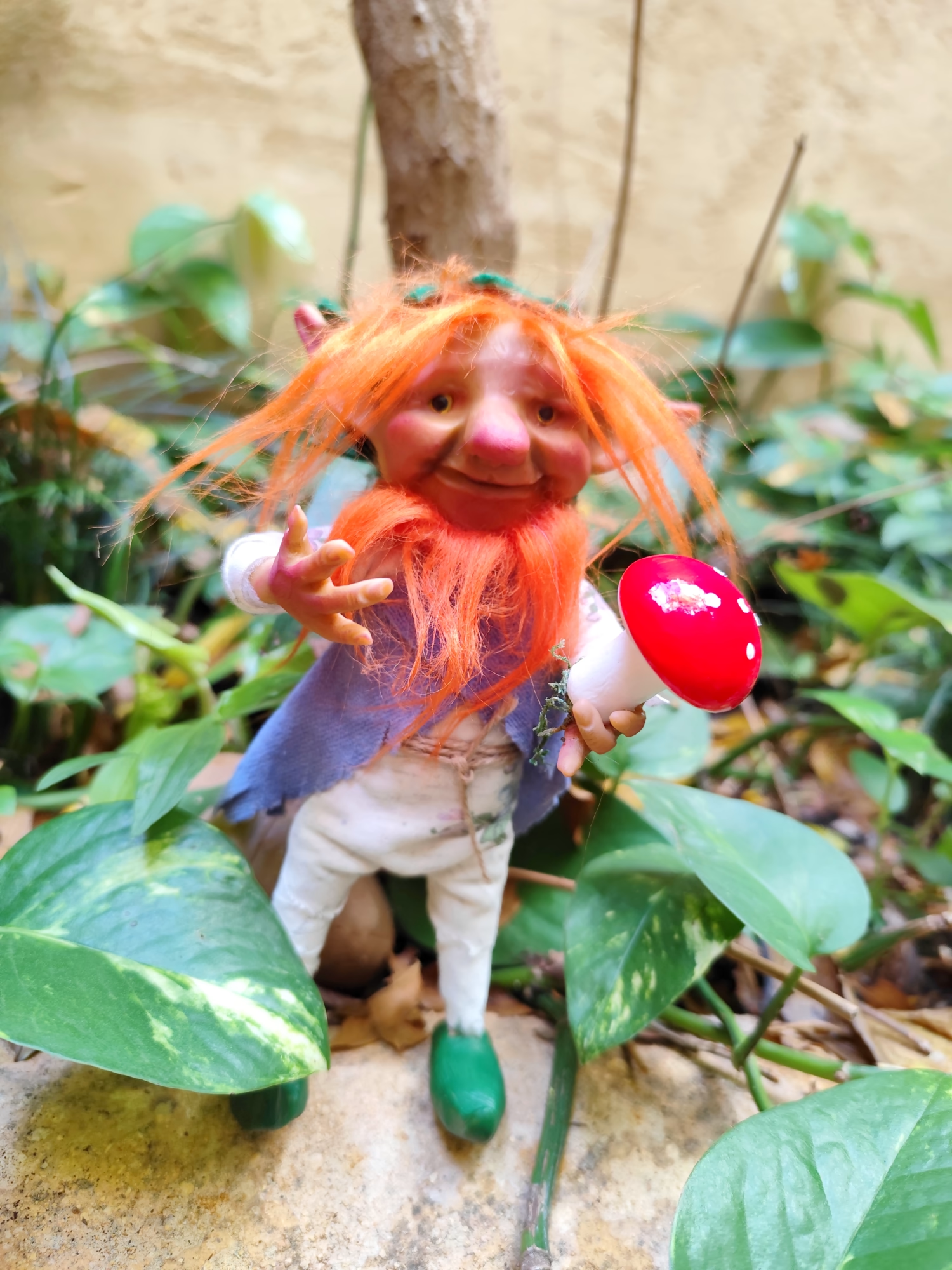
Ideal Brownie: Something with Calm Spark on the nightstand.
Living room (Yin-Yang balance)
What to do:
- Furniture in a U or L shape (conversation, inclusion)
- Maximum natural light (active chi)
- Living plants (wood element, vitality)
- Art that inspires you (positive energy)
- Avoid furniture with its back to the door (feeling of vulnerability)
Ideal Brownie: Something with Home Spark on a visible shelf.
Kitchen (fire element dominant)
What to do:
- Keep clean and tidy (prosperity according to FS)
- Knives put away (not exposed = cutting energy)
- Appliances working (broken = stagnant chi)
- Bright light (yang energy for cooking)
- Plants or fresh herbs (balance fire with wood)
Ideal Brownie: A little Brownie with Fortune Spark.
Desk/Home office (mental clarity)
What to do:
- Desk facing the door (command position = visual control)
- Back against a solid wall (support, security)
- Clear desk space (clear mind)
- Natural light or a strong desk lamp
- No visible clutter (distraction = scattered chi)
Ideal Brownie: Something with Creativity Spark or Fortune.
Important note: Feng Shui isn't dogma. If something doesn't resonate, ignore it. Use what works for YOU, not for a 2000 year old manual.
The role of intentional objects in Feng Shui
Traditional Feng Shui uses symbolic objects: dragons, Chinese coins, bells, crystals...
The principle behind it: objects with intention reinforce the energy of the space.
Why a handmade Brownie works in Feng Shui:
- They have a clear purpose: The Magical Sparks define their energetic function (calm, protection, fortune...)
- They represent the Earth element: Clay, cold porcelain or stone + natural elements = earth energy (stability)
- They're unique: Not mass production = individual chi, not generic
- Made with intention: Conscious craftsmanship = clean integrated energy
Placing a Brownie with a specific Spark in a space fulfills the Feng Shui function of anchoring intentional energy without resorting to specific Chinese cultural symbolism.
Common Feng Shui mistakes
Mistake 1: Buying "Feng Shui" objects without understanding
Fortune toads, golden dragons... if they don't resonate with you culturally, they're empty decoration. Use symbolism that YOU understand.
Mistake 2: Following rigid rules without flexibility
"My bed MUST face north." If that makes your room uncomfortable, ignore it. Real comfort > Feng Shui dogma.
Mistake 3: Thinking it's a magical solution
Feng Shui doesn't fix your life. It optimizes your environment so YOU can fix it better. It's support, not a substitute for action.
Mistake 4: Ignoring cleaning and maintenance
The best Feng Shui in the world doesn't work if your house is dirty and cluttered. Cleanliness = necessary foundation.
Bagua map (optional but useful)
The Bagua is an octagonal map that divides your home into 9 areas, each related to an aspect of life:
- Wealth (southeast): Prosperity, abundance
- Fame (south): Reputation, recognition
- Relationships (southwest): Love, partnership
- Family (east): Ancestors, roots
- Health (center): Physical wellbeing
- Creativity (west): Children, projects
- Knowledge (northeast): Wisdom, study
- Career (north): Work, life path
- Helpful People (northwest): Mentors, travel
You can place intentional objects in each area to reinforce that energy. Example: a Brownie with a Fortune Spark in the wealth zone.
(This is optional. You can ignore the Bagua and still benefit from basic Feng Shui.)
Minimalist vs maximalist Feng Shui
| Minimalist approach | Maximalist approach |
|---|---|
| Few objects, very intentional | Many objects, but organized |
| Empty spaces = chi flows easily | Full spaces = dense but rich chi |
| Dominant neutral colors | Balanced vivid colors |
| One Brownie per space | Several Brownies in a curated collection |
| Less = more peace | More = more stimulation |
Both work well. It depends on your personality. Introverts usually prefer minimalist. Extroverts, maximalist.
Immediate action: 3 Feng Shui changes today
If you want to apply Feng Shui right now, do this:
1. Clean and tidy your entrance
The entrance is where chi enters your home. If it's blocked, cluttered, dark, your whole house is affected. Clear it, clean it, add light.
2. Add a living plant in the living room
Wood element = growth, vitality. A healthy plant instantly improves chi. (If it dies, remove it: stagnant chi.)
3. Place an intentional object in your favorite spot
Reading nook, desk, nightstand... Choose where you spend the most time. Put an object with a clear purpose there (something that reminds you of a specific Spark, for example). Anchor the energy you want in that space.
Your home has good Feng Shui if...
- You feel good when you walk in (welcoming energy)
- Natural light reaches most spaces
- You can move freely without obstacles
- Every object has a purpose or makes you happy
- Spaces are clean and maintained
- It feels like YOUR refuge, not just a dwelling
Feng Shui is conscious design, not superstition
You don't need to believe in mystical energies to benefit from Feng Shui. You just need to recognize that your environment really affects you and design intentionally to optimize your wellbeing.
Natural light, clear spaces, purposeful objects, balance between activity and calm... That's not magic. That's smart design with a lot of ancient common sense.
And when you add Brownies with clear intention (objects with specific Sparks), you're applying the Feng Shui principle of anchoring intentional energy in physical spaces.
Try it. Rearrange. Notice how you feel. Adjust. Repeat.
Your home is where you spend most of your life. It deserves conscious attention.