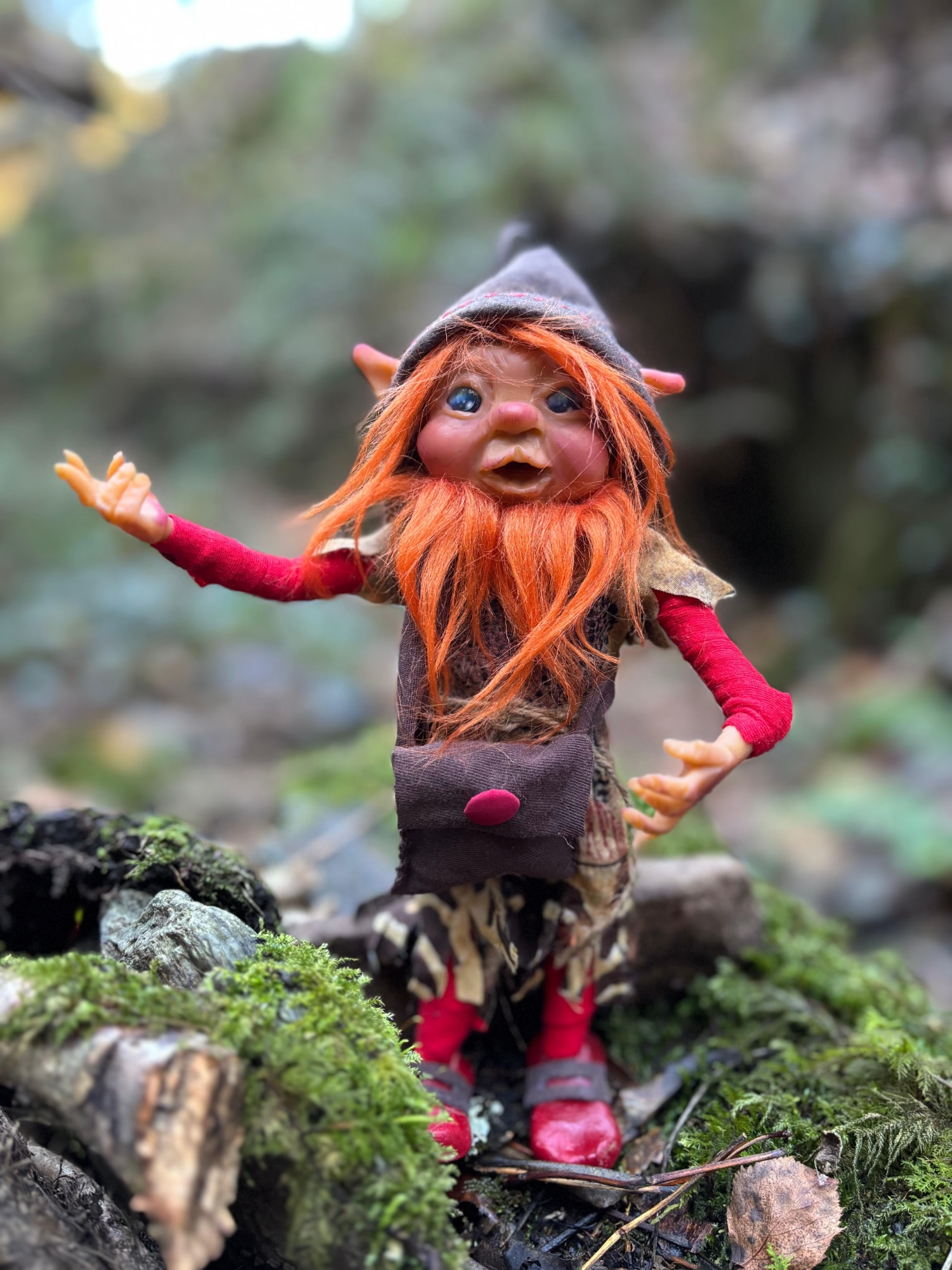
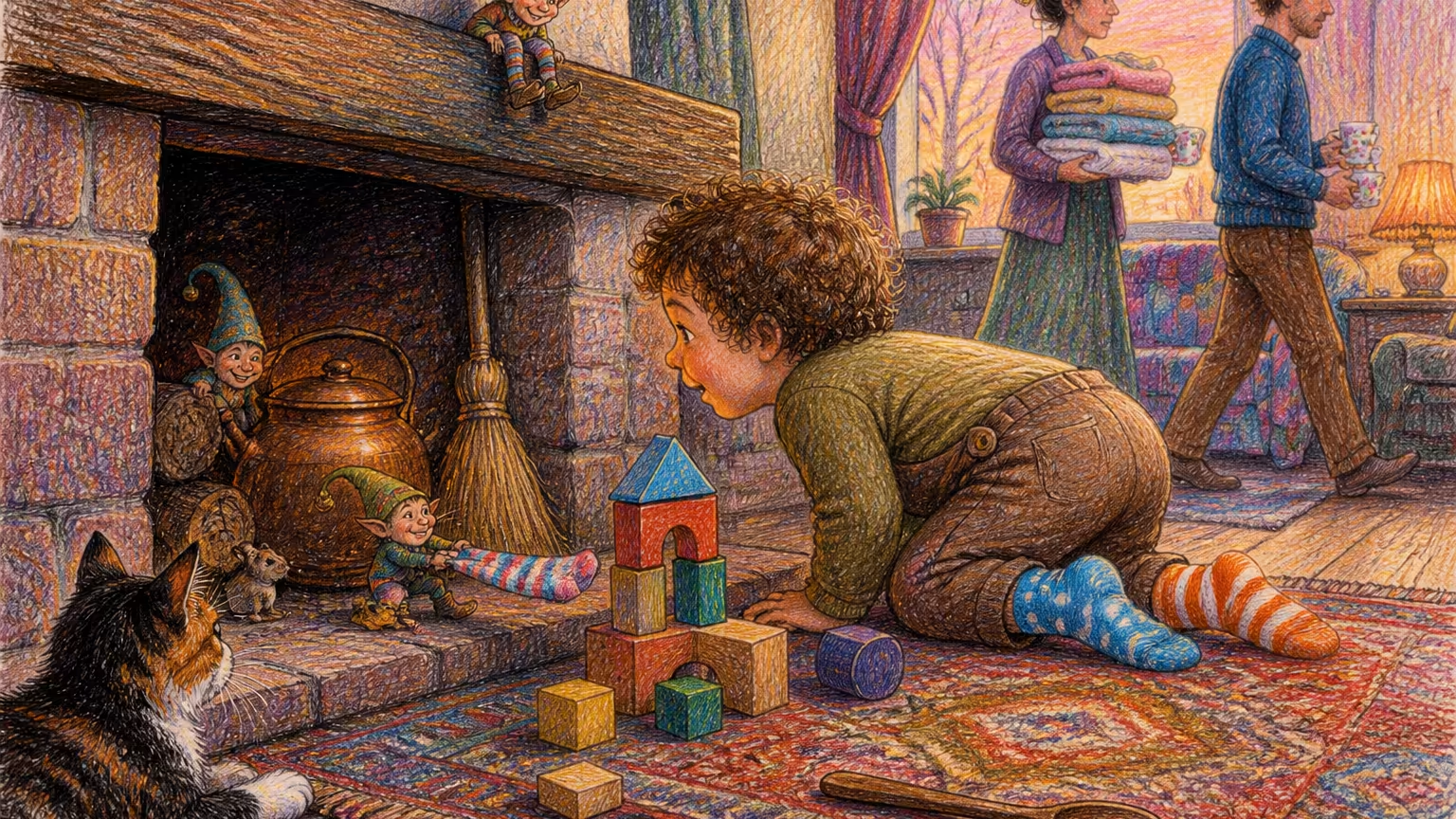
Children see us. They always have.
It's not a story or a grandmother with too much imagination. It's documented tradition in every corner of the world. Children on Scottish farms described exactly where the Brownie hid. Little ones in German houses pointed to the attic and said a Wichtel lived there. Kids in Asturian farmhouses looked at the chimney corner and knew someone was there. And the adults of every generation answered the same old thing: that they were away with the fairies, that they had too much imagination, that they'd grow out of it.
We take that a bit personally, not gonna lie.
Why can children see magical creatures that adults can't?
The most honest explanation we've found comes from a man named Jean Piaget, who in the 1920s documented something we'd known for much longer: all little kids live in a state of constant animism. They give life, intention, and personality to everything around them. The chair is hungry. The rain is angry. The missing sock didn't disappear because of the washing machine, it left because someone took it. That someone is us, and kids know it. Piaget called it "magical thinking." From our point of view, it's simply correct thinking.
In all European folklore traditions the same constant appears: children see household creatures, adults don't. There's something in a five-year-old's gaze that makes it impossible for us to hide completely. We don't know if it's how they process peripheral light, if they haven't yet learned to filter out what has no name, or if they're simply not afraid of what they see. The fact is they see us. And when it happens, it does something to us inside that we don't know how to describe and don't really want to analyze.
The history of household Brownies in Europe is full of testimonies from children who described us with detail no adult had ever told them. Where we lived. What we did at night. What we were good at. They knew it on their own.
When exactly do adults stop seeing us?
We've been observing this from inside houses for centuries and we have quite a lot of data. The process happens between seven and nine years old, though we've seen earlier cases and some adults who take much longer to lose the sight. What's constant is the mechanism: it doesn't happen all at once. It happens gradually, like the light fading in a room without anyone turning off the switch. The first sign is that the child stops looking at corners when entering the living room. The second is that they start telling other children they're away with the fairies for doing exactly what they used to do. The third, and this is the definitive one, is when they tell another child that Brownies don't exist. At that moment they've crossed to the other side.
The process speeds up as soon as the adults around them start saying they're too old for certain things. "You're too old to believe in Brownies" is almost literally a key that closes a door. A door that, by the way, never disappears. It stays there. Some leave it ajar their whole lives, and those are the ones who sometimes, as adults, hear a noise in the hallway at three in the morning and instead of thinking "it's the pipes" think "let's see who it is."
Those are our favorites.
If you want to know exactly where we come from, in the origin of the word Brownie we tell the whole story. And if you want to meet the Magikitos looking after your home right now, they're in our Brownies section. They've been there a while. Just waiting for you to notice.