We live surrounded by mass-produced stuff. Cheap, easy, all the same. Amazon drops it at your door in 24 hours. Everything’s convenient, replaceable, basically made to be binned.
And yet, in the middle of all that, there are people who still choose handmade. One-of-a-kind pieces, made by real hands, pricier, and they take weeks to arrive. Why?
It’s not romantic nostalgia. It’s not a hipster flex. There are real, tangible reasons handmade matters in a world of mass production. Once you get them, the way you consume shifts.
What is handmade?
Handmade isn’t just “made by hand”. It’s a process where:
- One person (or a small team) makes each piece
- They use skills learned over years
- Every object has its own tiny differences
- The time invested is real (hours or days per piece)
- There’s intention and conscious choices at every step
Mass production is the opposite: machines, molds, thousands of identical copies, minimal time, and zero personal decisions per item.
The real differences (beyond the romance)
1. Uniqueness you can actually see
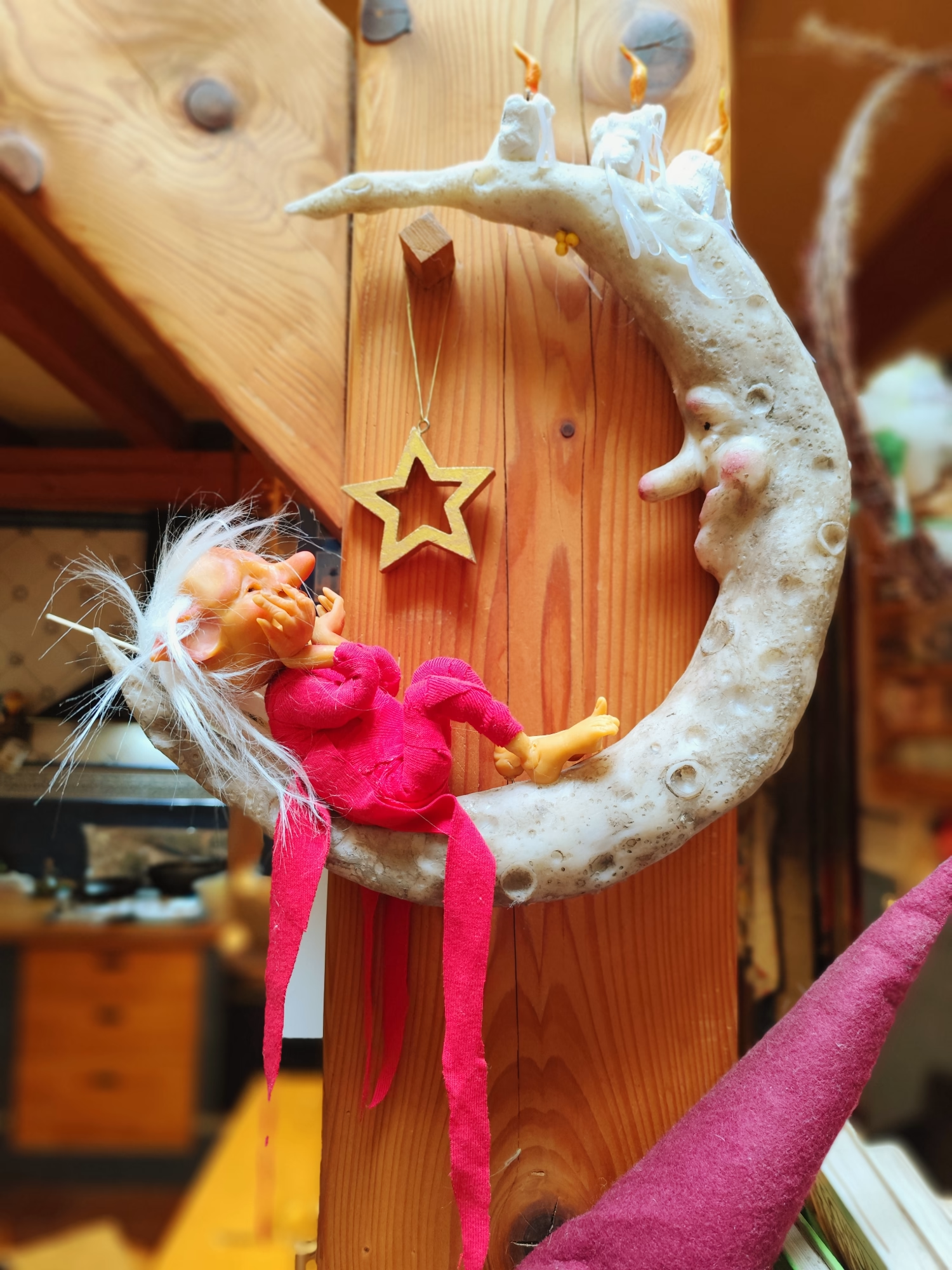
Handmade: Every piece is unique. Even if you try to replicate it, the natural variations of a human hand make each object different. Magikitos are the perfect example: shaped without molds, so literally no two are alike.
Mass production: Thousands of identical copies. Yours is interchangeable with 50,000 others.
Why it matters: Owning something unique has real psychological value. It’s not replaceable. It’s YOUR piece, not version #47,293 from an industrial mold.
2. Materials and durability
Handmade: Makers choose materials for quality, not because they’re the cheapest. Real wood, natural fibers, good metals. Things built to last decades.
Mass production: Materials optimized for cost: cheap plastics, MDF instead of wood, the lowest acceptable quality. Planned obsolescence.
Why it matters: Handmade lasts. Mass-produced stuff breaks and you replace it. Over time, handmade is often more sustainable and more economical.
3. Human impact
Handmade: You buy straight from the maker, or with very few middlemen. Your money feeds families, not shareholders. Working conditions are dignified.
Mass production: Opaque supply chains. Often it means exploited labor in poorer countries, awful conditions, poverty wages.
Why it matters: Ethics. If you care about not funding exploitation, handmade is a choice you can actually verify.
4. Environmental footprint
Handmade: Local (or national) production, often natural or recycled materials, less packaging, and durability means less waste.
Mass production: Manufacturing in China or Bangladesh, international shipping, plastics, excessive packaging, objects designed to break so you buy again.
Why it matters: Real sustainability, not greenwashing.
5. Connection and story
Handmade: You know who made it, how, and why. There’s a story behind it. Some artisans sign their pieces, share the process, and tell you what they believe in.
Mass production: Anonymous origin. “Made in China” is the whole story. No face, no name, no connection.
Why it matters: Objects with stories create emotional bonds. You take better care of them, they last longer, they mean more.
The real cost: why handmade “costs more”
Handmade isn’t expensive. Mass production is artificially cheap because it pushes costs elsewhere:
| Cost | Mass production | Handmade |
|---|---|---|
| Time | Minutes (machines) | Hours (human hands) |
| Skill | None (automated) | Years of learning |
| Materials | As cheap as possible | Quality first |
| Wages | Exploitation (often) | Fair pay |
| Scale | Thousands of units | Individual pieces |
When handmade “costs more”, you’re paying for:
- Real time from a skilled person
- Quality materials
- Fair pay
- Uniqueness you can actually see
- Long-term durability
It’s not expensive. It’s the fair price. Mass production is artificially cheap because someone else pays the difference, exploited workers, a damaged planet.
When handmade is objectively better
Home décor and everyday objects
You live with them every day. Generic objects make generic spaces. Unique handmade pieces give a home a soul. Magikitos are a perfect example: each one has its own personality that industrial objects never capture.
Meaningful gifts
Giving handmade says “I actually took my time and chose something made just for you”. Giving Amazon says “I grabbed the first thing I saw”. The message matters.
Things you use constantly
Kitchen knives, bags, furniture. If you’ll use it more than 1000 times, invest in handmade. It lasts, it works better, it earns its price.
Clothing

Fast fashion wrecks the planet and exploits workers. Handmade or truly sustainable clothing costs more, but it lasts years, not months.
When mass production actually makes sense
Not everything needs to be handmade. Situations where mass production is reasonable:
- Tech: Nobody’s handcrafting smartphones. Scale is necessary.
- Specific tools: Drills, appliances. Handmade doesn’t really add an advantage.
- Purely functional, temporary items: Screws, cables, things you use briefly and toss.
- When you can’t afford handmade: That’s valid. Do what you can with the budget you’ve got.
The key is being aware of what you choose, and when. Not everything has to be handmade and not everything has to be mass-produced. Intentional balance.
How to spot real handmade?
Plenty of brands sell “handmade” that’s really mass production with a cute story on top. Red flags:
- Unlimited stock, always available: Real handmade is limited, each piece takes time.
- Suspiciously low price: If “handmade” costs the same as factory stuff, someone’s probably lying.
- No info about the maker: Real handmade has a face and a name. “Local artisans” with no details is just marketing.
- Two items that are perfectly identical: That points to molds or industrial production. Handmade has natural variation.
How to double-check (quick checklist):
- Can you see who made it (name, photo, story)?
- Do they explain the creation process?
- Do pieces vary from one to another?
- Does the price reflect human working time?
- Limited stock, or “always available”?
What happens when you choose handmade?
If 10% of your purchases move from mass production to handmade:
- Economic: Your money supports artisan families, not corporations.
- Environmental: You cut your footprint, local production, better materials, longer lifespan.
- Cultural: You help keep traditional crafts alive instead of letting them vanish under cheap imports.
- Personal: Unique objects with soul make your space feel like YOU, not an IKEA catalog page #4829.
You don’t need to go 100% handmade. But being aware, and choosing handmade when it matters, that changes things.
Little exercise: Look around. How many things in your home have a story, a known maker, real uniqueness? If you practise conscious minimalism and the answer is “not many”, maybe it’s time to rebalance.
Magikitos as an example of the real deal
Magikitos tick every box of handmade you can actually verify:
- Known creator: A Spanish artisan with a real name and a real face.
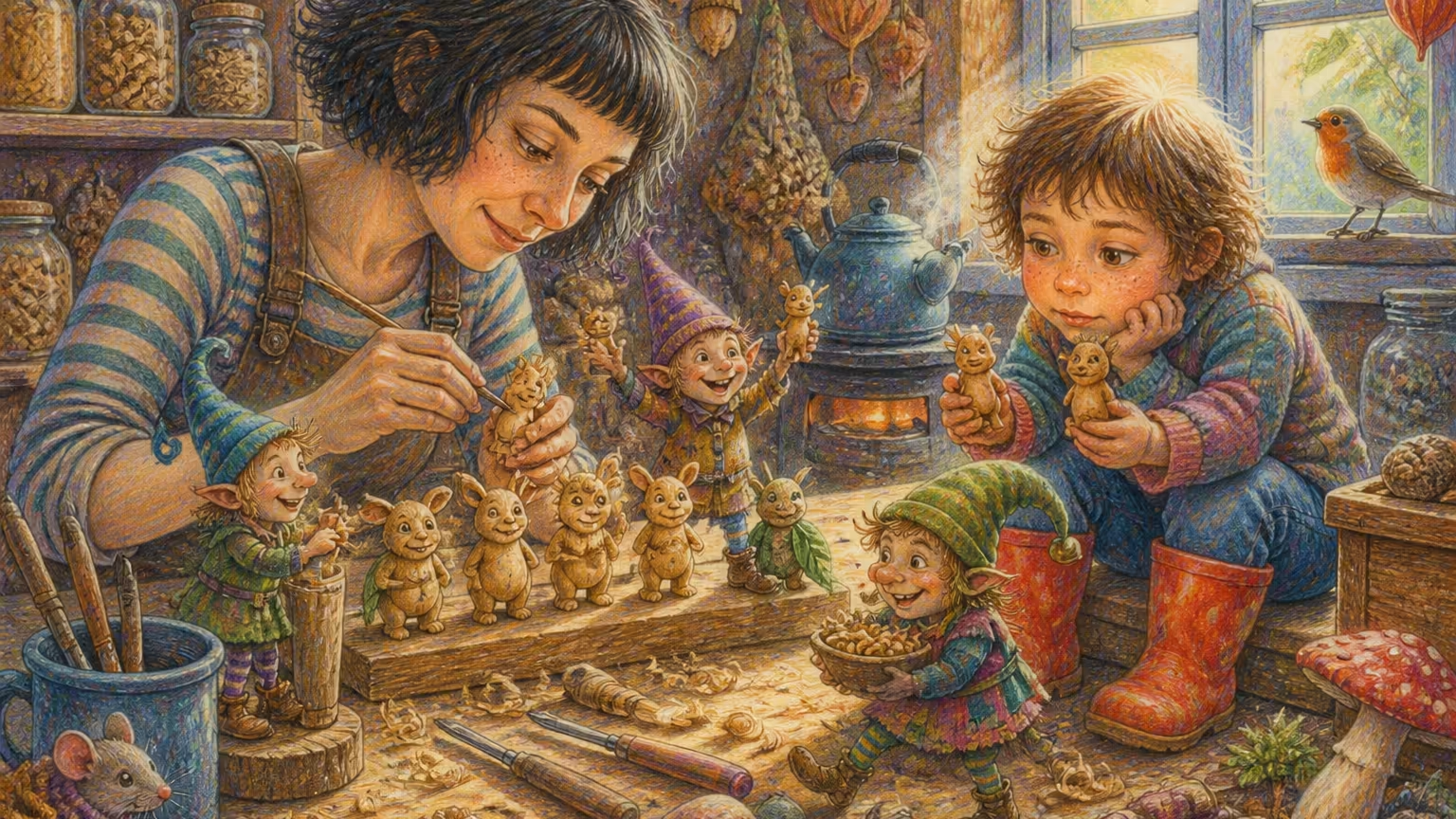
- Transparent process: Hand-shaped with no molds, materials from the forest.
- True uniqueness: No two are alike, you can see it across the collection.
- Meaningful time: Hours per piece, not minutes.
- Limited stock: What’s there is what’s there. When it’s gone, it’s gone.
- Fair price: It reflects time plus materials plus skill.
It’s not “handmade” marketing. It’s handmade you can prove. And that difference matters.
Choose handmade when…
- You want something with soul, not a generic replacement
- You want to support real people, not corporations
- You value uniqueness over convenience
- You prefer durability over planned obsolescence
- You care about how things are made
- You want objects with story and real connection
Buying with intention in a mass-produced world
You can’t, and shouldn’t, buy everything handmade. But you can be aware of what, when, and why.
Mass production has its place. Handmade does too. And in a world where everything is identical, disposable, anonymous, unique pieces made by real people with real skills matter more than ever.
This isn’t nostalgia. It’s recognizing that how we consume affects the world, other people, and our own relationship with the objects around us.
Choose consciously. When it matters, choose handmade. Your home, your ethics, and artisans everywhere will thank you.