
The lighthouses that blink with a full name
HistoryIn the 19th century, with sea traffic booming and the coastline drowning in close calls, lighthouses became more than glowing poles. They turned into identities.
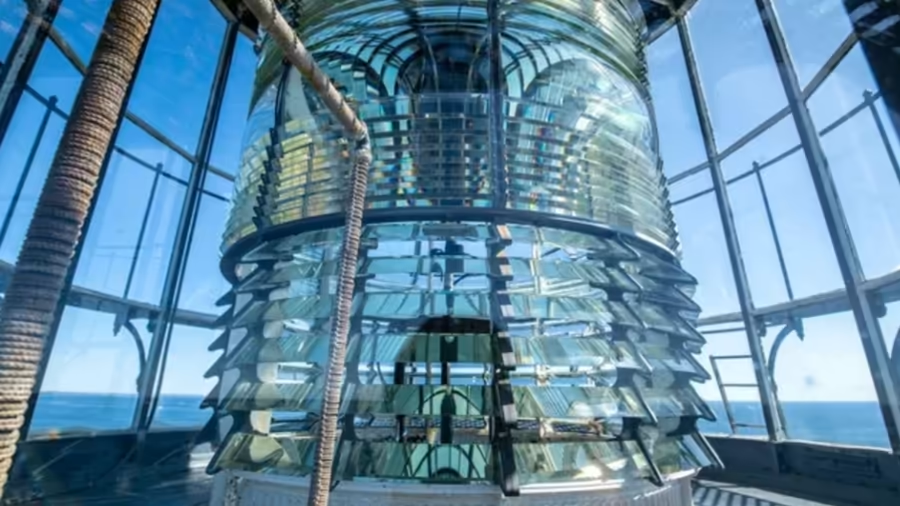
The big tech leap for lighthouses back then was the use of Fresnel lenses.
What’s a Fresnel lens?
Picture a giant magnifying glass, but “slimmed down”, built from rings of glass that catch all the lamp’s light (the stuff that would normally spill out to the sides) and focus it into one powerful beam that reaches waaaay farther.
But the cleverest move was giving each lighthouse its own “signature”, thanks to different flash patterns.
Specifically, each lighthouse got a unique blinking rhythm, like visual Morse code. For example, one could do two short flashes and a long pause, or one long flash every ten seconds. That beat was like an ID card you could read from the horizon. With nautical charts in hand, a captain could say, “Yep, that blink is Cabo de San Juan, we’re here”, even in the middle of a full-on storm.
And here comes the Magikito bit: it wasn’t just about brute force or raw power, it was rhythm and consistency. Ships stayed safe not because the light “shouted” louder, but because it repeated a recognizable code that built trust, even from far, far away.
We love it because it’s a life lesson: sometimes you find your place not by going faster or shining brighter than everyone else, but by keeping a clear pattern that’s yours. What’s your “here I am” blink?

From the tasting Lucecitas y parpadeos constantes