
Post-it: the glue that was born “too weak”
HistoryThe big invention that started as a sticky little fail
In the late 60s, at a company called 3M, a chemist named Spencer Silver was trying to create a super-strong glue for airplanes. But what he got was… kinda weird: an adhesive that did stick, yes, but came off with the tiniest little tug.
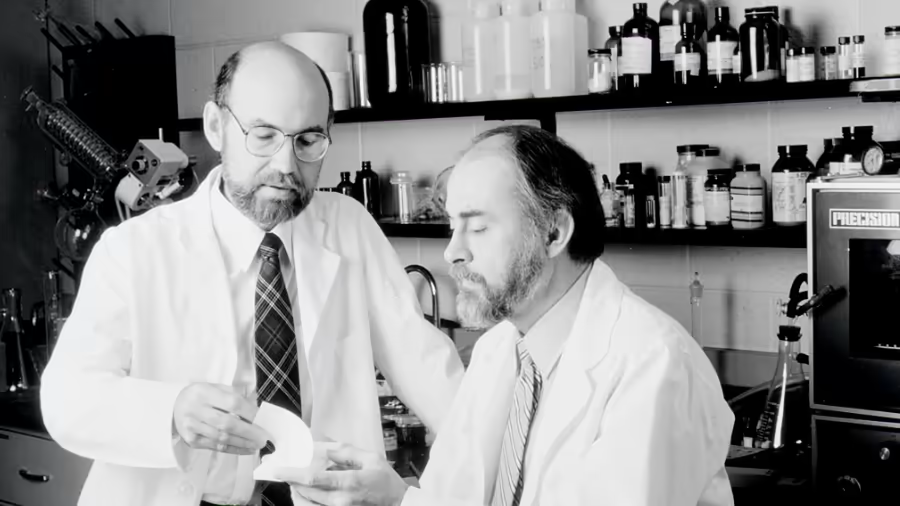
At first, everyone thought it was a useless mistake, until years later the Post-it was born.
How does a Post-it adhesive work?
The secret is in the microspheres. Picture regular glue like a layer of honey: it spreads all over the surface and grabs with everything it has, which is why it’s such a pain to remove. Post-it glue, instead, is made of millions of microscopic little bubbles, like tiny rubber balls that sit apart from each other.
When you stick the note on, only a few of those balls actually touch the paper, so the grip stays gentle. When you peel it off, the bubbles don’t break and they don’t stay stuck to the book either. They go with the yellow paper, ready to bounce onto another page. It’s an invention that wins you over not by holding tight, but by having good manners.
What is pressure-sensitive adhesion?
It’s a system where you don’t need heat or messy liquid glues to keep something in place. You just need a little press with your fingertip. When you press, you make those tiny bubbles we talked about touch the surface.
It’s the technology of “for now”: stick, read, peel, and leave no trace.
What began as a lab mistake ended up changing how we organize our ideas and our fridges. Sometimes an “error” is just a solution waiting for the right problem to show up.
Magikitos are keeping this lesson close: not everything useful has to be permanent or forever. Some ideas work precisely because they let you change your mind with zero guilt. What could you try today “just temporarily” and see what happens?

From the tasting La conspiración de las cosas pegajosas