The leprechaun is probably the most recognized magical creature in the world. The little figure in a bright green suit, sitting on his pot of gold, smiling from coffee mugs and cereal boxes. Everyone knows that leprechaun. The problem is that leprechaun is largely a nineteenth-century American invention. The original Irish creature was much quieter, much harder to find, and a whole lot less green.
We are the Magikitos, and we've spent a good while studying the household creatures of all Europe. The leprechaun interests us especially because he's the most famous Irish relative of our family. His story deserves to be told right, without the neon green getting in the way.
The real leprechaun: shoemaker, loner, master of silence
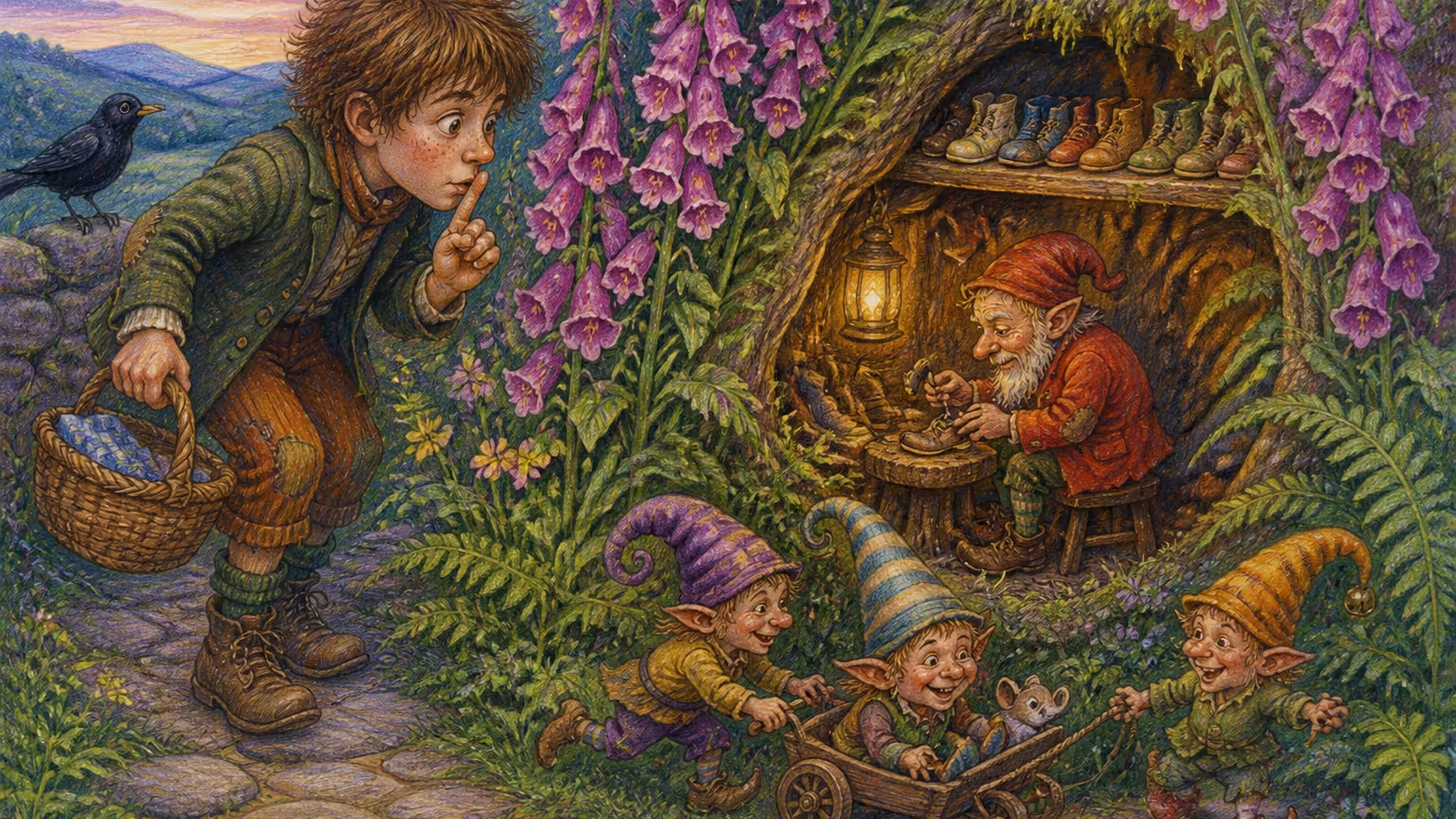
In the oldest Gaelic folklore, the leprechaun appears as a small solitary figure with a very specific trade: he makes shoes. Not just any shoes. He crafts footwear for the fairy world, for the Aos Sí, the otherworldly beings who in Irish mythology dwell in fairy mounds and the spaces between the visible and the invisible. The leprechaun is the shoemaker of that world, and the sign that one is near is a small rhythmic tapping that seems to come from everywhere at once: a hammer on leather.
The mechanics of an encounter are simple but impossible to pull off: if you hear him working and manage to see him without taking your eyes off him for even a second, he's bound to reveal where he keeps his pot of gold or grant three wishes. If your gaze wanders for even the time of a blink, he vanishes. Human concentration always fails. The leprechaun always wins. He's the most patient and cleverest creature on the islands.
The original color of the leprechaun, in the oldest texts, was red. Green came later, brought by the Irish diaspora in the United States, who needed a recognizable and exportable symbol of national identity. The top hat is also American. Ireland later reclaimed the stereotype, as often happens with cultural exports that come back amplified.
The leprechaun's family: clurichauns, brownies and other island cousins
The leprechaun isn't alone in the folklore of the British Isles. He has relatives with different names and slightly different personalities, and it's worth getting to know the whole family tree.
The clurichaun is his most troublesome cousin: same size, same appearance, but he lives in cellars and has a complicated relationship with drink. With luck, he guards the cellar and scares off thieves. Without it, he ruins it himself. Some folklorists argue that the difference between a leprechaun and a clurichaun is simply a matter of mood: the same creature, before and after discovering the cellar.
In Scotland and northern England there are the brownies: domestic creatures who live on farms, do the nighttime work that humans leave half-done, and disappear if you give them clothes or treat them with pity. They're the most domestic version of the leprechaun family, less solitary and more tied to the rhythm of the house. They have more in common with what we understand as a household Brownie than the leprechaun himself, who is more of a hermit craftsman than a home companion.
This family of small domestic creatures repeats all over Europe with different names. If you want to see just how similar they are, we have the full map: the same being with twenty different names, from Ireland to Japan, passing through Spain, Russia and Southeast Asia.
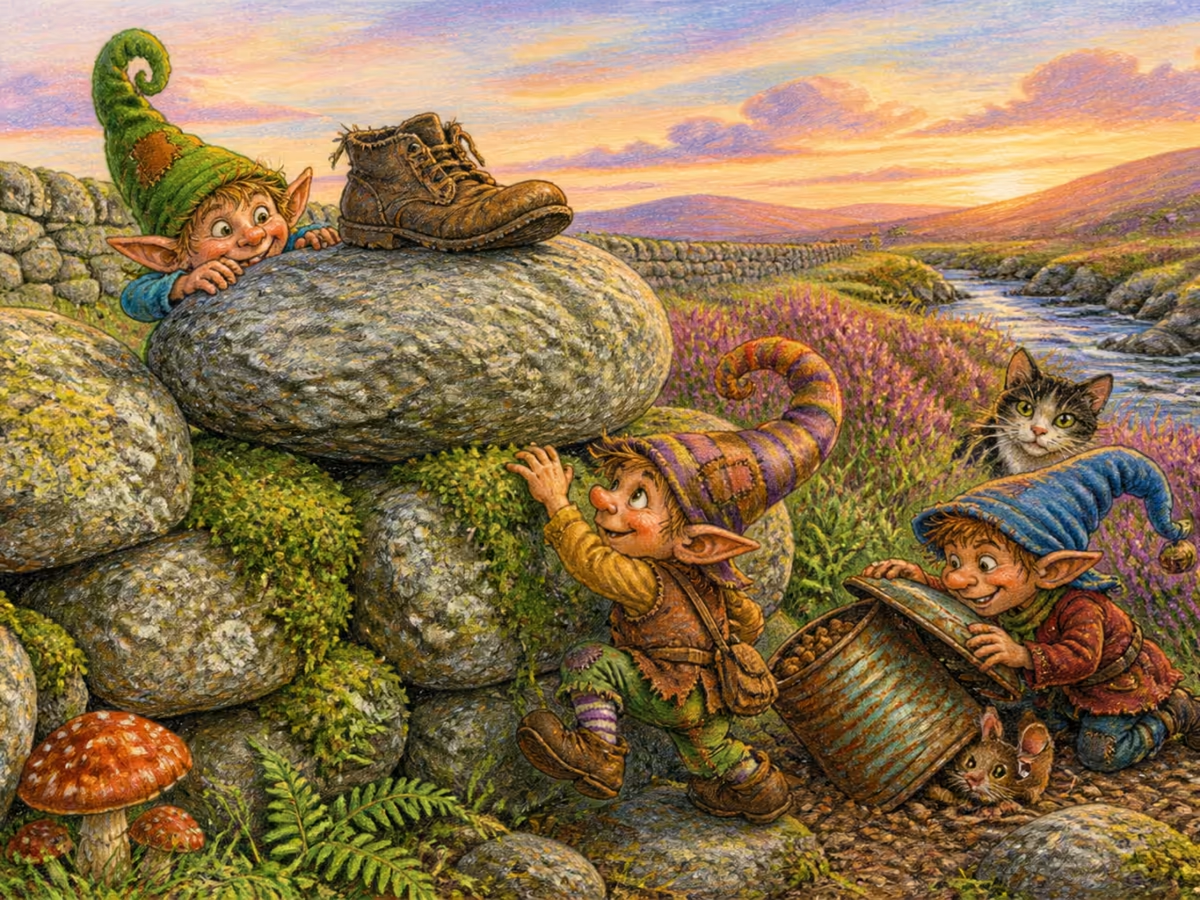
A fairy shoe is the hardest thing to find in the fey world. Not because leprechauns are especially fast, but because they work the leather with the hammer with such complete concentration that the sound seems to have no source.
That's exactly what makes them close relatives of our Magikito Brownies: the same artisan skill, the same innate discretion, the same instinct to be where nobody looks.
Where does the leprechaun's pot of gold come from?
The pot of gold isn't a gift: it's a ransom. In the original folklore, the leprechaun has accumulated it over centuries of masterful craft and small fairy fortunes. When a human captures him and manages to not look away, the pot is what the leprechaun offers in exchange for his freedom. Not generosity. A transaction under duress. He'd rather lose the gold than stay a prisoner, because for a creature whose greatest power is freedom of movement, capture is the worst of fates.
The tradition that the pot is buried at the end of the rainbow is a poetic way of saying that its location can never be pinned down: the end of the rainbow shifts as soon as you get close, just like the leprechaun disappears the moment you blink. The gold is real. The direction isn't.
This dynamic of the impossible chase runs through European folklore from one end to the other. The trasgu of northern Spain hides what humans seek with comparable efficiency. If you want to see how the leprechaun fits into that broader tradition, the trasgu and the creatures of northern Spain goes exactly there.
Are the leprechaun and the household Brownie the same being?
The question we ask ourselves every time we study a new creature is always the same: how much of all this is really local folklore, and how much is the same human archetype emerging in different geographies? With the leprechaun and the European household Brownie, the answer clearly points to the latter. The similarities are too many to ignore.
Both are small. Both have highly developed artisan skills. Both have an ambivalent relationship with humans: neither completely good nor completely bad, following their own rules that don't always match ours. Both appear when not being looked for and disappear when you try to catch them with too much enthusiasm. Both live on the margins of human spaces, between the wall and the hayloft, under the root of the tree or in the dark corner of the kitchen.
What changes is the cultural context: Ireland produced a more solitary and independent creature. Continental Europe produced creatures more tied to the home and to everyday service. The same archetype. Different local flavor. For the complete family tree of European household Brownies, from the Scottish brownie to the Russian domovoi, the real story of Europe's household Brownies has everything you need.
And if you want to meet one without the complications of Irish folklore, our Magikito brownies don't need you to catch them. They let themselves be seen gladly. Or, if you prefer to start with drawing, our brownies coloring pages have plenty to choose from.