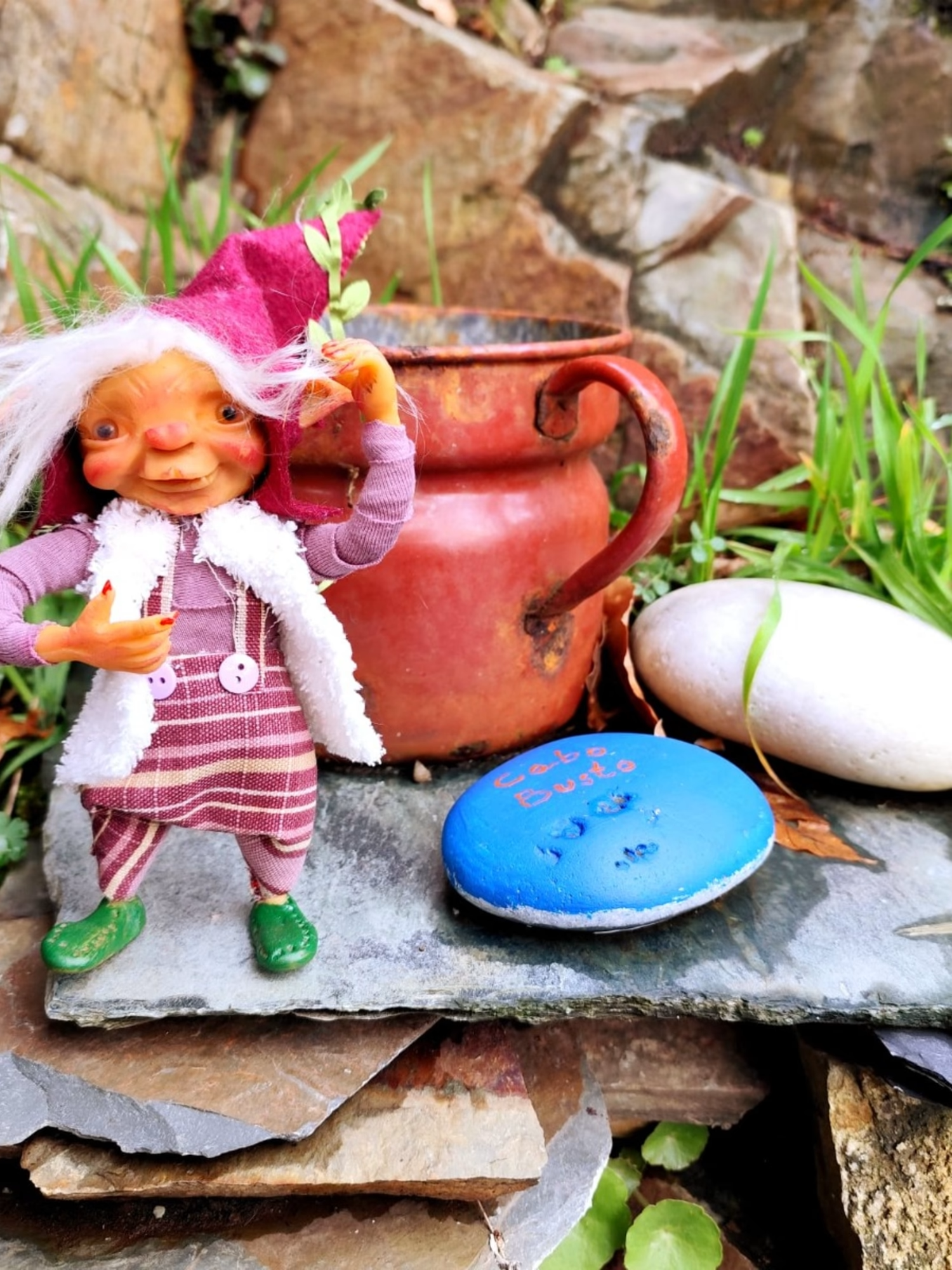
Fulgencio took his newly repaired boots for a walk as though he was being paid per step. He'd mended them himself. Clean leather, fresh laces, not a single hole. Before we'd reached the second fern, he'd asked four times whether we'd noticed.
“These are a gentleman's boots. Yours let the scenery in.”
Petronila poked her big toe through the front of her boot and wiggled it at him. We doubled up. Fulgencio looked away with tremendous elegance and stepped in snail poo. That took care of the elegance for a while.
Small sizes are for people who enjoy suffering
No, lovely humans, we don't buy undersized shoes so they'll burst. We like being able to wiggle our toes. If a boot pinches, we alter it or find another. Life already supplies enough pains in the arse without strapping one to each foot.
Most holes come from walking, jumping over roots and dragging our feet home after parties. We mend what we can. Reuse fabric, replace soles and stitch things together more reliably than some people keep promises. But a boot can last so long it ends up knowing the woods inside and out.
We keep the odd little hole because it amuses us. In mild weather, Petronila sticks her toe out to check for rain without lifting her head from under the mushroom. It's not a perfect invention. A butterfly once mistook the toe for a flower. We had to explain to the butterfly that it should stop trying.
If cold or water gets in, we patch the hole. Being daft doesn't mean we enjoy walking around with soup in our socks. And when a shoe can no longer carry a foot, it might still house a family. We clean it, let it dry and find a sheltered spot. Where a human sees an old boot, we see a house with laces.
Petronila had spent weeks preparing one of these houses. She'd added a scrap-fabric curtain and a thimble flowerpot beside the heel. She thought it was empty. That morning, we discovered otherwise.
The boot had company
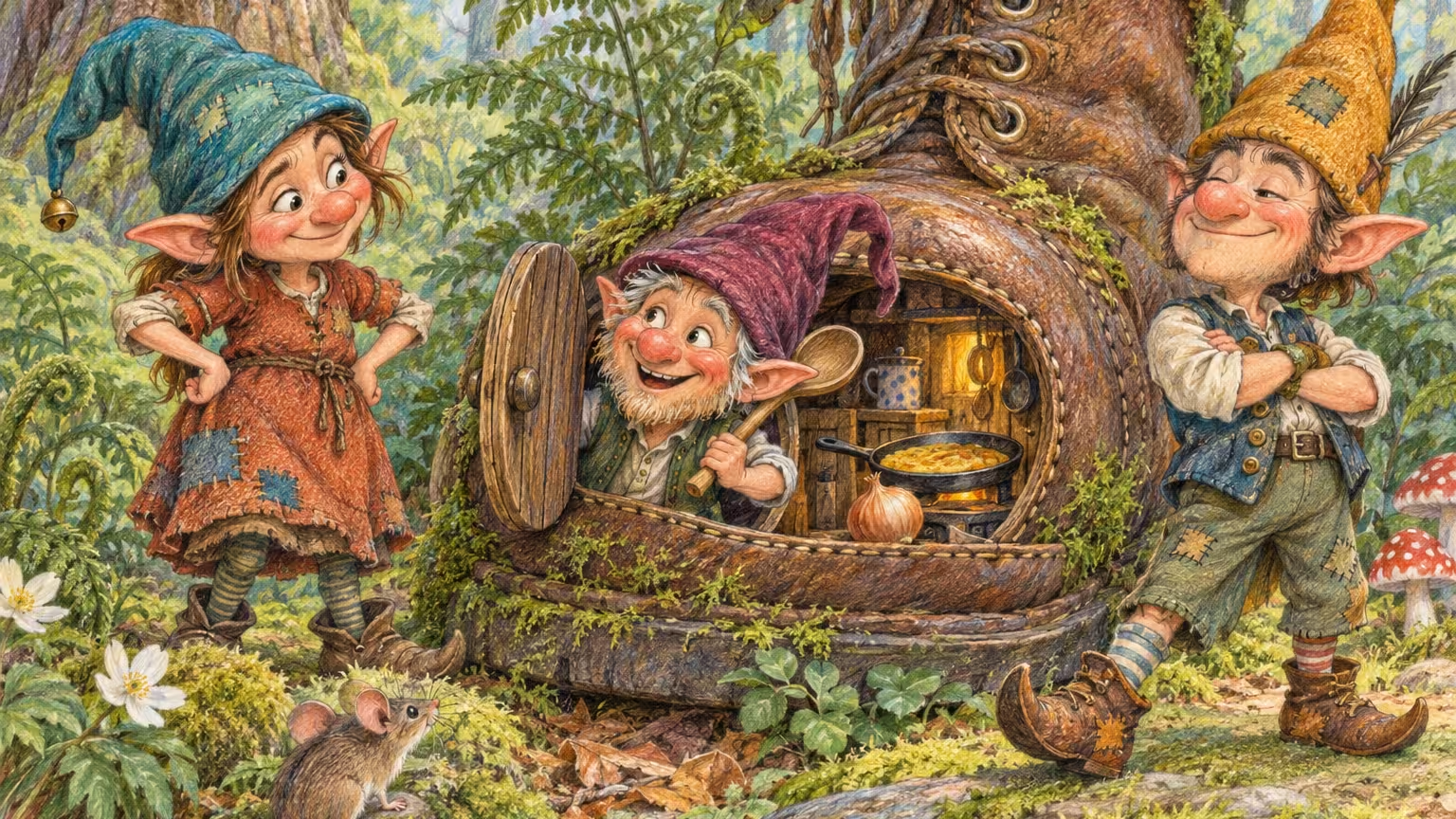
Bonifacio emerged through the hole in the toe, a spoon over his shoulder and the face of someone who'd slept wonderfully. Two cousins followed. One carried a pillow, the other an onion. We didn't know what the onion was for and preferred to remain blissfully ignorant.
“Who told you lot you could move in?” asked Petronila.
“It was open.”
We sat on the moss. This looked promising. Bonifacio showed us the kitchen in the heel and the bedroom under the tongue. The onion, it turned out, was for an omelette. Petronila eyed her curtain and became slightly less furious when she caught the smell from the pan.
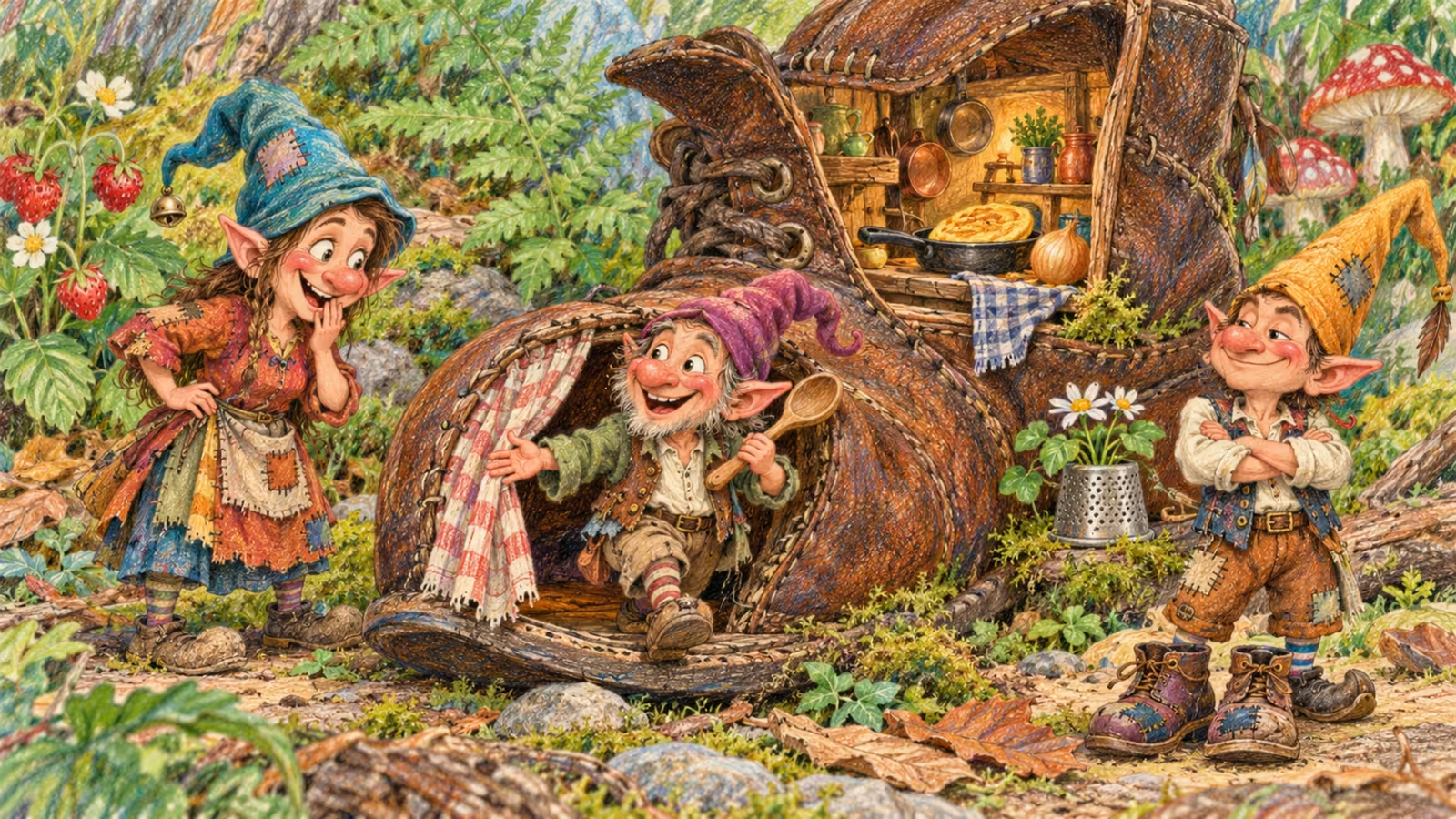
Fulgencio came over to explain how this proved the importance of properly closed footwear. He leaned against a root, folded his arms and put on his being-right face. Then a little thread of smoke drifted out of one eyelet.
He froze. So did we. The smell of toast came from inside his new boot. Fulgencio slowly undid the lace. Aunt Eufrasia popped up beneath the tongue, holding a slice of bread.
“Will you stop bloody walking? You're spilling my breakfast.”
Fulgencio took the boot off. She complained that he'd lifted her roof. We could barely breathe for laughing.
He'd sealed every hole and left the entrance at the top wide open. Still, the lady was warm as bloody toast.