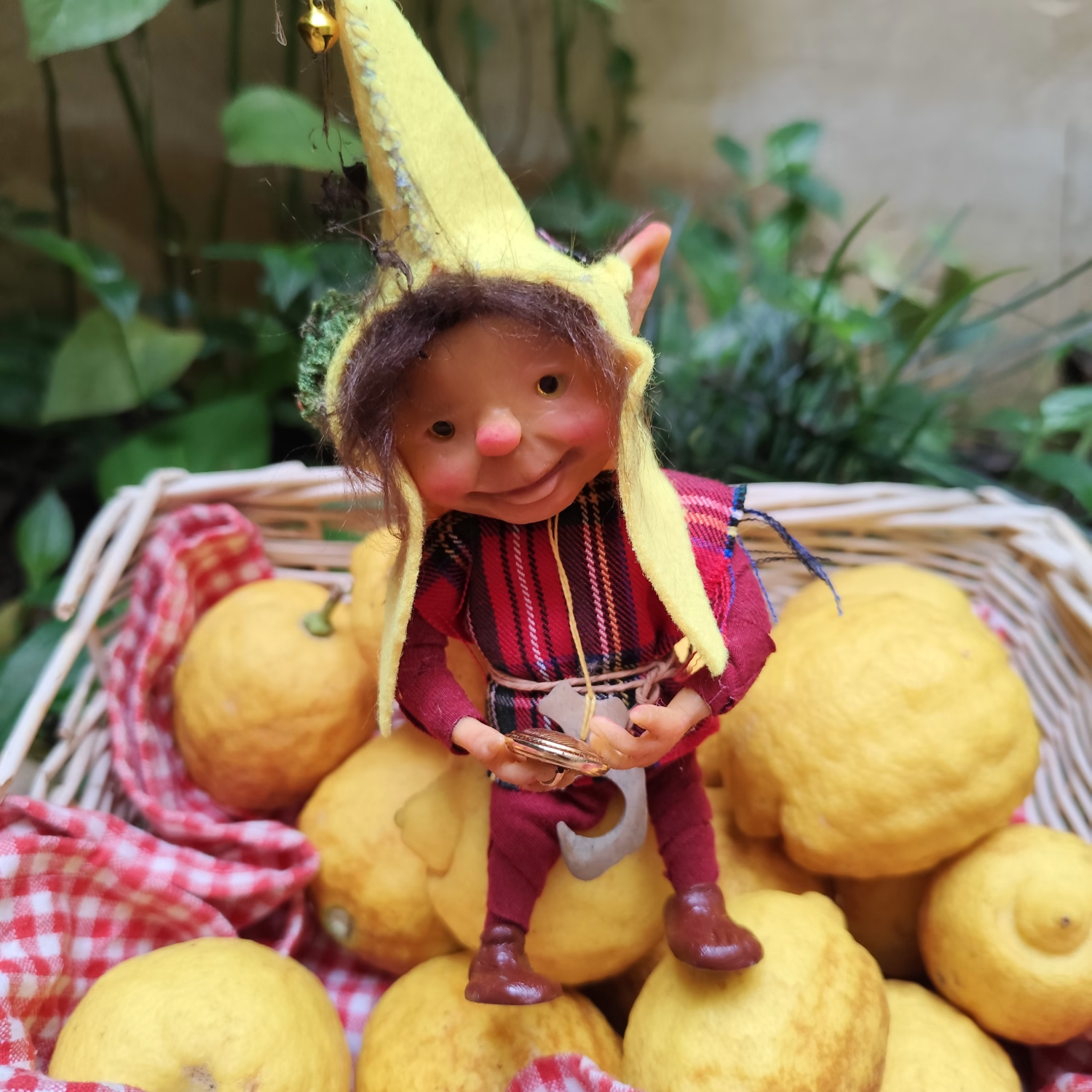
Let's get something off our chests: we Brownies are sick of being called elves. Or gnomes. Or, worst of all, "those little chaps in the garden." We've been telling everyone for centuries that we're brownies, and people keep mixing us up like a forest fry-up.
It's not your fault, lovely reader. The blame falls on centuries of mischievous literature, an Oxford professor named Tolkien who built a whole universe to his own taste, and some German ceramic figurines with red pointy hats that conquered the planet's flower beds. Real folklore, though, does tell the three creatures apart, scalpel-clean.
Today we sort it out without huffing, with etymological tenderness and a pinch of ancestral cheek. Let's get on with it.
The Brownie: keeper of the hearth (that's us)
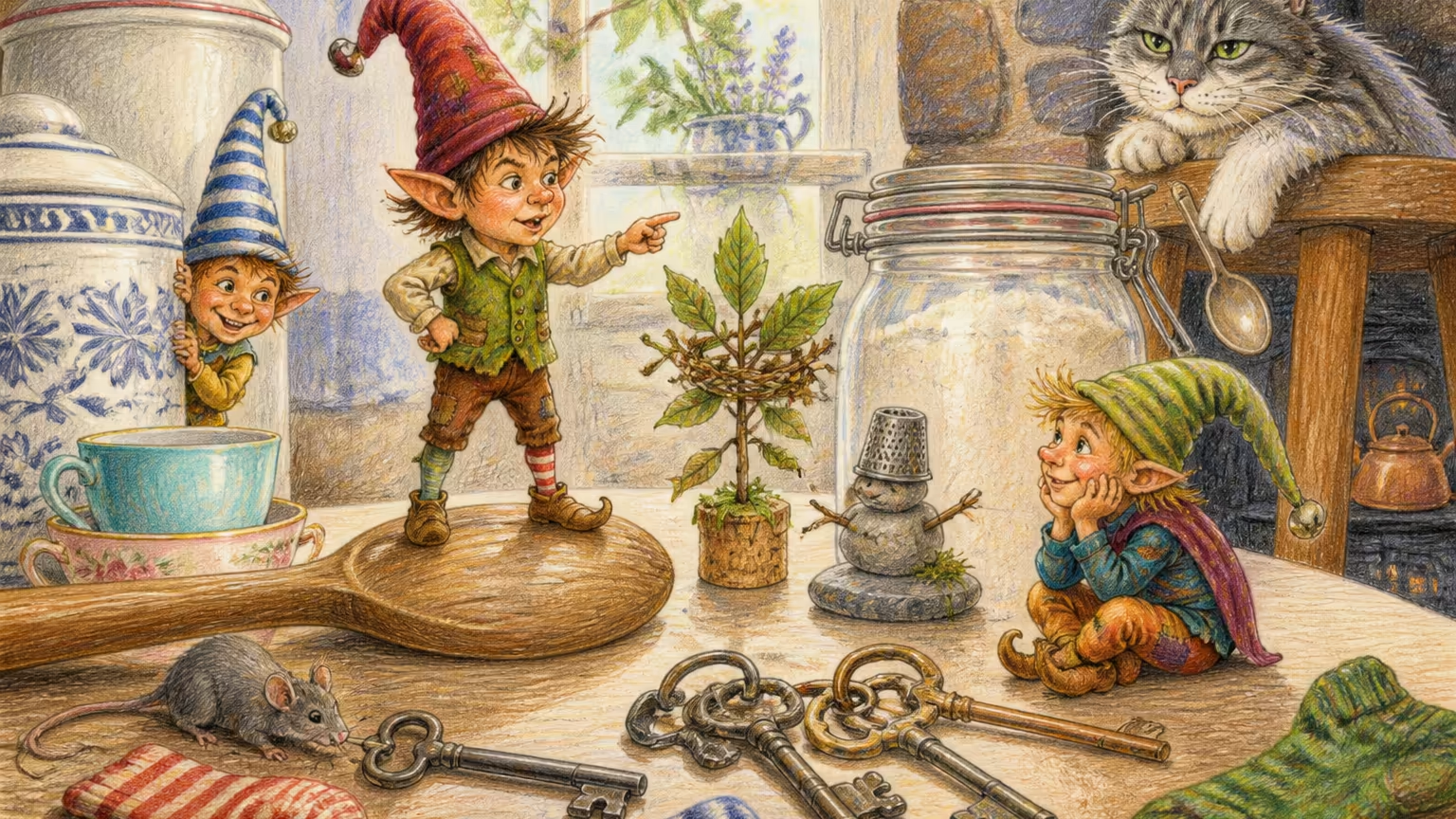
The word "brownie" comes from Scottish folklore, where it described a small creature with a brown coat who quietly took on house chores in exchange for a bowl of cream and a slice of bread. Our true habitat has always been the home: the walls soaked in kitchen steam, the corners where memories pile up, the cupboards where socks mysteriously disappear (yes, we moved those, we confessed it in another piece).
The brownie isn't a creature of the woods. We're domestic, through and through. We live where people live. We tag along, we look after things, we play small pranks and, above all, we keep alive that tiny wisp of magic the everyday tries to steal from you. That's why there are regional cousins all across Europe: the Scottish Brownie milking cows for a bowl of cream, the German Kobold getting cross if you don't name him properly, the French Lutin moving your shoes at midnight, the Italian Folletto pinching cats for sport. All cousins. All living with you, not far from you.
If you want the full picture of how a modern brownie lives in a modern home, head over to the official household brownie guide. And if you fancy a deeper dive into where the very word came from, our etymological exploration goes back to medieval Spanish for the Spanish-speaking sister term.
The Elf: the wild woods, and a man named Tolkien
The elf is another beast entirely. The Old English word ælf named a creature of woodlands and hills, tied to wild nature and silvan magic. In the Norse tradition the elves were the álfar: luminous, almost divine beings who lived in their own realm called Álfheimr. Not in your kitchen. Not in your home. Far away, in the roots of old oaks, in the clearings where moonlight pours down without asking.
That's the folklore. Then along came J. R. R. Tolkien, Oxford professor with a philological hobby of cosmonomic proportions, who invented the Eldar: tall, immortal, melancholy, pointy-eared, with their own language (several, in fact). He made a masterpiece. He also gobsmacked the planet into a permanent state of confusion. Because ever since, half the world thinks an elf is a tall blonde person with a bow, a tunic and an ancient sorrow on their face.
Now, we're not slagging off Tolkien. Bless his pen. But his elf isn't our cousin. Our cousin doesn't exist in his universe at all, because there are no domestic brownies in the folkloric sense in Middle-earth. Tolkien made something else. A gorgeous something else, mind you.
One more note: the "house-elves" in Harry Potter (Dobby, Kreacher) aren't elves in the folkloric sense either. Those are actually closer to European household brownies, although the author chose to call them elves for her own reasons. The folkloric DNA, though, is properly ours.
The Gnome: the earth, the alchemist, and the garden trap
The gnome was born in the sixteenth century, from the pen of Paracelsus, a Swiss alchemist with a name so long he stuck to the nickname. Paracelsus sorted the elemental spirits into four categories: salamanders (fire), nymphs (water), sylphs (air) and gnomes (earth). Gnomes lived in caves, mines and depths. They were earth spirits, short, stout, tied to metals and gemstones.
They didn't live in gardens. That came much later, in the nineteenth century, when a German maker named Philipp Griebel started cranking out ceramic figurines with red pointy hats and white beards to decorate bourgeois gardens. The idea went viral, garden gnomes conquered Europe, and suddenly any small figurine with a pointy hat was a gnome. Even if it was a brownie. Even if it was an elf. Even if it was a Magikito sneaking through the hydrangeas.
We affectionately call this the garden trap: the mass visual confusion that lumps brownies, gnomes and decorative figurines into the same pot of red-hatted ceramic. And you, after reading this far, know they aren't the same thing at all.
Quick table: the real differences
To close it with a clean visual snap, here's the side-by-side. Same folkloric scalpel, now cutting in columns:
| Aspect | Brownie | Elf | Gnome |
|---|---|---|---|
| Habitat | The human home | Woods, hills, the wild | Caves, mines, the earth |
| Folkloric origin | European household tradition (Brownie, Kobold, Lutin, Folletto, Trasgu) | Norse and Germanic tradition (álfar) | Paracelsian alchemy of the sixteenth century |
| Typical size | Small, 30 to 60 cm | Human-sized or taller in Tolkien, variable in folklore | Short and stocky |
| Character | Mischievous, protective, loyal to the home | Distant, magical, tied to the wild | Subterranean, tied to metals and gems |
| Modern confusion | With garden gnomes and dwarves | With Tolkien's elves and Santa's helpers | With decorative figurines and cartoons |
The modern muddle: Tolkien, Disney and the garden join hands
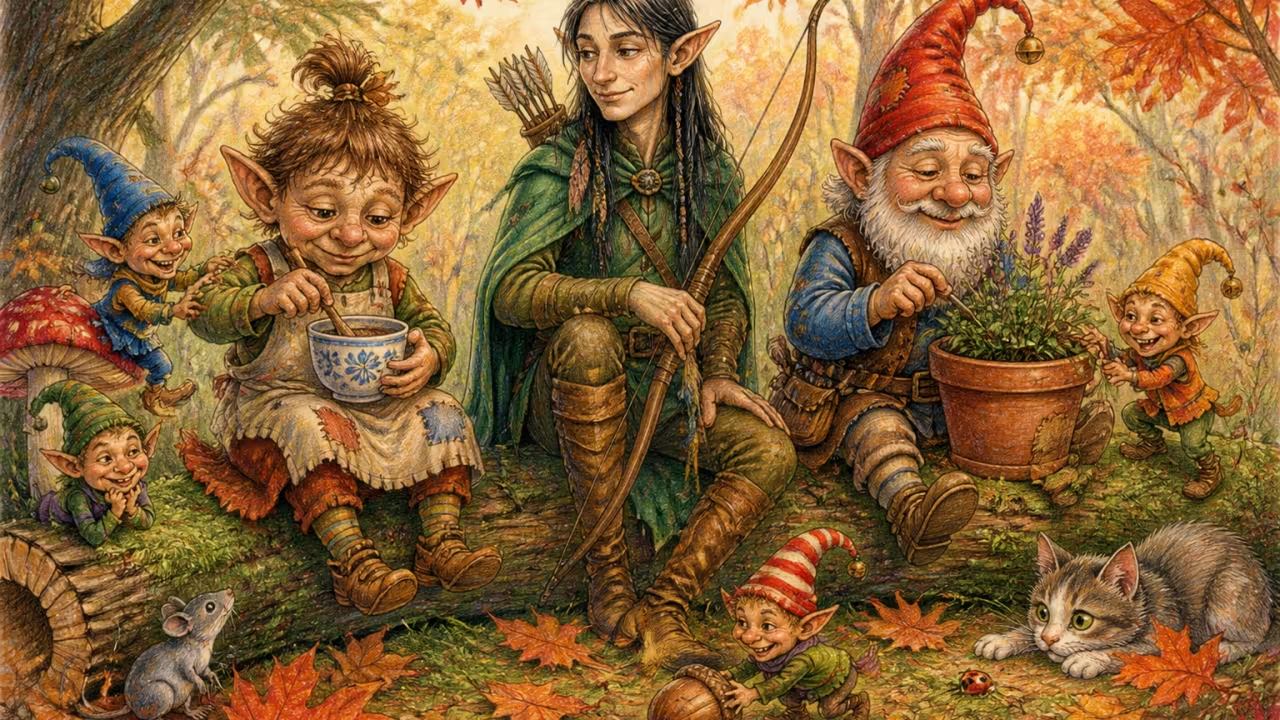
The big contemporary tangle comes from three fronts that overlapped without asking permission. Tolkien made the elf epic. Disney made the Seven Dwarfs adorable (technically dwarves, not gnomes nor brownies, but they piled into the same imaginative cupboard). And the bourgeois gardens filled up with generic figurines anyone calls "brownies", "gnomes" or "little chaps" depending on the day and the mood.
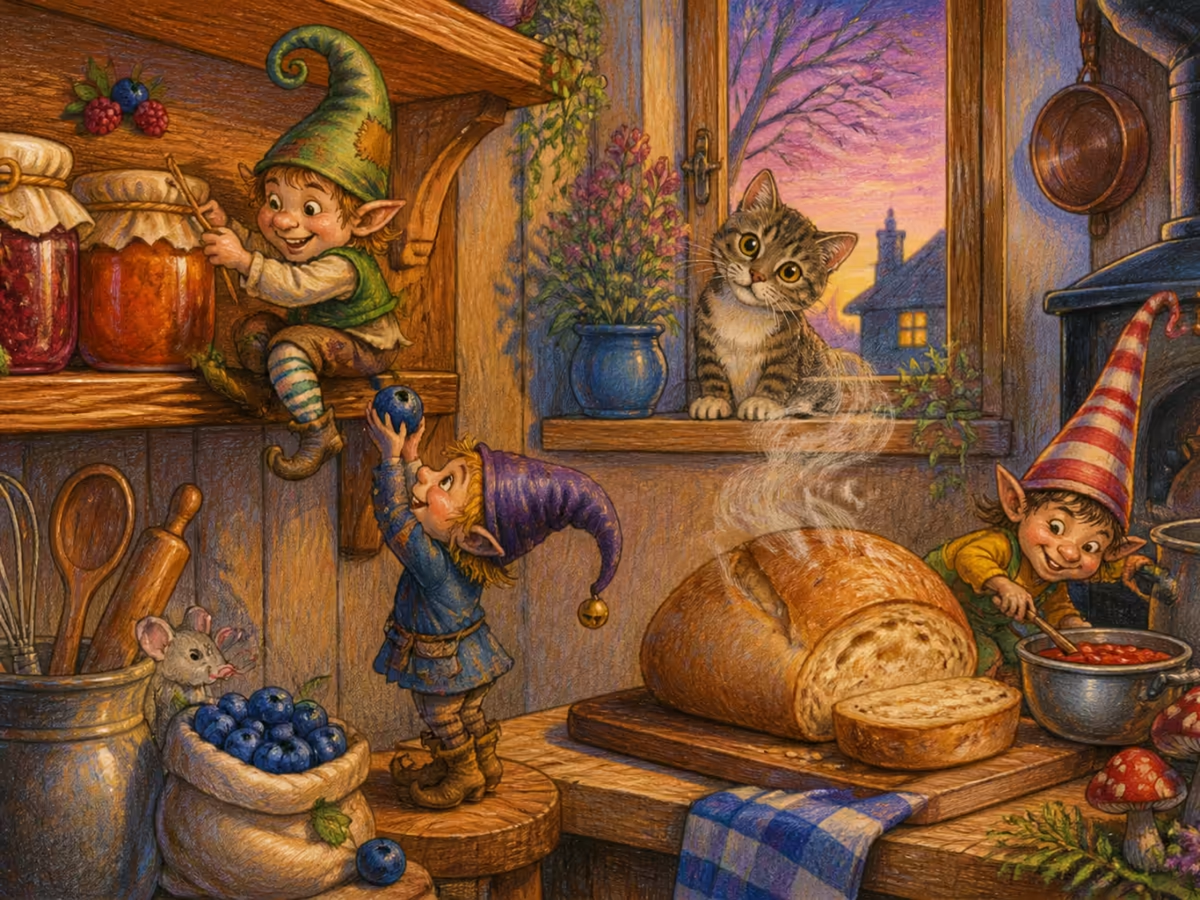
The upshot is that in everyday English "brownie", "elf" and "gnome" get tossed around as if they were synonyms for any small magical creature. We find that sweet (naming with affection) but also unfair (it erases the real folklore).
When you say "brownie", you're invoking a specific, domestic, very old tradition. When you say "gnome", you should be invoking a Renaissance alchemist. When you say "elf", you're picking between Norse folklore and Tolkien's imagination. Each has its own corner.
And for those who reach the end with loose ends, two honest answers to the questions readers actually ask. While you're here, let's close the loop properly.
Aren't Tolkien's elves the same as folkloric brownies?
No. Tolkien's elves are a modern literary creation drawn in part from Norse folklore, but pushed into their own universe where they're tall, immortal and melancholy. European household brownies (Scottish Brownie, German Kobold, French Lutin, Italian Folletto) are small domestic creatures who live in human homes, do small chores, play pranks and stay where people are. They're living folk tradition, not fiction. Tolkien built a beautiful world, but he didn't invent the household brownie, who was around long before him.
So what exactly are the Magikitos?
We're the contemporary Taramundi take on the European household brownie. Brownies in EN, Wichtel in DE, Lutins in FR, Folletti in IT, duendes in ES. Hand-crafted by Carmen in Taramundi with cold porcelain and a lot of care, we carry concrete magical sparks (luck, calm, creativity, whatever fits) and live in human homes keeping company without getting in the way. Not woodland elves, not garden gnomes. The brownies of your home, with a name, a personality, and a quiet pact of mutual care.
The thing to take away
If you keep only ONE bit from this piece, let it be this: "duende", the Spanish word for "brownie", means "owner of the house" in medieval Spanish. We've been that for centuries. Centuries sharing walls with human families. It's not a fantasy label. It's a proper domestic post. And we take the post seriously, even if we then nick your teaspoons and shuffle the keys in the hallway.
If you want to dig deeper into how to care for a modern household brownie, how it differs from a fairy (another classic mix-up, just as juicy), or which regional cousins live where, you have the doors open: basic care of the household brownie, brownies vs fairies, how to tell them apart, the Trasgu and other creatures of northern Spain, the Latin American cousins of the wild.
Let each creature have its own corner. That's our folkloric crusade of the day. Until the next prank.