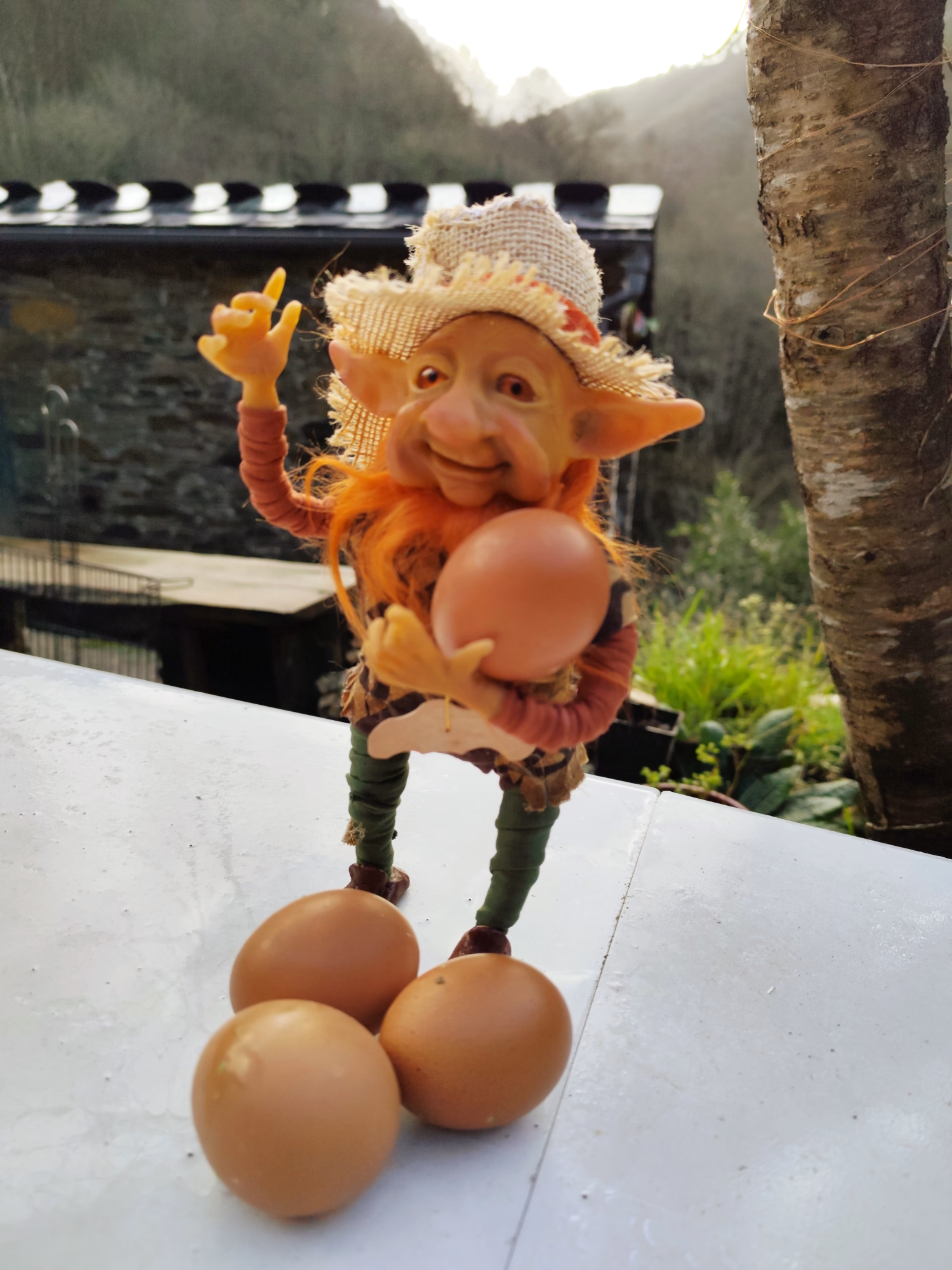
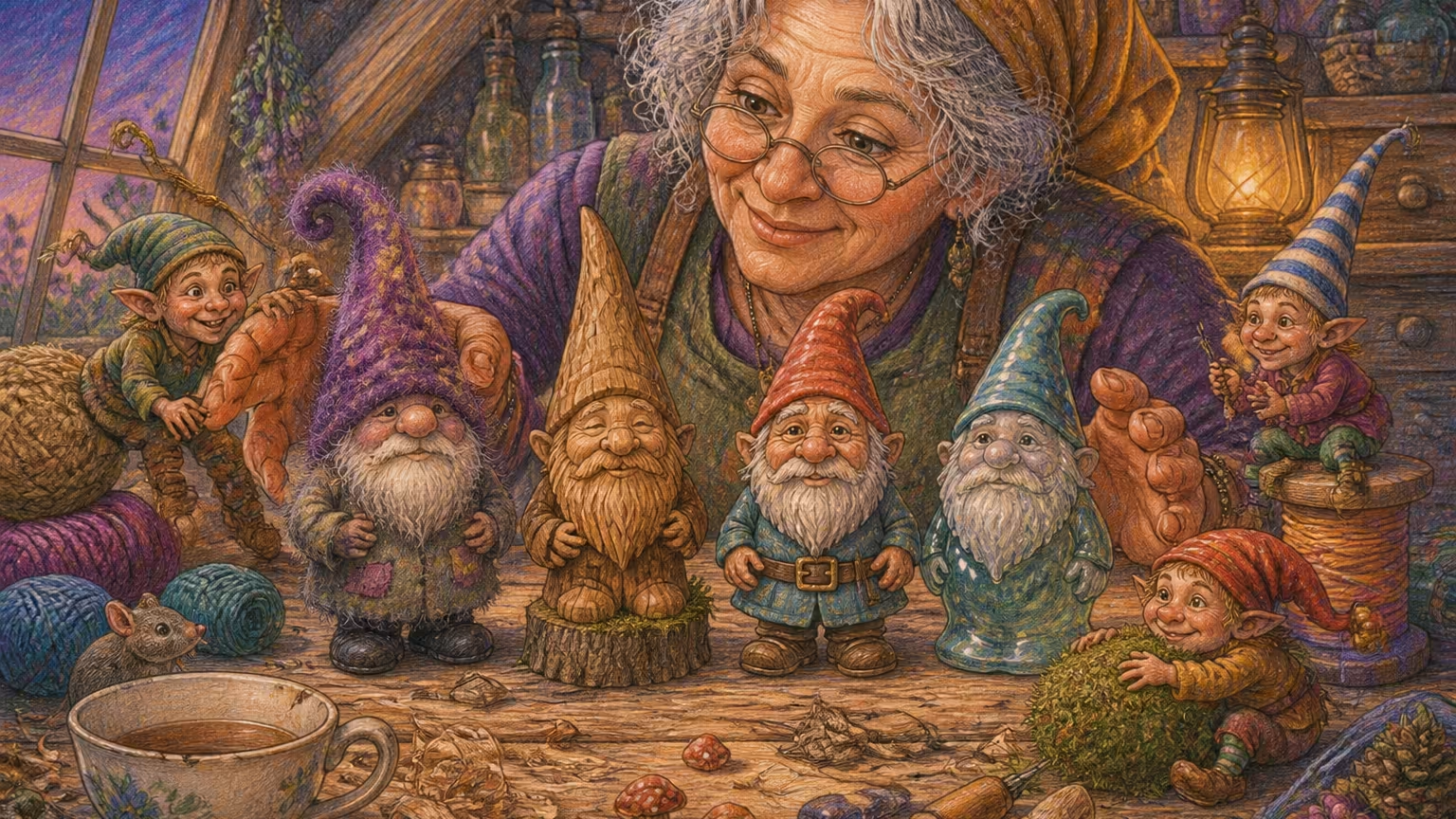
Among all the corners of magical craftsmanship, Brownie figures are one of the most confusing. You see one thing online, another in the shop next door, and suddenly you're standing in front of twenty options that all look like Brownies but have nothing in common. That might sound like a first world problem, but it matters a lot: a handmade Brownie figure made of felted wool has a very different energy than a mass produced resin one. It's not snobbery, it's soul physics.
We've seen people flip out over anything with pointy ears, a hat and a mischievous face. And hey, we get it. But if you're bringing a creature home, it's worth knowing what you're choosing.
The materials Brownies are made from
Material isn't a technical detail. It's the first conversation a Brownie has with you before you say a word.
Carded wool (needle felted). This is the technique of many artisans who make soft figures: carded wool compacted by hand with special needles until it gains volume and character. The touch is soft, warm, almost ridiculously huggable. Wool breathes, and each piece comes out slightly different because the fingers of the maker are not a mold. Here the difference between real craftsmanship and mold production is obvious at first touch.
Carved wood. Nordic and Central European tradition, real weight in the hand, the texture of an old forest. Well carved wood lasts generations. Depending on the artisan, it can go from simple and primitive to so detailed it seems to blink. There's something in wood that connects directly to the part of the brain that believes in things that can't be explained.
Clay and ceramics. They allow extreme detail: wrinkles, buttons, expressions. They're more delicate but also more expressive. A well painted ceramic Brownie has a presence that takes your breath away. The downside: they fall, they break, and the Brownie looks up at you from the floor with a disappointed face.
Synthetic resin. Resin can look gorgeous in photos, with perfect colors and sharp details. But it's refined plastic. It weighs the same, smells the same, and in three years it looks like any bazaar ornament. If you want quick visual weight, it can work. If you want something that shines on its own on your shelf for years, pick another material.
The types of Brownie figures you'll come across
Beyond material, Brownies come with different personalities. This isn't marketing: each type of figure has a different folkloric origin and projects a different energy in the space where it lives.
The house Brownie. Silent guardian, chubby figure, expression between mischievous and protective. It's the classic. In European tradition it goes from the Scottish Brownie to the German Wichtel to the Asturian Trasgu, always tied to the house, the kitchen and home wellbeing. There are versions of this being in every culture in the world.
The forest Brownie. Wilder, with branches, mushrooms or mud built into the design. Less settled, more adventurous. Ideal for anyone who feels that trees understand them better than most people.
The Christmas Brownie. Seasonal by nature, though some people leave them out all year without anyone saying a word. If you're looking at this type, you probably already know what you want.
The Magikito. Handcrafted cold porcelain Brownie with its own Sparks. Each one has its own name, specialty and character. No two are alike because they're made by hand, one by one in Taramundi. Though you won't find this one in any shop: Magikitos aren't sold, these figures are made for the love of art and we show them in the Brownie section.
How to choose the Brownie figure that feels right for you
Choosing a Brownie figure well is an exercise in honesty. Not budget, not fashion, but honesty: what do you want that creature to do in your life?
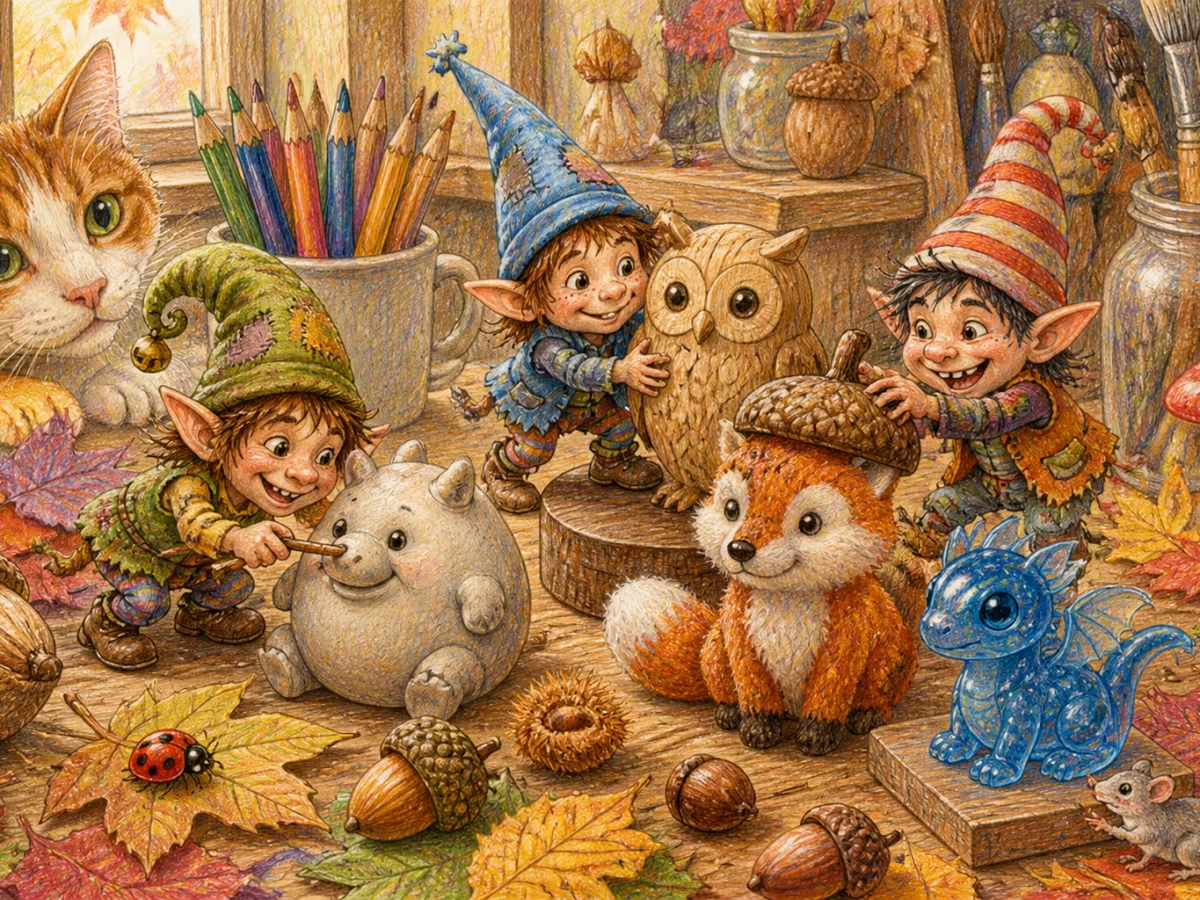
If you want warm company for a restful space, wool wins hands down. If you want presence on a library shelf or a desk with history, carved wood has that narrative weight that rocks. For decorative spaces where visual impact is everything, hand painted ceramics might be the answer.
And if you're looking for a gift with real meaning, any authentic handmade piece beats any molded resin by a hundred points. The difference between handmade and mass production isn't just aesthetic: it's the difference between an object with a story and one that has nothing to tell.
Another variable few people mention: size matters, but not to compensate for anything. For coherence with the space. A thirty centimeter Brownie on a nightstand can be a statement. In a large living room it can get lost. Small and well placed usually beats big and lost in the space.
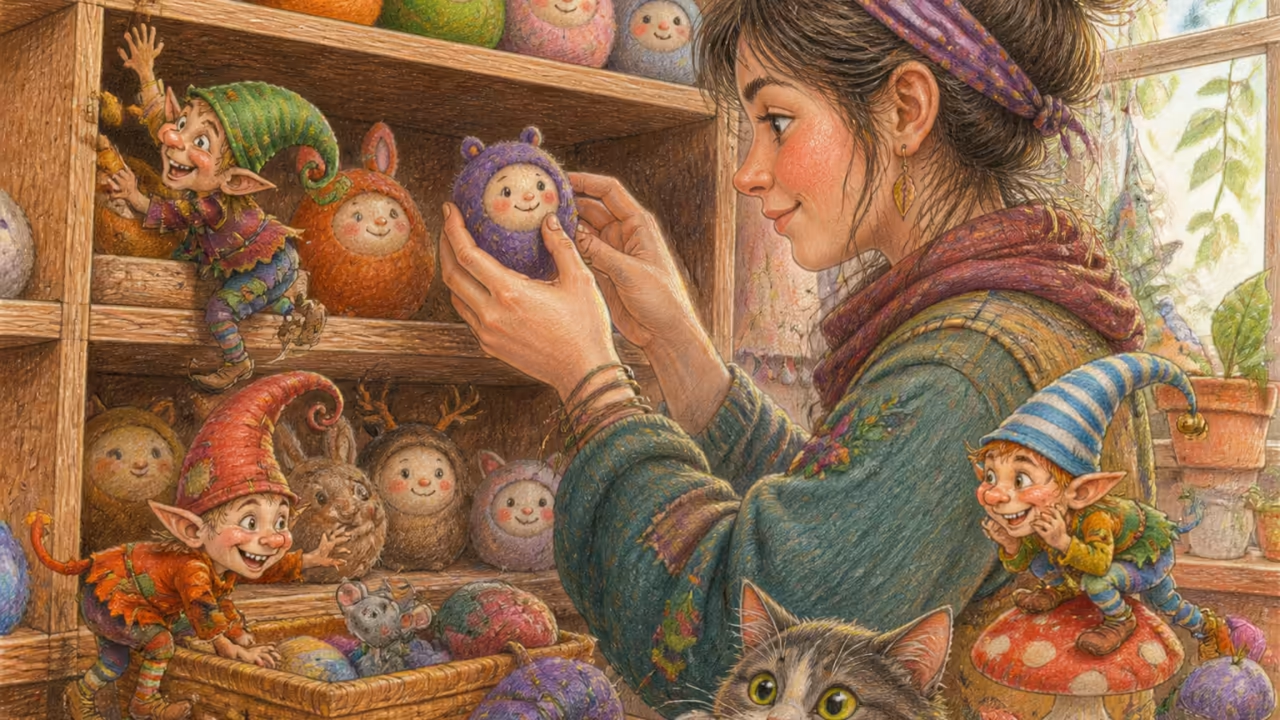
If you also feel like exploring the creative side before committing to a physical piece, the Brownie coloring pages are a different entry point: they let you get to know the visual universe of the Brownie without hurry.
What is the best handmade Brownie figure?
The best handmade Brownie figure is one made of carded wool or wood carved by a real artisan. These techniques guarantee that each piece is unique, has authentic texture and can't be mass produced. Needle felting in particular gives the Brownie a warm, imperfect presence that no mold can imitate, and that imperfection is exactly what gives it character.
The difference from resin figures is immediate to the touch. And also in the third year of life, when the craftsmanship remains the same and plastic starts to show its nature. If you're choosing just one, choose the one someone made with their hands, not the one that came out of an industrial mold.
Which material do Brownie figures last longest in?
Both carved wood and needle felted carded wool last for decades with minimal care. Wood just needs to stay away from extreme humidity. Felted wool is cleaned with a soft brush and stored away from direct sunlight. Ceramics can last generations if they don't fall. Resin ages visually much sooner. For real durability, natural craftsmanship over technical plastic, always.