The Brownie in the Piano
The Renfield Hotel did not hire liars. That was the first thing Gerald Whitmore learned when he lied his way in anyway, telling the events manager he had trained at a conservatory in Vienna. As it happened, it did not exist. He knew three songs. Two of them were the same song in different keys.
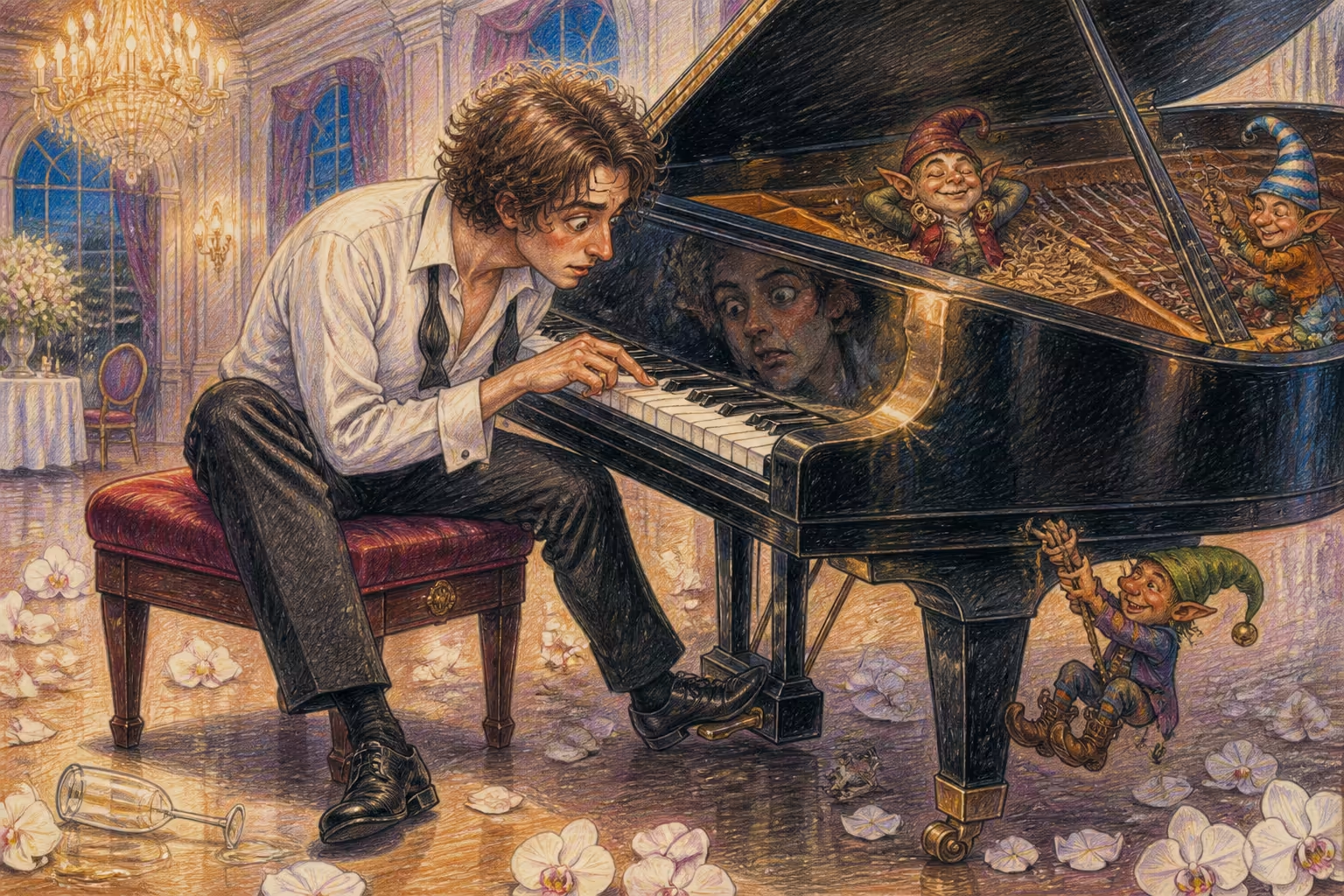
Which was how, on the night of the Ashworth Price wedding, in a ballroom dripping with white orchids and old money, Gerald sat down at a gleaming grand piano to play for four hundred guests and one bride who had specifically requested Clair de Lune. He did not know Clair de Lune. What came out instead, ten seconds in, was a catastrophe. His fingers snagged like a shoelace caught in a bicycle chain, black keys and white keys colliding in a pile-up that sounded less like Debussy and more like a cat falling down a staircase carrying a xylophone.
The string quartet stopped, aghast. A great-aunt dropped her champagne flute, and the bride Sophie, radiant thirty seconds ago, pressed both hands to her mouth as her eyes filled, because this was supposed to be perfect, and perfect had just gone spectacularly wrong in front of everyone she loved.
Two security guards in black suits began moving towards the stage. That was when the piano, quite literally, saved him. From deep inside the instrument, tucked behind the hammers and the tiny tuning pins and a nest of felt scraps and old piano wire, a small figure stirred. He was a brownie named Fizzlewick, dressed in a waistcoat sewn from the velvet lining of piano hammers and a bow tie cut from a snapped E-string, and he had been living in that piano for six years because pianos, in his professional opinion, were the single best hiding spot in any building. He felt things through wood and wire, the way other creatures felt rain coming.
And what he felt right now, rising off that stage in waves, was a bride's whole wedding day curdling into humiliation, and a terrified young man who was, underneath the lie, simply desperate not to disappoint anyone. Fizzlewick did not think twice. He pressed both palms flat against the underside of the soundboard and let his magic pour straight into the wires. Gerald's hands were still moving, wrong note after wrong note, but the piano itself stopped listening to them. Instead, from somewhere impossible, the actual notes of Clair de Lune began pouring out. Rich and unhurried, drifting up through the ballroom like moonlight finding a window.
Gerald looked at his own hands in open horror. He was pressing keys at random. The music didn't care. It was gorgeous. The security guards stopped walking. Sophie lowered her hands from her mouth, and the tears that had been about to fall turned into something else entirely. Because the melody swelled exactly where it should, softened exactly where it should, as if the piano somehow knew the version of the song that lived only in her memory, the one her grandmother used to hum. Which, as it happened, it did. Fizzlewick had plucked that detail straight out of the ache in the room.
By the final notes, the ballroom was utterly silent, and then it wasn't, because four hundred people rose out of their chairs at once. Sophie crossed the stage in her wedding dress and hugged Gerald so hard he nearly tipped off the bench, whispering that it was the most beautiful thing she'd ever heard, that her grandmother would have wept. Gerald opened his mouth to confess everything—the fake conservatory, the two and a half songs, the whole flimsy scaffolding of his lie—and found he couldn't do it, not with her crying happy tears into his shoulder. So instead he just said, 'I'm so glad,' which was at least entirely true.
Later, long after the last guest had gone and the ballroom lights had dimmed to amber, Gerald sat alone at the piano, running one finger along the keys like he might find the trick if he pressed hard enough. He never did find it.
But from inside the piano, curled back into his nest of felt and wire, Fizzlewick allowed himself a small, satisfied chuckle. He straightened his string bow tie and thought that this particular hiding spot had turned out to be an excellent line of work after all. He'd let the boy sweat through the next wedding on his own. In his own mind, a magic hero helps once, generously, not forever. But tonight, a bride kept her memory of her grandmother and a fraud kept his job one more day. And honestly, Fizzlewick thought that was a fair trade for anybody.