There’s a moment that happens, without fail, at some point in every child’s early years. The tooth loosens. Just a little at first, then a lot. You spend a few days working it with your tongue, half fascinated and half horrified, like a moth circling a very small flame. And then one day, without much fanfare, it falls out.
And in that precise moment, almost every culture on earth decides that what needs to happen next is magic. Not biology. Not a bin. Magic.
In much of the world, the tooth goes under the pillow and a fairy comes in the night and leaves a coin. In Spain, it’s a mouse. In Japan, you throw it up toward the sky or down toward the earth depending on which jaw it came from. In Greece it goes on the roof. In Turkey it gets buried near the place that holds your dreams for the child’s future. Why? Why this unspoken agreement between cultures that never met each other, this shared instinct that a baby tooth can’t just slip away without ceremony?
The Tooth Fairy: Older and Stranger Than She Looks
The image is so familiar it feels like it must be ancient: child loses tooth, puts it under the pillow, falls asleep, wakes up to find a coin. The Tooth Fairy came. Done. Everyone back to breakfast.
But the origins of the Tooth Fairy are considerably messier than her sparkly reputation suggests. There’s no founding legend, no moment where someone said "right, from now on there’s a Tooth Fairy." The character grew slowly, out of layered European and American traditions, until she felt inevitable.
The oldest roots point north. In Scandinavian and Germanic medieval traditions, baby teeth had protective power. Norse warriors made necklaces from their children’s lost teeth and wore them into battle. A milk tooth was a talisman, a tiny sacred object connected to life and luck. You didn’t just throw it away.
Medieval Europe also had customs of burying or burning lost teeth to keep them out of the hands of witches or enemies, who might use them for spells. Every culture had a protocol for the fallen tooth. Nobody had a bin for it.
The first written record of the Tooth Fairy as a recognisable character appears in 1908, in a children’s supplement to the Chicago Daily Tribune. A mother described the ritual as a technique to get her children to cooperate through the ordeal of a wobbly tooth. "The fairy comes that night and leaves something nice." The children suddenly stopped screaming. The magic was essentially parenting psychology with wings. It worked so well it spread across the English-speaking world at the speed of a truth that feels like it was always there.
The Mouse Who Was There First
Here’s the part that surprises most English speakers: the mouse tradition is older, at least in its written form. And it has such a specific, lovely origin that it sounds invented.
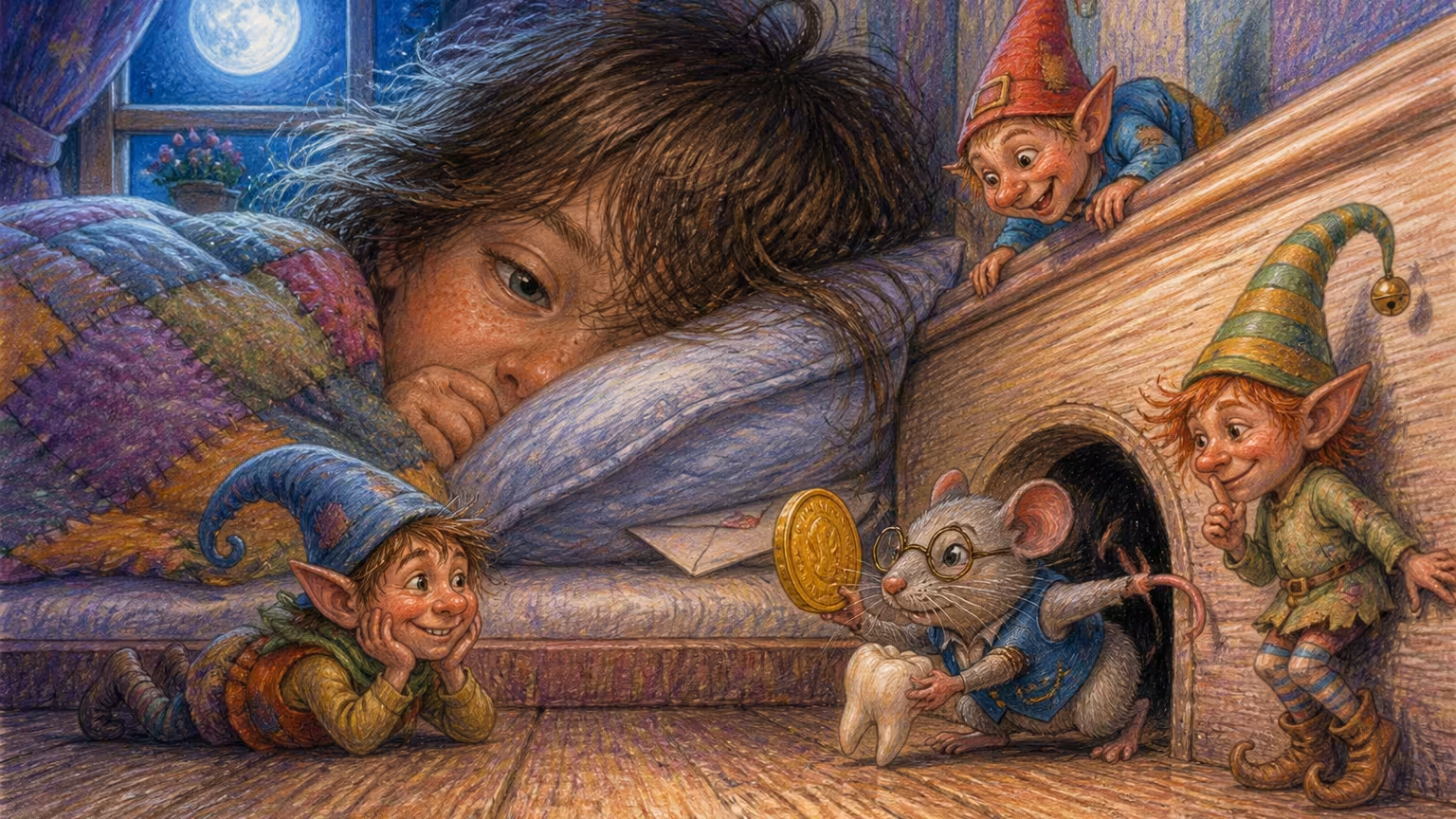
In 1894, King Alfonso XIII of Spain was eight years old and had just lost his first baby tooth. His mother, Queen María Cristina, asked Luis Coloma, a Jesuit priest and writer, to create a story for the occasion. What he came up with was Ratoncito Pérez: a tiny mouse who lived inside a biscuit tin in a confectionery shop on the Calle Arenal in Madrid, in a miniature flat full of furniture the size of a thumb. Pérez collected good children’s teeth through the pipes and cracks of the city at night, leaving gifts in exchange.
The story was published, it spread, and the mouse won. In Spain and Latin America, Ratoncito Pérez is still a childhood fixture. He even has an official home on the Calle Arenal, visited by children to this day.
But Pérez had distinguished ancestors. France had its own version centuries earlier: La Bonne Petite Souris, a good little mouse from a fairy tale written in 1697 by Madame d’Aulnoy. A magical mouse who helped a good queen defeat an evil king, with powers that included making something special happen with lost teeth. The French mouse tradition is over three hundred years old.
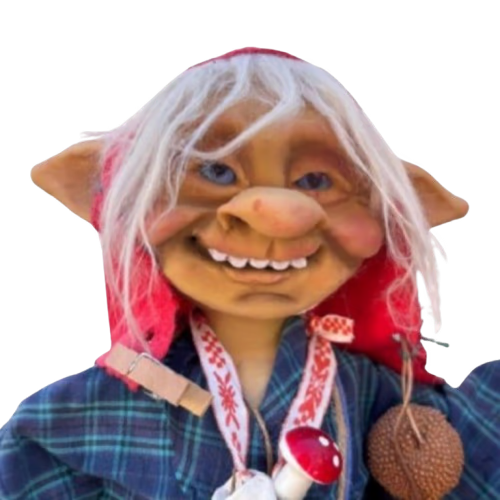
Why a mouse instead of a fairy? It makes more sense than it sounds. Rodents are the world’s tooth specialists. Their teeth never stop growing, they live in the cracks of houses, they move at night without being seen. A mouse who collects baby teeth fits perfectly into the tradition of small, discreet household creatures that share our homes invisibly, like the domestic Brownies of European folklore, but with whiskers and no pointy hat.
The Rest of the World Has Its Own Answer
One of the best things about looking into baby tooth traditions is discovering how differently each culture arrived at its own answer, with no one copying anyone else.
In Japan, physics rules. Lower jaw teeth get thrown upward (so the adult tooth grows up in the right direction), upper jaw teeth get thrown down. No fairy, no mouse, no coin. Just geometry and faith in correct growth.
In Greece and much of the Mediterranean, the tooth goes on the roof with a wish. The roof holds it, and the new tooth grows strong. In Turkey, many families bury the tooth near the place connected to the child’s hoped-for future: near a school for studiousness, near a sports pitch for athletics. The tooth as investment in destiny.
In India the traditions vary by region: some throw the tooth toward the sun, some bury it, some offer it to birds to carry away any fear. In parts of the Middle East, the tooth flies upward with a prayer.
Mice, fairies, rooftops, earth, sky, sun, birds. The variety is genuinely wonderful. But the pattern is always the same: the tooth doesn’t just disappear. The tooth participates in something.
Why Do All Cultures Make Magic Out of Baby Teeth?
Because losing a baby tooth is the first rite of passage a child’s body registers in a visible, irreversible way. Part of you falls out. There’s no going back. And humans have been responding to transitions with ritual, story and magic for thousands of years, because rites make change less frightening and more memorable. It’s not superstition. It’s developmental psychology in a fairy costume.
The child who lies awake waiting for the Tooth Fairy isn’t afraid of the tooth falling out. They can’t wait for night to come. The ritual turns a moment of loss into a moment of anticipation. The tooth leaves, but something arrives. That’s what rites of passage do across every human culture: they mark the transition and make it something worth reaching for.
If you’re interested in the small rituals that give ordinary days more weight and meaning, our piece on everyday rituals and the magic of tiny gestures goes exactly there.
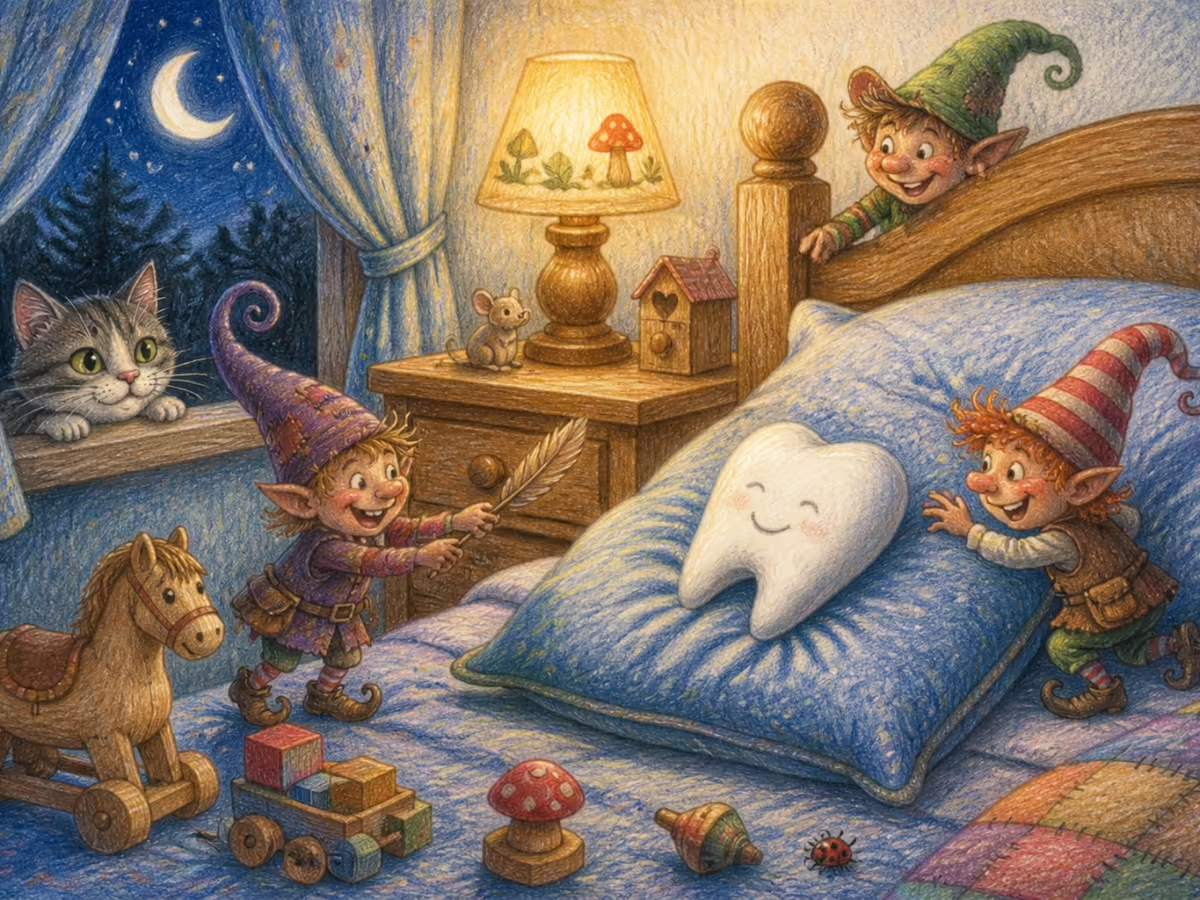
The moment the tooth goes under the pillow is one of the purest in childhood. There’s anticipation. There’s blind faith that something invisible will do its part. A kind of belief that doesn’t need proof because it already works.
That’s the Spark of Joy in its most undiluted form: the quiet certainty that tomorrow there’ll be something good waiting.
Magical Fairies and What They Share with Magikitos
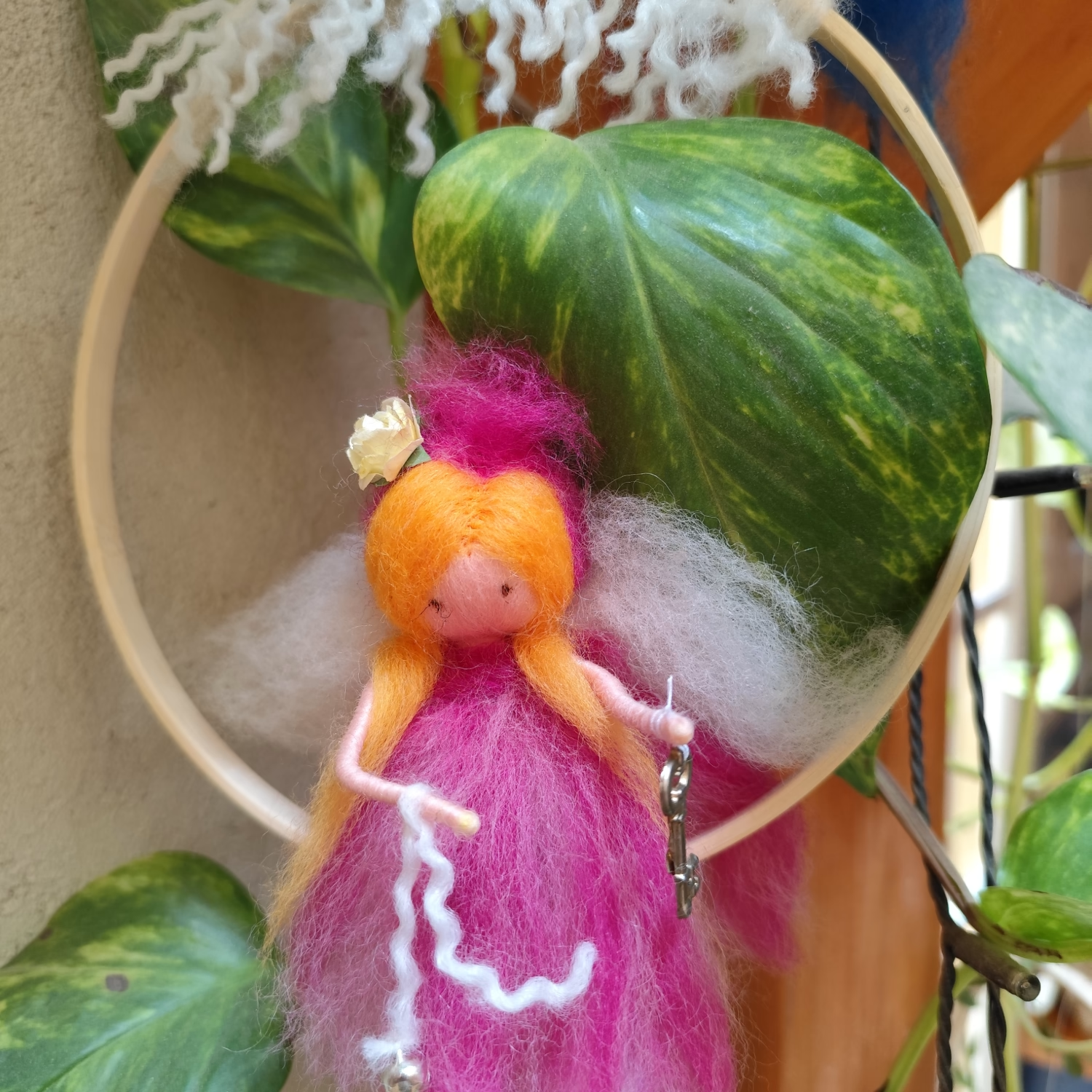
Magikito Fairies don’t come to collect baby teeth (though some of them have a look that suggests they’d be happy to, if you asked nicely enough). But they do share something essential with the Tooth Fairy: they’re made for moments of transition, for homes where people believe that small moments deserve small ceremonies.
A Magikito Fairy on a child’s shelf does the same thing the Tooth Fairy does under the pillow: it says that in this home, there’s room for everyday magic. That the Spark of Home doesn’t come from the furniture. It comes from what we decide to believe lives in it.
If you want to know where fairies really came from, beyond the glitter and Tinkerbell, the story is much older and wilder than you’d expect. From the Celtic Sidhe to Hayao Miyazaki, there’s a three-thousand-year thread connecting it all. We trace it in the real history of fairies.
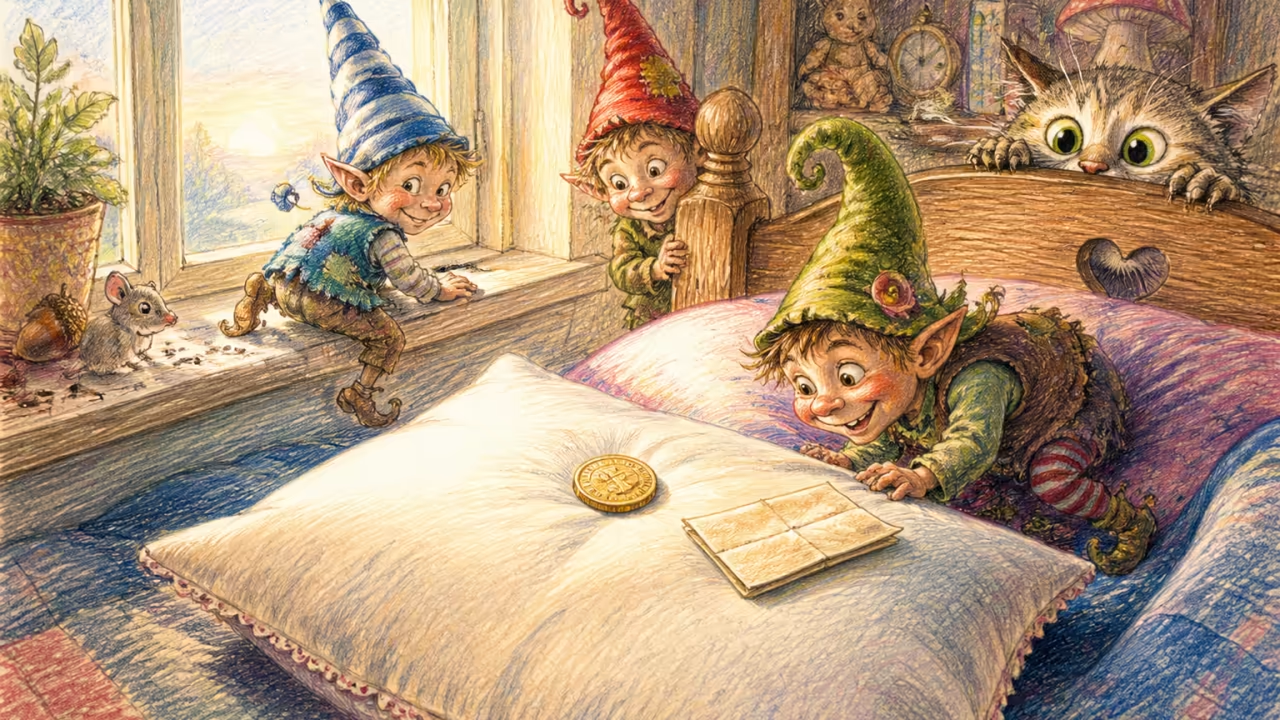
How Much Does the Tooth Fairy Leave Nowadays?
There’s no official rate, but rough figures exist. In Spain, Ratoncito Pérez typically leaves between one and three euros per tooth, depending on the family. In the US, the national average sits around six dollars per tooth, though in certain areas the Fairy has developed distinctly inflationary tendencies and leaves twenties. The most generous case we’ve heard of: fifty euros for a particularly dramatic molar. Magic has no price, apparently, but it does have a cost of living index.
What seems universal: the first tooth is worth more than the rest. The first one is special. The first deserves the big coin, the handwritten note, the envelope with your name on it. By the fourteenth tooth the Fairy has a heavy workload and may be somewhat less lavish. That’s just being realistic.
What actually matters isn’t the amount. It’s that the child wakes up and finds something. That the pact held. That the magic worked. And if you’re looking for something that lasts longer than a coin, Magikito Fairies are companions for exactly this age. Or explore our fairy colouring collection if they’d like to draw their own.