
Why planes can fly
Science biteDid you know flying isn’t dark magic, it’s air magic with a proper shove?
A plane flies because its wings create lift, an invisible but very real force that pushes it upward so it doesn’t drop.
Where does that invisible “upward shove” called lift come from?
From two ideas working as a team: action and reaction and pressure. Picture this: you stick your hand out of a moving car window and tilt it a little upward (that’s the “angle of attack”). We know you’ve done it at least once. You feel the air smack your hand and send it up. That happens because your hand is deflecting the air downward with force, and pure physics says, if you push air down, the air returns the favor by pushing you up.
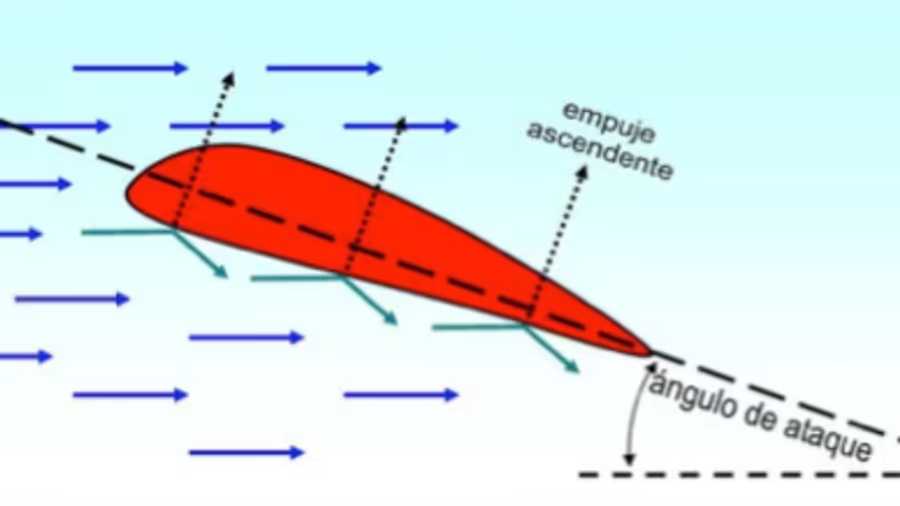
And on top of that, here comes the big secret, the wing’s shape makes the air that flows over the top run a bit more “free” and with lower pressure, creating a suction effect. Truth is, the plane flies more because the sky “pulls” it from above than because the air pushes it from below. It’s like the wing grabs an invisible handrail and hangs from it.
Result: if there’s enough speed for that airflow to stay steady, the plane ends up “resting on” and “hanging from” the wind at the same time.
In the forest we say it like this: to go up, you don’t need to “float”, you need to give the air a clear job. It’s all about direction and knowing where to place the force.