
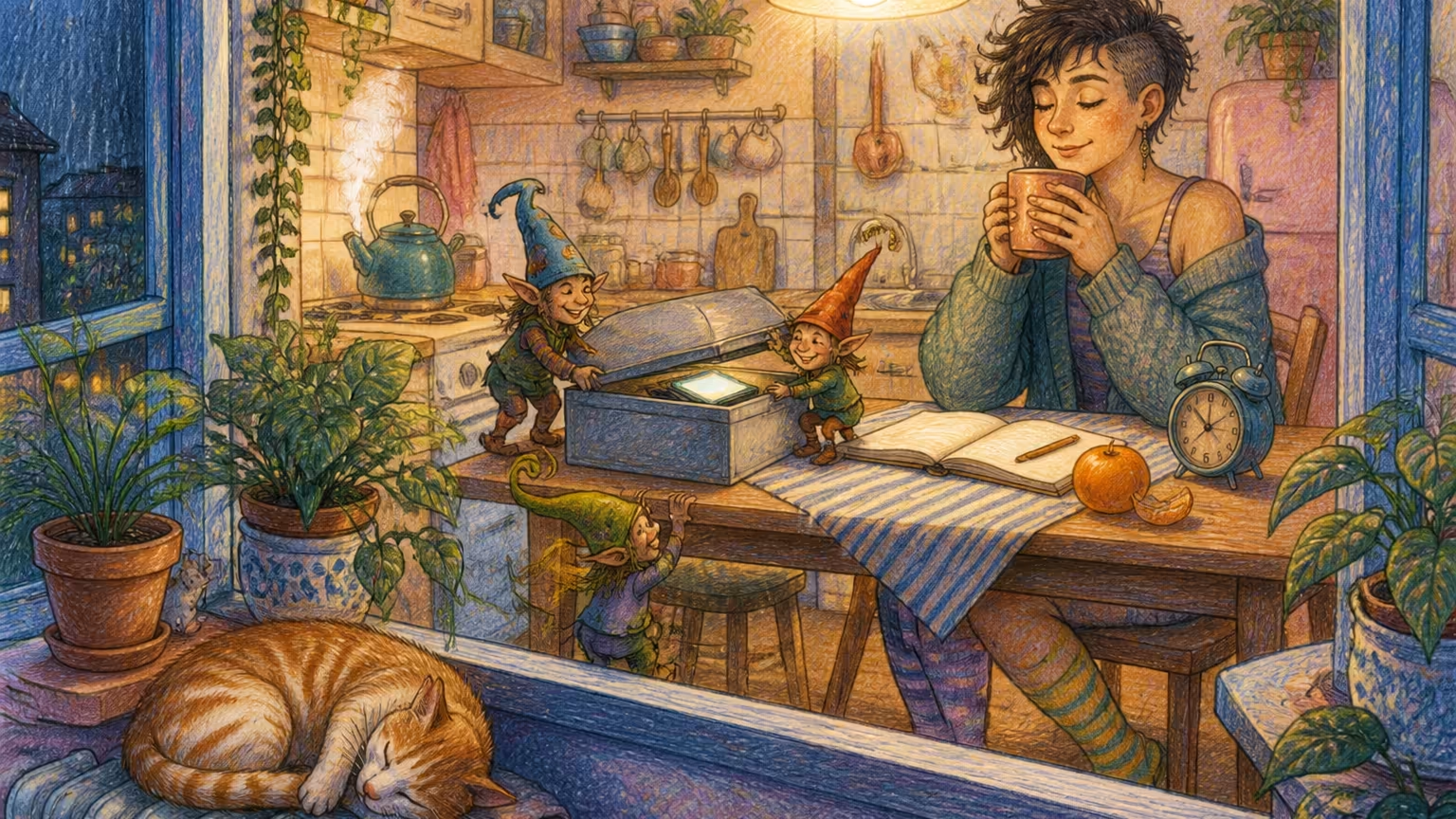
The modern world is exhausting.
Notifications every five minutes. Doom news 24/7. Work that creeps into your home. Social media that makes you feel like your life isn’t enough. Impossible productivity expectations. Infinite info your brain can’t even digest.
And somehow, in the middle of all that, you’re supposed to be fine, be happy, hit goals, and keep it together.
It’s nuts.
This guide is practical survival so you don’t lose your mind in a world that feels designed to push you over the edge.
The main enemies of your sanity
Before you fight them, name them:
1. Constant hyper-connection
Your phone never stops. WhatsApp, email, Instagram, Twitter, news, notifications from apps you don’t even remember installing.
Your brain wasn’t built for this. It’s stuck in constant alert, waiting for the next ping. It never truly rests.
2. Apocalyptic info 24/7
War, climate crisis, the economy wobbling, pandemics, natural disasters. The news blasts fear nonstop because fear sells.
Your ancient brain can’t tell the difference between a real threat right now and a far-away threat on a screen. Stress switches on either way.
3. Social comparison on steroids
Before, you compared yourself to your close circle. Now you compare yourself to millions of people posting their best, filtered version online.
It’s a game you can’t win. There’ll always be someone prettier, richer, more successful, happier… apparently.
4. Toxic productivity culture
“Optimize every minute. Wake up at 5am. Two-hour morning routine. Side hustle. Learn a new skill. Network. Personal brand.”
Rest looks like failure. Doing nothing is “wasting time”. Your value as a person gets measured in output.
5. Nonexistent boundaries
Working from home turns into working anytime. Available 24/7. No separation between personal life and work life. Your home stopped being a refuge.
Mental survival strategies
1. Radical digital unplugging (even if it’s temporary)
You don’t need to be available 24/7. You really don’t.
What to do:
- Airplane mode at night: After 10pm, 11pm, whatever time you choose, that’s it. If it’s a real emergency, it can wait until tomorrow.
- No phone in bed: Get a real alarm clock. Your phone doesn’t sleep with you.
- Notification-free blocks: 2 to 3 hours a day on Do Not Disturb. Focus on one thing with no interruptions.
- One day without socials: A Saturday or Sunday with no Instagram, Twitter, or TikTok. Messaging only if it’s truly necessary.
At first you’ll feel anxious. “What if I miss something important?” You won’t. Anything important will still be there in a few hours.
2. An information diet
You don’t need to know everything happening in the world in real time.
What to do:
- No news right after waking up: Don’t start your day with disasters. Have coffee, breathe, do your thing. Then, if you want, catch up.
- Limit news consumption: 15 to 30 minutes a day max. More than that doesn’t add value, it just adds anxiety.
- Avoid doomscrolling: That endless Twitter scroll of bad news doesn’t help. It drags you down.
- Choose sources on purpose: 2 to 3 outlets you trust. You don’t need the whole internet yelling opinions about everything.
Being informed is fine. Being flooded with end-of-the-world content isn’t.
3. Unbreakable work boundaries
Work will expand to fill all the time you give it. Set boundaries or it eats everything.
What to do:
- Fixed schedule: You work from X to Y. Outside that, work doesn’t exist. Email closed, work phone off.
- Separate physical space: If you work from home, have a specific work zone. When you step away from it, work is done.
- Don’t check email after hours: It can wait. If it’s truly urgent, they’ll call.
- Learn to say no: No to extra projects, pointless meetings, work that isn’t yours. Your time has a limit.

They’ll say you’re not committed. That you’re not a team player. That others stay longer. Too bad. Your mental health is worth more.
4. Real connection over digital connection
Social media doesn’t replace real human connection. Honestly, it erodes it.
Meet in person. A video call beats texting. In person beats video. Prioritize being physically present. When you’re with someone, put your phone away. Full attention on the person, not the screen.
Better three real friends than 500 Instagram followers. Find an offline community. A yoga group, a book club, volunteering, whatever. Real people you see regularly.
Humans need a tribe. Social media doesn’t count as a tribe. It’s the illusion of connection.
5. Non-negotiable rest
Resting isn’t wasting time. It’s basic maintenance for your system.
Sleep 7 to 8 hours. It’s not a luxury, it’s biology. Without it, everything else collapses. Have days where you do nothing. A Sunday with no schedule, no productivity, no goals. Just existing. Your brain needs it.
Twenty-minute naps aren’t laziness, they’re a system reset. And vacations are only real if there’s no laptop and no checking email. If you don’t truly unplug, you don’t truly rest.
Sustainable productivity requires rest. Burning out isn’t a badge of honour. It’s bad planning.
6. Movement as a pressure valve
Stress builds physical tension. You need to release it.
Walk every day. Thirty minutes minimum. Preferably in nature or a park. No phone, no podcast. Just walking. Exercise regularly. Gym, yoga, swimming, climbing, whatever works. 3 to 4 times a week.
Stretch 10 minutes a day. Your body is tight from stress. Let it go.
Movement helps your body process stress hormones. If you want to stay sane, it’s not optional.
7. Attention practices (meditation, mindfulness)
Your mind is stuck in chaotic multitask mode. It needs attention training.
Meditate 10 minutes a day. Train yourself not to get yanked around by every thought. Practice everyday mindfulness. Eat without your phone, take a mindful shower, walk while actually noticing things. Be present.
When you feel stress rising, stop for one minute. Breathe slowly. Reset your nervous system.
It’s not mysticism. It’s basic mental training. Like the gym, but for your attention.
8. Nature as an antidote
Screens all day disconnect you from physical reality. Nature plugs you back in.
Spend time in green spaces. Park, hills, beach, forest. At least two hours a week. Keep plants at home. Living green to care for. A connection to something that grows without WiFi.
Step outside for fresh air every day. Even if it’s 10 minutes on the balcony. Get out of the indoor bubble.

Nature calms your nervous system automatically. Science backs it up.
Tiny habits, huge impact
Big change starts with ridiculously small actions, done consistently:
Habit 1: The first 30 minutes of your day
Don’t grab your phone immediately. Wake up, breathe, stretch, eat, get ready. Then technology.
Those 30 minutes set the tone: reactive (phone first) or intentional (you first).
Habit 2: One screen-free meal
One meal a day with no phone, no TV, no laptop. Just food, sensations, presence.
It breaks the constant multitasking. It reminds you that you can do one thing at a time.
Habit 3: Go outside every day
Even if it’s raining. Even if you’re tired. Fifteen minutes outside the house. Change the air.
Staying shut in for days rots your mind.
Habit 4: Don’t take your phone to bed
Charge it in another room. Bed is for sleeping, not endless scrolling.
It improves sleep massively.
Habit 5: A 10-minute weekly check-in
Every Sunday: How was the week? What helped me? What drained me? What needs adjusting?
Self-awareness beats autopilot.
Signs you need to stop RIGHT NOW
Your body warns you before it collapses. Learn to listen:
- Persistent insomnia: You’re tired but you can’t sleep. Your mind won’t stop.
- Constant irritability: Everything annoys you. You snap at anything.
- Trouble focusing: You read the same paragraph five times and nothing goes in.
- Tiredness that sleep doesn’t fix: You sleep but you’re still wiped out.
- Social isolation: You don’t have the energy or desire to see anyone.
- Physical symptoms: Frequent headaches, stomach issues, chronic muscle tension.
- Anhedonia: Nothing feels good. Stuff you used to enjoy now feels flat.
If you’ve got several of these, it’s not that you’re weak. You’re burnt out. Stop before it’s too late.
Important: If symptoms are severe or persistent, seek professional help. Therapy isn’t failure. It’s smart maintenance for your mental health.
What does NOT work (stop trying)
Doesn’t work: More productivity
If you’re burnt out, optimizing your morning routine won’t save you. You need rest, not more efficiency.
Doesn’t work: Digital escapism
Netflix, video games, endless scrolling… they distract you but they don’t restore you. You’re still exhausted after.
Doesn’t work: “I should be stronger”
It’s not about willpower. The modern environment is objectively draining. Adjust the environment, don’t blame yourself.
Doesn’t work: Comparing yourself to others
“So-and-so works 12 hours and they’re fine.” Maybe they’re not fine and they don’t say it. Or their situation is different. You’re not so-and-so.
Doesn’t work: Waiting for it to fix itself
The world isn’t going to get calmer on its own. You have to actively build your own calm.
Create sanity refuges
You need spaces where the world can’t get in (the Danes call it hygge):
- Physical space: A corner of your home with no work and no tech. Just calm.
- Blocked time: One hour a day that’s sacred. No bargaining. It’s yours.
- Safe relationships: 2 to 3 people you can be real with, no filters.
- A decompression ritual: Something that marks “work is over, personal life starts”. It can be yoga, a walk, a long shower…

These refuges aren’t a luxury. They’re survival.
Purposeful objects as anchors
Sometimes it helps to have physical reminders of your intentions:
- Calm guardian: Something that reminds you to breathe when you see it. It can be a companion with a Spark of Calm, a plant, a photo…
- Physical books: Read on paper instead of a screen. Rest for your eyes and your mind.
- Analog tools: A real watch, a physical alarm clock, a paper planner. Less dependence on your phone.
They’re not magical. They’re tools that make it easier to remember what matters.
Adjust your expectations of yourself
You can’t do everything. You really can’t.
- You can’t work 10 hours, work out, eat perfectly, keep a spotless house, see friends, learn skills, read books, meditate, and sleep 8 hours… every day.
- You can’t stay on top of everything, have an opinion on everything, reply to everyone, be available always.
- You can’t be productive, creative, and well-rested all at once. Life has seasons.
Pick your battles. Do 3 to 5 important things well. The rest can wait, or not happen at all.
You’re staying sane if…
- You unplug digitally every day (at least airplane mode at night)
- You have clear work boundaries and you keep them
- You prioritize sleep and rest, no guilt
- You go for walks or spend time in nature regularly
- You eat without screens at least once a day
- You have real human connection (not just digital)
- You practice some kind of attention work (meditation, yoga, mindfulness)
- You know how to say no to commitments that drain you
You’re not weak, the system is broken
If you feel like you can’t take it anymore, it’s not because you’re weak or defective.
It’s because the modern world is badly designed for humans:
- Artificial light 24/7 (your circadian rhythm gets wrecked)
- Work with no limits (your brain never rests)
- Infinite information (cognitive overload)
- Constant social comparison (you’re never enough)
- Endless stimulation (dopamine addiction)
- Disconnected from nature (your nervous system gets out of whack)
Your exhaustion is a normal response to an abnormal environment.
The solution isn’t pushing harder. It’s building boundaries, refuges, and practices that protect your sanity in the middle of the chaos.
You’re not going to change the world. But you can change how you move through it.
Start with one
Don’t try to do all of this at once. That’s exhausting too.
Pick ONE thing from this list. The one that hits home. Do it for a month.
It can be:
- Airplane mode at night
- Walk 30 minutes every day
- Meditate 10 minutes in the morning
- One screen-free meal
- A strict work hours limit
When it becomes a habit, add another. Little by little, you build strength.
You don’t need an instant total makeover. You need small, sustainable changes that protect your sanity long-term.
The world won’t calm down. But you can create your own calm inside it.
Give it a shot. Your sanity is worth it.