If you put the word pixie into any search engine in 2026, the first ten results will be photographs of women with very short tousled hair. The next twenty will be hairstyle tutorials, celebrity examples, and pixie cut variations for different face shapes. Somewhere around result number thirty-five, if you scroll patiently, you might finally start to see the real pixie: the small Cornish folkloric creature who has been part of British west country tradition for at least a thousand years, much longer than any haircut.
This article is about that real pixie, the one with the green coat and the wild laugh and the bad habit of leading travellers astray on Dartmoor. We will leave the haircuts to the hairdressers and the search engines to their algorithms. We Magikitos prefer the old version.
The pixie of Cornwall and Devon (or piskie, in the older dialect spelling) is one of the most distinctive figures of British folkloric tradition, a creature with its own visual language, its own rules of engagement with humans, and its own geography that is precisely tied to the south-western corner of the British Isles. The pixie is not interchangeable with the brownie or the hob or any of the other small folk we have covered in our pieces on the British brownie and on the family of household fairies. Today we will give you the deep dive on the pixie alone.
What is a pixie in Cornish folklore?
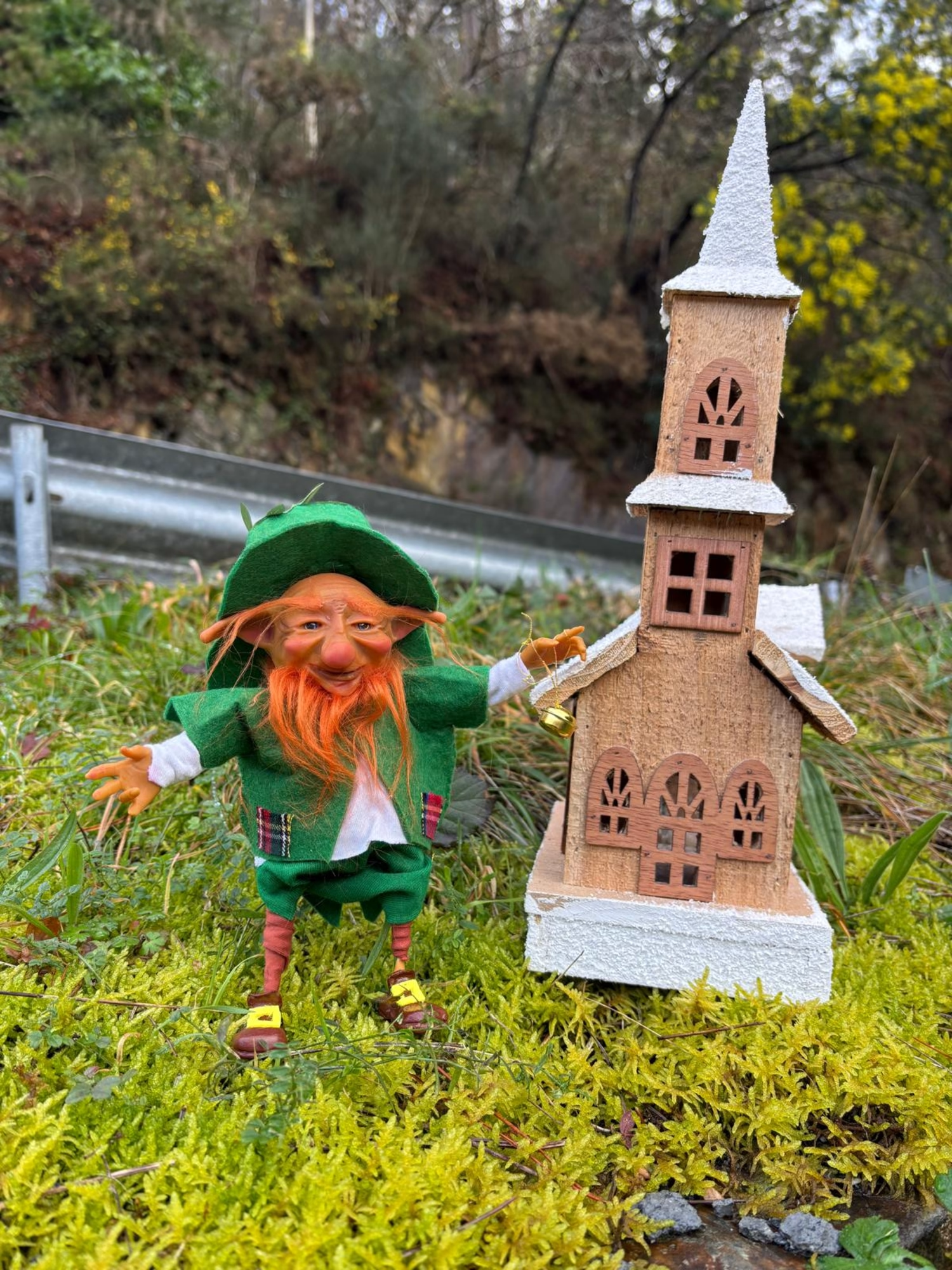
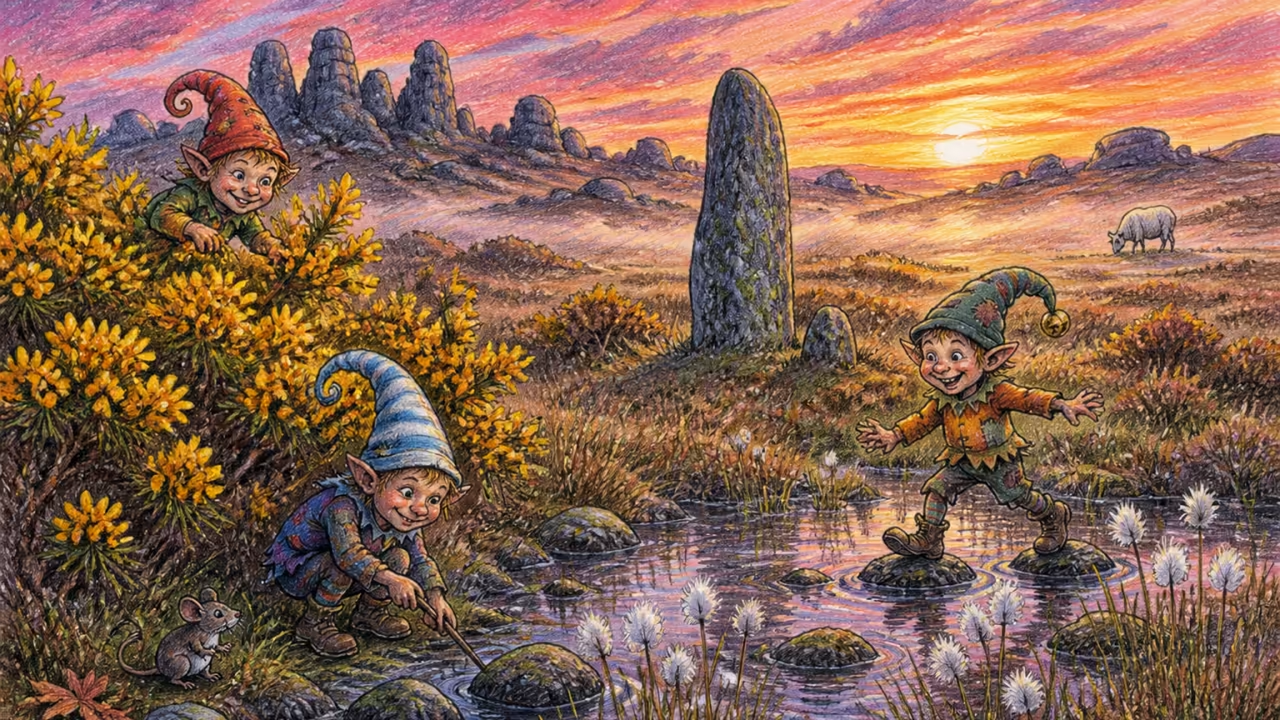
A pixie is a small, mischievous, intensely social creature from the folklore of Cornwall, Devon, and parts of Somerset, traditionally described as around 30 to 60 centimetres tall, dressed in green or russet clothing, with pointed ears and a wild laughing manner. Unlike the brownie or hob, who attach themselves to a household or a place and quietly help with domestic work, the pixie is a wild outdoor creature, found primarily on moorland, around standing stones, and in the open countryside of the south-west. Pixies live in groups (called troops or bands in the old folklore) rather than alone, and their main occupations are dancing in rings on the open moors, riding wild ponies bareback at night, and leading human travellers astray in the mist for the sheer pleasure of the prank.
The pixie is, in short, the wild and social cousin of the household fairies, a creature whose magic is communal and outdoor rather than solitary and domestic. The geographical specificity matters enormously: the pixie is not a generic British fairy but a deeply Cornish-Devonian one, and the folklore makes very little sense without the granite tors, the gorse-covered moors, and the windswept coastlines of the British south-west.
Why does pixie searching turn up haircuts instead of folklore?
Because of the dominance of the pixie cut hairstyle in twentieth-century western culture, popularised by Audrey Hepburn in Roman Holiday (1953) and Mia Farrow in Rosemary’s Baby (1968), and reinforced by every fashion magazine and search algorithm since. By the early twenty-first century, the cultural visibility of the pixie cut had completely overtaken the cultural visibility of the original folkloric pixie in the mainstream English-language conversation. Search engines optimise for what users are actually looking for, and what users are actually looking for under the word pixie is, in 2026, almost always a haircut question, not a folklore question. The original pixie has been pushed to the margins of the internet, even though she remains very much alive in the folklore of the south-west of England.
This is an interesting case of what folklorists call cultural displacement: a much older and richer meaning being statistically buried by a newer and shallower meaning, simply because the newer meaning generates more queries. The pixie is not lost (any Cornish or Devonian local will tell you the real story without a moment of confusion), but she is hidden behind a wall of haircut tutorials. The point of this article is to put her back on the page where she belongs.
What is the difference between a pixie and a brownie?
Significant and consistent across the folklore. A brownie is a domestic creature, attached to a household, helpful in nature, quiet in temperament, solitary by preference, and rewarded with a small bowl of cream. A pixie is a wild creature, attached to a landscape rather than a family, mischievous in nature, loud and laughing in temperament, social by preference, and uninterested in human offerings. The brownie tidies your hearth. The pixie steals your horse for a midnight ride. The brownie wears worn felt and bare feet. The pixie wears bright green and dances in rings. These two creatures are folklorically cousins (they probably share an ancient Celtic ancestor), but they have evolved into radically different functions in British folklore, and confusing one for the other is a small but real folkloric error.
The geographical distribution tells the same story. Brownies are found mostly in Scotland and northern England, where the folklore emphasises household and domestic work. Pixies are found in Cornwall, Devon, and Somerset, where the folklore emphasises wild moorland and outdoor mischief. The two regions of the British Isles produced two distinct family members of the small folk, and the difference is partly geographic, partly social, and entirely meaningful.
What is the difference between a pixie and a piskie?
The two words are essentially the same creature, with piskie being the older Cornish dialect form and pixie being the modern Standard English form. Piskie is the spelling you will see in nineteenth-century Cornish folklore collections (notably in the work of William Bottrell and Robert Hunt, the two great Victorian-era collectors of Cornish folklore), and it is still the spelling preferred by Cornish cultural revivalists and by speakers of the Cornish language. Pixie is the spelling that became standard in the twentieth century as Cornish folklore was absorbed into general British and American popular culture, and is now the more common form in print and online. Some folklorists argue that piskie carries a slightly stronger Cornish-cultural meaning, while pixie has been somewhat watered down by global popular culture (including the haircut). Both are correct, both refer to the same creature, but using piskie when discussing Cornish-specific folklore is a small mark of respect for the older tradition.
Where do pixies live in Devon and Cornwall?
In five types of landscape, all specifically tied to the geography of the south-west. First habitat: the open moorland of Dartmoor in Devon, particularly around the granite tors and the high boggy plateaus. Dartmoor is, by general agreement among British folklorists, the heartland of the pixie tradition. Second habitat: the open moorland of Bodmin Moor in Cornwall, which is smaller than Dartmoor but equally rich in pixie folklore. Third habitat: the granite stone circles and ring forts scattered across both counties, particularly the Hurlers near Minions in Cornwall and Grimspound on Dartmoor. Fourth habitat: ancient woodlands of the south-west, especially Wistman’s Wood on Dartmoor, with its stunted oaks and moss-covered boulders that look almost too magical to be natural. Fifth habitat: coastal cliffs and sea caves of north Cornwall, where pixies are said to dance on the cliff edges on moonlit nights and lure unwary fishermen into bad weather.
The geographical specificity matters because it means a real pixie pilgrimage is possible. You can actually visit these places. They are all open to the public, they are all walkable in a day or two of moderate hiking, and they all carry the visible imprint of the folklore that grew up around them. A trip through the pixie heartlands of Devon and Cornwall is one of the great folklore tourism experiences in Britain.
What are the famous pixie locations in the south-west?
Several places have become bywords for pixie activity, both in local folklore and in modern folk tourism. The Pixies’ Parlour on Dartmoor, near Chagford, is a small rocky alcove where pixies are traditionally said to gather. Robert Hunt and William Bottrell recorded dozens of pixie-led incidents across Devon and Cornwall in the 1860s and 1870s, many tied to specific bridges, caves and villages whose names survive in their collections. And Dartmoor itself, more broadly, contains dozens of named pixie sites that local people still mark with informal markers and small offerings.
How do you avoid being pixie-led?
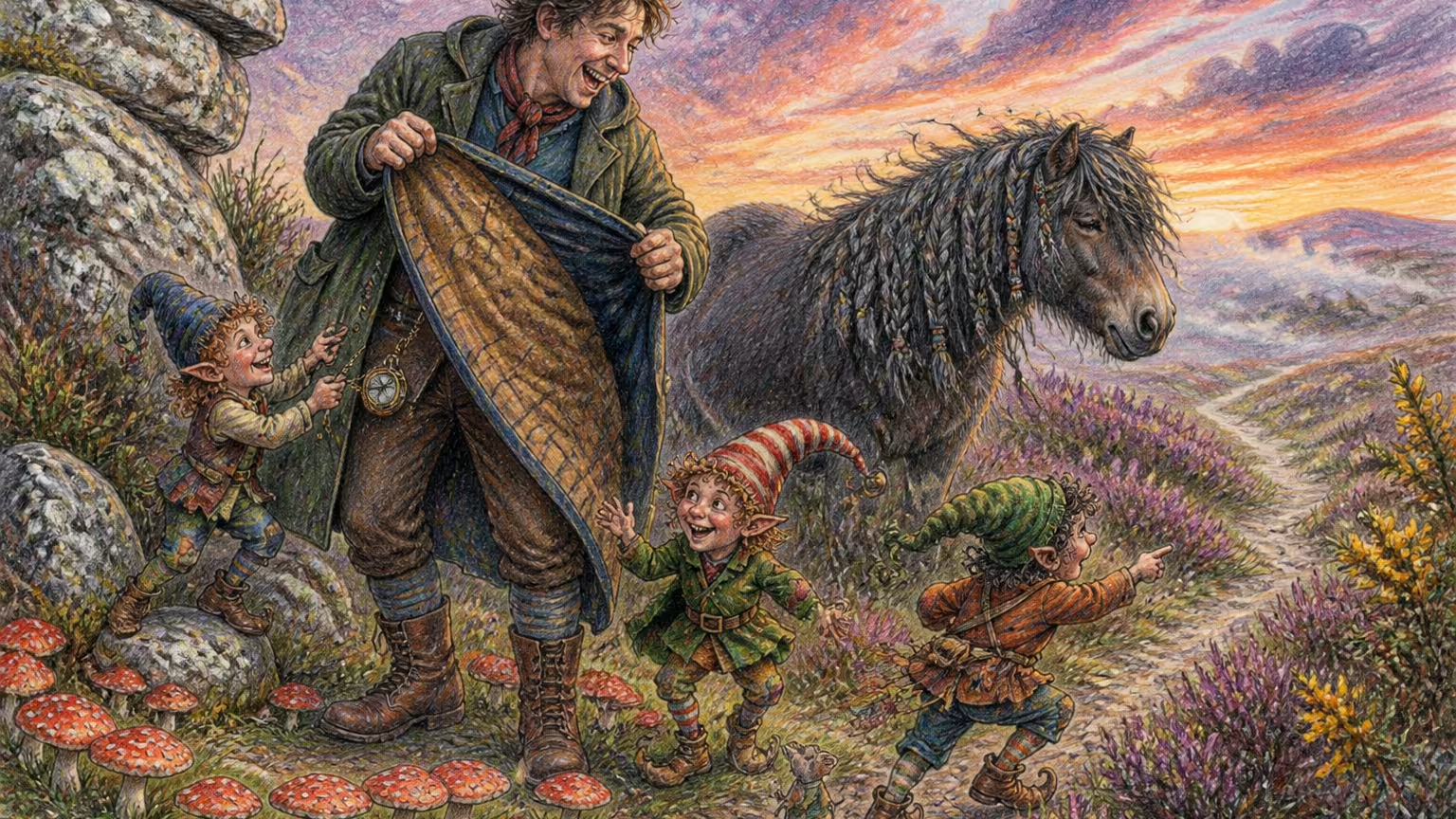
By following three traditional remedies that have been recorded in Cornish and Devonian folklore for at least four hundred years. First remedy: turn your coat inside out. The most famous pixie counter-spell, recorded by everyone from William Bottrell in 1870 to modern hiking guides to Dartmoor, is to take off your jacket or coat, turn it inside out, and put it back on. This breaks the pixie spell by reversing the polarity of your clothing relative to the magic. Second remedy: carry iron in your pocket. Cold iron has been an anti-fairy charm across Celtic Europe for millennia, and the pixie folklore inherits this completely. A small horseshoe nail or an iron key in your pocket is enough to discourage pixie interest. Third remedy: stay on the path and avoid stepping into rings of mushrooms or unusual circular patches of greener grass. Pixie rings, the old folklore says, are dancing grounds, and stepping into one breaks the natural boundary that keeps pixies on their side and humans on theirs.
These remedies are still taught informally on Dartmoor today. If you do a guided night walk on the moor with a local guide, you will almost certainly be advised at some point to turn your coat inside out as a precaution. Whether you believe in pixies or not, it is a charming small ritual that gives the walk a particular folkloric flavour. We Magikitos have used the inside-out coat trick more than once over the centuries, and we can confirm that it does at least make you laugh, which probably helps regardless.
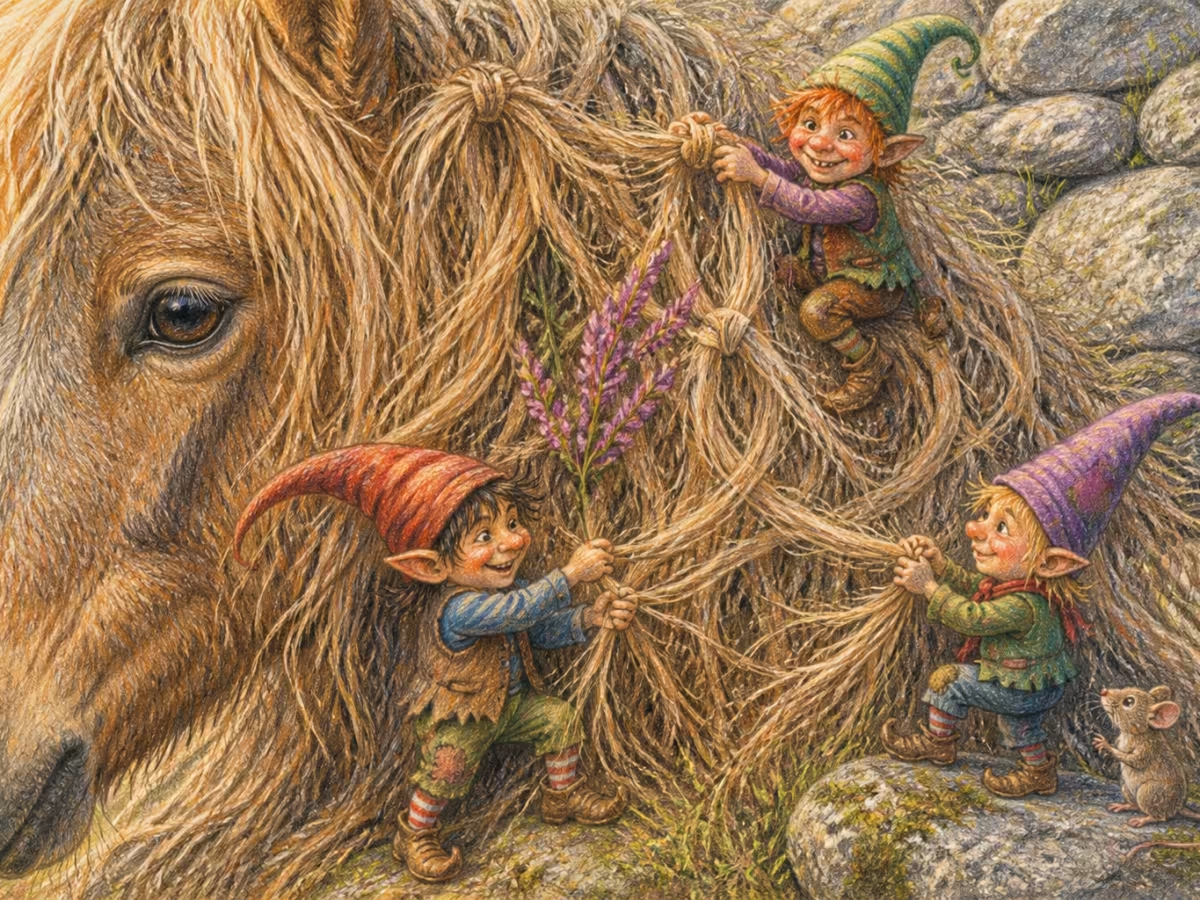
The tangled knots in horse manes (called elf-locks or fairy-knots) are one of the most universally recognised signs of pixie activity. Dartmoor ponies wake up regularly with these intricate plaits in their manes and tails, and the traditional explanation across south-west England is that pixies have ridden them in the night and plaited their hair in the dark.
Modern equine biologists offer alternative explanations involving static electricity, natural matting, and the way ponies rub against rough surfaces. We Magikitos hold both explanations as simultaneously true: the science explains how the knots form, and the folklore explains why they happen. Both are useful, and neither cancels the other.
Where can you find handmade pixie figures?
From a small but resilient community of woodcarvers, potters and felt-makers in Cornwall, Devon and Somerset who keep the pixie tradition alive in physical form. The town of Boscastle in north Cornwall has several small workshops producing handmade pixie figures, and the Museum of Witchcraft and Magic in the town is worth a visit for its broader collection of south-western folklore objects. The town of Chagford on Dartmoor has a small but excellent craft community producing pixie-themed work. The villages around Tintagel and Saint Ives also have handmade pixie sources for those willing to look beyond the mass-produced tourist shops. We Magikitos work with Carmen at the workshop in Taramundi, who shapes small mischievous creatures by hand with the proper green-clad pixie spirit. You can browse our pieces in the brownies collection (where the pixie lives alongside her cousins from the household fairy family) and our smaller folkloric pieces in our treasures.
One small warning for shoppers: avoid the cheap mass-produced pixie figures sold in the larger Cornish tourist shops, particularly those clustered around Lands End and Saint Michael’s Mount. These are almost all imported from East Asia and have no connection to the genuine Cornish folkloric tradition. The small workshops we recommend are more expensive, but they support local craftspeople and they produce figures with actual folkloric integrity.
A real pixie wears green, dances on Dartmoor, and ties knots in pony manes for the laugh. The haircut is a separate cultural phenomenon that owes its name to the original creature but has nothing else in common with her.
The Magikitos, from the workshop in Taramundi
Are pixies the same as fairies?
Cousins, definitely. Identical, no. The fairy in the broad English folkloric tradition is a more generic category that includes a wide range of small magical creatures, from the brownie at one end to the pixie at the other, with many regional varieties in between. The pixie is therefore one specific kind of fairy, with her own clearly defined characteristics: south-western British, outdoor, social, green-clad, mischievous, and tied to moorland. To call a pixie a fairy is not wrong but is imprecise, like calling a pug a dog: technically correct, but missing the specific details that make a pug a pug. In serious folkloric writing, pixie is the precise term, and fairy is the broader category. Use both as appropriate to the level of detail you need.
This distinction is not pedantic. Different kinds of fairies have different powers, different rules of engagement, different folkloric histories, and different cultural meanings. Calling them all fairies indiscriminately is a small but real impoverishment of the tradition. The pixie deserves her own name, used precisely, in the same way that the brownie and the hob and the boggart deserve theirs.
Are pixies still believed in today in south-west England?
By more people than you might expect, in a soft and half-knowing way that is characteristic of how modern British folklore actually survives. If you spend any real time in rural Devon or Cornwall, particularly in the villages around Dartmoor and Bodmin Moor, you will hear pixie references in everyday conversation that are not entirely jokes. People still say their car got pixie-led when they take a wrong turn on the moor at night. People still mention finding elf-locks in their horses’ manes without quite meaning that pixies did it but also not quite meaning that they did not. The belief is not the literal Sunday-school belief of mediaeval times, but it is also not the dismissive scepticism of urban modernity. It is a third thing: a half-belief, a cultural reflex, a folkloric instinct that keeps the pixie present in the south-western imagination even though no one is making theological claims about her existence.
Folklorists have a name for this kind of belief: it is called residual folklore, a tradition that survives below the level of conscious affirmation but above the level of conscious denial. The pixie of the south-west of England is one of the great examples of residual folklore in modern Britain, and one of the reasons we Magikitos find her so interesting. She has survived a thousand years of social change, the rise of Christianity, the Industrial Revolution, the Victorian era, the twentieth century, and now the dominance of the pixie cut on the internet. Whatever the next two centuries throw at her, we are betting she will survive that too. Dartmoor is still Dartmoor, and the elf-locks still appear in the ponies’ manes in the morning. Long may that continue.