
The day the modern lighter sparked to life
HistoryPicture living in a world where starting a fire was a whole workout of “stone, tinder, and patience”… and then, out of nowhere, a pocket little gadget shows up that goes click and boom… “let there be a tiny flame”.
That’s basically what went down in the 20th century with the “modern” spark lighter, closely tied to the discovery and everyday use of ferrocerium (also called “artificial flint”), an alloy that throws off crazy sparks when you scrape it.
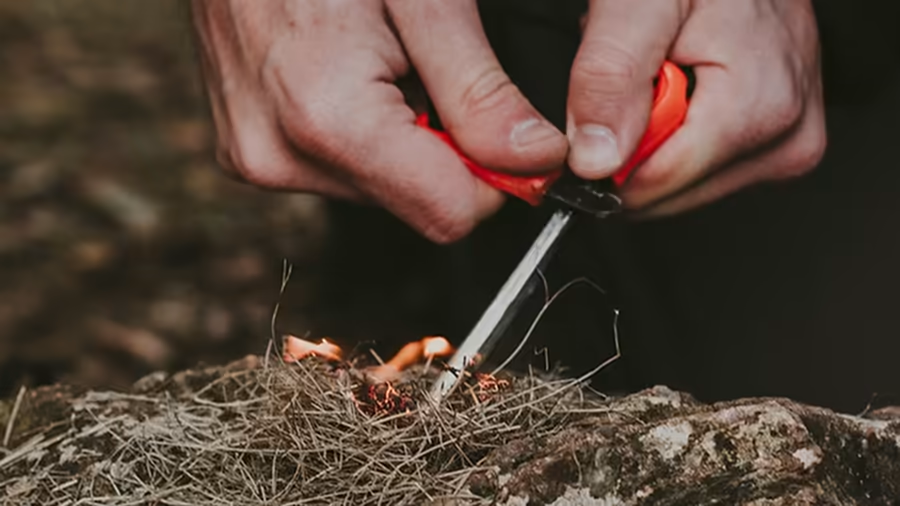
Sure, there were wick-and-gasoline lighters before, but ferrocerium made fire feel instant. More like “I’m cold and I’m in a hurry”.
What is ferrocerium and why does it spark so easily?
Think of ferrocerium like a little bar stuffed with tiny “party-hungry shavings”. When you scrape it with a steel wheel, you rip off microscopic particles. Those bits hit the air, oxidize super fast, and glow red-hot. It’s like grating cheese and getting a little snowfall, except this “snow” comes out on fire, which is a whole different vibe.
Why did this change everyday life?
Because fire stopped being this mysterious thing and became a tool. Cooking, warming up, lighting a candle, firing up a gas stove… everything became more “right at your fingertips”. And yeah, it also taught us something: if something that powerful fits in your pocket, responsibility fits in there too, you just have to remember to bring it along.
Magikito moral: some inventions hand you pocket-sized power. Today, when you feel that “click” of impulse (a snappy reply, a silly purchase, a burst of anger), ask yourself if you’re using your spark to light something useful… or to start a fire you can’t undo.