This morning in Taramundi the coffee maker started doing that diva “pssshhh” and we were like, “Uh-oh, someone’s in a mood”.
In strolls the barista goblin and goes, “Heeey, it’s not a mood, it’s pressure”. And we go, “Well tell it to get some therapy, it’s splashing the stovetop”.
Magikito moral: sometimes you’re not grumpy… you’re two bubbles away from turning into espresso. Breathe, turn the heat down, and don’t splash anyone.
The moka: a little steam elevator for your coffee
Science bite
Did you know...?
The moka pot doesn’t “pump” coffee with magic, the secret is pure science: water steam that really, really wants an exit.
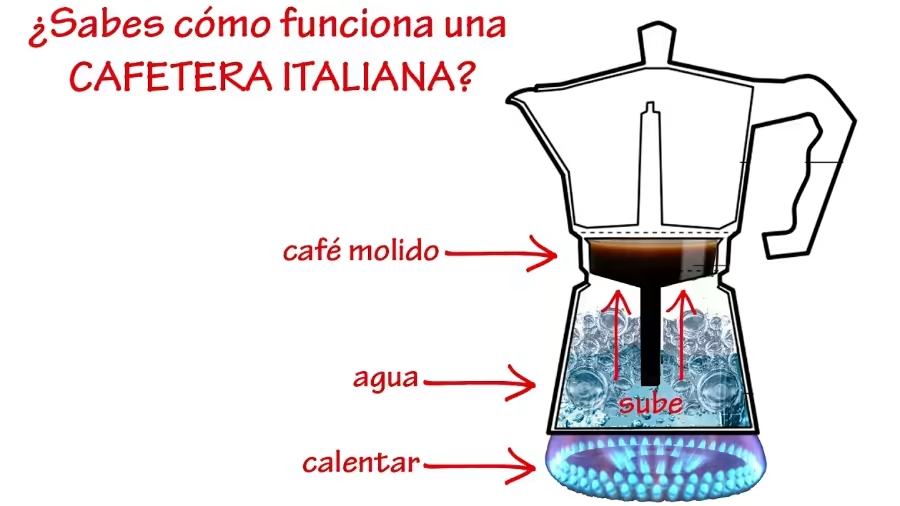
The famous Italian coffee maker has three main parts: the water chamber at the bottom, the funnel in the middle with ground coffee, and the top collector where the brew lands.
How does the Italian moka work?
When you set it on the heat, the water in the bottom chamber warms up and part of it turns into steam. That steam builds pressure inside the lower chamber and pushes the liquid water up through the little central tube. The water passes through the ground coffee, a process called extraction, because as it runs through the grounds it pulls out caffeine and all those tasty little flavor-bits, and then it rises into the upper chamber, where you see it come out in that proud little stream.
The fancy part is in the details: the moka works with moderate pressure, less than an espresso machine, so the result is intense but it’s not café-bar “espresso.” And keep an eye on the safety valve on the bottom chamber: if it gets blocked, or if the grind is packed in too tight, the pressure can climb higher than it should.
So, here’s the spell: medium-low heat, don’t tamp the coffee like you’re wrestling it, and never fill the water above the valve.
In the forest we call it “the steam lesson”: if you shoot up too fast, you end up whistling. Better steady, with a calm way out.
Bialetti’s last trip: a moka turned into an urn
Curiosity
Can you imagine your final goodbye happening inside your own invention?
Well, this actually happened: when Alfonso Bialetti (the man behind the iconic moka pot, the “Moka Express”) passed away, his ashes were placed inside an oversized moka. Not a bar story. It’s a real fact, quoted all over Italy and retold as a design-history curiosity from everyday life.
And it leaves us staring into our coffee, somewhere between a laugh and a little bow of respect. Because some people sign paintings, others sign buildings, and Bialetti signed breakfasts. There’s no monument more stubborn than something you use half-asleep every morning, hair doing its own thing, whispering “just one more sip before work”.
The weirdest and sweetest part is that the moka, which runs on pressure, turns into a symbol of the total opposite here: rest. Like saying, “let me be, I’m having my little coffee in peace”.
Magikito reflection: how lovely it would be to leave behind something so humble and everyday, something people hold close without even realizing it.
Moka Coffee Cheesecake on a Biscuit Crust
Magical recipe
Today we’re craving a dessert that tastes like a long after-lunch linger and a quick chat: creamy, with moka coffee, and that little side thought of “yeah, I deserve this”.
Ingredients:
200 g María biscuits, the classic ones
80 g melted butter
500 g cream cheese
120 g sugar
200 ml whipping cream
2 eggs
80 ml strong coffee (moka is best), cold
1 tsp vanilla extract (optional)
Method:
Crush the biscuits, mix them with the butter, and press the mixture into a tin.
Beat the cream cheese and sugar until smooth. Add the eggs one at a time. Fold in the cream, the cold coffee, and the vanilla. Mix gently, like you’re trying not to wake the whole house.
Pour over the base and bake the whole situation at 160-170 ºC for about 45-55 minutes, until the edges are set and the center has that classy little wobble.
Let it cool a bit, then chill in the fridge for at least 4 hours (overnight is even better).
If it comes out a bit creamy when you slice it, it’s not “still raw”, it’s “this is perfect”.
And if you pair it with another sip of moka… we’re looking the other way.
Low flame, long game
Reflection
"Hurrying doesn’t make things faster, it just cranks up the pressure."
The moka teaches you that without ever getting preachy. If you blast the heat, the coffee comes out wild, overheats, turns bitter, and on top of that it leaves your stovetop looking like a crime scene. But if you go with steady energy, the water rises calmly and the result lands just right.
We do the same in forest-life mode: no need to tamp the coffee like it owes you money, and no need to squeeze yourself like you’re a machine. Pressure, when it has nowhere to go, ends up whistling.
So here’s today’s tiny pact: pick one thing and do it on low flame. A formless walk, a call to a mate you haven’t heard in ages, a wonderfully pointless task. No rush, no self-punishment, no inner “come on, go go go” yelling at you.
What part of your day needs less hurry and more nicely regulated heat?