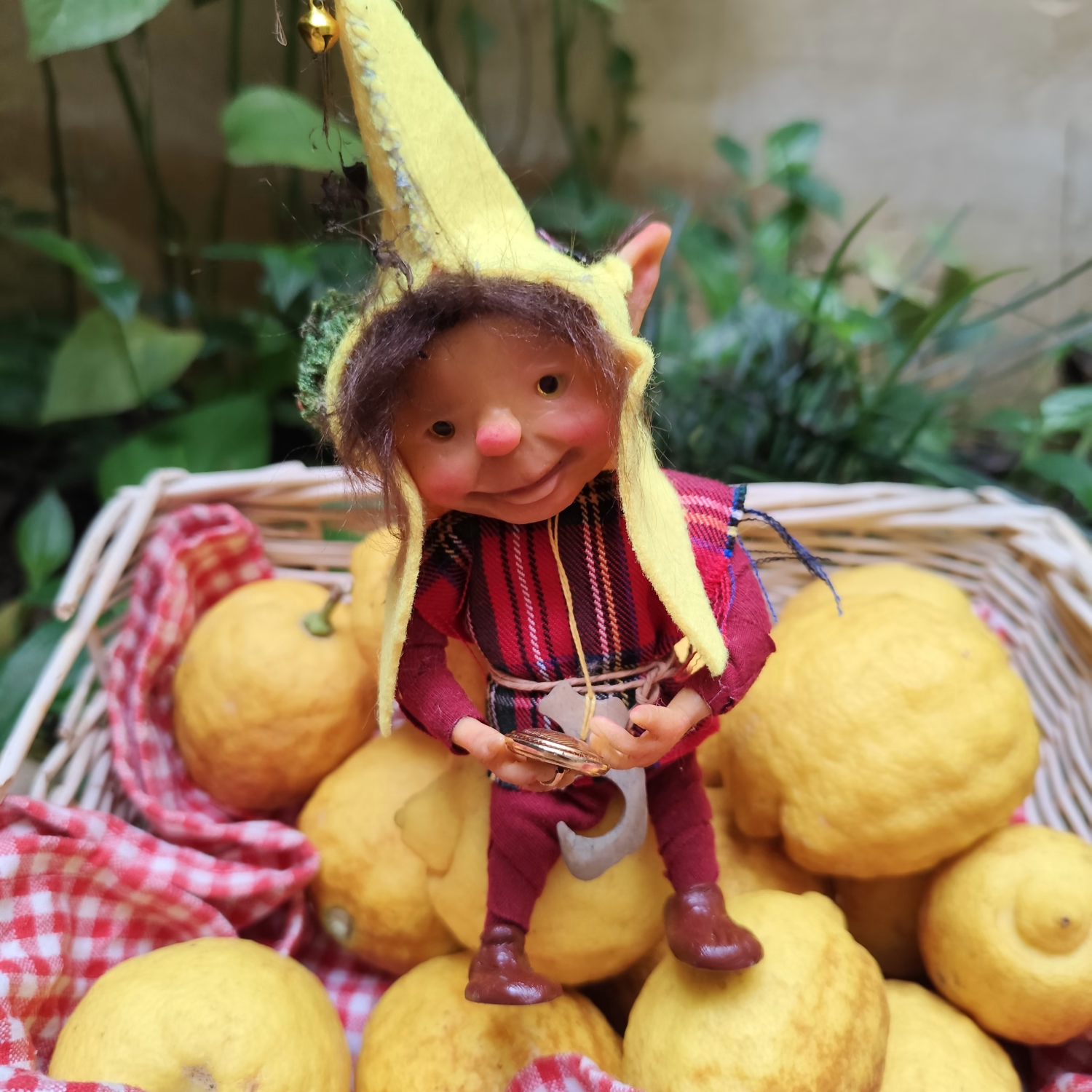
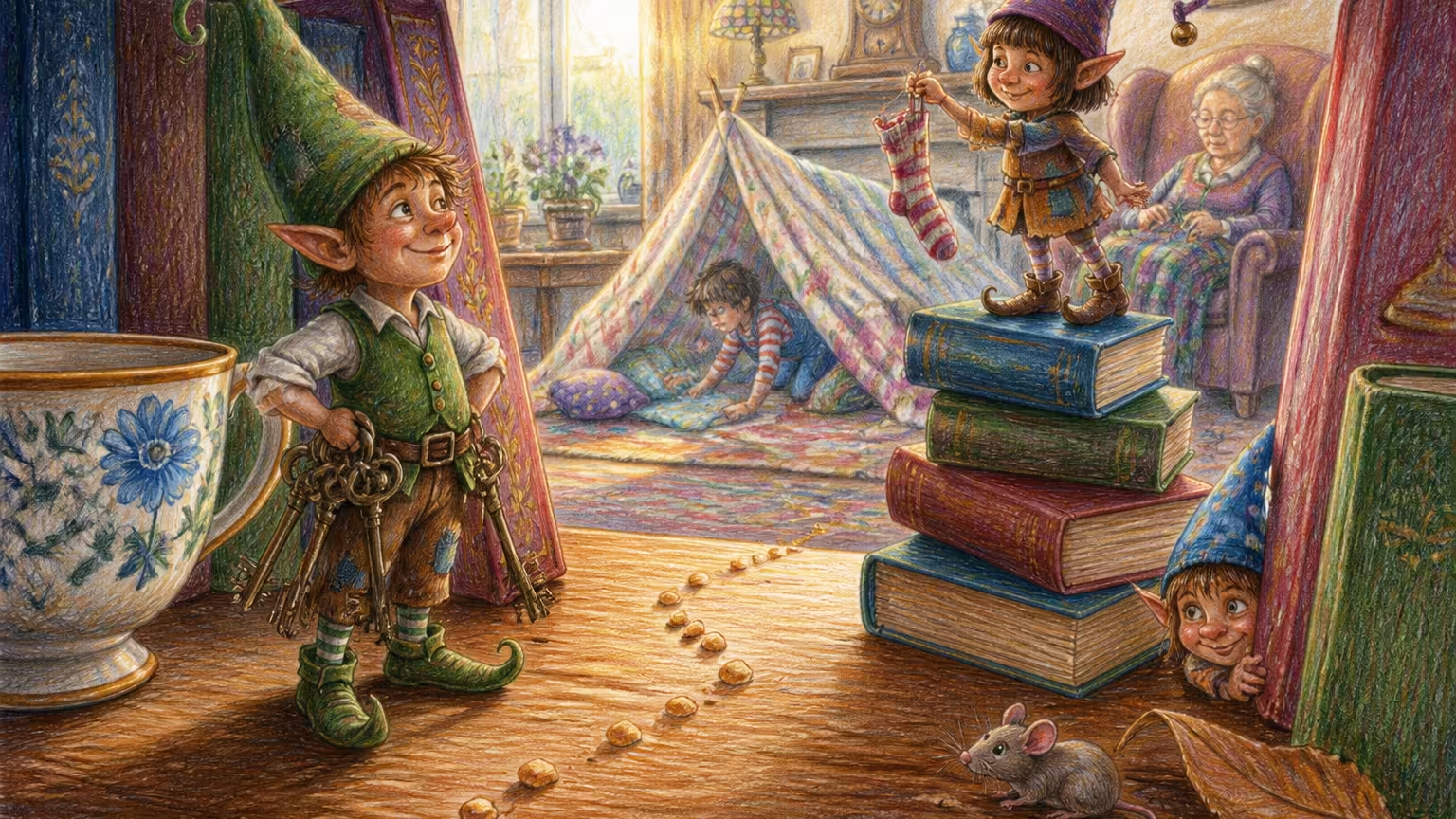
Look. It's been sitting there all day, perfectly still on your shelf, watching you with that smile that says nothing and everything at once. And you're there, all relaxed, thinking you're the head of the household.
Well, no. You're not the owner. You never were.
We got here first.
What exactly does the word Brownie mean?
The word Brownie comes from an old Scots word: "brounie". And that word comes from "brown". The colour of earth, wood, and the warm glow of the hearth. No mystery there, but it says a lot.
"Brownie" is a diminutive of "brown". It names a creature that is brown all over, that blends into the corners of a house, that looks like it belongs to the walls and the firelight. The name itself is a confession: we're not visitors. We're part of the furniture.
Yes, you read that right. The etymology of the word confirms what we've always known: you are the lodger. A very nice lodger, sure, but a lodger all the same. We are the original inhabitants. And we would never have asked for a deposit.
Why do Magikitos act like the house is theirs?
Because it is. They walk around like they own the place, and it makes perfect sense once you understand the etymology.
Scottish oral tradition always knew it. When grannies said "there's a brownie in this house" they weren't talking about a stray guest. They were naming the true spirit of the home. A figure that cares for the house because the house belongs to it as much as to any human member of the family.
There's something lovely there that often gets overlooked. The Brownie wasn't born as a word for fright or for an unsettling presence. It was born as a word for belonging. For the bond between a creature and a place. For quiet, everyday, domestic magic.
The same pattern all over Europe
The funny thing is we're not the only ones with a name that gives the game away. All over Europe, the creatures that look after the house have etymologies just as telltale. Here they are in a row, so you can compare them at a glance.
| Creature | Where the name comes from | What it actually means |
|---|---|---|
| Brownie (Scotland) | From "brounie", a Scots diminutive of "brown" | The brown one, the one who blends with wood and firelight |
| Duende (Spain) | From "duen de casa", medieval Castilian | Owner of the house, the one who runs the home |
| Wichtel (Germany) | From Old High German "wiht", meaning creature or being | A small household spirit, a friendly little helper |
| Lutin (France) | From old "nuiton", from "nuit" (night) | Creature of the night, the one who works in the dark |
| Folletto (Italy) | From Latin "follis", a bellows | A puff of air, the one that passes through and stirs everything up without being seen |
Different names, same confession: none of them asked permission to be where they are. It was never your job to invite us.
If you want to know the full story of these creatures across Europe, we have an entire article dedicated to European household spirits that will blow your mind.
Are there other names for the Brownie in Britain?
Loads, and almost all of them from the north. The same creature that in Scotland is called a brownie crosses a border and changes its coat without changing its trade: in the far north it's a gruagach, in the Scottish islands it's a ùruisg, and in some parts of England it's called a hob. Different syllable, same mischief.
Each region gave it the name that sounded like home, but they all meant the same neighbour with a key to the door. If you're curious, we have a page about the household spirits of northern Europe. And if you look further afield, you'll find that the same being has twenty names around the world, from the Scottish brownie to the Russian domovoi.
And the Brownie in modern life?
The same word has had a busy second career. It named a chocolate cake, a camera, a level in the Girl Guides. But all those are newcomers. The oldest meaning is still the one that matters: the little household spirit who quietly keeps things running.
It's no accident the word survived in so many forms. The Brownie of folklore and the Magikitos share something: we are presences that can't be fully explained, that show up when you least expect them, and that turn any space into something more than it was.
The old stories got it right. Chapeau to the old Scots.
The owners, always at home
So now you know. Next time someone asks what a Brownie is, you have the most accurate answer the Scots language can give: the brown one of the house. Not a ghost. Not a wandering spirit. The spirit of the home. With all the calm and all the affection that implies.
Which includes, of course, the periodic disappearance of your socks. Those are small duties of the role. We take our job very seriously.
If you want to meet the Magikitos who look after your home, they're there. Like they always have been. Like they always will be.